
MOSCOW, October 11 -. RIA Novosti former head of NASA's John Morse today announced the creation of Project Blue, in which in the years 2019-2022 in the space can be started the first private space telescope to search for aliens and planets near Alpha Centauri, according to the site of the project.
"We can not see the individual features on the surface of the planet, it will be like a point source of light, a kind of" pale blue dot "like Earth in the famous photograph" Voyager. "But we will see in two years, as it moves, and collect data on properties of the planet, its mass, structure and other important characteristics, "- says John Morse, the former head of the division in the scientific missions of NASA.
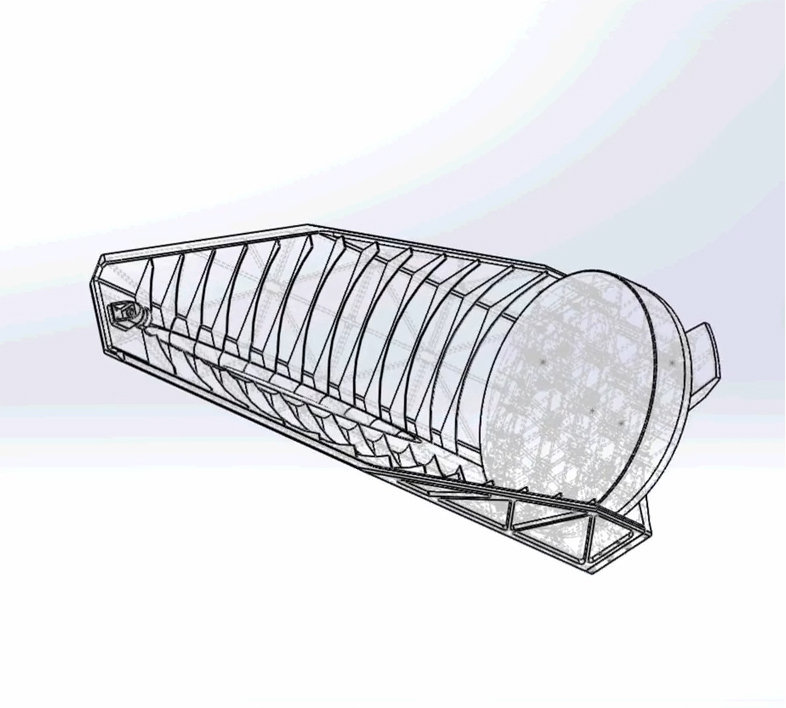
Telescope Project Blue, with which scientists hope to find planets in the Alpha Centauri
In 2012, the scientific world was shaken by the discovery - the star Alpha Centauri B was discovered Earth-like planets, but then astronomers have found that the signal of its existence has been generated by the peculiarities of the HARPS instrument in the work, with which it opened.
Nevertheless, the discovery of Earth-like planets in its neighboring star, Proxima Centauri, again revived the hope that the planets in the Alpha Centauri exist. For this reason, Morse and his associates decided to create Project Blue initiative, under which they plan to find these planets with the help of a small and relatively low-cost space telescope.

Its cost is estimated at about 10-50 million US dollars, but the sources of funding have not been determined.According to Morse, the initiative could attract the attention of many individuals interested in the search for extraterrestrial life. The launch is planned for the 2019-2022 years.
To ensure the lowest cost of the project, all the key elements of future space observatories, including the 55-inch telescope will first be tested on board the balloon, which Morse and his associates plan to launch in the upper atmosphere in the next year. The results of these test runs, they hope to Project Blue, will help "to remove all the unnecessary" and cut down on the creation of the telescope and its orbiting costs.

A key element of this telescope will be a special "shield", the coronagraph in the language of science, which closes the star disk on which the telescope is directed. This makes it possible, in theory, to see those planets that revolve around it, and even take a picture of them. Two years ago, NASA announced the possibility of creating special zonda- "sunflower" StarShade, which will play the role of the coronagraph for the space telescope TESS, scheduled for launch in 2017.
According to estimates of the former administrator of NASA, the probability of detecting a planet in a binary star Alpha Centauri is about 80%, which makes the Project Blue attractive from a scientific point of view. Already, anyone can donate money to the creation of the telescope at the project site.


No comments:
Post a Comment