MITRA MANDAL GLOBAL NEWS

Business Today:- Wall St. flat as earnings from some big names disappoint

Authentic news,No fake news.

Wall St. flat as earnings from some big names disappoint
(Reuters) - U.S. stocks were little changed in early trading on Thursday after the S&P and the Nasdaq touched all-time highs as earnings from some big names disappointed.
U.S. fines Exxon Mobil over Ukraine-related sanctions violations
WASHINGTON (Reuters) - The U.S. Treasury Department on Thursday announced a civil penalty against Exxon Mobil Corp and its U.S. subsidiaries for violating sanctions regulations related to Ukraine in May 2014, fining the global oil company $2 million.
Bill Gross warns of recession risk if highly levered economies hike rates
NEW YORK (Reuters) - Highly levered domestic and global economies including the United States, which have "feasted" on easy monetary policies in recent years, cannot withstand a normalizing of short-term interest rates without running the risk of a recession, influential bond investor Bill Gross of Janus Henderson Investors warned on Thursday.
U.S. weekly jobless claims fall to near five-month low
WASHINGTON (Reuters) - The number of Americans filing for unemployment benefits fell more than expected last week, touching its lowest level in nearly five months, suggesting strong job gains that should continue to underpin economic growth.
Murdoch made to wait few more weeks for Britain's Fox-Sky decision
LONDON (Reuters) - Rupert Murdoch will have to wait a few more weeks to know whether Twenty-First Century Fox's bid for Sky will be referred for a lengthy British investigation.
Banks hope to keep staff in London if soft Brexit deal struck
LONDON (Reuters) - Banks which are shifting operations to avoid disruption once Britain leaves the European Union hope only a handful of people will eventually have to leave London, industry sources say.
Exclusive: U.S. Cardinal Health puts $1.5 billion China business on block - sources
HONG KONG (Reuters) - U.S. drug distributor Cardinal Health has put its China business up for sale, drawing keen interest from state-backed Chinese pharmaceutical firms in a deal that may be worth up to $1.5 billion, sources familiar with the matter said.
Sears to sell Kenmore appliances on Amazon; shares jump
(Reuters) - Sears Holdings Corp's shares soared 20 percent after the struggling retailer said it would sell its Kenmore home appliances on Amazon.com and integrate the brand's smart gadgets with the online giant's Alexa digital assistant.
Europe's cashed-up companies get comfy with capex
LONDON (Reuters) - Sitting on $1 trillion in cash and emerging from years of caution, European companies are now showing the strongest year-on-year growth in capital spending plans in the world.
Abbott lifts profit forecast as it integrates St. Jude deal
(Reuters) - Abbott Laboratories on Thursday raised its full-year adjusted profit forecast as the diversified healthcare company gains from its $25 billion acquisition of medical devices maker St. Jude Medical earlier this year

आपरेटरों ने कहा, शून्य आईयूसी से ग्रामीण टेलीफोनी प्रभावित होगी, जियो की राय भिन्न

Authentic news,No fake news.


पीटीआई-भाषा संवाददाता
 
नयी दिल्ली, 20 जुलाई (भाषा) इंटरकनेक्शन शुल्क को लेकर आपरेटरों की राय भिन्न-भिन्न है। प्रमुख दूरसंचार कंपनियों भारती एयरटेल और वोडाफोन ने आज दलील दी कि ग्रामीण क्षेत्रों में दूरसंचार ढांचा काफी हद तक इनकमिंग कॉल से मिलने वाले राजस्व पर निर्भर करता है। इंटरकनेक्ट प्रयोग शुल्क :आईयूसी: को समाप्त करने या उसमें कमी करने से ग्रामीण इलाकों में दूरसंचार सेवाएं प्रभावित होंगी।

हालांकि, रिलायंस जियो ने इस दलील को खारिज करते हुए दावा किया बेशक मोबाइल इंटरकनेक्शन शुल्क को समाप्त कर दिया जाए, तो भी वह इस साल के अंत तक 99 प्रतिशत कवरेज उपलब्ध करा देगी।

भारतीय दूरसंचार नियामक प्राधिकरण द्वारा आयोजित खुली परिचर्चा में जियो के एक प्रतिनिधि ने कहा, ‘‘गरीब लोगों को दूरसंचार आपरेटरों के दक्षता की कमी वाले नेटवर्क के लिए ‘सब्सिडी’ देनी पड़ रही है। 4जी नेटवर्कपर कॉल ले जाने की लागत काफी कम बैठती है इसके बावजूद मौजूदा आपरेटर ग्रामीण क्षेत्रों के लोगों को 2जी नेटवर्क ही दे रहे हैं। यदि कोई आपरेटर किसी गांव से जाना चाहता है तो हम वहां अगले दिन की नेटवर्क लगा सकते हैं।’’ ट्राई ने 2011 में उच्चतम न्यायालय में अपने हलफनामे में कहा था कि दूरसंचार आपरेटरों को बिल एंड कीप व्यवस्था में जाने के लिए 2014 तक का समय दिया जाना चाहिए। इसके तहत आपरेटर अपने नेटवर्क पर आने वाली इनकमिंग कॉल्स का रिकॉर्ड रख सकते हैं लेकिन दूसरे आपरेटरों से इसके लिए मांग नहीं कर सकते हैं।

अधिकारी ने कहा कि 2014 से आगे आईयूसी को जारी रखने से मौजूदा आपरेटरों को एक लाख करोड़ रुपये का फायदा हुआ है।

Chinese Overfishing Threatens West African Economies

Authentic news,No fake news.


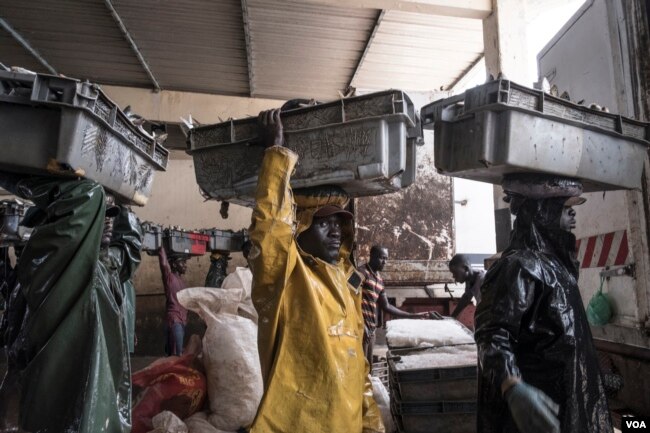
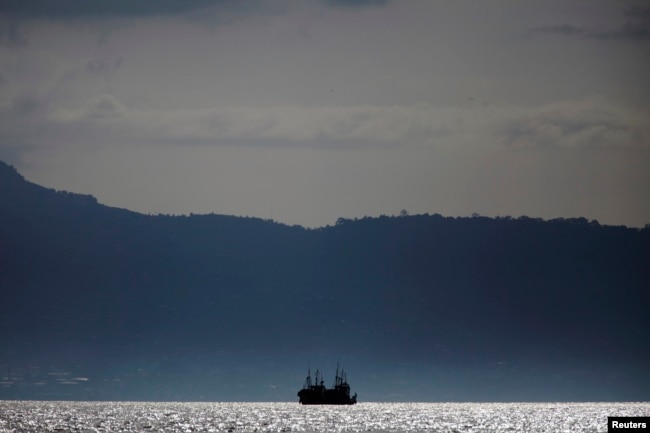
Foreign fishing vessels, many from China, prowl the waters off West Africa every day. They capture millions of fish — catches that used to go to local boats. The fish are then shipped to China, Europe and the United States, satisfying a global demand for seafood and fueling a multibillion-dollar industry.
Foreign trawlers from Asia and Europe have cost West Africa's economy 300,000 jobs and $2 billion in income, according to John Hocevar, a marine biologist with Greenpeace.
However, what to do about the problem — and possible damage to regional fish populations — has eluded experts and officials.
FILE - Overfishing in West African waters has depleted stocks of high-quality fish in Senegal, May 29, 2017. (R. Shryock/VOA)
Chinese presence
Exact numbers are difficult to come by, but experts agree no single country has a greater presence off the coast of West Africa than China.
In a 2015 report, Greenpeace estimated that, two years earlier, China had 426 distant water fishing vessels off Africa's West Coast.
Between 2000 and 2011, 64 percent of China's average annual catches, valued at more than $7 billion, came from that area, according to The Pew Charitable Trusts.
Fishing isn't a big part of China's economy, representing less than one percent of total gross domestic product. But for many in China's coastal provinces, it's both a livelihood and way of life, according to Haibing Ma, the China program manager for the Worldwatch Institute, a nonprofit group that researches sustainability.
Chinese fishers have traveled to Africa because their own fish stock has nearly run out. "Overfishing has destroyed the sustainability of China's inshore fisheries," Ma said.
FILE - After witnessing several irregularities involving local and foreign fishing vessels in West Africa, Greenpeace called for a regional fisheries management body in the region.
Lack of oversight
Fishing practices are inherently difficult to monitor and regulate. Oceans are vast, vessels are hard to reach, and a mix of local and international laws and regulations complicates enforcement.
Domestic laws regulate waters up to 200 miles off the coast, and international laws control waters past that, according to Todd Dubois, assistant director of the National Oceanic and Atmospheric Administration Fisheries Office for Law Enforcement.
This complex environment has led to a variety of creative ways to maximize profits without breaking the law.
For example, legislation in Guinea-Bissau has kept large industrial fishing vessels away from its coast. So, fishing companies have deployed small boats that don't need licenses from nearby countries such as Senegal. Those boats will fish in Guinea-Bissau and return their catches to a large "mothership," which in turn takes its bounty back to Senegal to be traded.
In other cases, "floating factories" — large, nearby vessels used for processing and packaging catches — have enabled other boats to catch small pelagics, such as mackerels and sardines, quickly and on a massive scale for prolonged periods.
And bottom trawls, a kind of gear that contributes to overfishing, were installed on most Chinese vessels studied by Greenpeace in 2015.
Many see international fishing off Africa's West Coast as an exploitation of local resources by foreign powers. But some of the most damaging practices occur within the law, and local African economies sometimes benefit from illegal fishing.
In Mauritania, for example, a Chinese company made a secret deal with the local government to build a fish-processing factory and bring 80 large vessels to the coast in exchange for a $100 million investment in the country.
That deal may have benefited both countries, says Andre Standing, an adviser at the Coalition for Fair Fisheries Arrangements, but it has had a profoundly negative impact on small-scale fishermen.
FILE - Chinese fishing trawlers anchor off the coast of Freetown, Sierra Leone, Nov. 18, 2012.
Responsible practices
Fishing, even when done on a massive scale, can be sustainable, provided there's adequate planning and reporting. That means understanding the vulnerability of local fish populations and managing catches accordingly.
"Some reproduce very fast and can handle quite heavy fishing, such as tuna, and some of the small pelagics like the sardines," Standing said, but other fish, such as sharks, develop very slowly. "We're already seeing across Africa and across the world that industrial fishing and long line fishing in particular, they've decimated populations of the other types of fish."
Standing cautions against drawing conclusions about the entire Chinese fishing industry. Individual fishing companies need to be judged on their own merits, he said. There are good Chinese companies, just as there are bad European companies.
China's presence off Africa's west coast shows no signs of shrinking, though. The Chinese government has enabled the industry to expand far beyond the country's own shores. In 2013, the government gave the fishing sector about $6.5 billion in subsidies, according to a brief Standing wrote for the Africa Center for Strategic Studies.
Whether considering the actions of China, the European Union, or local African governments and businesses, the root of the problem comes from a lack of focus on long-term sustainability, according to Standing.
"In many areas, there really isn't this careful, precautionary approach to managing fishing intensity," he said. "A lot are being driven by short-term profit, and that's really at the heart of the unsustainable nature of fisheries."
Zhan Yang, Teng Xu and Ricci Shryock contributed to this report.

Australia human history 'rewritten by rock find'

Authentic news,No fake news.

Source-BBC

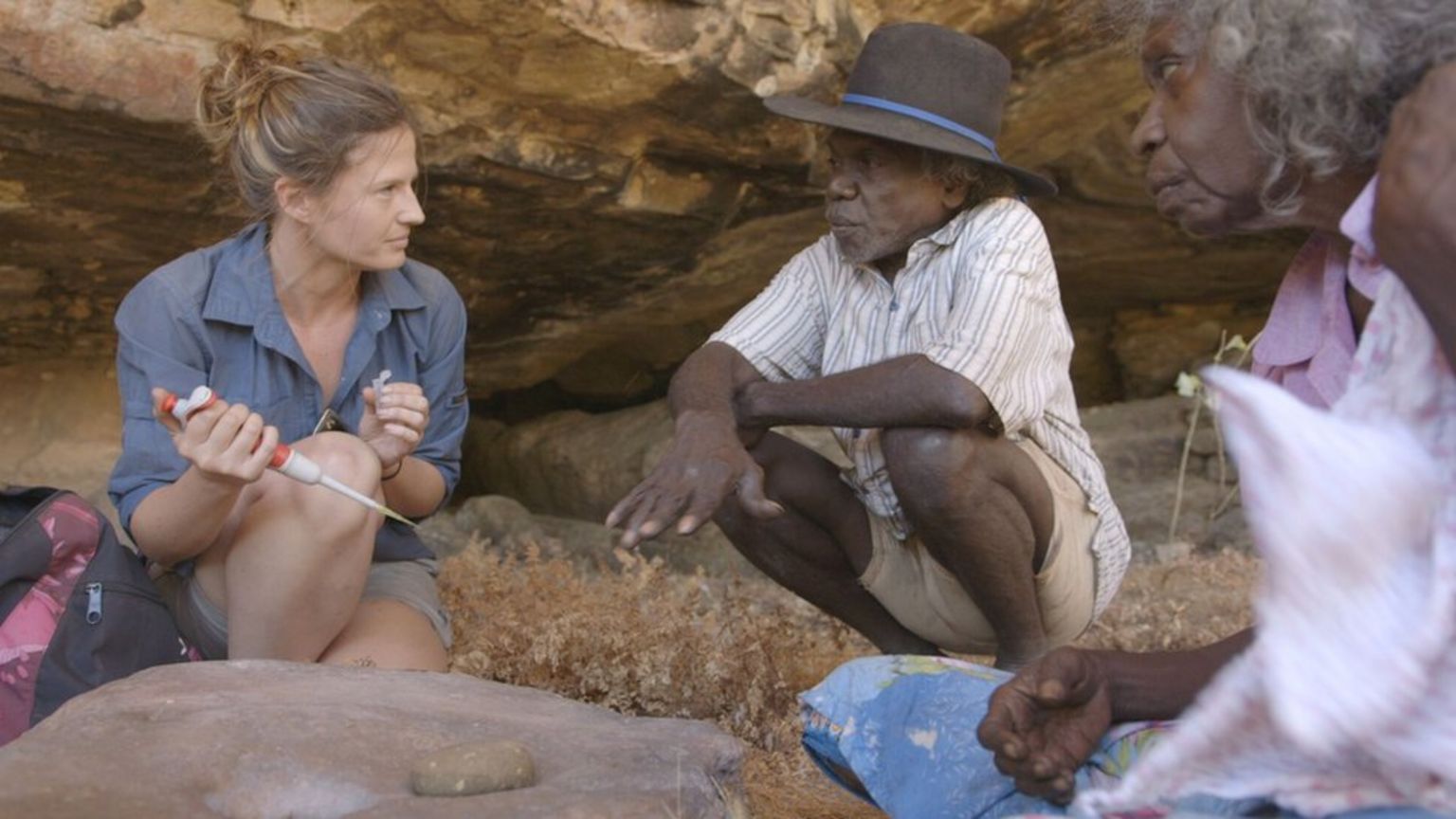
Scientists Dr Elspeth Hayes (left) with Mark Djandjomerr (centre) and May Nango (right) at the dig siteImage copyrightDOMINIC O BRIEN/GUNDJEIHMI ABORIGINAL CORPORATION
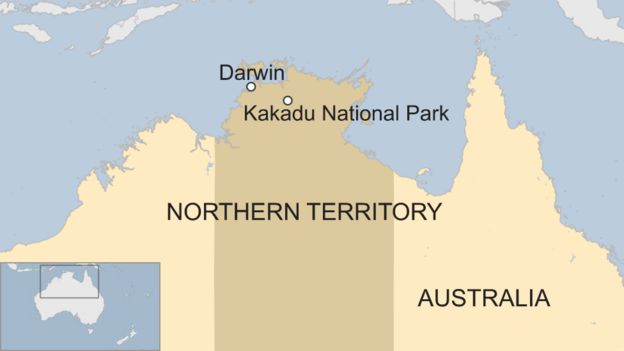
Image captionThe discovery was made in a rock shelter in the Northern Territory
Archaeologists have found the first evidence to suggest that Aboriginal people have been in Australia for at least 65,000 years.
The discovery indicates their arrival on the continent was up to 18,000 years earlier than previously thought.
It was made after sophisticated artefacts were excavated from a rock shelter in the Northern Territory.
Researchers unearthed what they say are the world's oldest stone axes and ochre crayons, thought to be used for art.
The research, which has been peer-reviewed, was published in the journal Nature.
It is based on findings at the Madjedbebe shelter, near Kakadu National Park.

How does this change things?

Australian Aborigines are believed to be the world's oldest continuous civilisation.
However, there has been debate among scientists about when they arrived, with an estimate of between 47,000 and 60,000 years ago. They would have made sea journeys from the islands of South-East Asia at a time when water levels were much lower.
The lead author of the new research, Associate Prof Chris Clarkson, from the University of Queensland, said: "We have managed to establish a new age for first occupation in Australia and pushed it back by about 18,000 years beyond what was the previous established age of about 47,000 years."
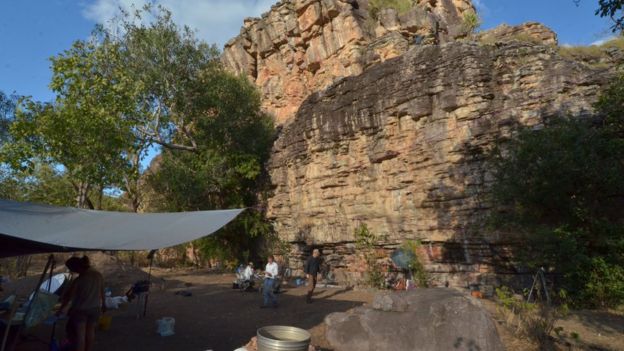
The archaeological siteImage copyrightDOMINIC O BRIEN/GUNDJEIHMI ABORIGINAL CORPORATION
Image captionResearchers worked with the agreement of the traditional owners of the area near the Kakadu National Park
He added: "This has huge implications for everything from the out-of-Africa storyto the extinction of megafauna and Aboriginal peoples' own knowledge of how long they have been in this country."
The out-of Africa theory postulates on when humans first left Africa. The dates there have also been hugely debated and have ranged from between 60,000 and 100,000 years. What this new research does is push up the bottom of that range to 65,000 years.
It also confirms that humans would have arrived before the extinction of Australian megafauna such as a type of giant wombat and a giant carnivorous goanna.
graphic in the Sydney Morning Herald put the new timeframe in perspective, saying that if Aboriginal culture were taken to be 24 hours long, the First Fleet of European settlers in 1787 would have arrived at 23:54 and 56 seconds.

What dating techniques did the new research use?

Radiocarbon dating was used on charcoal samples but this has a limit of about 50,000 years.
To go beyond that, the team used the method of optically stimulated luminescence (OSL).
It is used on buried material, measuring the time that has elapsed since mineral grains were last exposed to sunlight. It was used to date some 28,500 individual grains of sand.
This led to a far more accurate timeframe than was previously known.

So what artefacts were discovered?

The rare artefacts found in the dense lowest layer of the Madjedbebe shelter indicate an "innovative and dynamic early Aboriginal occupation of Australia", Assoc Prof Clarkson told the BBC.
An edge-ground hatchet head being revealedImage copyrightCHRIS CLARKSON
Image captionGround-edge stone axes were unearthed during the excavation
"We found these beautiful ground stone-edge axes with grooves at one end where the handle would have been attached with resin," he said.
The team found pieces of reflective art minerals such as mica wrapped around ground ochre, along with a slab covered in red ochre that was mixed with mica.
"It really tells us that people were heavily into artistic activity," Associate Prof Clarkson said.

What is the Madjedbebe area?

The traditional owners of the area are the Mirrar people.
Their interests are represented by the Gundjeihmi Aboriginal Corporation, which struck a deal with the researchers over the latest dig.
Mirrar people worked alongside archaeologists at Madjedbebe, helping with the excavation and curation of the material.
Since the 1970s, the Northern Territory rock shelter has been excavated four times, with more than 10,000 artefacts found in the lowest layer of the site.
Gundjeihmi Aboriginal Corporation head Justin O'Brien said that the latest research "shatters previous understandings of the sophistication of the Aboriginal toolkit".
Map

Mitra-mandal Privacy Policy

This privacy policy has been compiled to better serve those who are concerned with how their  'Personally Identifiable Inform...