
MOSCOW, December - RIA Novosti. The past year will be remembered for the Russian science major new achievements in various fields - thermonuclear physics, archeology, biomedicine, quantum technologies.
In addition to the receipt of the unique scientific results, this year there were events related to the organization of research - in particular, the elections to the Russian Academy of Science, and the subsequent dismissal of the past in its officials.
A strategy for scientific and technological development of Russia was approved at the end of the year.
Triumph of the Russian nuclear science

Muscovy and oganeson were synthesized by scientists from the Joint Institute for Nuclear Research (JINR, Dubna), and in late November the International Union of Pure and Applied Chemistry (the IUPAC) secured the title of the 115-m and 118-m elements of the periodic table, respectively.
IUPAC decision was a recognition of the outstanding contribution of JINR scientists in the discovery of an "island of stability" of superheavy elements, which is one of the most important achievements of modern nuclear physics. "Island of stability" refers to the previously theoretically predicted region of superheavy elements that may exist is not the proportion of microseconds, like their predecessors on the periodic table, and much longer orders.
115th element Muscovy named in honor of the Moscow region, where the JINR and where many new chemical elements were first obtained.
118th element oganesonom named in honor of the outstanding Russian nuclear scientist, a world leader in the field of synthesis of new elements Academician Yuri Hovhannisyan. He is the scientific director of the Laboratory of Nuclear Reactions Flerov JINR, where experiments were conducted on the synthesis of new elements.

Prior to this, only one scholar has received this recognition during his lifetime - in 1997, the 106th element was named seaborgium (Sg) in honor of the pioneering studies on the synthesis of new elements of the American scientist Glenn Seaborg.
Earlier, the "Russian" elements became the 44th ruthenium element (Ru, from the medieval Latin Russian name - Ruthenia), the 101-th element mendelevium (Md), named after the creator of the periodic table of chemical elements Dmitri Mendeleev, the 105th element dubnium (Db ) - in honor of Dubna, and the 114th Flerova element (Fl), which perpetuated in the name of the memory of the eminent nuclear physicist, member of the Soviet atomic project Academician Georgi Flerov, a former organizer and leader of the work on the synthesis of new chemical elements in the USSR. Yuri Hovhannisyan is the closest disciple Flerova.
The discovery of the century

The discovery was announced on 11 February. space-time waves were recorded by detectors International Gravitational Observatory LIGO, located in the United States.
According to general relativity, the two "black holes", revolving around each other, lose energy due to the emission of gravitational waves. As a result, they gradually, over billions of years, come together. As a result of the collision, it formed a "black star" and emit gravitational waves.
Scientists were able to fix the "ripples" of space-time from a catastrophic collision of two black holes in deep space. Their weight in the tens of times the mass of the Sun, and the merger itself occurred 1.3 billion years ago, but moving with the speed of light gravitational wave reached the Earth only now.
According to experts, a decisive contribution to the opening of collaboration LIGO space-time waves made MSU professor, corresponding member of Russian Academy of Sciences Vladimir Bragin, deceased at the end of March. Braginsky founded and until recently was headed by the Moscow group collaboration LIGO.
Three-dimensional model of Palmyra

The expedition, which took place in September, has helped to clarify the results of previous research scientists. With the help of 3D-models, without going into place, it will be possible to start work on recreating the estimated Pallmiry monuments, ancient ruins which - one of six UNESCO World Heritage sites in Syria.
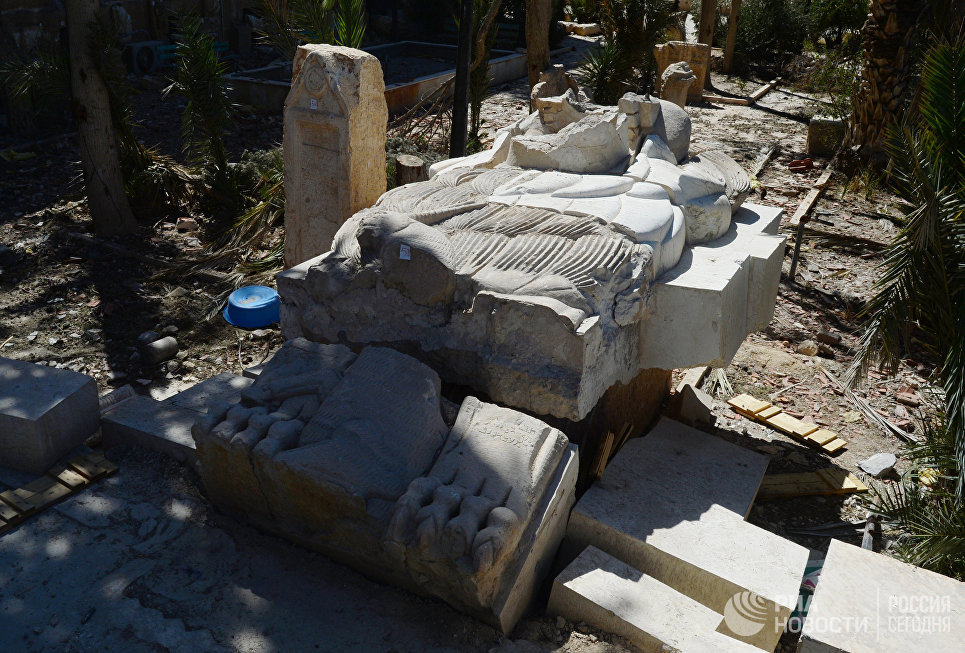
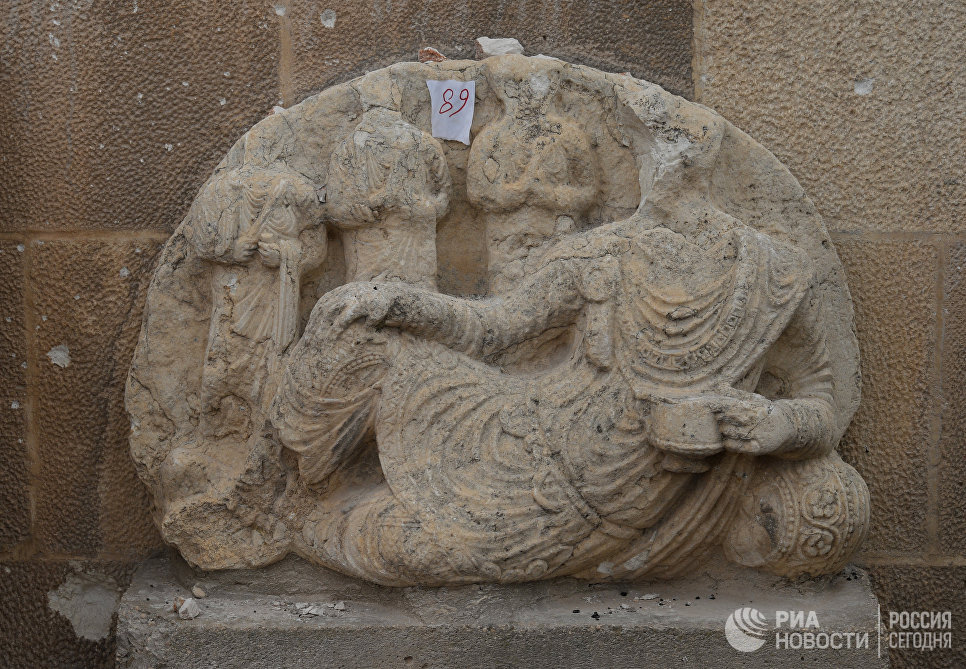
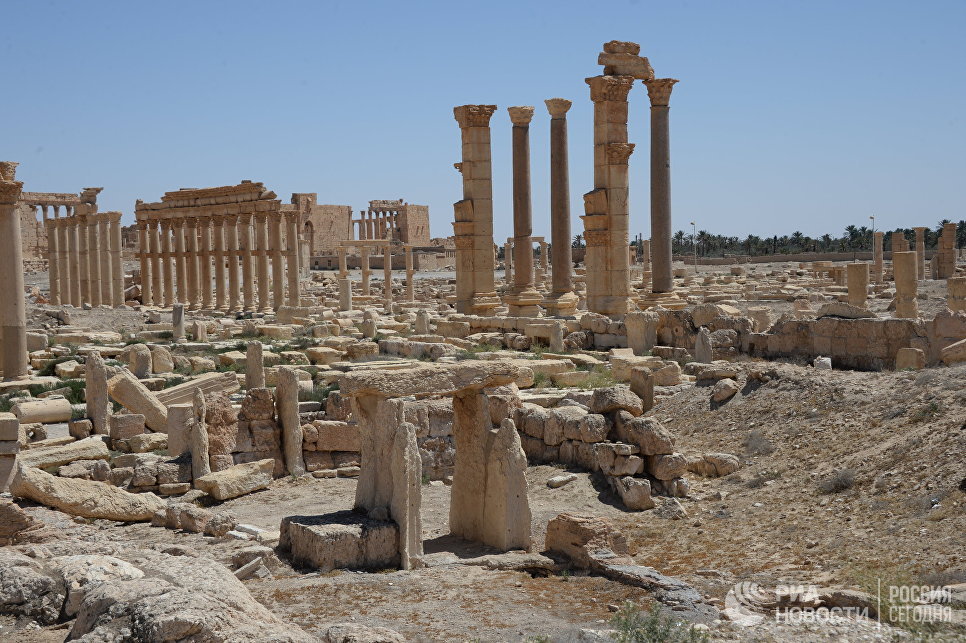
During his stay in Palmyra militants blew up the famous Arc de Triomphe with a colonnade, a temple Baalshamina the II century and the sanctuary of the supreme deity of the Semitic Bela. He was sacked by the National Museum and the necropolis of Palmyra - Tower tomb of the famous patrician.
What is left of the ancient monuments of Palmyra







Test-railgun gun
In Shatura Branch Joint Institute for High Temperatures tested so-called railgun - electromagnetic accelerator that can accelerate matter to the first cosmic speed and output payloads into orbit.
Such devices are now considered the basis for the creation of new weapons systems and output of goods into orbit.

Since the achievement of such speeds require such high currents and energies that all components of the railgun quickly wear out and break down, but now the main task - to find a material that could withstand such loads, and how to protect them from wear and tear.
According to scientists, the development and further study of how the similar Electromagnetic accelerators, will help not only to output loads into space and destroy dangerous objects in their approach to the world, but also to reveal the deeper secrets of the universe: the behavior of the plasma in space as nucleate and dying stars.
Railgun shot: the first tests of the Russian electromagnetic gun
Siberian fusion breakthrough
Employees of the Novosibirsk Institute of Nuclear Physics of the Budker (INP) made steady heating of the plasma to a record temperature of ten million degrees Celsius - this result is of fundamental importance from the standpoint of work on fusion.

The INP considered the possibility to create the next generation of traps, the parameters of which will be significantly increased.
The vaccine against multiple sclerosis

© Photo: Courtesy of the press-service of the Institute of Bioorganic Chemistry
Upon the occurrence of multiple sclerosis the immune system starts to destroy the myelin, which consists of an insulating sheath of nerve fibers. Existing methods of treatment of multiple sclerosis suppress the patient's immune system and make it vulnerable to infections.
Employees IBCh created a new cure for this disease, which has no such side effects. It uses liposomes and has passed two phases of clinical trials. Liposomes are microscopic balls of fluid, surrounded by "nanobroney" synthetic fat molecules, which gradually disintegrate when ingested. Such "nanogranaty" scientists today use in experiments on the delivery of antibodies, and especially aggressive drugs to cancer cells.
In this case, the liposomes contain myelin fragments, one of which has a therapeutic effect in the early stages of the disease, and the other two to prevent the development of pathological remission. Experiments conducted on rats have shown that such liposomes effectively fight the effects of multiple sclerosis and cause the immune system to stop the destruction of myelin.
Scientists conducted vaccine trials in healthy volunteers and patients with multiple sclerosis in five major national centers in Russia. It remains to wait for the results of the final phase of clinical trials, which allow a new drug to the clinical practice for the treatment of multiple sclerosis.
Once qubit, two qubit

Qubits represent and memory, and computing units of a quantum computer that can simultaneously store and a logical zero and the unit due to quantum mechanical effects and the laws of quantum physics. Combining multiple qubits in a single computer system allows you to quickly solve the mathematical or physical problems, the search for an answer to that using brute force methods would take time, comparable to the lifetime of the universe.
As the researchers note, one qubit - is just one element of a quantum memory that can store information, but it can not perform quantum computing, because they rely on the confusion that exists between several qubits. A further task was to combine a set of qubits together and learn how to manage them.
The implementation of this task and the creation of two-qubit system, as noted by physics, suggests that Russia could join the global race of building quantum computers and to achieve significant progress in the development of quantum computing.
Acceleration superconducting memory

© Reidar Hahn / Fermilab
memory work scheme proposed by them does not require time-consuming processes of magnetization and demagnetization. Due to this read and write operations occupy only a hundred picoseconds, depending on the materials and geometry of the particular system, while conventional schemes require hundreds or even thousands of times longer.
The authors have proposed to do the basic memory cell based on quantum effects in the so-called Josephson junctions - "sandwich" of two pieces of superconductor and dielectric.
Traditionally, for recording information in the memory cell applied magnetic field on the basis of the Josephson junctions. But such schemes, there are two principal shortcomings: firstly, the low density of the "package" of memory cells - the board is necessary to put additional chains for their make-up while reading or writing data, and secondly, the magnetization vector can not be changed quickly, which limits the speed recording.
Now Russian scientists suggest using injection currents flowing through one of the layers of the superconductor. Thus, the read state logic cells will be via the current which passes through their entire structure. Such operations will require hundreds of times faster than the measurement of the magnetization or reversal of a ferromagnet.
The resignation of the minister of the profile

When Livanov, with which the Russian Academy of Sciences had a strained relationship, in 2013 began the reform of the RAS. As a result of reforms to the "big" of the Academy were connected, Russian Academy of Medical Sciences and Russian Academy of Agricultural Sciences. Scientific institutes placed under the control of the Federal Agency of Scientific Organizations (Fano).
Academy of Management Sciences repeatedly called clearly prescribed mechanism of separation of powers between the RAS and Fano main problem that arose in the course of reform. Scientists note that conducted under the auspices of Fano Association of Russian scientific organizations, often do not have common research interests, threatens the loss of promising research directions.
After the change of minister, according to management, RAS, scientists became much easier to work with the Ministry of Education and their cooperation is developing in a "very proper, constructive direction."
rejuvenation of the Russian Academy of Sciences

Previous elections of new members of the Academy of Sciences was held in 2011. The next scheduled to be held in 2013, but due to the outbreak of the Academy of Sciences of the reform were repealed. New elections were later scheduled for October 2016.
As a result of the merger of the "big" of the Academy of Sciences with medical and agricultural academies RAS full members automatically become representatives of RAMS and RAAS, which provoked controversy among reputable scientists believe that such a mechanical approach devalues the status of academicians and corresponding member of the Russian Academy of Sciences.
In addition, after the merger of the average age of members of the corresponding increased to 70 years, and the rate among academics averaged 76 years.
New elections have been called upon to improve this situation. So, for the corresponding members half of vacancies has been allocated for researchers under the age of 51, and about a third of vacancies for academics meant for professionals to 61 years. According to information made public on the results of the elections of the Russian Academy of Sciences 176 new academicians and 323 new members have been elected correspondent.
The average age of newly elected academicians was nearly 63 years old, and corresponding members - nearly 53 year. As a result, the average age of academicians of RAS, taking into account the newly elected, was 73.7 years (decline compared to the pre-election indicator is almost 3 years old). The average age of all the corresponding members of the RAS is now 66.7 years ( "rejuvenation" for three and a half years).
Officials scientists

In November, the Science and Education Council meeting Russian President Vladimir Putin said that in late 2015 asked the government representatives, including senior officials, to refrain from participating in the elections to the Russian Academy of Sciences. Putin promised to employees Manager of the President, the Defense Ministry, Interior Ministry and the FSB, elected to the Russian Academy of Sciences, provide the opportunity to engage in research activities instead of only working in government.
It turned out that in the Russian Academy of Sciences, this time 14 people were elected who have held high positions in government.
Among them - the deputy head of the Ministry of Internal Affairs and head of the investigation department of the Ministry of Alexander Savenkov, head of registration and archives of the FSB Vasily Khristoforov, head of the Main Military Medical Directorate of the Ministry of Defense of the Russian Federation Alexander Fisun, deputy managing director of President of the Russian Federation - Head of Medical Department Manager of the President of the Russian Federation Konstantin Kotenko, Deputy Minister of education and science of the Russian Federation Alexey Lopatin. Later, they were relieved of their posts.
In most RAS decision of officials to participate in the elections have explained their own initiative and said that candidates were evaluated on scientific criteria.
The strategy of the development of science

It will be the basis for the development of sectoral strategic planning documents in the field of scientific and technological development of the country, the Russian government programs, government programs country entities as well as planning and program-target documents state corporations, state-owned companies and joint stock companies with state participation.
As noted in the text of the strategy and its implementation will provide the country's willingness to existing and emerging challenges through greater use of new knowledge and effective use of human potential.
In addition, it comes to improving the quality of life, security of the country and the strengthening of Russia's position in the global ranking of standard of living by creating on the basis of advanced scientific research required products, goods and services.


No comments:
Post a Comment