The U.S. Coal Industry Is In A Futile War
Summary
US coal companies continue to face massive headwinds mainly in the form of low natural gas prices, strict environmental regulations, and increasingly cost-effective renewable energy technologies.
Coal plants are retiring at record rates across the US, which is a trend that will likely only accelerate moving forward.
Despite major efforts at innovation, US coal companies have little to no hope of any major turnaround.
The US coal industry is clearly in its final days. The recent bankruptcy of US coal standout Peabody Energy (OTCPK:BTUUQ) only serves to reinforce this fact. While the US coal industry has enjoyed energy dominance for countless decades, it is starting to crumble as a result of large headwinds from multiple directions. In fact, a recent Moody's (NYSE:MCO) report stated that "in the current commodity price environment, most unregulated coal and nuclear plants are generating little or negative cash flows." Clearly, the US coal industry is starting to face massive structural problems.
Natural gas has been a primary culprit for the US coal industry's downward spiral. Low natural gas prices, largely driven by the shale revolution, have put an incredible amount of pressure on coal companies over the past decade or so. Natural gas will likely continue to put a great deal of strain on the US coal industry in the near-term. However, even if US coal survives the natural gas onslaught, the industry will have little to no chance of recovering in the long run. Given the trend of increasingly strict environmental regulations and the rise of alternative energies, even coal standouts like Alliance Resource Partners (NASDAQ:ARLP) and Foresight Energy (NYSE:FELP) are bad investments.
The Unrelenting Rise of Natural Gas
The natural gas boom in the US was, and continues to be, a main contributing factor towards the coal industry's monumental collapse. The major innovations in hydraulic fracturing and horizontal drilling technology have enabled natural gas companies to take advantage of the massive shale gas fields in North America. As a result, prices for natural gas have more or less been consistently low over the past decade or so. In fact, natural gas is currently trading around a stunningly low price of two dollars per million Btu.
It would not be surprising to see natural gas overtake coal as the primary source of electricity in the US very soon. In fact, this shift may happen in just a few quarters time given current trends. In 2015, natural gas was about tied with coal in terms of percentage share of total US electricity generation at approximately 33% each. As coal is far more polluting the natural gas, the increasingly strict environmental regulations imposed by the government will continue to have a disproportionately negative impact on coal.
Even low-cost producers like Alliance Resource Partners are having an incredibly hard time dealing with the rise of natural gas. By many indications, low natural gas prices are here to stay much to the dismay of coal companies. The combination of cheap natural gas and strict greenhouse gas regulations are putting an enormous strain on the profitability and even viability of coal plants. At the current rate, even clean coal technologies will do little to slow the coal industry's seemingly inevitable decline.
US coal plants are being shut down with increasing frequency as a result of unfavorable economics.
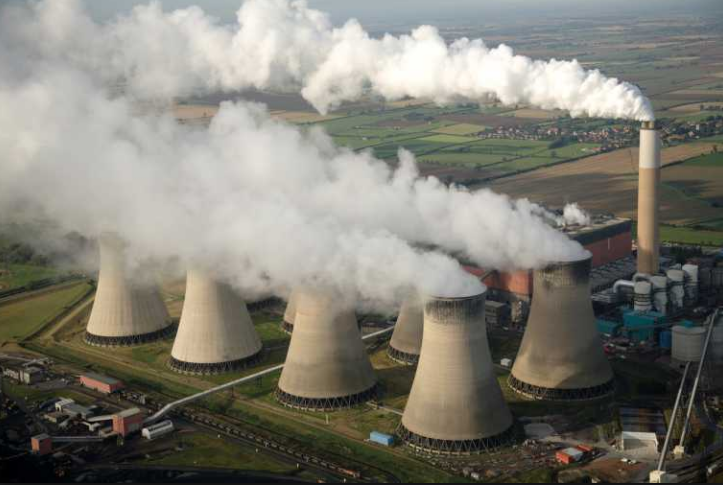
Source: earthtimes
Increasingly Harsh Regulations
It has become increasingly acceptable to oppose coal on the policy front. Policies like the Clean Power Plan have been a major catalyst for the US coal industry's collapse. It was recently announced that since 2010, approximately100 GW of coal electricity capacity have announced plans to shut down operations. Just recently, Dynegy (NYSE:DYN) announced that it will retire 1835 MW of coal capacity as a result of unfavorable coal economics. This massive trend of coal plant retirements would not have been possible without the enactment of harsh environmental policies.
With anti-coal campaigns only growing stronger and politicians embracing increasingly staunch anti-pollution platforms, the trend of strict environmental regulations will likely continue. While there has been some pushback against the growing anti-coal movement (24 states recently sued President Obama or his omission rules), such efforts are largely futile. Not only are coal interests rapidly losing influence, but they are also losing support from the general public. Unless the coal industry is able to make miraculous innovations over the next few years, the industry's chances of survival in the long term are nearly nonexistent.
Even coal standouts like Alliance Resource Partners or Consol Energy (NYSE:CNX) have far more downside at their current valuations. As alternative energies grow more cost-effective and as regulations become increasingly anti-coal, the coal industry is set to continue its downward trend. Moreover, the promise of clean coal technologies is rapidly diminishing, which means that there is little hope for any sort of turnaround in the future. Given the large number of near-term and long-term headwinds facing the coal industry, investors would be wise to stay away from coal.
Conclusion
There are countless obstacles facing major US coal companies. The continual threat of natural gas, strict environmental regulations, and increasingly cost-effective renewables will likely plague the coal industry for years to come. Major coal plants across the country are retiring at record numbers, which is a trend that will likely accelerate in the current atmosphere. Even China is starting to shutter some of its largest coal plants in an effort to control pollution.
With some of the world's largest coal consumers becoming more and more conscious about the environment, coal demand on a global level should also decline in the years to come. While many coal stocks may look attractive at their current record low valuations, the vast majority of these stocks will likely continue to plummet. The bankruptcies of major coal companies like Peabody Energy and Arch Coal (ACIIQ) are becoming an all too frequent occurrence and are a great indication of the industry's general health. Investors would be far better served to invest in high growth energy companies like First Solar (NASDAQ:FSLR) or SolarCity (NASDAQ:SCTY).


No comments:
Post a Comment