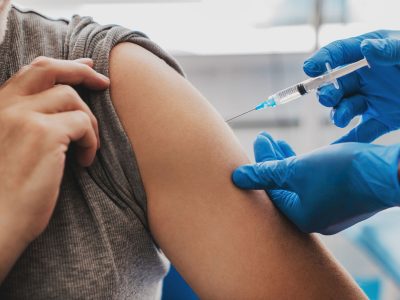
Many of us have friends or family who plan on getting the vaccine. Maybe they truly believe they are in danger. Maybe they think it’s better safe than sorry. Maybe they just want to be able to go to the pub again.
If you know someone who is planning on getting vaccinated against Covid19, ask them these five questions. Make sure they understand exactly what they’re asking for.
1. Did You Know That We Have Never Successfully Vaccinated Against Any Coronavirus?
Scientists have been trying to develop a SARS and MERS vaccine for years, with nothing to show for it. In fact, some of the failed SARS vaccines actually caused hypersensitivity to the SARS virus. Meaning that vaccinated mice could potentially get the disease more severely than unvaccinated mice.
2. Did You Know It Usually Takes 5-10 Years To Fully Develop A Vaccine?
Vaccine development is a slow, laborious process. Usually, from development through testing and finally being approved for public use takes many years. The various vaccines for Covid have all been developed and approved in less than a year.
3. Did You Know That The Covid “Vaccine” Is Based On New Technology, Which Has Never Been Approved For Use On Humans Before?
While traditional vaccines work by exposing the body to a weakened strain of the microorganism responsible for causing the disease, these new Covid vaccines are mRNA vaccines.
mRNA (messenger ribonucleic acid) vaccines theoretically work by injecting viral mRNA into the body, where it replicates inside your cells and encourages your body to recognise, and make antigens for, the “spike proteins” of the virus. They have been the subject of research since the 1990s, but before 2020 no mRNA vaccine was ever approved for use.
4. Did You Know That The Pharmaceutical Companies Can’t Be Sued If The Vaccine Hurts Or Kills Someone?
Back in the Spring of 2020 many governments around the world granted vaccine manufacturers immunity to civil liability, either by invoking existing legislation or writing new laws.
The UK went even further, granting permanent legal indemnity to the government, and any employees thereof, for any harm done when a patient is being treated for Covid19 or “suspected Covid19”.
5. Did You Know 99.8% Of People Survive Covid19?
The case-fatality ratio of Sars-Cov-2 infection has been a bone of contention for months, but it is certainly much lower than all the initial models predicted.
It was originally massively inflated, with the WHO using a figure of 3.4%.
Subsequent studies have found it to be much lower, in some cases even lower than 0.1%. A report published in October in the WHO’s own research bulletin finding a CFR of 0.23% “or possibly considerably lower”.
Meaning, even according to the WHO, at least 99.77% of people infected with the virus will survive.
*
Ask your friends these questions. Give them detailed answers.
It is a rushed and untested vaccine, made using unprecedented technology, with no legal recourse should it do you harm, to treat a virus 99.8% of people will survive.
So the question that really matters is: Do you really want, or need, to take that risk?
NEW YORK, Mar 7 2021 (IPS) - Access to an inclusive quality education is a universal human right. When the inherent right to a good education is ignored or denied, the consequences are severe. For a girl in country of conflict or forced displacement, the impact is brutally multiplied.
Yasmine Sherif
Besides their already marginalized role in war-torn countries or as refugees, adolescent girls and girls are being disproportionately affected by the consequences of the COVID-19 pandemic. Even before the pandemic broke in early 2020, some 39 million girls had their education disrupted as a direct result of humanitarian crises. Of these, 13 million girls had been forced out of school completely.
Such is the level of discrimination that, according to the UN refugee agency, UNHCR, refugee girls are only half as likely to be enrolled in secondary school as boys. There is a two in three chance girls in crisis settings won’t even start secondary school. At primary level girls in crisis settings are two and a half times more likely to be out of school.
In crisis settings, adolescent girls are more likely to be married by 18 than to finish school. Early pregnancies, gender-based violence and sexual and physical exploitation are realities faced by millions of girls daily. Take a moment and reflect on this brutal reality. Imagine if these figures were the reality of our own adolescent daughters.
The UNFPA projects that the diverse consequences of the COVID-19 pandemic could result in 13 million additional child marriages between 2020 and 2030. These traumatic experiences lead to higher dropout rates, perpetuating cycles of exploitation and entrenching millions in poverty. Such is the excruciating consequences of girls already enduring conflicts and forced displacement and now surviving another threat: the pandemic.
Providing girls and adolescent girls in crisis with an education is absolutely essential today in order to empower them and bring hope. Their access to an inclusive quality education during already challenging circumstances is as transformative for them as human beings arising from the ashes of hopelessness, as it is for their societies in urgent need of empowered girls and women to build back better.
Studies show that increased access to education dramatically raises their lifetime earnings, national economic growth rates go up, child marriage rates decline, and child and maternal mortality fall. Girls’ education breaks down cycles of exploitation, protecting and empowering young girls and adolescents to reach their potentials and become change-makers. And, the world need change-makers more than ever, not the least in countries affected by conflicts and displacement.
The World Bank estimates that if every girl worldwide were to receive 12 years of quality schooling, whether or not in a crisis setting, they would double their lifetime earnings, with the aggregate value running into trillions of dollars.
Education provides girls with practical skills and tools; it supports them emotionally and empower them process their traumatic experiences; it prepares them to face their unique challenges, helping them to not only become productive members of society, but more and more, to become confident leaders of their societies.
It is a small crowd right at the top, however. Only about 20 countries have a female head of state or government, and fewer have at least 50 percent women in the national cabinet. But as COVID-19 has demonstrated, several have played decisive roles in protecting our humanity on the basis of universal human rights.
So, what does the pathway to leadership look like when you are young? How do we get young girls in crisis situations into education and then later to play important roles in the decision-making of their communities, their economies and nations?
Education Cannot Wait – the global fund launched at the 2016 World Humanitarian Summit to deliver quality education for those left furthest behind, that is 75 million vulnerable children and youth in countries affected by armed conflicts, forced displacement, climate-induced disasters and protracted crises. At Education Cannot Wait we place girls and adolescent girls at the forefront of our work – because it is their inaliable human right and we believe in them as the change-makers. We take affirmative action: sixty percent of our total spending is geared at an inclusive quality education for girls.
Afghanistan, for example, is one of the most dangerous countries for children because of ongoing insecurity and conflict. UNICEF estimates that 60 percent of the 3.7 million children out of school are girls. Some 17 percent of Afghan girls will marry before the age of 15 and 46 percent will marry before they reach 18. Early marriages contribute significantly to school dropout rates. The Welfare Association for the Development of Afghanistan, an ECW implementing partner, reaches out to community leaders to deliver real results for girls in the most remote areas of Afghanistan, who until recently were held back from going to school and from receiving a quality education.
ECW has given priority in Afghanistan to female teacher recruitment. This is being achieved in Herat, where 97 percent of teachers are women and 83 percent of students in accelerated learning classes are girls. The first year of ECW’s Multi-Year Resilience Programme – with teaching starting in May 2019 – saw some 3,600 classes established in nine of Afghanistan’s 34 provinces. This required newly recruited teachers, 46 percent of whom are women, to teach 122,000 children. Nearly 60 percent of the enrolled children are girls.
In Rodat district in Afghanistan’s Nangarhar province, for example, community stakeholders and religious elders agreed the lack of qualified female teachers was hindering girls’ access to education, and immediately set about to find one. It was no easy task but eventually a female graduate in chemistry and biology was hired and she has turned into a beacon of hope, helping some 40 girls return to classes.
This emphasis on girls’ education is crucial for our future as a human family and the priority must be with those girls and adolescent girls left furthest behind. As Deputy-Secretary of the United Nations, Amina J. Mohammed, recently stated: “Girls’ education is particularly under threat in emergencies and for children on the move and we need to continue to empower this next generation of women leaders through a quality education.”
On March 8 we celebrate International Women’s Day with this year’s theme of ‘Women in leadership: Achieving an equal future in a COVID-19 world’. From the perspective of those living in developed countries, what that equal future might look like for girls in crises settings has been perversely highlighted by the grim consequences of the new coronavirus world. As each month of lockdowns in rich countries passes, reports mount up of the mental health issues and child abuse being suffered by those unable to get to their normal safe learning environment at school. Girls especially are at risk and the ones more likely to be pressed into domestic chores and subject to discrimination – deprived of a future.
Gordon Brown, UN Special Envoy for Global Education and Chair of the ECW High-Level Steering Group, reminds us that the world in 2030 risks being as far away from meeting the Sustainable Development Goals for education (SDG4) as we are now – unless we act decisively. No one should be left behind and that means addressing support needed by over 75 million children and youth in need of urgent education support in crisis-hit countries.
Education cannot wait for a conflict or crisis to be over so that crisis affected children and youth can resume normal life, or refugee children can go home. Protracted crisis often last for decades and families caught up in conflicts spend an average of 17 years as refugees. When education is denied to children, hopes for a better, the last glimmer of hope is extinguished.
Education Cannot Wait is about hope and action. We were established to accelerate the race for meeting Sustainable Development Goal 4 in crisis and disasters. By bringing together all actors in both the humanitarian and development community, we sprint forward to meet the deadline of 2030. Thanks to host-governments, UN agencies, civil society and communities, we move fast, effectively and efficiently. However, a quality education for girls and adolescent girls in crisis requires financial investments. Provided that the funding is available, we can together win this race for girls’ education. Of this, we have no doubt.
The following opinion piece is part of series to mark the upcoming International Women’s Day, March 8.
NEW DELHI, India, Mar 6 2021 (IPS) - Power is an intriguing concept and it means different things to different people. In simple words, power is the ability to influence the behavior of others to get what you want. Power distribution is usually visible in most societies when there is a clear and obvious division between the roles of the men and expectations from women. One can’t talk about power without talking about patriarchy – in which men always hold the power and women are largely excluded from it. Women are almost always taught power and ambition are two dirty words, and should not be linked to their personalities.
In 2020, as the world tried to survive the global pandemic, women across the world were trying to survive a lot more along with COVID-19, also at times claiming their power and negotiating their spaces in various different ways.
Kawkab Al-Thaibani
In Yemen, Kawkab Al-Thaibani, a women’s rights activist and former Director of Women4Yemen Network has been pushing for women’s meaningful participation in the country’s current peace process.
“War is the face of toxic masculinity, and it will never give women space, because women are peace agents. The war in Yemen is the biggest challenge we are facing, but the lack of desire by the negotiators to include women in any talks, another challenge,” Kawkab said in an interview to IPS News.
“Yemeni women are one of the most resilient groups in the society. In this Pandemic, the businesses run by women were forced to shut down, whereas shops run by men were not. There is discriminaiton and they think businesses run by women are not important, though it’s very obvious now that it’s the Yemeni women who are leading the financial responsibility of the family,” Kawkab said.
Speaking at the Webinar organized by the IPS United Nations Bureau in mid july 2020 on the impact of Covid-19 on Women and Children, Saima Wazed, Advisor to the Director General of WHO on Autism and Mental Health, and Chairperson, Shuchona Foundation said, “Women already are subject to a double burden of duties which includes unpaid housework. The pandemic drew a common picture across cultures of women with jobs having to juggle being employee, homemaker, cook, cleaner, teacher to her children overnight. Those in the informal sector were the first ones to lose all of their choices of small income sources they may have had.”
One of the other alarming impacts of COVID-19 pandemic has been on girls’ education. “11 million girls might not return to school this year due to COVID-19s unprecedented education disruption.” According to this report by UNESCO, “This alarming number not only threatens decades of progress made towards gender equality, but also puts girls around the world at risk of adolescent pregnancy, early and forced marriages, and violence. For many girls, school is more than just a key to a better future. It’s a lifeline.”
Addressing the deeply rooted gender disparities in and through education, Yasmine Sherif, Director, Education Cannot Wait (ECW) says because of the many risks and barriers that continue to constrain girls and adolescent girls from accessing education, in context where girls are under-represented, ECW encourages its country-level partners to ensure that at least 60% of learners reached are girls and adolescent girls. “This affirmative action to address these inequalities entails promoting a ‘whole-of-child’ approach. It also considers their safety, their food security, their physical and mental health,” Yasmine said to IPS.
Nazlan Ertan
“COVID-19 risks damaging much of the progress towards gender equality that myself and other women activists have spent our lives working towards,” said Mary Robinson, former President of Ireland, Chair of The Elders to IPS. “We are deeply concerned that women already seem to be bearing the brunt of the socio-economic fallout from COVID-19, and that this pandemic may deepen the gender inequality rift,” said Mary Robinson.
In Turkey, in 2019, 474 women were murdered, mostly by partners and relatives and the figures in 2020, affected by coronavirus lockdowns, are expected to be even higher. “Women have been on the streets and various hashtags have surfaced, domestic violence has increased, nearly half of all the women claim that they have faced some form of physical or psychological abuse in their lives, said journalist Nazlan Ertan to IPS News.
In Bangladesh, in October 2020, citizens took to the streets, outraged by the reports of gruesome gang rapes and sexual violence that were taking place in the country. 975 women were raped in the first nine months of 2020 during the pandemic, 43 women were killed after being raped and 204 women were attempted to be raped by men in Bangladesh.
Shireen Huq
“There is a culture of impunity in the country and when it comes to accessing justice, corruption continues to be a major obstacle,” said Shireen Huq, women’s rights activist and founder Naripokkho, a non-profit organization that has been working on women’s rights and the impact of sexual violence in Bangladesh since 1983 to IPS News.
“Violence, male dominance and male aggression have existed for years, the tendency to glorify that these things didn’t happen in the past, and that it’s only happening now in our lifetime, is not true. Misogyny has been part of our culture, politics and society for centuries, especially across South Asia,” said Shireen.
In Egypt, Mozn Hassan, one of the most outspoken voices on human rights, founder and Executive Director of Nazra for Feminist Studies has had a travel ban imposed on her since June 2016, following previous incidents of judicial harassment against Nazra for Feminist Studies, including summons in relation to foreign funding case.
In an interview to IPS News Mozn said, “Being an independent femisnist voice can cost you a lot, targeting by state actors, asset freeze, travel ban, charges of supporting women to have “irresponsible liberty”, or facing threats of charges that could bring you to life time in prisons are just a few examples.”
Mozn Hassan
“What is happening to Nazra is a clear example of how patriarchal and conserverative individuals cannot accept feminism and feminist acts. I am only one amongst other human rights defenders who has been charged for supporting women to have ‘irresponsible liberty’. Being an activist is hard, being a feminist is harder and being a person who is not part of a social gang, even harder in Egypt. It really is a choice,” said Mozn.
In addition to these pre-existing social, political and systematic barriers to women’s participation and leadership, there are multiple new barriers that have emerged with the COVID-19 pandemic. However countries with women in leadership positions have suffered six times fewer confirmed deaths from COVID-19 than countries with governments led by men, only 20 countries have women as Head of State and Government worldwide.
The stories of strong female leaders navigating their countries through the pandemic crisis will be remembered for a long time to come, and perhaps also change the overarching narrative of what a strong leader should look and behave like – as compared to the reckless, often pompous and populist male leaders of the world. We are still a long way from fully leveraging the potential of women’s leadership, expertise and intelligence, but that’s not stopping women from taking charge.
The very nature of power is dominance, and women in their own quiet or not-so-quiet and resilient ways have sent the message out, that they are no longer willing to negotiate this space, they are simply going ahead and claiming it.
The author is a journalist and filmmaker based out of New Delhi. She hosts a weekly online show called The Sania Farooqui Show where Muslim women from around the world are invitedto share their views.
WASHINGTON (AP) — President Joe Biden is confronting the political risk that comes with grand ambition. As one of his first acts, Biden offered a sweeping immigration overhaul last week that would provide a path to U.S. citizenship for the estimated 11 million people who are in the United States illegally. It would also codify provisions wiping out some of President Donald Trump's signature hard-line policies, including trying to end existing, protected legal status for many immigrants brought to the U.S. as children and crackdowns on asylum rules.
(1 of 6) President Joe Biden waits to sign his first executive order in the Oval Office of the White House in Washington. As one of his first acts, Biden offered a sweeping immigration overhaul that would provide a path to U.S. citizenship for the estimated 11 million people who are in the United States illegally. It would also codify provisions wiping out some of President Donald Trump's signature hard-line policies, including trying to end existing, protected legal status for many immigrants brought to the U.S. as children and crackdowns on asylum rules.
It's precisely the type of measure that many Latino activists have longed for, particularly after the tough approach of the Trump era. But it must compete with Biden's other marquee legislative goals, including a $1.9 trillion plan to combat the coronavirus, an infrastructure package that promotes green energy initiatives and a “public option” to expand health insurance.
In the best of circumstances, enacting such a broad range of legislation would be difficult. But in a narrowly divided Congress, it could be impossible. And that has Latinos, the nation's fastest growing voting bloc, worried that Biden and congressional leaders could cut deals that weaken the finished product too much — or fail to pass anything at all.
“This cannot be a situation where simply a visionary bill — a message bill — gets sent to Congress and nothing happens with it,” said Marielena Hincapié, executive director of the National Immigration Law Center, which advocates for low-income immigrants. “There’s an expectation that they will deliver and that there is a mandate now for Biden to be unapologetically pro-immigrant and have a political imperative to do so, and the Democrats do as well.”
If Latinos ultimately feel betrayed, the political consequences for Democrats could be long-lasting. The 2020 election provided several warning signs that, despite Democratic efforts to build a multiracial coalition, Latino support could be at risk.
Biden already was viewed skeptically by some Latino activists for his association with former President Barack Obama, who was called the “deporter in chief” for the record number of immigrants who were removed from the country during his administration. Sen. Bernie Sanders of Vermont defeated Biden in last year's Nevada caucuses and California primary, which served as early barometers of the Latino vote.
In his race against Trump, Biden won the support of 63% of Latino voters compared with Trump's 35%, according to AP VoteCast, a survey of more than 110,000 voters nationwide. But Trump narrowed the margin somewhat in some swing states such as Nevada and also got a bump from Latino men, 39% of whom backed him compared with 33% of Latino women.
Biden became the first Democratic presidential candidate since 1996 to carry Arizona, in part because of strong grassroots backing from Mexican American groups opposed to strict GOP immigration policies going back decades. But he lost Florida by underperforming in its largest Hispanic county, Miami-Dade, where the Trump campaign's anti-socialism message resonated with Cuban- and some Venezuelan Americans.
Biden also fell short in Texas even though running mate Kamala Harris devoted valuable, late campaign time there. The ticket lost some sparsely populated but heavily Mexican American counties along the Mexican border, where law enforcement agencies are major employers and the GOP's zero-tolerance immigration policy resonated.
There were more warning signs for House Democrats, who lost four California seats and two in South Florida while failing to pick up any in Texas. Booming Hispanic populations reflected in new U.S. census figures may see Texas and Florida gain congressional districts before 2022's midterm elections, which could make correcting the problem all the more pressing for Democrats.
The urgency isn't lost on Biden. He privately spent months telling immigration advocates that major overhauls would be at the top of his to-do list. As vice president, he watched while the Obama administration used larger congressional majorities to speed passage of a financial crisis stimulus bill and its signature health care law while letting an immigration overhaul languish.
“It means so much to us to have a new president propose bold, visionary immigration reform on Day 1. Not Day 2. Not Day 3. Not a year later,” said New Jersey Democratic Sen. Bob Menendez, his chamber's lead sponsor of the Biden package.
Menendez was part of a bipartisan immigration plan championed by the “Gang of Eight” senators that collapsed in 2013. Obama then resorted to executive action to offer legal status to millions of young immigrants. President George W. Bush also pushed an immigration package — with an eye toward boosting Latino support for Republicans before the 2008 election — only to see it fail in Congress.
Menendez acknowledged that the latest bill will have to find at least 10 Republican senators' support to clear the 60-vote hurdle to reach the floor, and that he's “under no illusions" how difficult that will be.
Former Rep. Carlos Curbelo, a moderate Republican from Florida, said Biden may find some GOP support but probably will have to settle for far less than what’s in his original proposal. “Many Republicans are worried about primary challenges,” Curbelo said, adding that Trump and his supporters’ championing of immigration crackdowns means there's “political peril there for Republicans.”
But he also said Democrats could alienate some of their own base by appearing to prioritize the needs of people in the country illegally over those of struggling U.S. citizens and thus “appearing to overreach from the perspective of swing and independent voters.”
Indeed, Democrats haven't always universally lined up behind an immigration overhaul, arguing that it could lead to an influx of cheap labor that hurts U.S. workers. Some of the party's senators joined Republicans in sinking Bush's bill.
Still, Latinos haven't forgotten past immigration failures and have often to blamed Democrats more than Republicans. Chuck Roca, head of Nuestro PAC, which spent $4 million on ads boosting Biden in Arizona, said that while Hispanics have traditionally tended to support Democrats, he has begun to see trends in the past decade where more are registering as independent or without party affiliation. Those voters can still be won back, he said, but only if Latinos see real change on major issues such as immigration “even if it's piecemeal.”
“They have to get something done if they want to start to turn around the loss of Latino voters,” said Rocha, who headed Latino voter outreach for Sanders’ presidential campaign. “They have to do everything in their power now to get Latinos back.”
Associated Press writer Alan Fram contributed to this report.
"What's in a name? That which we call a rose by any other name would smell as sweet." ~ William Shakespeare
By Catherine Austin Fitts
I am not a scientist. I am not a doctor. I am not a biotech engineer. I am not an attorney. However, I read, listen, appreciate, and try to understand those who are.
I was an investment banker until politics made it impossible to continue to practice my art. I was trained as a portfolio strategist—so I map my world by watching the financial flows and allocation of resources. I was also trained as a conspiracy generator and foot soldier—conspiracies being the fundamental organizing principle of how things get done in our world. It was not until I left the establishment that I learned that those not in the club had been trained to disparage and avoid conspiracies—a clever trick that sabotages their efforts to gather power.
My response to living at war with agencies of the U.S. government for a time was to answer the questions of people who were sufficiently courageous and curious to solicit my opinion. Over many years, that response transformed into two businesses. One was The Solari Report, which continues to grow as a global intelligence network—we seek to help each other understand and navigate what is happening and contribute to positive outcomes. The other was serving as an investment advisor to individuals and families through Solari Investment Advisory Services. After ten years, I converted that business to doing an ESG screen. What those who use it want—that is not otherwise readily available in the retail market—is a screen that reflects knowledge of financial and political corruption. Tracking the metastasizing corruption is an art, not a science.
When you help a family with their finances, it is imperative to understand all their risk issues. Their financial success depends on successful mitigation of all the risks—whether financial or non-financial—that they encounter in their daily lives. Non-financial risks can have a major impact on the allocation of family resources, including attention, time, assets, and money.
Many of my clients and their children had been devastated and drained by health care failures and corruption—and the most common catalyst for this devastation was vaccine death and injury. After their lengthy and horrendous experiences with the health care establishment, they would invariably ask, "If the corruption is this bad in medicine, food, and health, what is going on in the financial world?" Chilled by the thought, they would search out a financial professional who was schooled in U.S. government and financial corruption. And they would find me.
The result of this flow of bright, educated people blessed with the resources to pay for my time was that, for ten years, I got quite an education about the disabilities and death inflicted on our children by what I now call "the great poisoning." I had the opportunity to repeatedly price out the human damage to all concerned—not just the affected children but their parents, siblings, and future generations—mapping the financial costs of vaccine injury again and again and again. These cases were not as unusual as you might expect. Studies indicate that 54% of American children have one or more chronic diseases. Doctors who I trust tell me that number is actually much higher, as many children and their families cannot afford the care and testing necessary to properly diagnose what ails them.
One of the mothers featured in VAXXED—a must-watch documentary for any awake citizen, as is its sequel VAXXED II: The People's Truth—estimated that a heavily autistic child would cost present value $5MM to raise and care for over a lifetime. When my clients who were grandparents insisted that they would not interfere with their children's vaccine choices because it was "none of their business," I would say, "Really? Who has the $5MM? You or your kids? When your kids need the $5MM to raise their vaccine-injured child, are you going to refuse them? You are the banker, and it is your money that is at risk here, so it is your business. Do you want to spend that $5MM on growing a strong family through the generations or on managing a disabled child who did not have to be disabled?" Often, that $5MM in expenditures also translates into divorce, depression, and lost opportunities for siblings.
My clients helped me find the best resources—books, documentaries, articles—on vaccines. You will find many of them linked or reviewed at The Solari Report, including in our Library.
Of all the questions that I had, the one that I spent the most time researching and thinking about was why. Why was the medical establishment intentionally poisoning generations of children? Many of the writers who researched and wrote about vaccine injury and death assumed it was an aberration—resulting from the orthodoxy of a medical establishment that could not face or deal with its mistakes and liabilities. That never made sense to me. Writings by Forrest Maready, Jon Rappoport, Dr. Suzanne Humphries and Arthur Firstenberg have helped me understand the role of vaccines in the con man trick of saving money for insurance companies and the legally liable.
Here is one example of how the trick may play out. A toxin creates a disease. The toxin might be pesticides or industrial pollution or wireless technology radiation. The toxin damages millions of people and their communities. Companies or their insurance provider may be liable for civil or criminal violations. Then a virus is blamed. A "cure" is found in a "vaccine." The pesticide or other toxic exposure is halted just as the vaccine is introduced, and presto, the sickness goes away. The vaccine is declared a success, and the inventor is declared a hero. A potential financial catastrophe has been converted to a profit, including for investors and pension funds. As a portfolio strategist, I admit it has been a brilliant trick and likely has protected the insurance industry from the bankrupting losses it would experience if it had to fairly compensate the people and families destroyed.
Thanks to the work of Robert Kennedy and Mary Holland of Children's Health Defense, I now understand the enormous profits generated by so-called "vaccines" subsequent to the passage of the National Childhood Vaccine Injury Act of 1986 and the creation of the National Vaccine Injury Compensation Program—a federal no-fault mechanism for compensating vaccine-related injuries or deaths by establishing a claim procedure involving the United States Court of Federal Claims and special masters. Call a drug or biotech cocktail a "vaccine," and pharmaceutical and biotech companies are free from any liabilities—the taxpayer pays. Unfortunately, this system has become an open invitation to make billions from "injectibles," particularly where government regulations and laws can be used to create a guaranteed market through mandates. As government agencies and legislators as well as the corporate media have developed various schemes to participate in the billions of profits, significant conflicts of interest have resulted.
The Public Readiness and Emergency Preparedness Act (PREPA or the PREP Act) became law in 2005, adding to corporate freedoms from liability. The Act "is a controversial tort liability shield intended to protect vaccine manufacturers from financial risk in the event of a declared public health emergency. The act specifically affords to drug makers immunity from potential financial liability for clinical trials of . . . vaccine at the discretion of the Executive branch of government. PREPA strengthens and consolidates the oversight of litigation against pharmaceutical companies under the purview of the secretary of Health and Human Services." (~ Wikipedia)
Over time, this has evolved to the engineering of epidemics—the medical version of false flags. In theory, these can be "psyops" or events engineered with chemical warfare, biowarfare, or wireless technology. If this sounds strange, dive into all the writings of the "Targeted Individuals."
I learned about this first-hand when I was litigating with the Department of Justice and was experiencing significant physical harassment. I tried to hire several security firms; they would check my references and then decline the work, saying it was too dangerous. The last one took pity and warned me not to worry about electronic weaponry, letting me know that my main problem would be low-grade biowarfare. This biowarfare expert predicted that the opposing team would drill holes in the wall of my house and inject the "invisible enemy." Sure enough, that is exactly what happened. I sold my house and left town. That journey began a long process of learning how poisoning and nonlethal weapons are used—whether to move people out of rent-controlled apartments, sicken the elderly to move them to more expensive government-subsidized housing, gangstalk political or business targets, or weaken or kill litigants—and the list goes on. Poisoning turned out to be a much more common tactic in the game of political and economic warfare in America than I had previously understood.
After I finished my litigation, I spent several years detoxing from heavy metal toxicity—including from lead, arsenic, and aluminum. As I drove around America, I realized it was not just me. Americans increasingly looked like a people struggling with high loads of heavy metals toxicity. In the process of significantly decreasing my unusually high levels of heavy metals, I learned what a difference the toxic load had made to my outlook, my energy, and my ability to handle complex information.
This brings me to the question of what exactly a vaccine is and what exactly is in the concoctions being injected into people today as well as the witches' brews currently under development.
In 2017, Italian researchers reviewed the ingredients of 44 types of so-called "vaccines." They discovered heavy metal debris and biological contamination in every human vaccine they tested. The researchers stated, "The quantity of foreign bodies detected and, in some cases, their unusual chemical compositions baffled us." They then drew the obvious conclusion, namely, that because the micro- and nanocontaminants were "neither biocompatible nor biodegradable," they were "biopersistent" and could cause inflammatory effects right away—or later (http://medcraveonline.com/IJVV/IJVV-04-00072.pdf)
Whatever the ingredients of vaccines have been to date, nothing is more bizarre and unsettling than the proposals of what might be included in them in the future. Strategies—already well-funded and well on the way—include brain-machine interface nanotechnology, digital identity tracking devices, and technology with an expiration date that can be managed and turned off remotely. One report indicates that the Danish government and U.S. Navy had been paying a tech company in Denmark to make an injectible chip that would be compatible with one of the leading cryptocurrencies.
I was recently reading Mary Holland's excellent 2012 review of U.S. vaccine court decisions ("Compulsory vaccination, the Constitution, and the hepatitis B mandate for infants and young children," Yale Journal of Health Policy, Law, and Ethics) and I froze and thought, "Why are we calling the injectibles that Bill Gates and his colleagues are promoting 'vaccines'? Are they really vaccines?"
Most people are familiar with how Bill Gates made and kept his fortune. He acquired an operating system that was loaded into your computer. It was widely rumored that the U.S. intelligence agencies had a back door. The simultaneous and sudden explosion of computer viruses then made it necessary to regularly update your operating system, allowing Gates and his associates to regularly add whatever they wanted into your software. One of my more knowledgeable software developers once said to me in the 1990s—when Microsoft really took off—"Microsoft makes really sh***y software." But of course, the software was not really their business. Their business was accessing and aggregating all of your data. Surveillance capitalism was underway.
The Department of Justice launched an antitrust case against Microsoft in 1998, just as the $21 trillion started to disappear from the U.S. government—no doubt with the help of specially designed software and IT systems. During the settlement negotiations that permitted Gates to keep his fortune, he started the Gates Foundation and his new philanthropy career. I laughed the other day when my tweet of one of Robert Kennedy Jr.'s articles from Children's Health Defense—describing the gruesome technology Gates is hoping to roll out through "injectibles"—inspired a response: "Well, I guess he is finally fulfilling his side of his antitrust settlement."
If you look at what is being created and proposed in the way of injectibles, it looks to me like these technological developments are organized around several potential goals.
The first and most important goal is the replacement of the existing U.S. dollar currency system used by the general population with a digital transaction system that can be combined with digital identification and tracking. The goal is to end currencies as we know them and replace them with an embedded credit card system that can be integrated with various forms of control, potentially including mind control. "De-dollarization" is threatening the dollar global reserve system. The M1 and M2 money supply have increased in the double digits over the last year as a result of a new round of quantitative easing by the Fed. The reason we have not entered into hyperinflation is because of the dramatic drop in money velocity occasioned by converting Covid-19 into an engineered shutdown of significant economic activity and the bankrupting of millions of small and medium-sized businesses. The managers of the dollar system are under urgent pressure to use new technology to centralize economic flows and preserve their control of the financial system.
Just as Gates installed an operating system in our computers, now the vision is to install an operating system in our bodies and use "viruses" to mandate an initial installation followed by regular updates.
Now I appreciate why Gates and his colleagues want to call these technologies "vaccines." If they can persuade the body politic that injectible credit cards or injectible surveillance trackers or injectable brain-machine interface nanotechnologies are "vaccines," then they can enjoy the protection of a century or more of legal decisions and laws that support their efforts to mandate what they want to do. As well, they can insist that U.S. taxpayers fund, through the National Vaccine Injury Compensation Program, the damages for which they would otherwise be liable as a result of their experiments—and violations of the Nuremberg Code and numerous civil and criminal laws—on the general population. The scheme is quite clever. Get the general population to go along with defining their new injectible high-tech concoctions as "vaccines," and they can slip them right into the vaccine pipeline. No need to worry about the disease and death that will result from something this unnatural delivered this quickly. The freedom from liability guaranteed by the PREP Act through the declaration of an emergency—and the ability to keep the emergency going through contact tracing—can protect them from liability for thousands if not millions of deaths and disabilities likely to follow such human experimentation. Ideally, they can just blame the deaths on a virus.
A colleague once told me how Webster's Dictionary came about. Webster said that the way the evildoers would change the Constitution was not by amending it but by changing the definitions—a legal sneak attack.
I believe that Gates and the pharma and biotech industries are literally reaching to create a global control grid by installing digital interface components and hooking us up to Microsoft's new $10 billion JEDI cloud at the Department of Defense as well as Amazon's multibillion cloud contract for the CIA that is shared with all U.S. intelligence agencies. Why do you think President Trump has the military organizing to stockpile syringes for vaccines? It is likely because the military is installing the roaming operating system for integration into their cloud. Remember—the winner in the AI superpower race is the AI system with access to the most data. Accessing your body and my body on a 24/7 basis generates a lot of data. If the Chinese do it, the Americans will want to do it, too. In fact, the rollout of human "operating systems" may be one of the reasons why the competition around Huawei and 5G telecommunications has become so fractious. As Frank Clegg, former President of Microsoft Canada has warned us, 5G was developed by the Israelis for crowd control.
In the face of global "de-dollarization," this is how the dollar syndicate can assert the central control it needs to maintain and extend its global reserve currency financial power. This includes protecting its leadership from the civil and criminal liability related to explosive levels of financial and health care fraud in recent decades.
Which brings me back to you and me. Why are we calling these formulations "vaccines"? If I understand the history of case law, vaccines, in legal terms, are medicine. Intentional heavy metal poisoning is not medicine. Injectible surveillance components are not medicine. Injectible credit cards are not medicine. An injectible brain-machine interface is not a medicine. Legal and financial immunity for insurance companies does not create human immunity from disease.
We need to stop allowing these concoctions to be referred to by a word that the courts and the general population define and treat as medicine and protect from legal and financial liability.
The perpetrators of this fraud are trying a very neat trick—one that will help them go much faster and cancel out a lot of risk—at our expense. I understand why they are doing it.
What I don't understand is why we are helping them. Why are we acquiescing in calling these bizarre and deeply dangerous concoctions "vaccines"? Whatever they are, they are not medicine.
So, what shall our naming convention be? What name shall we give to the relevant poisons, neurologically damaging metals, and digital shackles?
Whatever we call them, I know one thing. THEY ARE NOT MEDICINE, WHICH MEANS THEY SURE ARE NOT VACCINES.
View the French Translation: The Injection Fraud – It’s Not a Vaccine(PDF).
View the German Translation: The Injection Fraud – It’s Not a Vaccine(PDF).