MITRA MANDAL GLOBAL NEWS

Lawyer condemns Julian Assange over statement on rape case

MITRA-MANDAL(Global news and views on current-affairs) monitoring service has no affiliation with the publisher of the content below. This is a content navigation service.


A lawyer acting for the woman who made rape allegations against Julian Assange has accused him of “violating” her client in the media, after the WikiLeaks founder released a statement detailing answers he gave to Swedish investigators.
Assange on Wednesday thumbed his nose at Swedish officials, who he says have robbed him of his freedom for six years, by releasing the answers he gave to them under questioning at Ecuador’s London embassy last month.
The statement sets out for the first time a detailed account by Assange of his encounter with the woman in August 2010.
Elisabeth Massi Fritz, the lawyer for the accuser, said Assange’s decision to release details of their relationship in the statement was “unfortunate”.
She later accused Assange of “violating” her client in the media. “Assange seems to be desperate. As soon as he has something to say he calls the media and is conducting the investigation through the media,” she told the Swedish broadcaster SVT.
“The only thing I can say is that Assange has low credibility, which we will prove when we prosecute. I expect the prosecutor to issue charges. I also expect Assange to stop violating my client in the media. She has suffered more than enough for six years.”
The transcript of a police interview with the woman was leaked to the media in December 2010, which the Australian, who has not been charged with any crime, says helped to establish an aura of guilt around him.
Since then, Assange has repeatedly asked to be allowed to tell his side of the story to prosecutors, but until recently they insisted he come to Sweden for questioning. Assange has been confined to Ecuador’s London embassy since June 2012 after claiming asylum to avoid extradition over the allegations.
“I am now releasing my statement to the public,” Assange said in a letter accompanying the document on Wednesday. “The reason is simple. I want people to know the truth about how abusive this process has been.”
The release of the statement was expected to prompt dismay in Sweden, where prosecutors’ desire for personal aspects of the case to remain confidential has led them to deny Assange access to evidence against him because of the risk that it might become public.
In correspondence with Ecuador over the conditions of Assange’s interrogation, the Swedish prosecutor in the case, Marianne Ny, insisted the proceedings remain private to protect the plaintiff. A spokesperson for Ny told the Guardian she was awaiting the formal report on the interviews from Ecuador, due this month, before deciding on her next step.
The statement, which Assange read out to investigators in response to their questioning, contains a sustained attack on the prosecutor, for whom he claims the interview in London was “simply a ruse to tick a box to ensure the technical possibility to indict me”. Under Swedish law, an interview with the suspect is an essential step before issuing charges.
The statement fleshes out Assange’s argument that he is at risk of extradition from Sweden to the US to face espionage charges – and potentially a life behind bars.
Last week the UN’s working group on arbitrary detention rejected an appeal by the UK against its February ruling that the risks facing Assange if he left the embassy meant his situation amounted to a prolonged deprivation of liberty “in breach of the principles of reasonableness, necessity and proportionality”.
Until now, Assange has not described his sexual encounter with his accuser. He has not publicly apologised to her or tried to mitigate the distress she says she has been caused.
Assange’s statement says that, owing to US hostility towards WikiLeaks, his bank cards were blocked after his arrival in Sweden in the summer of 2010 at the peak of the Pentagon’s conflict with him over the release of a trove of diplomatic and military documents. He says this made him highly dependent on the hospitality of others.
The woman “appeared to be sympathetic to my plight and also appeared to be romantically interested in me”, Assange told prosecutors. “She was not close to people I was close to, so it seemed that those who meant me harm would be unlikely to try to find me by monitoring her movements.”
She “made it very clear that she wanted to have sexual intercourse” with Assange and placed his hands on her breasts while in a cinema, he continued. “I felt concerned about the intensity of [her] interest and I also deeply loved another woman, which played on my mind and left me emotionally distracted.”
The intensity of her interest made him fear how she might react if she felt he was rejecting her, he said. He claimed he later discovered she had collected dozens of photos of him in the weeks before they met, her Flickr photo account filled with “pages and pages” of photos of Assange.
After they had unprotected sex, she wanted him to have a test for sexually transmitted diseases, the statement continues.
“We were in agreement and arranged to meet the following day in the nearby park around lunchtime, when I would have time to get tested. She said she was fine and seemed at ease. You can imagine my disbelief when I woke the next morning to the news that I had been arrested in my absence for ‘rape’ and that police were ‘hunting’ all over Stockholm for me.”
Assange claims that text messages sent by the woman at the time – access to which his lawyers were allowed only briefly and early in the case – show she was not asleep during the sex.
According to the transcripts leaked to the Guardian in 2010, the woman told police she met Assange at a seminar at which he was speaking, and afterwards went to the cinema with him, where they kissed in the back row.
Two days later, she arranged to meet him and they went to her flat. They started to have sex, she said, but she moved away because Assange had not wanted to wear a condom, and he fell asleep. She told police they later had sex at least once when he had “unwillingly” worn a condom, but the following morning, after she had gone to buy breakfast and then climbed back into bed and fallen asleep, she had woken to find him having sex with her without a condom.
According to the statement, she told him: “You better not have HIV,” and he answered: “Of course not,” but “she couldn’t be bothered to tell him one more time because she had been going on about the condom all night. She had never had unprotected sex before.” The statement says she bought the morning-after pill and took an STD test but when she telephoned Assange asking him to be tested he said he didn’t have the time.
Assange has made no secret of his contempt for the Swedish prosecutor, but his decision to release his side of the story appears calculated to place further pressure on Ny to end the stalemate in the case, either by issuing a rape charge – and implicitly explaining the evidence for the charge – or lifting the arrest warrant against him.
“In the past the prosecution has fed partial information to tabloids that politically oppose me,” Assange said. “It is better that my statement, which I am happy with, and which makes it obvious to all that I am innocent, sees the light in full.”

Trump's impact on metals and mining in one chart


Ahead of the US presidential election great hopes were pinned on the performance of the gold price should Donald Trump prevail. A few analysts saw a Trump victory sending gold to $1,500 or well beyond.
After a brief surge to $1338 an ounce on election night, gold's nearly $180 an ounce collapse has unnerved the entire sector – even those companies enjoying the bounce in base metals that started way before Trump even became the Republican candidate.
Seaborne thermal coal prices have also come off the boil, down more than 22% since the election
Gold's now barely hanging on to double digit gains for 2016 and the performance of the metal since Trump's victory has dragged down precious metals. The exception is  palladium thanks to its status as an industrial metal mainly used in automobile manufacture. Silver's slide since the election has also been relatively contained – some 50% of silver finds application in industry.
While zinc – up 70% since the start of the year after adding another 12% in value since November 8 – would benefit from president elect Trump's $500 billion infrastructure and fiscal stimulus plans, the change in sentiment towards industrial metals is nowhere clearer than in the copper price.
The bellwether metal's 2016 performance had been lacklustre compared to zinc, tin (+46% year to date), nickel (+34%) and lead (+28%), but the metal started to move even before the vote and is now 25% to the better for the year.


The world's second most traded bulk commodity after oil, iron ore (+16% since the election and 83% year to date) has defied expectations and while the price of the steelmaking raw material is influenced more by stimulus in top consumer China, Trump's infrastructure push should provide some support.
US coal prices are off their lows reached in September and October, but despite avowed support from the Trump team the positive impact on the domestic industry from a new administration is seen as limited at best.  Seaborne thermal coal prices have also come off the boil, down more than 22% since the election.
Oil's resurgence is more an Opec than a Trump phenomenon, but the 13% jump over the past month retaking the $50 a barrel level is helping to bring price inflation across the mining and metals sector.

Energyworld.com


Top Stories
The real inside story of the Ratan Tata - Cyrus Mistry breakup
Govt probes prior info of ONGC gas migrating to RIL block: Dharmendra Pradhan
ONGC demands 15-year extension of licence for Sudan oil block
IOC,BPCL,HPCL sign deal to set up India's biggest oil refinery
India's debt-laden power retailers seen scaring off global investors
Oil & Gas
India in talks with Russia to swap natural gas with China
OPEC deal will go ahead even if only Russia commits - Nigeria oil minister
Big question mark on US stand on COP21 deal, says Pradhan
We will close Essar Oil deal in a few weeks: Rosneft executive
ONGC exploring swap deals to import gas from Myanmar
EIL says working to set up mega refinery with oil firms
ONGC says KG Basin project on track, to produce gas on time
Iran to to sign oil and gas deals with Total, Shell
UAE energy minister says oil investment declined even at $50 per barrel
Mexico receives $2.65 billion in 2016 oil hedge
Coal
Power generator NTPC strikes first coal
Court orders framing of charges against ex-coal secretary, others
More doubts on Adani coal mine project subsidies in Australia: IEEFA
Power
Tata Sons plans Extraordinary General Meeting to expel Cyrus Mistry as director
Cyrus Mistry's talk on Tata Trusts is travesty, says Vijay Singh
CAG flags variations in AT&C losses shown by Power Ministry
Bihar facing power shortage with reduced supply from centre and power plant shutdown
Govt issues cross border electricity trade guidelines
Renewable
Google to switch to renewable energy entirely in 2017; All data centres to go green
This Karnataka village thrives 100 per cent on solar power
Hindustan Zinc enters solar energy biz, to invest Rs 630 cr

Thursday Morning Briefing: Wells Fargo's spotty report card

View in Browser
Reuters
logo-reuters-news-now

A U.S. bank regulator is ready to fail Wells Fargo on a national scorecard for community lending, a move that could limit near-term expansion for the bank. Wells Fargo is due to be deemed a bank that "needs to improve" under the Community Reinvestment Act, a law meant to promote lending to poor neighborhoods. Not only is the bank not sharing its toys, but it also has had issues playing well with others.


Digits of the day:

60 percent

Almost 60 percent of transgender Americans have avoided using public restrooms for fear of confrontation, saying they have been harassed and assaulted, according to a survey by the National Center for Transgender Equality. The survey, the largest ever of transgender people in the United States, contrasts with the message of conservative politicians and religious leaders that claim transgender people are the antagonists preying on others.

Quote of the day

"The findings reveal disturbing patterns of mistreatment and discrimination and startling disparities between transgender people in the survey and the U.S. population when it comes to the most basic elements of life, such as finding a job, having a place to live, accessing medical care, and enjoying the support of family and community." – 2015 Transgender Survey, National Center for Transgender Equality.


This will make the first days of the Trump Administration interesting. Vietnam started dredging on a disputed reef in the South China Sea, a move that could draw the ire of China, which claims sovereignty over the territory, and could ratchet up tensions in the region.


Dancing on the ceiling

A visitor and an employee dressed as Snegurochka (Snow Maiden), the granddaughter of Ded Moroz (Russian equivalent of Santa Claus), pose for a picture inside an upside down house in the suburbs of Krasnoyarsk, Russia, Dec. 7, 2016. REUTERS/Ilya Naymushin


Around the country

  • Here's a rundown of President-elect Donald Trump's latest appointments:
    • Head of the Environmental Protection Agency: Oklahoma Attorney General Scott Pruitt, a climate-change skeptic who sued the organization he's been nominated to lead.
    • Head of the Department of Homeland Security: Retired Marine Corps General John Kelly, the third retired general to be named to a senior post in the Trump administration. He told Congress last year that the lack of security on the Mexican border posed a threat to the United States.
    • Head of the Small Business Administration: Linda McMahon, former CEO of World Wrestling Entertainment and wife of wrestling star Vince McMahon. Trump, of course, is no stranger to WWE.
  • Elizabeth Warren and Bernie Sanders were two of just five senators that opposed Senate legislation that will reshape the way the Food and Drug Administration approves new medicines. It will also provide funding for cancer and Alzheimer's research, help fight the opioid epidemic, expand access to mental health treatment and advance research into precision medicine. Warren and Sanders called it a handout to the pharmaceutical industry. The House passed the bill last week and will next go to the White House.
  • A federal judge in Michigan effectively halted a recount of the state's presidential vote sought by Jill Stein. The judge sided with a state appeals court that found the Green Party candidate had no grounds to mount the challenge. Stein is appealing to Michigan's Supreme Court. In addition to Michigan, Stein is trying to have the votes recounted in Pennsylvania and Wisconsin. 

Around Wall Street

  • After two years of hunkering down, struggling U.S. oilfield service providers are preparing for an expected oil-price recovery in an unexpected way: filing for bankruptcy. They've been waiting out a slump in oil prices by idling machinery, laying off workers and extending deadlines for repaying debts. Now they are turning to Chapter 11 creditor protection to shed debt and raise cash so they can spend and invest again.
  • China's imports grew at the fastest pace in more than two years in November, fueled by its strong thirst for commodities from coal to iron ore. Exports also rose unexpectedly, reflecting a pick-up in both domestic and global demand. The upbeat data adds to signs of a modest industrial recovery in the world's largest economies, even as China braces for a potential trade war once Donald Trump takes office.
  • OPEC's deal to cut oil production may prove effective in running down global inventories, but analysts hold little hope for much of a rise in prices, according to a Reuters poll. If all OPEC members honor the deal reached in Vienna on Nov. 30 to cut output, any ensuing price gain and drop in inventories could be quickly reversed by rising non-OPEC production.

Around the world

  • South Korea's parliament introduced a bill to impeach President Park Geun-hye, setting the stage for a historic vote to oust the embattled leader engulfed in a corruption scandal. Parliament is expected to vote tomorrow in favor of impeachment, although the Constitutional Court must decide whether to uphold the motion, a process that could take up to 180 days.
  • The European Union will soon let Ukrainians and Georgians visit the bloc without requiring a visa, ending an internal EU dispute that held up those travel measures. Some EU leaders thought the bloc was reneging on pledges to ex-Soviet states that are trying to move out from Moscow's shadow. Others got cold feet about opening doors to 45 million Ukrainians after the public backlash that followed last year's refugee crisis in Europe.
  • Three-quarters of Japanese companies expect no expansion in world trade, highlighting anxiety that Trump's protectionist rhetoric during his campaign may turn into growth-sapping policies.

Today's reason to live

The Roots with Busta Rhymes and Joell Ortiz - The Hamilton Mixtape: My Shot


Trump Meeting Puts NASA Funding in Question


Matt Williams द्वारा
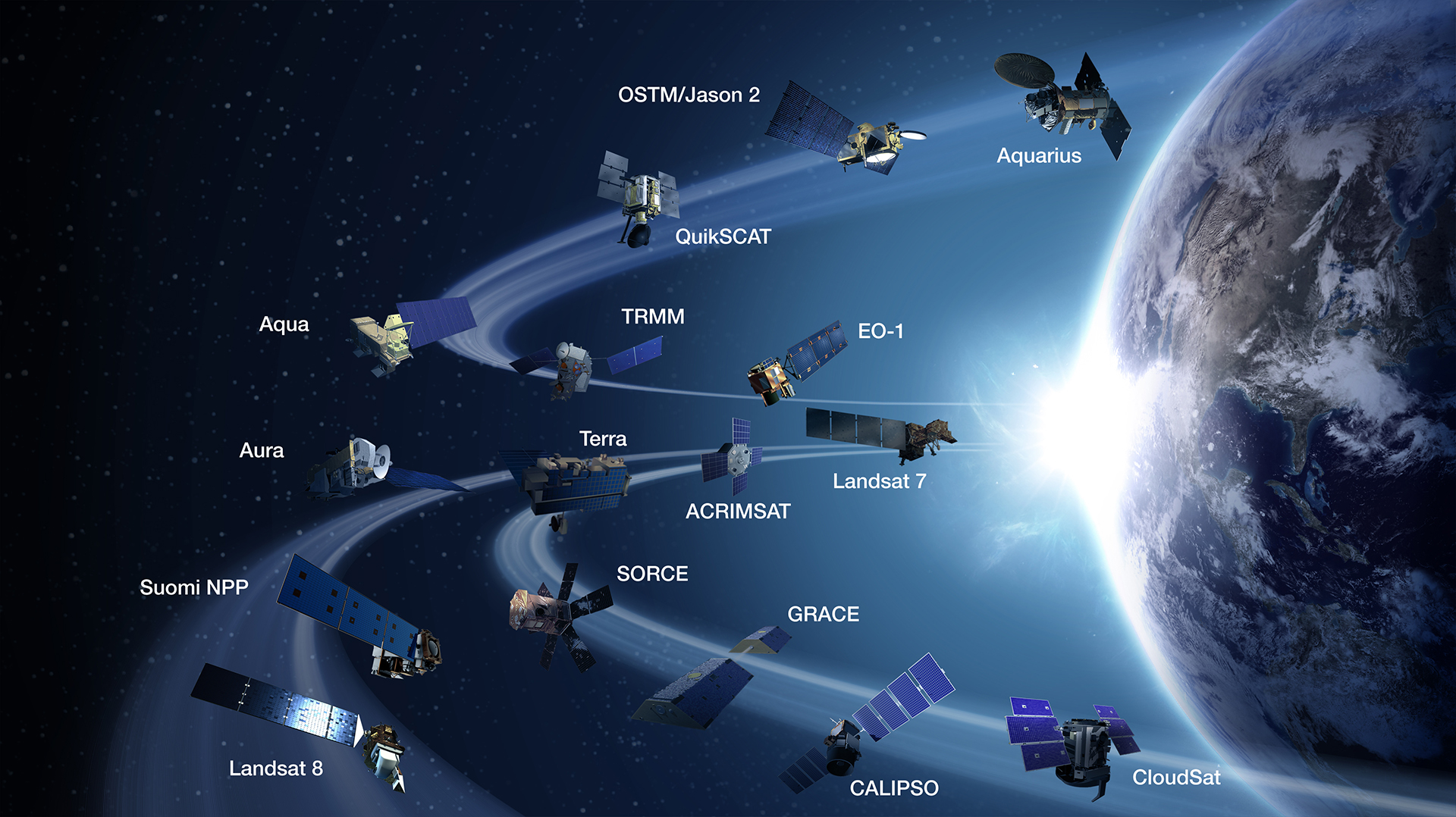
Since the election of Donald Trump, NASA has had its share of concerns about the future. Given the President-elect's position and past statements on climate science, there has been speculation that his presidency will curtail funding to some of their research efforts, particularly those that are maintained by the Earth Science Directorate.
Things took another turn on Monday (Dec. 5th) as Trump met with former Vice President and environmental activist Al Gore to discuss his administration's policy. This meeting was the latest in a series of gestures that suggest that the President-elect might be softening his stances on the environment. However, there is little reason to suspect that this meeting could mean any changes in policy.
The meeting was apparently arranged by the President-elect's daughter, Ivanka Trump, to coincide with the former VP's attendance of a conference in New York on Monday. Said conference was the 24 hour live broadcast titled "24 Hours of Reality", an event being put on by the Climate Reality Project - a non-profit organization founded by Gore to educate the public on climate change and policy.
Much of NASA's research into Climate Change takes place through the Earth Sciences Directorate. Credit: NASA
The meeting lasted 90 minutes, after which Gore spoke to reporters about the discussion he and the President-elect had. As he was quoted as saying by The Washington Post:
“I had a lengthy and very productive session with the president-elect. It was a sincere search for areas of common ground. I had a meeting beforehand with Ivanka Trump. The bulk of the time was with the president-elect, Donald Trump. I found it an extremely interesting conversation, and to be continued, and I'm just going to leave it at that.”
While this meeting has led to speculation that Trump's administration might be softening its stance on environmental issues, many are unconvinced. Based on past statements - which include how Climate Change is a "hoax invented by the Chinese" - to his more recent picks for his cabinet, there are those who continue to express concern for the future of NASA programs that are centered on Earth sciences and the environment.
For instance, after weeks of remaining mute on the subject of NASA's future, the Trump campaign announced that it had appointed Bob Walker - a former Pennsylvania Congressman and the chair of the House Science Committee from 1995 to 1997. A fierce conservative, Walker was recently quoted as saying that NASA should cease its climate research and focus solely on space exploration.
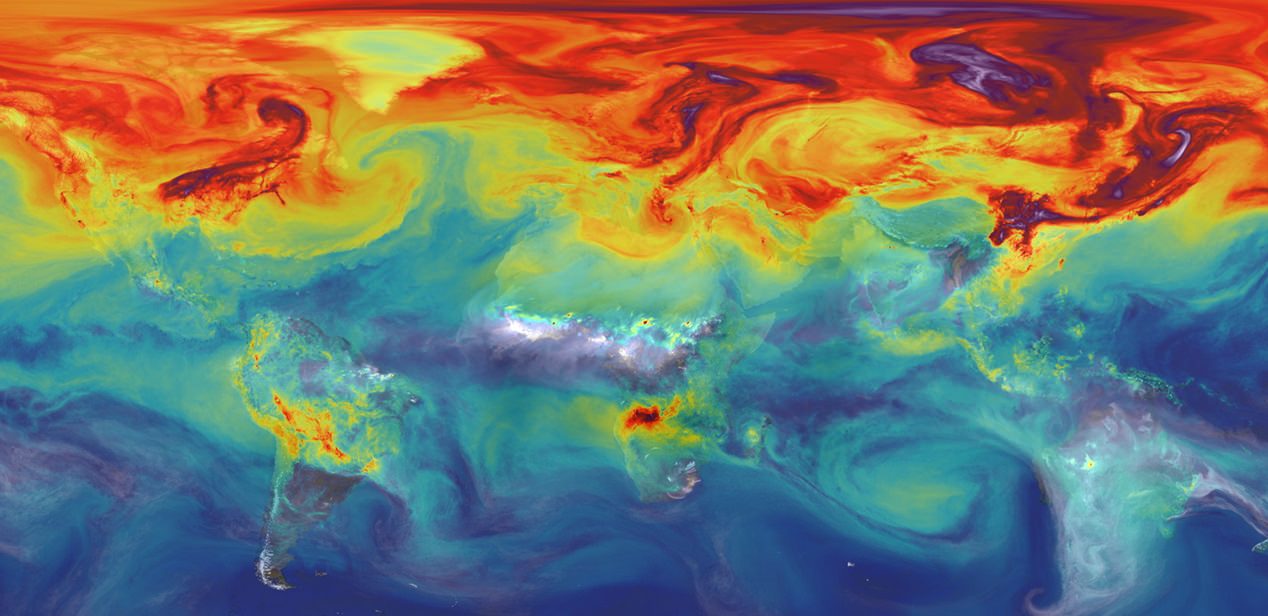
Carbon dioxide in Earth's atmosphere if half of global-warming emissions are not absorbed. Credit: NASA/JPL/GSFC
Artist's impression of the carbon dioxide that will be present in Earth's atmosphere if half of global-warming emissions are not absorbed. Credit: NASA/JPL/GSFC
“My guess is that it would be difficult to stop all ongoing Nasa programs but future programs should definitely be placed with other agencies," he said in an interview with the Guardian in late November. "I believe that climate research is necessary but it has been heavily politicized, which has undermined a lot of the work that researchers have been doing. Mr Trump’s decisions will be based upon solid science, not politicized science.”
From statements such as these, plus things said during the campaign that emphasized NASA's important role in space exploration, the general consensus has been that a Trump administration will likely slash funding to NASA's Earth Science Directorate while leaving long-term exploration programs unaffected. According to David Titley, who recently wrote an op-ed piece for The Conversation, this would be a terrible mistake.
Titley is a Professor of Meteorology at Pennsylvania State University and the founding director of their Center for Solutions to Weather and Climate Risk. In addition to being a Rear Admiral in the US Navy (retired), he was also the Chief Operating Officer of the National Oceanic and Atmospheric Administration from 2012–2013 and has been a Fellow of the American Meteorological Society since 2009.
As he noted in his piece, NASA's Earth science and Earth observation efforts are vital, and the shared missions they have with organizations like the NOAA have numerous benefits. As he explained:
"There’s a reason why space is called 'the ultimate high ground' and our country spends billions of dollars each year on space-based assets to support our national intelligence community. In addition to national security, NASA missions contribute vital information to many other users, including emergency managers and the Federal Emergency Management Agency (FEMA), farmers, fishermen and the aviation industry."
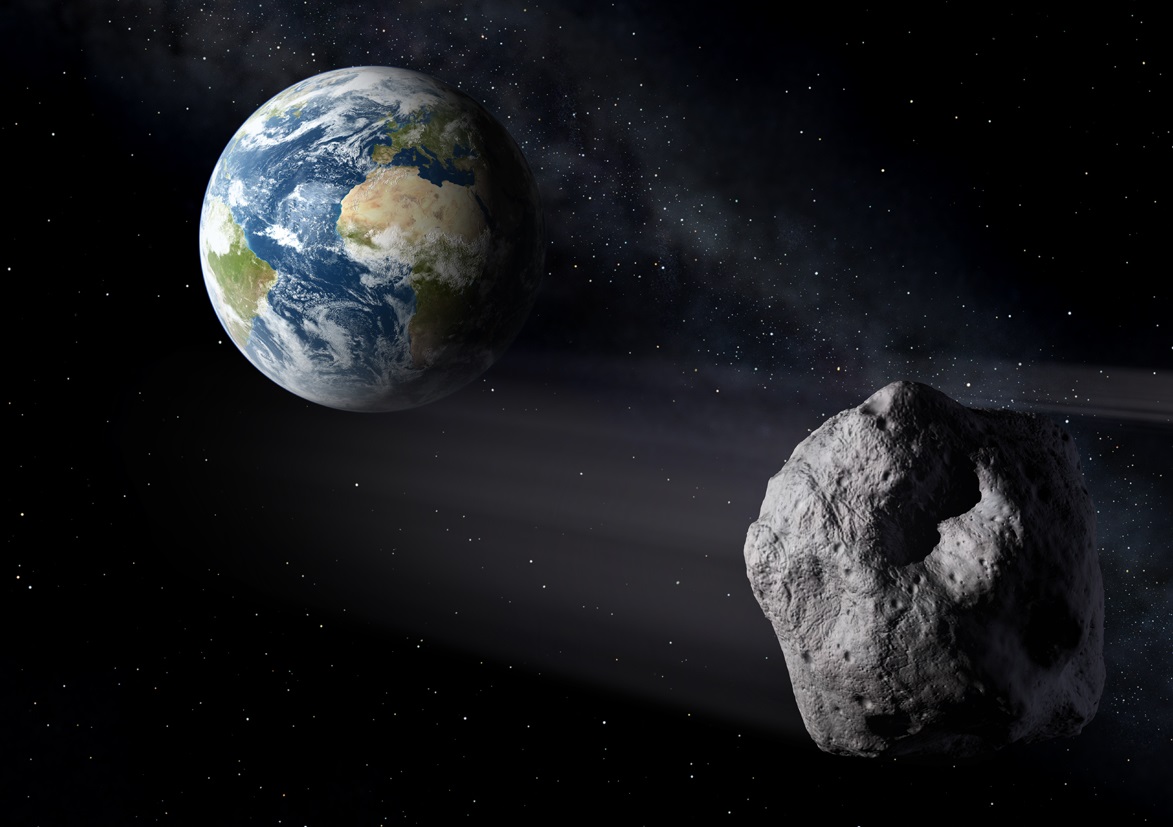
An artist's conception of an asteroid passing near the Earth. NASA is getting better at spotting them and giving us advance warning of their approach. Image credit: ESA.
In the past, NASA's Earth Science Directorate has contributed vital information on how rising temperatures could affect water tables and farmlands (such as the ongoing drought in California), and how changes in oceanic systems would affect fisheries. On top of that, FEMA has been working with NASA in recent years in order to develop a disaster-readiness program to address the fallout from a possible asteroid impact.
This has included three tabletop exercises where the two agencies worked through asteroid impact scenarios and simulated how information would be exchanged between NASA scientists an FEMA emergency managers. As Melissa Weihenstroer - a Presidential Management Fellow in FEMA's Office of External Affairs and who works with NASA's Planetary Defense Coordination Office - recently wrote about this inter-agency cooperation:
"Since FEMA doesn’t have direct experience with asteroids or their impacts, we’ve turned to some people who do: our partners at the National Aeronautics and Space Administration (NASA). While FEMA will be the agency in charge of the U.S. government efforts in preparing for and responding to any anticipated asteroid-related event here on Earth, NASA is responsible for finding, tracking, and characterizing potentially hazardous asteroids and comets while they are still in space.
Whenever a transition occurs between one presidential administration and the next, there is always some level of concern about the impact it will have on federal organization. However, when an administration is unclear about its policies, and has made statements to the effect that federal agencies should cease conducting certain types of research, NASA can be forgiven for getting a little nervous.
In the coming years, it will be interesting to see how the budget environment changes for Earth science research. One can only hope that a Trump administration will not see fit to make sweeping cuts without first considering the potential consequences.

Mitra-mandal Privacy Policy

This privacy policy has been compiled to better serve those who are concerned with how their  'Personally Identifiable Inform...