MITRA MANDAL GLOBAL NEWS

IN THE WORLD


US Secretary of State John Kerry.  Archival photoKerry: Any US administration will adhere to NATO obligations
US Secretary of State noted that the majority of both major US parties committed to NATO and its principles.
21:34
06/12/2016
019
Flag of Israel.  Archival photoIsrael criticized the election of the Central Committee of Fatah, Barghouti
Former leader of the military wing of Fatah received the most votes in the elections held on Sunday in the Central Committee of the movement led by Palestinian President Mahmoud Abbas.
21:30
06/12/2016
05
Views of the City of Rome.  Archival photoCS Italy will discuss the question of the constitutionality of the new electoral law
The meeting will take place on 24 January. This date is crucial to understand when the new campaign can begin in the country.
21:22
06/12/2016
020
Polish police.  Archival photoResident of Poland faces prison for the false report about a bomb on board the aircraft
About a bomb on board the plane said the 64-year-old resident of Poland who, according to media reports, was in a state of alcoholic intoxication.
21:20
06/12/2016
04
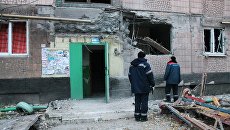
Residential house, injured by gunfire Ukrainian law enforcers.  Archival photoKiev insists on a speedy resolution of security issues in the Donbas
Topic: Peace negotiations in Ukraine in 2016
Also, the Ukrainian side insists on the release of prisoners.
21:17
06/12/2016
0252
United Kingdom.  Archival photoOn Brexit for hearing in the Supreme Court of Britain were opponents Mae
Before the British High Court judges on the second day of hearings were public prosecutor of Northern Ireland and the lawyer opponent Gina Miller government.
21:06
06/12/2016
015
The situation in the Donbass.  Archival photoKiev reported by law enforcement officers who died during the war in the Donbas
The plot: The situation in Ukraine. December 2016
Since the start of military operations in the Donbas killed more than three thousand Ukrainian security officials said the country's chief of staff Viktor Muzhenko.
21:01
06/12/2016
020627
Sweden.  Archival photoIn Sweden, a citizen of Iraq was given six months in prison for desecrating the bodies of enemies in war
The court's decision is the first case in Sweden, where deprivation of liberty shall be appointed for the desecration of the bodies of the dead in war.
20:51
06/12/2016
0376
The situation in the Lugansk and Lugansk region.  Archival photoLC authorities intend to reduce the negative effects of the "water blockade"
The plot: The situation in the DNR and LNR. December 2016
LC authorities will do everything possible to residents and businesses LC minimally affected by "water blockade" from Kiev, said the head of the self-proclaimed Republic Igor Carpenter.
20:38
06/12/2016
053
US President-elect Donald Trump.  Archival photoRomney and Giuliani are in contact with Trump about the Secretary of State post
Once the president will make his choice, he will announce about it, said the representative of the interim administration.
20:35
06/12/2016
0132
British Prime Minister Theresa May.  Archival photoMei is ready to publish on Brexit plan to prevent a split in the party
Plot: The referendum in the UK on the issue of exit from the EU
The Government accepted the proposal of the Labour Party to support the plan of the British prime minister to run Brexit process by the end of March next year.
20:33
06/12/2016
0138
The meeting of the contact group on Ukraine in Minsk.  Archival photoSafety Subgroup in the Donbass completed its work in Minsk
Topic: Peace negotiations in Ukraine in 2016
A spokesman for Pushilin also reported that at the meeting of the subgroup on Tuesday discussed the investigation into the shelling of Makeyevka on October 27 in which two people were killed and ten were wounded.
20:24
06/12/2016
0155
Deputies at the session of the Verkhovna Rada of Ukraine in Kiev.  Archival photoRada on Thursday will consider the issue of depriving immunity Novinsky
The plot: The situation in Ukraine. December 2016
Ukrainian Parliament Speaker Andrew Paruby believes that no one member has no right to "hide behind immunity", and each citizen must prove his innocence in court.
20:23
06/12/2016
0178
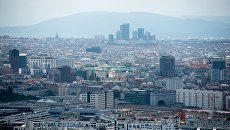
Austria.  Archival photoThe Austrians are in favor of lifting the sanctions with Russia, the survey showed
The researchers interviewed 800 people online over 16 years in the period from 21 to 28 October.
20:19
06/12/2016
0725
Russian President Vladimir Putin.  Archival photoDeputy Foreign Minister discussed with the Ambassador of Japan preparing Putin's visit to Tokyo
This was reported by the Foreign Ministry.

20:02
06/12/2016
028
Employees of Ukrainian police in Kiev.  Archival photoAfter the shooting, in the Kiev region of the service was suspended 25 policemen
The plot: The situation in Ukraine. December 2016
At the time of the accident investigation was suspended three heads of departments and staff of the Kiev police.
20:02
06/12/2016
0231
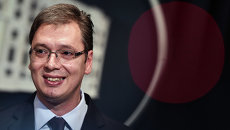
Serbian Prime Minister Aleksandar Vučić.  Archival photoSerbian Prime Minister informed about the possibility of new parliamentary elections
The Prime Minister of Serbia Aleksandar Vučić does not exclude the probability of appointment of early parliamentary elections simultaneously with the upcoming presidential elections in the spring of 2017.
19:59
06/12/2016
072
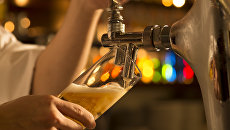
The barman pours beer into a glass.  Archival photoIn Belgium, the beer brewed in honor of Santa Claus
Beer "Pere Noel" features a orange and banana-caramel-pear flavor.
19:56
06/12/2016
096
The checkpoint near the village of Marinka.  Archival photoPPC Work "Marinka" in the Donbass renewed
Earlier Tuesday, the Ukrainian border guards said the closure of the CPT "Marinka" because of the shelling.
19:46
06/12/2016
018
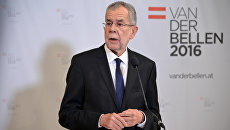
Winning the presidential elections in Austria, the former leader of the Greens, Alexander Van der BellenVan der Bellen described the results of the elections in Austria
According to him, the results of the presidential elections in Austria have shown the demand for coexistence across Europe.
19:45
06/12/2016
0234

Europe to Decide on Use of Mercury in Dentistry

UNITED NATIONS, Dec 6 2016 (IPS)

Three major European institutions, namely the European Commission, Parliament and Council, are due to meet on 6 December to discuss regulations on mercury, particularly its use in dentistry.
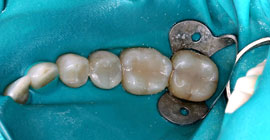
Mercury fillings removal
Mercury makes up 50 percent of amalgam, which is commonly used for dental fillings. Europe is currently the world’s largest amalgam user.
A coalition of over 25 international non-governmental organisations launched a global campaign in July to end the use of mercury in dentistry, citing health and environmental risks.
“Mercury is globally one of the 10 chemicals of major public health concern, yet the Commission proposes we maintain the status quo,” said Health Care Without Harm Europe’s Chemicals Policy Advisor Philippe Vandendaele
Amalgam is often the largest source of mercury releases in municipal wastewater and is also an increasing source of mercury air pollution from crematoria.
Mercury entering water bodies can contaminate fish and other animals, further exposing consumers to dangerous levels of secondary poisoning.
Though direct health risks from amalgam are still uncertain, mercury is known to cause damage to the brain and nervous system of developing fetuses, infants and young children.
As a result, the European Commission’s health advisory committee recommended a ban on mercury-based fillings in children and pregnant women.
“An ambitious regulation is needed to reduce the use of mercury in the European Union and phase it out of dentistry…over 66 percent of dental fillings in the EU are now made without mercury and it is now time that this becomes the norm,” said European Environment Bureau’s Elena Lymberidi-Settimo.
The European public also voiced their concerns over amalgam.
Following consultations, the European Commission found that 88 percent of participating Europeans recommended to phase out the toxic material while 12 percent called for its use to be phased down.
Some countries such as Sweden, Norway and Denmark have already banned or restricted the use of mercury-based dental fillings.
“European dentists know the end is near for amalgam. Alternatives are available, affordable, and effective. It is time for Europe to say good-bye to amalgam, a material clearly inferior to composite or ionomers,” said German Dentist Hans-Werner Bertelsen.
Composites and ionomers are both alternative dental restorative materials that use various glass and plastic compositions.
There is a growing consensus on the issue within the European Parliament as members have received over 17,000 signatures on petitions calling to ban amalgam in Europe.
According to the United Nations Environment Programme (UNEP), the use of mercury in tooth fillings represents approximately 10 percent of global mercury consumption, making it the largest consumer uses of mercury in the world.

Putin's Russia seeks to project power with modern military


A massive reform effort launched in the wake of Russia's 2008 war with Georgia has transformed a crumbling, demoralized military into agile forces capable of swift action in Ukraine and Syria. Long gone are the days when Russia was forced through financial hardship to scrap dozens of warships and ground most of its air force. Whereas many young men long dodged their obligatory military service, recruits today speak of extending assignments in a better equipped, trained and paid army.
"The military reform has given Russia, the Kremlin (and) Mr. Putin a usable instrument of foreign policy which Russia did not have for a quarter century," said Dmitry Trenin , director of the Carnegie Moscow Center think tank.
This dawning reality casts a shadow from Moscow to Washington and beyond. The key question: Will an emboldened Putin keep deploying his forces in bitterly disputed unilateral actions, or could the U.S. election of Donald Trump mean a potential thaw in relations and new era of cooperation? Trump's nominee for national security adviser, retired U.S. Lt. Gen. Michael Flynn , has said he sees Russia as a possible military partner in Syria and elsewhere.
Putin's military power today stands in stark contrast to the dying days of the Soviet Union, when Russia inherited the bulk of the 4-million-strong Soviet army, conscript-heavy forces it could barely afford to feed.
Russia rapidly reduced those ranks to just over 1 million and then found itself struggling through much of the 1990s to defeat rebels in the breakaway republic of Chechnya. Russia's military has 1 million soldiers today.
During its five-day war with tiny Georgia, army units starved of new equipment for 15 years experienced chronic vehicle breakdowns, communications failures and friendly-fire casualties from inaccurate salvos. Incensed by those setbacks, Putin and military commanders committed to a program of radical restructuring and spending.
Perhaps the most important change today is in the caliber of the soldiers themselves. While all men aged 18 to 27 still face a mandatory year of military service, Russia increasingly is attracting volunteers for at least two years and building a culture emphasizing the military as a career.
While conscripts are paid a paltry 2,000 rubles ($31) a month, those signing contracts for longer tours of duty receive 10 times the starting pay and extra privileges. Promotion to sergeant could mean a monthly paycheck of around 40,000 rubles ($620), better than average civilian wages.
Russia's Defense Ministry says contract soldiers, most of them former conscripts who opt to stay, have outnumbered conscripts in the ranks since 2015. Moscow-based military analyst Pavel Felgenhauer said Russia's 2-year-old recession had weakened the jobs market and made it "much easier to recruit volunteer contract soldiers."
At a newly opened recruitment center in Yekaterinburg, the largest city in Russia's central heartland, officers in crisp new uniforms distribute colorful army leaflets and run computerized assessment tests on candidates.
"The military is getting stronger as the number of contract soldiers is rising," said Maj. Gen. Alexander Yarenko, who oversees the Yekaterinburg recruitment office. "Weapons are quite complex, requiring a high level of training."
Some recruits offer pragmatic reasons for joining, others gung-ho visions of adventure. "I have decided to sign the contract because it offers good prospects for the future, particularly for university graduates," said Vladislav Volkhin, a 22-year-old with a degree in information technology.
"Civilian jobs are routine, while military service is more colorful and interesting," said 21-year-old Dmitry Batalov, who holds a degree in finance and law but prefers to follow in the footsteps of his uncle, a special forces veteran who fought in Chechnya. Batalov said he hoped his career would involve "constant risk, the fight against evil, special operations."
The prospect of such deployments is real. Russia since 2014 has stoked tensions with the West in ways unseen since the Cold War. First came Russia's lightning seizure of Crimea from neighboring Ukraine, followed by surreptitious aid to pro-Russian rebels in the country's breakaway east. Next, Russia launched an air campaign in Syria in support of President Bashar Assad and against American-backed rebel groups as well as their shared Islamic State foe.
In the past month Russia's sole aircraft carrier, the Admiral Kuznetsov , has joined land-based aircraft in bombing targets in Syria — the first attacks mounted by carrier in Russia's history. Russia is using the Syria campaign to test several new designs of cruise missiles, fighters, bombers and helicopter gunships in combat for the first time.
At the start of the decade, the Kremlin pledged to spend 20 trillion rubles (more than $300 billion) on defense through 2020, a commitment unaltered by Russia's slide into recession under the twin weight of weak oil prices and Western sanctions imposed because of the Ukrainian fighting.
Last year alone, Russia spent a record 3.1 trillion rubles ($48 billion) on defense, 25 percent higher than in 2014 and more than a fifth of Russia's entire budget. Russian forces received 35 nuclear-tipped intercontinental ballistic missiles, more than 240 warplanes and helicopters, and nearly 1,200 tanks and other armored vehicles — a growth in Russia's arsenal unseen since Soviet times.
Analysts warn that Putin's forces could be poised to act more freely in Syria, Ukraine or elsewhere in expectation that Trump will prefer to cut deals with Russian interests, not confront them. Trenin said the prospect of personal rapport between Trump and Putin "could mean a better way to manage a fairly difficult relationship."
Felgenhauer noted the irony that, regardless of whether the West might meaningfully push back, Russia's top brass can cite any opposition to its actions as justification for even higher defense spending.
"The Russian military," he said, "has a vested interest right now in having more and more confrontation with the West."
Associated Press reporters Dmitry Kozlov in Yekaterinburg, and Kate de Pury and Veronika Silchenko in Moscow, contributed to this story.


Database helps Holocaust survivors reclaim Warsaw property

WARSAW, Poland (AP)


Claimants who fail to come forward by the deadline will forever relinquish their rights to any restitution, with the city to assume permanent ownership of unclaimed properties. "There is now a very limited opportunity for some kind of justice for people who suffered so much," said Gideon Taylor, chair of operations for the World Jewish Restitution Organization, which created the database.
The new law, which entered into force in September, affects people who had property in Warsaw that they tried to reclaim after the war. At that time, the communist regime seized much of the prewar property, of Jews and non-Jews alike, making it impossible in practice for anyone to reclaim it until communism fell in 1989.
In the years since then, some original owners have reclaimed lost property in complicated legal proceedings, but it has been more difficult for the Jews who fled Poland and settled abroad. As the problem continues to fester, the city of Warsaw this year compiled a list of 2,613 street addresses that will be open to be claimed, but does not give the names of the original owners.
The new database matches the street addresses with the names found in historical records. Taylor says it's not clear how many of those properties were Jewish, but he believes a significant number must be because Warsaw was 30 percent Jewish before the war and Jews were well-represented in the professional and property-owning classes.
Before the war Poland was home to about 3.3 million Jews, the largest Jewish community in Europe and the second-largest in the world after the United States. Most of them perished in the Holocaust. Poland is the only European Union country that has so far failed to pass a national law that returns property to Holocaust survivors and the others dispossessed by the war or communism.
Online:
The World Jewish Restitution Organization

Merkel amid tough talk on migrants


Merkel, who ran unopposed, won 89.5 percent of delegates' votes at a congress of her Christian Democratic Union in the western city of Essen for a new two-year term. That was short of the 96.7 percent she won in 2014, but still a solid mandate as she prepares to seek a fourth term as chancellor in next year's German election.
The vote came after a speech in which she struck a decidedly conservative note, telling members that she wants to stem the influx of migrants and restrict use of face-covering veils such as the burqa and niqab. Those are rarely seen in Germany, and the CDU has concluded that an all-out ban isn't constitutionally feasible.
"Full veiling is not appropriate here — it should be banned wherever that is legally possible," she said, drawing loud applause. Germany saw about 890,000 asylum-seekers arrive last year. Many came after Merkel decided in September 2015 to let in migrants who were stuck in Hungary. The numbers have since declined sharply, but Merkel's "we will cope" approach to the migrant crisis has provoked discord within the CDU, which has seen a string of poor state election results this year.
"A situation like the one in the late summer of 2015 cannot, should not and must not be repeated," Merkel told delegates. While Merkel insists that Germany will continue to take in people who genuinely need of protection, her government has toughened asylum rules and declared several countries "safe" — meaning people from there can't expect to get refuge.
Merkel was also a driving force behind an agreement between the European Union and Turkey in March to stem the flow of migrants. Polls show a solid lead for the conservatives, although their support is still short of the 41.5 percent they won in Germany's 2013 election. They face new competition from the upstart nationalist Alternative for Germany party, which has thrived by attacking Merkel's migrant policies.
"The 2017 election will be more difficult than any election before, at least since German reunification," Merkel said, citing the "strong polarization of our society." Merkel told delegates that "parallel societies" won't be tolerated and advocated banning the wearing of full-face veils used by some Muslim women where that's possible. But she also hit out at anti-migrant and anti-government protesters who chant "We are the people!" or post hate messages on social media.
"Who the people are ... is something that we will all determine, not just a few, however loud they may be," she declared. The EU's longest-serving head of government has often said her aim is for Europe to emerge stronger from crises such as the debt troubles that afflicted the common euro currency.
"We must, in this situation ... first do everything so that Europe doesn't emerge even weaker from the crises than when it went in," she said. That "sounds modest, but let's not deceive ourselves, it is not," Merkel said, citing conservative icon and ex-Chancellor Helmut Kohl's maxim that European stability shouldn't be taken for granted.
Aside from unhappiness about her migrant policy, some party members are grumbling about what's perceived as a drift to the left during her 11 years as chancellor. "We have thrown a lot of Christian Democratic principles overboard," said Eugen Abler, a delegate from the southwestern state of Baden-Wuerttemberg, whose complaints included what he called "the downplaying of Islamization."
"The result: We are winning few voters on the left and we are losing a lot on the right," he added. Merkel said tough times demand tough decisions. "I have asked a lot of you because the times have asked a lot of us — I am well aware of that," she told her party. "And I cannot promise you that there will be fewer demands in the future, because we must do what the times demand of us."

Cazeneuve is France's new prime minister as Valls steps down


Valls resigned a day after announcing his candidacy in the wake of French President Francois Hollande's decision not to run for a second term. "I was a happy prime minister" despite challenges that included terror attacks, Valls said in a ceremony transferring power. "I leave in calm ... (because Cazeneuve) is a man of state."
"You are a friend, a brother," he added. Both men made clear that coping with bloody terror attacks and facing down threats bonded them as they worked hand-in-hand. Cazeneuve also praised the "friendship" between himself and Valls.
Valls hopes to unite Socialists and give the left a chance to stay at the Elysee Palace in France's two-round presidential election in April and May. Current opinion polls, however, suggest that the second round could pit Marine Le Pen, the leader of the far-right National Front, against conservative Francois Fillon.
The 53-year-old Cazeneuve is a close ally of Hollande and became a popular figure as the champion of measures tackling extremism. Cazeneuve, appointed interior minister in 2014, faced a series of attacks in France that claimed more than 200 lives since January 2015. In total, he championed three counterterrorism laws and one intelligence law. He has also been in charge of implementing France's state of emergency following the Paris attacks that killed 130 people in November 2015.
Cazeneuve said his three-fold goal as prime minister will be "to protect, progress, prepare the future." He acknowledged that his mandate will be short, but said "each day is useful. Each day counts."
Bruno Le Roux, the head of the Socialist group in Parliament's lower house, was appointed as France's new interior minister. Valls is the top contender in the primary next month for Socialist candidates and their allies but he will face tough competition from former Economy Minister Arnaud Montebourg and former Education Minister Benoit Hamon, who both back more left-leaning policies.
Valls is known for his outspoken, authoritarian style and his tough views on immigration and security. He has been harshly criticized by other party members after championing tough labor reforms and endorsing a controversial ban last summer on the Islamic "burkini" swimsuit.
Samuel Petrequin contributed to this report.

Mitra-mandal Privacy Policy

This privacy policy has been compiled to better serve those who are concerned with how their  'Personally Identifiable Inform...