MITRA MANDAL GLOBAL NEWS

Aleppo will eventually fall, but Syrian war will go on


By Samia Nakhoul | BEIRUT
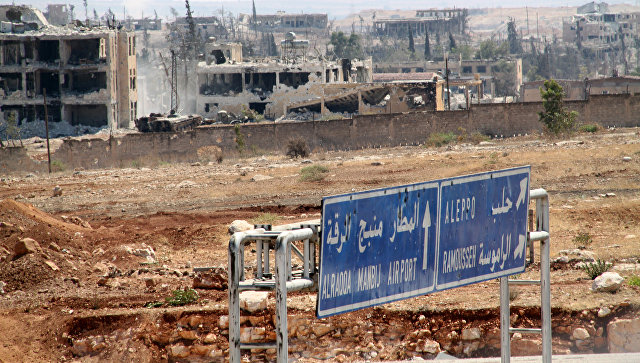
It may take weeks or months, but Aleppo is likely to fall to Syrian government forces backed by Russian air power and the most lethal bombardment in nearly six years of war.
Capturing the strategically important city, an economic and trading center which is key to controlling Syria's northwest, would be an important military triumph for President Bashar al-Assad and his Russian and Iranian allies.
It would be a crippling setback for the Western-backed Syrian rebels who, without quick reinforcements from their foreign backers, look set to be bombed out of their stronghold.
But the fall of Aleppo will not mean an end to the war, military and political analysts say.
Instead it is likely to give way to a long-term Sunni guerrilla insurgency in which the remaining moderate rebel groups, backed by the West and the West's regional allies, are driven into the arms of militant jihadis.
In a war with so many global and regional actors backing local clients, Assad will survive as leader of a shrunken, broken and fragmented country enduring the world's worst refugee crisis since World War Two.
"The Russians are doing in Aleppo and Syria what they did in Grozny -- it is the same", said Robert Ford, the U.S. ambassador to Syria in 2011-14, referring to the fierce bombardment that all but destroyed the capital of Russia's Chechnya region during Moscow's 1999-2000 war against Islamist separatists there.  
The opposition to Assad, he told Reuters, will "go from holding territory ... to being an insurgency, a guerrilla war, and that will continue a long time."
Syria's war began in 2011 after a popular uprising, against the Assad family's more than four-decade rule, that was inspired by the Arab Spring revolts across the Arab world.
The war, pitting rebels mostly from Syria's Sunni majority against a minority rule rooted in Assad's Alawite community, has killed more than 300,000 people. Half the population has been displaced and much of urban Syria has become a wasteland.
There have been moments during the conflict when it looked like Assad might be toppled. Russia sent its air force to bolster Iran-backed militias a year ago when Moscow and Tehran feared Assad was on the point of succumbing to rebel offensives.
The bombing of eastern Aleppo, with a pro-Assad force on the ground spearheaded by seasoned Iran-backed fighters such as Lebanon's Hezbollah and Iran's Revolutionary Guards, is meant to deal a decisive blow against the rebels.
ASSAD LUCKY WITH FRIENDS AND ENEMIES
Russian President Vladimir Putin and Iran's clerical leaders have not wavered in their support for Assad.
But the backers of the rebellion -- ranging from the United States to Turkey and the Gulf -- have been wary of being sucked into a Levantine quagmire and unnerved by concerns that Islamic State will fill the vacuum if Assad's rule implodes.
  Yet, despite the ferocity of the bombardment of eastern Aleppo, it may be too soon to count the rebels out.
Assad loyalist forces encircled the opposition enclave in July. But with manpower shortages, the Syrian army could not keep step on the ground with the Russian aerial assault. In August, rebels broke through government lines southwest of Aleppo, opening a corridor and briefly lifting the siege.
  As a harbinger of the future, the rebel counter-offensive was led by Nusra Front, the jihadi force that had just split from Al Qaeda and rebranded itself as the Jabhat Fateh al-Sham, or Front for the (Islamic) Conquest of the Levant.
Even while negotiating the terms of a short-lived ceasefire with Washington, Russia kept bombing the corridor south of Aleppo. When the brief break in hostilities ended, the intensity of the bombing increased.
The Russian and Syrian forces have been using much more powerful "bunker-buster" bombs, which residents of opposition-held areas say have the force to bring down entire buildings.
Western countries say Syria's government and its Russian allies are guilty of war crimes for targeting civilians, aid deliveries and hospitals. Moscow and Damascus say they target only militants and deny they have hit hospitals.
Despite the intensity of the bombing, the opposition are unlikely to stop fighting, not least because the Syrian establishment has left it nowhere else to go.
"Aleppo is not a turning point, not yet," said Ford, who is now a senior fellow at the Middle East Institute in Washington who has criticised U.S. President Barack Obama for failing to arm the mainstream rebels.
"It shows that the (Assad) regime is winning the war now but there will be no end to the war because the opposition will continue to fight," he said. "Aleppo will fall but it may not be quick, it may take one year but it will fall."
Rolf Holmboe, a former Danish ambassador to Lebanon, Syria and Jordan who is now a research fellow at the Canadian Global Affairs Institute, says Aleppo's fall would be devastating for the rebels, who have used it as a major hub throughout the war.
"The rebels will be isolated in enclaves. The regime will continue attacking one after another without difficulty," he said. "If Aleppo falls, it will be a strategic loss for the rebels ... Now there is no getting around the fact you have to make peace with Assad –- basically he would have won the war."
Holmboe considers it would be very difficult for the West or Turkey to resupply rebels in Aleppo -- even supposing they wanted to -- and that Russia and Assad have unleashed a two-pronged attack on eastern Aleppo.
  Like Ford, he drew comparisons with Russia's bombardment of Grozny.
CHANGING DYNAMICS
Crucial to the outcome of the war in Syria is the stance of external powers: how much they support their Syrian proxies and how they interpret their interests in a conflict with regional and global ramifications.
Russia and Iran not only want to salvage Assad but also hope to establish themselves as regional or global powers, though such goals leave Moscow with little way out of a conflict that could be a huge financial burden.
Under Obama, whose presidency ends in January, the United States seems to have more limited goals -- the main one being to drive Islamic State out of its strongholds in Iraq and Syria.
Washington's attention is divided, with the U.S. presidential election campaign nearing a climax and U.S. forces also focusing on driving IS out of Mosul and Raqqa in Iraq.
Gulf Arab countries, which supply weapons and funds to the Syrian opposition, have also been distracted -- by a war in Yemen against Houthi rebels aligned to Iran, their regional foe.
Ford said some regional powers could have more influence in Syria but no longer had the stomach for the war.
Jordan, he said, has all but shut down a supply route it ran for the so-called southern front of the rebel Free Syrian Army.
Turkey, which backs the Syrian rebels, is now preoccupied with halting Syrian Kurdish advances near its border. It has diverted its proxies away from Aleppo to fight Kurdish militia crossing west of the Euphrates river at the Syrian city of Jarablus, a move seen by some Syrian rebels as ruinous.
But it remains important for Ankara that the rebels are not defeated, not least because this could increase the flow of refugees to Turkey, which is already sheltering 3 million people who have fled the conflict.
Holmboe foresees the rebels becoming "isolated in various enclaves", with Assad in control of all big cities and "able to dictate a peace solution on his own terms".
"Maybe it's going to take five years, maybe it will take 10 years ... (but) he (Assad) will be the leader of a broken country," Ford said.
Sarkis Naoum, a leading Arab commentator, predicted a protracted conflict and the de facto partitioning of the country. But he suggested countries in the region would opt to increase their arming of rebel groups.
"The Gulf states are not pleased with the way things are going. They're willing to repeat the experience of Afghanistan," he said in reference to the 1980s when they supplied arms for the Mujahideen to fight the Soviet Union.
"For them this is the war of the century."
(Removes extraneous reference to Iraq in 31st paragraph.)
(Additional reporting by Maria Tsvetkova and Christian Lowe, Writing by Samia Nakhoul, Editing by Tom Perry and Timothy Heritage)

New Zealand drug smuggling ring linked to Asian crime gang: police


WELLINGTON, Oct. 5 (Xinhua) -- New Zealand law enforcement agencies have seized methamphetamine valued at 17 million NZ dollars (12.13 million U.S. dollars) after smashing an alleged drug smuggling ring linked to an Asian criminal gang.
Police and Customs said in statement Wednesday they had seized 17 kilograms of the drug along with jewelry worth 150,000 NZ dollars (107,910 U.S. dollars) and 200,000 NZ dollars (143,880 U.S. dollars) in cash after a seven-month joint investigation.
Three people had been arrested and charged with importing methamphetamine, supplying the drug and money laundering.
The importation was allegedly conducted by a member of the Thailand Chapter of the U.S.-based Bandido motorcycle gang.
Three men aged 54, 31 and 28 had appeared in Auckland's Manukau District Court and would next appear in October.
Police said they could not rule out the possibility of further charges as the investigation continued.
The drugs recovered were destined for the New Zealand market, Detective Senior Sergeant Albie Alexander, of the Police Organised Crime Unit, said in the statement.
"The seizure of such a substantial amount sends a clear picture that police will continue to work with our partner agencies to disrupt the supply chain and reduce the harm caused by this drug," said Alexander.

Hundreds evacuated as Colorado wildfire destroys parts of town

PUEBLO, Colo., Oct. 4 (UPI) -- Nearly 2,000 people have been evacuated in the past two days as a wildfire has surrounded the town of Beulah. Colo.
The Pueblo County Sheriff issued a stern warning to people in and near the town Monday night to evacuate while the fire died down overnight, based on concerns it could grow worse.
The grass fire has scorched 3,000 acres of the Beulah Valley and destroyed seven structures, though officials report there have been no injuries as a result of the blaze.
The fire was first reported just after noon on Monday, with evacuations slowly starting around 6 p.m. and increasing over the course of the following two hours to include the evacuation of more than 500 homes.
"I feel it is necessary to move people to safety while the routes are clear and the manpower is available," Pueblo County Sheriff Kirk Taylor said in a statement. "Waiting any longer means we may miss the best window we have, people may sleep through the critical evacuation message if we wait. Acting now is important to protect people. This fire is on both sides of the valley and if either flank moves toward the valley, we may lose lives."
The Pueblo County Health Department issued an air quality warning for residents remaining in the area to stay indoors if smoke decreases visibility, which is a primary indication of smoke becoming a threat to health.

PSYCHOLOGY PLAYS VITAL ROLE IN TACKLING DIABETES

Newswise — WASHINGTON - Individuals and families affected by diabetes must navigate a complex mix of medical, behavioral and social changes in which psychology plays an integral role, according to the flagship journal of the American Psychological Association.
In a special issue of American Psychologist® entitled “Diabetes and Psychology,” researchers review the current and potential contributions of psychological science to the well-being of people with or at risk of developing diabetes, including the role of family and social connections, changing technology, behavioral intervention programs and identification and treatment of mental disorders associated with diabetes itself.
“Diabetes is a common, chronic and costly condition that currently affects millions of people in the United States and worldwide, with even greater numbers at high risk for developing the disease,” said Christine Hunter, PhD, of the National Institute of Diabetes and Digestive and Kidney Diseases, part of the National Institutes of Health. “Behavioral, psychological and social factors play an important role in the delay or prevention of type 2 diabetes as well as the self-management and coping skills required to prevent or delay complications in both type 1 and type 2 diabetes. Psychologists and psychological research have an important role to play in improving the prevention and care of diabetes.”
Hunter was a scholarly lead for the issue along with Deborah Wiebe, PhD, of the University of California, Merced, and Vicki Helgeson, PhD, of Carnegie Mellon University.
Among the 10 articles in the special issue:
This article provides an overview of the scope of diabetes and the importance of psychologists for improving disease management and quality of life. It reviews the contributions of the behavioral and social sciences toward improved diabetes prevention and treatment and identifies opportunities for psychologists to close the gap in research and training to meet the challenges of diabetes today and into the future.
Contact: Christine Hunter hunterchristine@niddk.nih.gov
“The Social Context of Managing Diabetes Across the Lifespan,” by Wiebe, Helgeson, and Cynthia Berg, PhD, University of Utah.
People with diabetes must expend effort every day to manage their disease in order to maintain their health and well-being. Relationships with family, friends, romantic partners and health care providers provide an important context for managing diabetes. This article examines how these social resources change across the lifespan and how diabetes both affects and is affected by these key relationships at different points in life. The authors use two established psychological theories—interpersonal theory and self-determination theory—to identify aspects of family, partner, peer and provider relationships central to managing diabetes across the lifespan.
Contact: Deborah Wiebe dwiebe@ucmerced.edu
“Psychosocial Factors in Medication Adherence and Diabetes Self-Management: Implications for Research and Practice,”by Jeffrey Gonzalez, PhD, Yeshiva University and Albert Einstein College of Medicine; Molly Tanenbaum, PhD, Stanford University; and Persis Commissariat, PhD, Joslin Diabetes Center, Boston.
Managing diabetes requires a demanding treatment regimen involving multiple health behaviors, such as taking oral and/or self-injected medications, eating well, staying physically active and monitoring one’s blood glucose. This article examines the evidence for how select psychosocial factors, including knowledge and beliefs, emotional distress and well-being, and behavior skills and coping, can affect people’s ability to manage their diabetes.

Contact: Jeffrey Gonzalez jeffrey.gonzalez@einstein.yu.edu

“Psychological Conditions in Adults with Diabetes,” by Mary de Groot, PhD, Indiana University School of Medicine; Sherita Hill Golden, MD, Johns Hopkins University School of Medicine; and Julie Wagner, PhD, University of Connecticut Health Sciences Center.
The emotional and behavioral demands of managing diabetes, in conjunction with other life stressors, predispose adults with diabetes to develop multiple psychological conditions. This article summarizes the prevalence, impact and treatment of the primary co-occurring psychological conditions: depressive syndromes, anxiety disorders, disordered eating and serious mental illness.
Contact: Mary de Groot mdegroot@iu.edu
“Psychology, Technology and Diabetes Management,” by Linda Gonder-Frederick, PhD, Jaclyn Shepard, PsyD, Jesse Grabman, BA, and Lee Ritterband, PhD, University of Virginia.
Technological advances have fine-tuned patients’ ability to monitor blood glucose and administer insulin to themselves. For example, the artificial pancreas illustrates the potential of technology to simulate a tightly controlled, closed system. This article summarizes new developments in telemedicine, internet interventions and mobile applications, and explores theoretical models underlying human factors that influence individuals’ use of these new technologies.
Contact: Linda Gonder-Frederick lag3g@virginia.edu
“Evidence-Based Behavioral Interventions to Promote Diabetes Management in Children, Adolescents and Families,” by Marisa Hilliard, PhD; Priscilla Powell, PhD; and Barbara Anderson, PhD, Baylor College of Medicine and Texas Children’s Hospital.
As members of multidisciplinary diabetes care teams, psychologists are well suited to support youth with diabetes and their families. Psychological and behavioral interventions can help young people adhere to a complex and demanding diabetes care regimen. This article reviews contemporary behavioral interventions to promote more optimal diabetes family- and self-management, summarizes the evidence for established diabetes skills training programs and family interventions and introduces emerging evidence for technology and mobile health interventions and health care delivery system interventions.
Contact: Barbara Anderson bja@bcm.edu
The content is the sole responsibility of the authors and does not necessarily represent the official views or imply endorsement of the National Institutes of Health.
The American Psychological Association, in Washington, D.C., is the largest scientific and professional organization representing psychology in the United States. APA's membership includes more than 117,500 researchers, educators, clinicians, consultants and students. Through its divisions in 54 subfields of psychology and affiliations with 60 state, territorial and Canadian provincial associations, APA works to advance the creation, communication and application of psychological knowledge to benefit society and improve people's lives.

In Syria, a day recorded 51 ceasefire violations


Syrian army liberated territory from militants military school in Aleppo.  Archival photo
MOSCOW, Oct. 4 -. RIA Novosti During the day in Syria recorded 51 violation of the cessation of hostilities in the provinces of Aleppo, Damascus and Hama, according to the newsletter of the Russian Center for Reconciliation of the warring parties in Syria.
Syrian army liberated territory from militants military school in Aleppo.  Archival photo
The State Department experience "mixed feelings" because of the gap of cooperation with Russia
"During the day recorded 51 violation of the cessation of hostilities by illegal armed groups in the provinces of Aleppo (33), Damascus (12) and Hama (6)", - said in a statement posted on the Russian Defense Ministry website.
The seven-day deadline imposed in Syria ceasefire expired on 19 September.Package Russian-American agreements entered into force on 12th September.Russian Defense Ministry earlier said that the ceasefire on September 18 is observed only Syrian troops and fighters from the recorded violations.
The development of the situation - in a special project of RIA Novosti " The war in Syria " >>

In Russia, began the development of preliminary design of nuclear submarines of the fifth generation

In Russia, began the development of preliminary design of nuclear submarines of the fifth generation

Nuclear submarine.  Archival photo
MOSCOW, October 4 -. RIA Novosti Development of preliminary design of the fifth-generation Russian nuclear submarine has already begun, said Deputy Defense Minister of Russia Yury Borisov.
General Director of the St. Petersburg Marine Engineering Bureau Malachite Vladimir Dorofeev
Multi-purpose submarines 5 th generation will be developed until 2020
"If we talk on the newest submarines, that are currently under development pilot project promising fifth-generation nuclear-powered submarine, the results of which will decide on the date of its creation," - he said in an interview with the newspaper "Moskovsky Komsomolets" .
Earlier, the United Shipbuilding Corporation announced the start of work on the formation of appearance multipurpose nuclear submarines of the fifth generation "Husky" project, they will replace the submarine Project 885 "Ash", which are now being built and enter the combat strength of the Russian Navy.
So far we only know that the new multi-purpose submarine will be as unified with prospective strategic nuclear submarines, and on her arms will stand hypersonic missile "Zircon".

Science news-

The subglacial lake "East" in Antarctica have found an unknown bacterium

Research ship off the coast of Antarctica.  Archival photo
MOSCOW, Oct. 4 -. RIA Novosti is not known to science bacterium found in subglacial lake "East" in Antarctica, reported at the bottom of Science Head of Laboratory krioastrobiologii Peterburg University of Nuclear Physics named after Konstantinov Sergey Bulat.
So the artist imagined the process of analyzing the genomes of different creatures
Scientists from Russia have learned to quickly compare the DNA of different "sets" of microbes
"In the frozen water in the drill bit was found absolutely no bacteria known to us, it is called" w123-10 ", - Bulat told reporters.
According to him, the bacterium has 86% genetic similarity with known organisms, which, from the point of view of genetics, it is enough to speak about her absolute uniqueness.
"East" - a lake in Antarctica, which lies at a depth of four kilometers beneath the ice. Its existence was proved in 1994. Lake is a significant scientific value due to the fact that is the only one of its kind terrestrial analogue under-ice oceans on ice moons of Jupiter (Europa, Ganymede, Callisto) and Saturn (Enceladus).

Egypt police kill two Brotherhood leaders amid "anti-terror war"

CAIRO, Oct. 4 (Xinhua) -- The Egyptian police shot dead two leading members of the currently-outlawed Muslim Brotherhood group in a shootout earlier on Tuesday, the Interior Ministry said in a statement.
"Mohamed Kamal, a 61-year-old physician, one of the group's top leaders, and another leader Yasser Shehata, both were killed in the fire exchange," the ministry's statement said.
The police said the forces raided an apartment in Cairo's Bassateen neighborhood after learning it was used by the leaders as headquarters.
Kamal has been wanted over several charges including armed attacks and was twice sentenced to life in prison in absentia for establishing an armed group, the statement added, noting he has links with the assassination of the country's top prosecutor in mid-2015.
As for Shehata, he was also sentenced in absentia to 10 years in prison for assaulting a citizen and forcibly detaining him in the headquarters of the Freedom and Justice Party, the group's political wing, according to the statement.
The Brotherhood group has been designated as "a terrorist organization" in 2014, a year after the military ousted former Islamist president Mohamed Morsi and the police launched a massive crackdown on his loyalists that left about 1,000 of them killed and thousands more arrested.
Most of the group leaders, including Morsi himself and the group's top chief Mohamed Badie, are currently in custody over various charges including inciting violence to espionage.
Since Morsi's removal, growing anti-government attacks left hundreds of police and military men killed with a Sinai-based militant group loyal to the regional Islamic State (IS) group claiming responsibility for most of the attacks.
The liquidation of the two Brotherhood members came a few days after several anti-government attacks in the restive northern part of the Sinai Peninsula as well as the capital Cairo.
On Saturday, five police conscripts were shot dead by unknown gunmen while they were on their way back from vacation to their police central security department in Arish city of North Sinai province bordering Israel and the Gaza Strip.
A day later, also in Arish, four were killed and two others wounded in a blast that targeted an electricity company's vehicle, according to the Egyptian Interior Ministry.
Egypt's Deputy Prosecutor General Zakariya Abdel-Aziz survived an assassination attempt with a car bomb last Thursday in Cairo, and an emerging militant group calling itself "Hasm" claimed responsibility for the failed attempt in a statement circulated on social media.
Egyptian security forces have been launching massive anti-terror operations in North Sinai over the past three years, which killed about 1,000 militants so far and arrested a similar number of suspects.
The security raids in Sinai are part of the country's "war against terrorism" declared by then military chief and now President Abdel-Fattah al-Sisi following the fall of Morsi. Enditem

Iraq launches radio broadcast to Mosul residents ahead of offensive


BAGHDAD, Oct. 4 (Xinhua) -- Iraq launched a new radio station on Tuesday to help the residents of the city of Mosul to be safe during the upcoming major offensive aimed to free the city from Islamic State (IS) militants, the official television reported.
The radio station based in the town of Qayyara, some 55 km south of Mosul, will give instructions to the residents to guide them to safe zones and possible safe exit routes that will be decided by the security forces during the battles to free the city from the extremist IS militants, the state-run channel said.
The Radio of the Republic of Iraq will also provide emergency phone numbers for the residents to call if they need help, the channel said.
Iraqi Prime Minister Haider al-Abadi inaugurated the new radio station and sent a message to the people of Mosul saying "be ready, the promise (of liberation) is coming closer. Today you are closer than ever to get rid of oppression and injustice and of Daesh (IS group)."
Abadi called on the residents of Mosul to cooperate with the security forces, like the residents of the other freed cities and towns did, according to a statement issued by his office.
Mosul, about 400 km north of the Iraqi capital of Baghdad, is the second largest city in Iraq. The city has been under IS control since June 2014, when Iraqi government forces abandoned their weapons and fled, enabling IS militants to take control of parts of Iraq's northern and western regions.

Ukraine extends visa-on-arrival policy for Chinese citizens


KIEV, Oct. 4 (Xinhua) -- The Ukrainian government said on Tuesday it decided to extend the visa-on-arrival policy for Chinese citizens, which expired on Sept. 30.
"This decision will contribute to a significant intensification of bilateral relations with China, which is currently one of the important trading partners of Ukraine," the government said in a statement.
The new travel regime, which took effect on Oct. 1, will boost Ukraine's tourism industry and help the East European country attract overseas investment, the statement said.
It, however, gave no details on the expiration date of the fresh eased visa issuing rules.
According to the new rules, Chinese visitors could be issued visa on arrival not only at the Boryspil International Airport in Kiev, but also at the airport of Ukraine's southern Black Sea resort of Odessa.
As before, Chinese citizens can obtain 15-day Ukrainian entry visas upon their arrival if they have a document confirming the business or tourist purpose of the visit. The visa fee is about 100 U.S. dollars.
Ukraine has launched a pilot project to issue visas on arrival for Chinese citizens at the Boryspil airport in June.

Oklahoma Supreme Court strikes down abortion law


By Joseph Ax
Oklahoma's highest court on Tuesday struck down a law imposing restrictions on abortion providers, including a requirement that they take samples of fetal tissue from patients younger than 14 and preserve them for state investigators.
The law also set new criminal penalties for providers found to have violated abortion-related statutes as well as for anyone found to have helped a minor evade the requirement to obtain parental consent. In addition, the bill created a new, stricter inspection and licensing system for abortion clinics.
Legislators had said the fetal tissue section was aimed at capturing child rapists and that the lawwould protect women's health. But the New York-based Center for Reproductive Rights, which challenged the law in court, said it unfairly targeted doctors and facilities that perform abortions.
In a unanimous opinion, the nine-member Oklahoma Supreme Court found the law violated the state constitution's requirement that each legislative bill must address only "one subject." The rule, the court said, is designed to prevent legislators from including provisions that would not normally pass in otherwise popular bills.
The state unsuccessfully asserted that each part of the law addressed a single subject: women's reproductive health.
"We reject defendants' arguments and find this legislation violates the single subject rule as each of these sections is so unrelated and misleading that a legislator voting on this matter could have been left with an unpalatable all-or-nothing choice," Justice Joseph Watt wrote for the court.
In a concurring opinion, four of the judges said they also would have struck down the law as an unconstitutional burden on a woman's right to have an abortion.
The state attorney general's office, which defended the law in court, did not immediately respond to a request for comment.
Center for Reproductive Rights President Nancy Northup said in a statement: "This law was nothing but a cynical attack on women's health and rights by unjustly targeting their trusted health care providers."
The law was passed in 2015, but the court had put it on hold while it considered the challenge.
Oklahoma's Republican-dominated government has been at the forefront of socially conservative states that have enacted abortion restrictions in recent years, most of which have been challenged in court.
In June, the U.S. Supreme Court struck down a Texas law imposing strict regulations on doctors and facilities that perform abortions. A similar law is on hold in Oklahoma while the state Supreme Court considers its legality.
(Reporting by Joseph Ax; Editing by Lisa Von Ahn)

Mitra-mandal Privacy Policy

This privacy policy has been compiled to better serve those who are concerned with how their  'Personally Identifiable Inform...