Authentic news,No fake news.


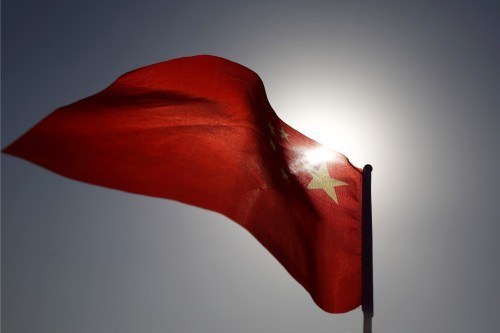
While the uncertainty around macroeconomic trends – including Brexit, the Trump win, and increasing globalisation efforts from China – may not bode well for the global economy, the African mining economy could well see favourable spin-offs. The conflicting views of the West and the East on economic globalisation could well present an opportunity for Africa.
Despite continuing uncertainty in the South African mining industry as a result of persistent regulatory insecurity, labour unrest and poor infrastructure, the different global headwinds could potentially drive foreign direct investment in the mining sector in Africa and the development of infrastructure in particular.
China is currently Africa’s largest trading partner, a relationship that is largely fueled by its insatiable appetite for energy and minerals. South Africa, in particular, is China’s largest trading partner, and has solidified this position with significant encouragement for Chinese investment into various industries, including mining, beneficiation and manufacturing. The strong Chinese appetite for investment in South Africa and Africa in general, coupled with President Donald Trump’s introspective attitude and intention to focus on the United States, could see China seeking to recoup losses with further African investments.
Changing approaches in the East and West
Developments over the past six months have seen a strong shift in the West towards greater introspection and nationalist agendas. Brexit is aimed at isolating the United Kingdom from the European Union in an attempt to, among other things, regain control over trade and immigration policy. And Trump has shocked the world by following through with many of the plans espoused during his election campaign.
In stark, and surprising contrast, China, the largest developing country in the world and the second largest economy, has opted to take a strong stance in favour of globalisation, in particular, economic globalisation. This stance, evident in China’s approach to investment, was further cemented by China’s President Xi during his speech at the World Economic Forum in Davos last month. Xi acknowledged the controversy which economic globalisation is facing but stated that “we should adapt to and guide economic globalisation, cushion its negative impact, and deliver its benefits to all countries and all nations”.
Trump’s pro-America policies have included a strong stance taken against China and the import of Chinese goods into the United States. The controversial new president has even gone so far as to call China “Public Enemy Number One”, sparking fears of a trade war in that tariffs would be introduced for Chinese imports.
However, despite Trump’s strongly expressed anti-China sentiments, his actions since taking office have actually benefited the Asian economic powerhouse. One of the first things Trump did was to ensure that the United States formally withdrew from the Trans-Pacific Partnership (TPP) with immediate effect. The TPP was intended to be a trade agreement between Australia, Brunei, Canada, Chile, Japan, Malaysia, Mexico, New Zealand, Peru, Singapore, Vietnam and the United States. This agreement purposely excludes China and is aimed at, among other things, promoting economic growth, good governance and labour and environmental protections in the member states. The United States’ decision to pull out of the TPP is a major blow to the agreement, and creates a trade lacuna in Asia which China will no doubt move to fill.
While it is still early days in the Trump regime, and a tumultuous period in global economic activity, China’s strong supportive stance on economic globalisation and its clearly articulated and executed intentions to invest in Africa, in particular South Africa, bode well for the future of the local mining industry. Increased investment into the mining sector, beneficiation and manufacturing industries will only improve South Africa’s economy in the years to come.
In fact, it may be the fruits won from international instability that aid South Africa to fix certain domestic factors, and ensure prosperity and longevity of the mining industry.


Van der Merwe (right) is a partner and Howard (left) an associate with Baker McKenzie, South Africa
This article first appeared in without prejudice, DealMakers’ sister publication.


No comments:
Post a Comment