MITRA MANDAL GLOBAL NEWS

S. Korea to enforce mandatory two-week quarantine for all entrants from overseas

Authentic news,No fake news.

SEOUL, March 29 (Yonhap) -- South Korea will enforce a two-week mandatory coronavirus quarantine for all entrants from overseas starting in April, government officials said Sunday, amid a steady inflow of virus cases from abroad.
All entrants to the country, regardless of nationality, should stay in quarantine starting Wednesday, according to health authorities. Visitors without local addresses here should stay in government-designated facilities at their own expense.
The move came as around 40 percent of the latest new infections were from overseas, spawning concerns that a rise in imported cases has complicated the government's quarantine efforts.
"The government has decided to strengthen quarantine measures against entrants from foreign countries, as confirmed cases are growing in many countries and imported infections are on the rise," quarantine authorities said.
South Korea is currently enforcing both a two-week quarantine period and virus tests for all long-term arrivals from Europe, regardless of symptoms. Entrants from the U.S. were also required to self-isolate at home for two weeks.
The government said it will impose a two-week quarantine on all foreigners coming for short stays in an effort to effectively prevent entry for unimportant purposes, such as tourism
Exceptions will be applied to those coming to South Korea for public purposes and have specific visas such as diplomatic or public affairs visas.
The government will also advise entrants who have been here for less than two weeks to self-isolate.
South Korea reported 105 new cases of the coronavirus Sunday, bringing the nation's total to 9,583, including 152 deaths.
Of the new cases, 41 involved entrants from overseas -- 23 from Europe, 14 from the Americas and four from unidentified Asian countries. Accounting for 4.3 percent of the total, 412 imported cases have been reported so far, according to health authorities.
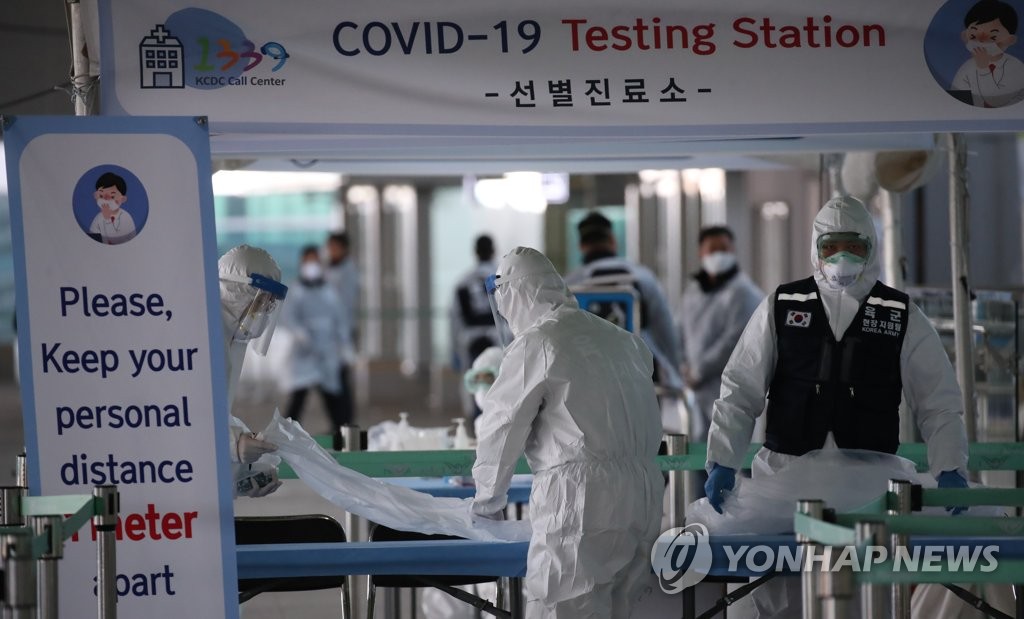
This photo, taken March 29, 2020, shows quarantine officials in charge of collecting samples from entrants for COVID-19 tests at Incheon International Airport, west of Seoul. (Yonhap)

N. Korea fires 2 short-range ballistic missiles into East Sea

Authentic news,No fake news.

SEOUL, March 29 (Yonhap) -- North Korea fired what appeared to be two short-range ballistic missiles toward the East Sea on Sunday, South Korea's Joint Chiefs of Staff (JCS) said, the latest in a series of projectile launches even as the country is on high alert against the coronavirus.
Both were fired northeastward from the eastern coastal city of Wonsan at 6:10 a.m. within a 20-second interval and flew around 230 kilometers at a maximum altitude of around 30 km, the JCS said, adding that South Korean and U.S. intelligence authorities are analyzing other specifics.
"In a situation where the entire world is experiencing difficulties due to COVID-19, this kind of military act by North Korea is very inappropriate and we call for an immediate halt," JCS said.
The military is closely monitoring the situation while maintaining a readiness posture, it added.
North Korea has carried out a series of weapons tests and artillery firing exercises this year. Except for small artillery firing drills, Sunday's launch is believed to be the North's fourth major weapons test this year.
The last such test came on March 21, when the North fired two short-range ballistic missiles believed to be its version of the U.S.' Army Tactical Missile System (ATACMS) from its western county of Sonchon in North Pyongan Province.
It is not immediately known if leader Kim Jong-un oversaw Sunday's firing, though the North's Korea Central News Agency (KCNA) had reported that the three previous tests this month took place under his watch.
The latest firing could be part of its artillery strike drill for the wintertime exercise, just as the previous three rounds, as military sources have said the exercise is likely to continue throughout this month.
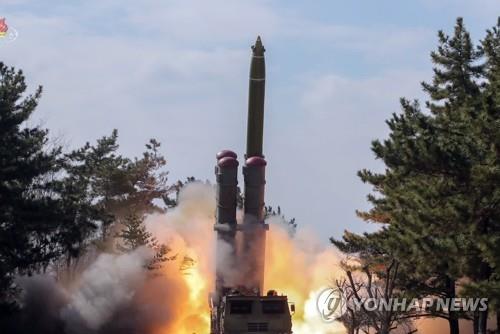
This image, aired by the North's Korean Central Television on March 3, 2020, shows what it said is a long-range artillery drill conducted the previous day. North Korea said leader Kim Jong-un inspected the drill, which South Korea said is presumed to have been a short-range ballistic missile test. (For Use Only in the Republic of Korea. No Redistribution) (Yonhap)
1 of 2
This image, aired by the North's Korean Central Television on March 3, 2020, shows what it said is a long-range artillery drill conducted the previous day. North Korea said leader Kim Jong-un inspected the drill, which South Korea said is presumed to have been a short-range ballistic missile test. (For Use Only in the Republic of Korea. No Redistribution) (Yonhap)
This photo captured from the homepage of the Korean Central News Agency on March 22, 2020, shows North Korean leader Kim Jong-un using binoculars to observe a test of a newly developed tactical weapon the previous day. (For Use Only in the Republic of Korea. No Redistribution) (Yonhap)
Sunday's firing seems to involve a super-large multiple rocket launcher, sources and experts said. If confirmed, it would mark the seventh test of the ground-based, solid-fuel weapon by the communist country so far, and the third launch this year.
During the March 2 test, the North launched two missiles presumably from the multiple rocket launcher from the Wonsan area toward the East Sea. They flew around 240 kilometers on an apogee of 35 kilometers.
Three projectiles of the similar type fired from its eastern town of Sondok on March 9 flew around 200 kilometers and as high as around 50 km, according to JCS.
A series of the tests were believed to have been aimed at enhancing its capabilities by shortening the firing interval of projectiles so as to make them hard to detect and intercept. Their gap, in fact, was greatly shortened over the course of the tests.
Some experts have said the North may have already put the launcher system into operational deployment, which is feared to serve as one of the most effective weapons aiming at its immediate neighbor, South Korea.
Experts and officials say the North's recent military moves appear to be primarily aimed at strengthening his grip on power amid fears of the spread of the COVID-19 virus and economic difficulties caused by the prolonged international sanctions regime.
The North has intensified efforts to contain the novel coronavirus, though the North has said it has not seen any confirmed case yet, a claim doubted by many.
Last week, North Korea revealed that U.S. President Donald Trump had sent a letter to Kim, offering assistance in the fight against the coronavirus. But Pyongyang has not responded to the U.S. offer, according to U.S. Secretary of State Mike Pompeo.
The North has also not reacted to the similar offer of inter-Korean cooperation on health issues made by South Korean President Moon Jae-in earlier this month, though Kim later sent a letter to Moon to console South Koreans fighting the virus and wish for their good health.
The latest firing came days after South Korea marked the 10th anniversary of the North's sinking of the South Korean warship Cheonan near the Northern Limit Line (NLL), the de facto inter-Korean maritime border, after a torpedo attack by its submarine. The attack killed 46 South Korean sailors.
During a ceremony to mark the fifth "Yellow Sea Defense Day" on Friday, President Moon Jae-in vowed unwavering efforts for peace on the Korean Peninsula, while stopping short of sending any direct messages to the communist country.
It was the first time that a sitting South Korean president has attended the ceremony designed to remember those killed in the Yellow Sea during three battles against the North's provocations in 2002 and 2010, including the Cheonan sinking.
Amid stalled denuclearization talks with the U.S. since the no-deal Hanoi summit in February last year, the North has called for boosting self-defense capabilities.
In his New Year's Day message, Kim Jong-un warned he will show off a "new strategic weapon" in the near future, which experts said may mean an advanced type of its intercontinental ballistic missile (ICBM) or an SLBM.
But it has not followed up on the threat, though it is banned from all ballistic missile activity under U.N. Security Council resolutions.

Singapore scientists study genes to fast-track coronavirus vaccine

Authentic news,No fake news.

SINGAPORE (Reuters) - Scientists in Singapore say they have developed a way to track genetic changes that speeds testing of vaccines against a coronavirus that has killed more than 16,000 people worldwide.

The scientists, at the city-state’s Duke-NUS Medical School, say their technique needs just days to evaluate potential vaccines provided by Arcturus Therapeutics, an American biotech firm the school has partnered with for the trials.
That timeframe compares with the months usually required for testing based on human responses.
“You can know from the way the genes change - what genes are turned on, what are turned off,” said Ooi Eng Eong, deputy director of the school’s emerging infectious diseases program.
Swift assessment of such changes triggered by a vaccine allows the scientists to determine its effectiveness and side effects, instead of relying solely on responses from humans who receive it, he added.
Currently, there are no approved medicines or preventive vaccines targeting the virus, with most patients receiving only supportive care, such as help with their breathing. Experts have said getting a vaccine ready could take a year or more.
Ooi said he planned to start testing vaccines in mice in about a week, with human trials expected in the second half of the year.
Pharmaceutical firms and researchers around the globe are racing to develop vaccines and treatments for the virus, which has infected more than 377,000 people.
These efforts include Gilead Sciences Inc’s experimental antiviral drug remdesivir and a plasma-derived therapy from Japan’s Takeda Pharmaceutical Co.
In a key step towards developing diagnostic methods, the Duke-NUS scientists helped culture the virus in late January, days after Singapore confirmed its first infection. That made it the third country, outside China, to culture the virus.
Slideshow (2 Images)
Another first was a test to detect virus antibodies even in those who had already recovered, crucial in containment efforts that have won global praise for Singapore.
From discovery to licensing, vaccine development in the past could take more than 10 years, but Ooi said science can now offer a much faster response.
“Everyone is racing ahead, but we are kind of writing the playbook as the game is being played,” he added

Scientists develop washable face mask filter

Authentic news,No fake news.

SEOUL, March  (Yonhap) -- South Korean scientists have developed a face mask filter that retains its protective properties even after being washed over 20 times, a research university said Tuesday.
The development by a team led by Kim Il-doo at the Korea Advanced Institute of Science and Technology (KAIST) comes as the country struggles with a supply shortage of protective masks amid worries over the spread of the new coronavirus.
The new filter, which can be placed inside regular cotton masks, is made of a nanofabric that is specially aligned for maximum protective qualities even after prolonged use.
Existing disposable masks lose their ability to filter out particles with time, especially if they come into contact with moisture and if they are washed.
Even after the mask is washed dozens of times with soap or submerged in an ethanol solution for three hours, its protective properties are retained.
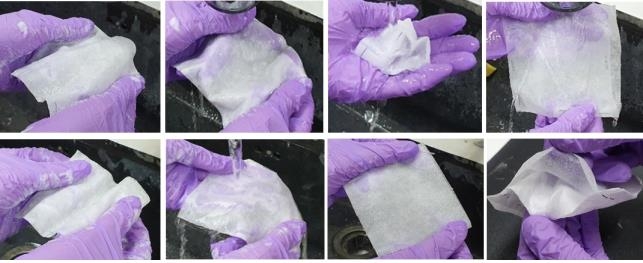
This photo provided by KAIST shows a new nanomaterial filter being hand-washed with soap. (PHOTO NOT FOR SALE) (Yonhap)
"After undergoing such a process, the filter retained its structure with its prospective properties remaining at 94 percent compared to when it was first used," KAIST said.
The new filter can be implemented in medium level KF80 masks as well as high grade N95 respirators that are in high demand by medical personnel. Even after the filtering material is folded and unfolded 4,000 times, the material retains KF80 grade protective qualities, it said.
KAIST said at present, Kim's team can churn out 1,500 filters a day at its lab, and if it gets approval from the Ministry of Food and Drug Safety, production capability could be ramped up.

Bangladesh Independence and National Day-

Authentic news,No fake news.

DHAKA, March 25, 2020 (BSS) – The Independence and National Day is tomorrow.
In the wake of the deadly novel coronavirus, the government has suspended all programmes of the day.
On the eve of the day, President M Abdul Hamid and Prime Minister Sheikh Hasina gave separate messages extending heartfelt greetings and warm felicitations to the countrymen living both at home and abroad.
Paying tributes to the martyrs and veterans of the War of Liberation at
the national mausoleum at Savar has been suspended.
Usually on that day, President M Abdul Hamid and Prime Minister Sheikh
Hasina place wreaths early in the morning as a mark of profound respect to
the memories of the martyrs. But this year, all programmes have been
suspended.
The day is a public holiday.
National dailies will bring out special supplements while Bangladesh
Betar, Bangladesh Television, private radio stations and television channels
will air special programmes highlighting the significance of the day.
Different political parties as well as socio-cultural and professional
organisations have also suspended all programmes to avoid public gathering
and maintain social distancing following the directives of the government as
well as the World Health Organization (WHO).
Every year, the March 26 brings the most tragic reminiscence of the
history’s blackest episode that heralded a nine-month bloody ordeal from the
night of March 25, 1971, achieving the long-cherished independence on
December 16 the same year at the cost of a sea of blood.
In the wake of the military crackdown, Father of the Nation Bangabandhu
Sheikh Mujibur Rahman, who became the undisputed leader of the then Pakistan
following the massive victory of his party, Awami League, in the 1970 general
elections, declared the independence of Bangladesh through the then EPR (East
Pakistan Rifles) wireless at 00-30 hours on March 26 (the night following
March 25) in 1971 at his historic Road-32 residence at Dhanmondi here.
The great leader also called upon the people to build up strong
resistance against the Pakistani barbaric occupation forces.
The Pakistani military junta, in a bid to stop the legitimate movement
of the Bangalees, arrested Bangabandhu on that night following his
declaration of independence.
Later, Bangabandhu was taken to the then West Pakistan where he had to
spend nine months in a dark condemned cell.
Bangabandhu wrote down the declaration of independence soon after the
Pakistani army cracked down on the fateful night of March 25, 1971.
The declaration of independence was soon put on air by wireless. The
declaration was first broadcast by Awami League leader MA Hannan from
Kalurghat Radio Station in port city of Chittagong on March 26, 1971.
However, on March 27, 1971, the then Major Ziaur Rahman announced the
proclamation of independence on behalf of great leader Bangabandhu Sheikh
Mujibur Rahman from the same radio station.
The Pakistani military junta in their monstrous outburst unleashed a
bloody holocaust breaking the silence of the night following March 25 in 1971
when they mercilessly killed hundreds of innocent sleeping Bangalees,
including teachers, students, police, soldiers, pedestrians and rickshaw-
pullers, here.
The nation soon launched the War of Liberation at the call of Father of
the Nation Bangabandhu Sheikh Mujibur Rahman in the early hours of March 26.
Bangladesh emerged as an independent and sovereign country on December
16, 1971 with the surrender of the Pakistani occupation forces, who killed
three million innocent civilians, perpetrated atrocities on two lakh Bangalee
women and burnt down lakhs of houses across the country during the nine-month
bloody war.

The Bangladesh cricketers donate half of monthly salary to battle coronavirus

Authentic news,No fake news.

DHAKA, March 25, 2020 (BSS) – The Bangladesh national cricketers came up with decision to donate half of their monthly salary to government fund in a bid to fight against coronavirus pandemic.
A total of 27 cricketers are donating half of their monthly salaries amongst which 17 players are in BCB contract list and remaining 10 players have played in the national team recently.
Bangladesh’s ODI captain Tamim Iqbal donates BDT 325,000, which is the
50 percent of his total monthly salary of BDT 650,000. Mushfiqur Rahim whose
month salary is BDT 620,000 donates BDT 310,000. Like them all of the players
are donating the 50 percent of their monthly salary.
Mashrafe Bin Mortaza who has recently gave up the ODI captaincy, also
were the 27 players who has recently played for the national team. As per
previous contract, Mashrafe’s monthly salary was BDT 450,000 form which he
donates BDT 225,000.
Senior players like Tamim Iqbal, Mushfiqur Rahim took their social media
handle to disclose the matter. Both of them however also gave a statement
through their facebook, which is almost same.
“The whole world is fighting against coronavirus pandemic. The outbreak
of coronavirus is also increasing in Bangladesh. We, the cricketers, are
trying to aware people in social media to take necessary steps to prevent
this pandemic,” the statement reads.
“But we believe we have many more things to do rather than just
increasing awareness among people. 17 players, who are in the central
contract of BCB, and 10 other players who took part in recent series for
national team; in total we are 27 cricketers giving half of our monthly
salaries to help against coronavirus. After excluding the tax the amount
might be approximately 25 lakh around,” it further reads.
“May be this fund is not that much compare to the fight against
coronavirus. But if we all together can contribute from our own position,
then in combined, it might be a bigger step to fight against coronavirus. If
we can take the responsibilities and try to make contribution wholeheartedly
rather than criticizing others, then we can win the war against coronavirus.
Everyone please stay home, stay safe. Be well and keep our country safe.”
Players are discussing with the BCB about where the donation should be
given as there is no official fund formed by the government yet for the
pandemic coronavirus, confirmed cricket operations manager Sabbir Khan.
Meanwhile, The Institute of Epidemiology, Disease Control and Research
(IEDCR) has confirmed that one more person has died of coronavirus (Covid-19)
infection in Bangladesh, taking the number of deaths from the disease in the
country to five.
As of Wednesday, the numbers of total infected people in Bangladesh
stand at 39. On Monday, Bangladesh government declared a 10-day shutdown,
effective from March 26 to April 4, to battle the spread of the coronavirus.
Both the private and public sectors, except emergency services, would
come to a temporary halt. Educational institutions will stay closed during
this period but banks will remain open to facilitate the financial
transaction for their clients.
At the same time, Bangladesh’s armed forces were deployed to assist the
administration in every divisional and district town to ensure that people
maintain social distance and are taking precautionary measures to prevent the
novel coronavirus from spreading further.

Ukraine plans to declare national emergency for 30 days due to COVID-19

Authentic news,No fake news.

So far, a state of emergency has been introduced in Kiev and several other Ukrainian regions
KIEV, March 25. /TASS/. Ukraine plans to introduce a national emergency in the country for 30 days due to the situation with the spread of the novel coronavirus (COVID-19), Ukrainian Prime Minister Denis Shmygal stated on Wednesday.
"The government will consider declaring a national emergency on the entire territory of the country for 30 days. All quarantine measures will be prolonged for 30 days," he said during a government session.
So far, a state of emergency has been introduced in Kiev and several other Ukrainian regions.
According to the Center for Public Health of the Ukrainian Health Ministry, as of March 25, there are 113 documented cases of the novel coronavirus in Ukraine. Four people have died. Quarantine has been introduced in the country from March 17 to April 3. Shopping centers, cafes, restaurants, gyms and other entertainment facilities have been shut. International and domestic transport service in Ukraine has been suspended.
In late December 2019, Chinese authorities notified the World Health Organization (WHO) about the outbreak of a previously unknown pneumonia in the city of Wuhan, central China. Since then, cases of the novel coronavirus - named COVID-19 by the WHO - have been reported in more than 150 countries, including Russia.
On March 11, the WHO declared the outbreak a global pandemic. As of now, over 410,000 people have been infected around the world and more than 18,000 have died. Russia has identified 658 cases, 29 patients have recovered. The Russian government has launched an Internet hotline to keep the country’s people informed about the coronavirus situation.

COVID-19 shrinks UN HQ staff but triggers innovation

Authentic news,No fake news.

by William M. Reilly
UNITED NATIONS, March 24 (Xinhua) -- The novel coronavirus has shriveled attendance
 at the UN headquarters to only essential individuals and even the UN chief is working
 partly from home, a UN spokesman said on Tuesday.
Stephane Dujarric, spokesman for UN Secretary-General Antonio Guterres, said there
 had only been about 130 swipes of identification cards through security turnstiles up 
until just before his usual mid-day briefing, compared to about 11,000 swipes before
 a work-at-home order was issued earlier in the month.
While Guterres works either in his 38th-floor office or his Upper East Side, Manhattan,
 official residence, Dujarric said many of those working in the headquarters are technicians,
 such as those facilitating his daily "virtual" video-teleconference briefings.
Even meetings of major bodies of the world organization -- such as the General Assembly
 or the Security Council -- have been postponed or adjustments made in how they
 are conducted, such as via video-teleconference or a change in procedure.
As an example, Dujarric said President Tijjani Muhammad-Bande of the General 
Assembly proposed how the General Assembly can take essential decisions
 while dealing with the pandemic.
Muhammad-Bande submitted a draft decision to the 193 member states that
 would enable the assembly to adopt essential decisions under a silence 
procedure if a plenary meeting is not practical due to the pandemic, said the spokesman.
Muhammad-Bande's proposal would authorize him to circulate a draft decision
 of the assembly to member states under an at-least 72-hour silence procedure, Dujarric said. If the silence is not broken, the decision would be considered adopted.
The proposal, in a draft decision, is itself under the silence procedure, until noon
 (U.S. Eastern Time) Friday.
Ahead of the virtual -- video teleconference -- meeting of the G20 leaders, also
 on Friday, the secretary-general wrote a letter to them, calling for decisive action
 on the current global health crisis.
Guterres called for a "war-time" plan, urging G20 leaders to step forward with a
 strong response package to address the various threats posed by COVID-19 to
 demonstrate solidarity with the world's people, especially the most vulnerable.
Dujarric listed some of the other actions by UN entities taking place around the
 world related to the COVID-19 crisis.
The UN Economic Commission for Europe (UNECE) is launching an "Observatory on
 Border Crossings Status due to COVID-19," which will gather updated information on
 border crossing limitations worldwide, he said. The aim is to ease the work of transport 
operators and preserve connectivity by keeping supply chains open as much as possible.
From Geneva, the High Commissioner for Human Rights, Michelle Bachelet, said that
 broad sanctions should urgently be re-evaluated in countries facing the COVID-19
 pandemic. These sanctions could have a potentially debilitating impact on the health 
sector and human rights.
With the pandemic, impeding medical efforts in one country heightens the risk for all,
 she said, and called for humanitarian exemptions to sanctions measures.
For his part, the secretary-general fully backs the high commissioner's sentiments,
 Dujarric said. "He has been in touch with a number of member states, including those 
who have imposed sanctions."
The secretary-general appeals to all members of the international community to
 facilitate and support Iran's efforts at this critical moment, the spokesman said.
The World Food Programme (WFP) is looking to pre-position buffer stocks of food or
 cash to provide at least three months of food assistance to vulnerable people in
 priority countries, Dujarric said.
The agency's main focus is to ensure that it has the resources in place to address
 the food and nutrition needs of 87 million people it plans to assist in 2020.
The WFP appealed to government partners to approve an estimated 1.9 billion U.S.
 dollars of contributions to the agency's food assistance programs. They are also
 asking for maximum flexibility in the way that resources are used, allowing for a 
dynamic response to the changing outlook.
The UN team in Kenya, led by the World Health Organization (WHO), has been
 working closely with the government in the response to COVID-19, the spokesman
 said. Experts from WHO have been integrated into the national COVID-19 technical
 and coordination committees since mid-January.
More than 20 UN staff members in Kenya have been seconded to government teams,
 including in the area of communication to help disseminate prevention messages at national
 and local levels.
UNICEF and other UN entities are also helping the government on emergency procurement
 while WHO is sourcing lab kits to increase stocks, he said.
With cases of COVID-19 now confirmed in the Democratic Republic of the Congo (DRC),
 the UN peacekeeping mission and the humanitarian community are mobilizing to support
 the government's response, the
 spokesman said.
Humanitarian Coordinator David McLachlan-Karr reported efforts undertaken to prevent the
 spread of the virus must apply throughout the national territory to help avoid a major health
 crisis.
In South Sudan, the UN peacekeeping mission in the country has put in place a seven-day
 freeze on staff traveling into the country as part of the efforts to prevent the spread of COVID-19, the spokesman said.
 Cargo flights into the country will continue.
Increased plant species composition creates more soil carbon, nitrogen

Authentic news,No fake news.

BEIJING, March 25 (Xinhua) -- Chinese researchers have disclosed that soil
 water content is improved when 
the plant species community composition is increased.
Soil water and nutrient resources are fundamental for the healthy development
 of agroforestry.
The researchers from the Xishuangbanna Tropical Botanical Garden under
 the Chinese Academy of Sciences hoped to examine the effects of the
 species composition of trees, shrubs and herbs on soil water and nutrients.
They measured the soil water and soil nutrient concentrations including 
carbon, nitrogen, kalium and calcium at six soil depths in a monoculture 
rubber plantation, four multi-species rubber agroforestry systems, and a tropical rainforest.
They found that the soil carbon and nitrogen increased as the plant species 
composition increased. And the soil water content also increased with the
 increased soil carbon and nitrogen.
However, the effects of plant species composition on the soil water content
 gradually changed from positive to negative, especially under the effects of 
herb species, which could accelerate soil water drainage and hence shorten
 the soil water residence time.
Thus the researchers concluded that the faster water infiltration and potentially
 higher flow of soil water in complex plant communities increased the risk and
 magnitude of mineral nutrient leaching.
Meanwhile, the increased plant composition decreased the concentration of
 soil nutrients, especially soil phosphorous, kalium and calcium.
The research, recently published in the journal Science of the Total Environment,
 is expected to be helpful for selecting suitable plant species by keeping the
 management of agriculture and forestry balanced

Mitra-mandal Privacy Policy

This privacy policy has been compiled to better serve those who are concerned with how their  'Personally Identifiable Inform...