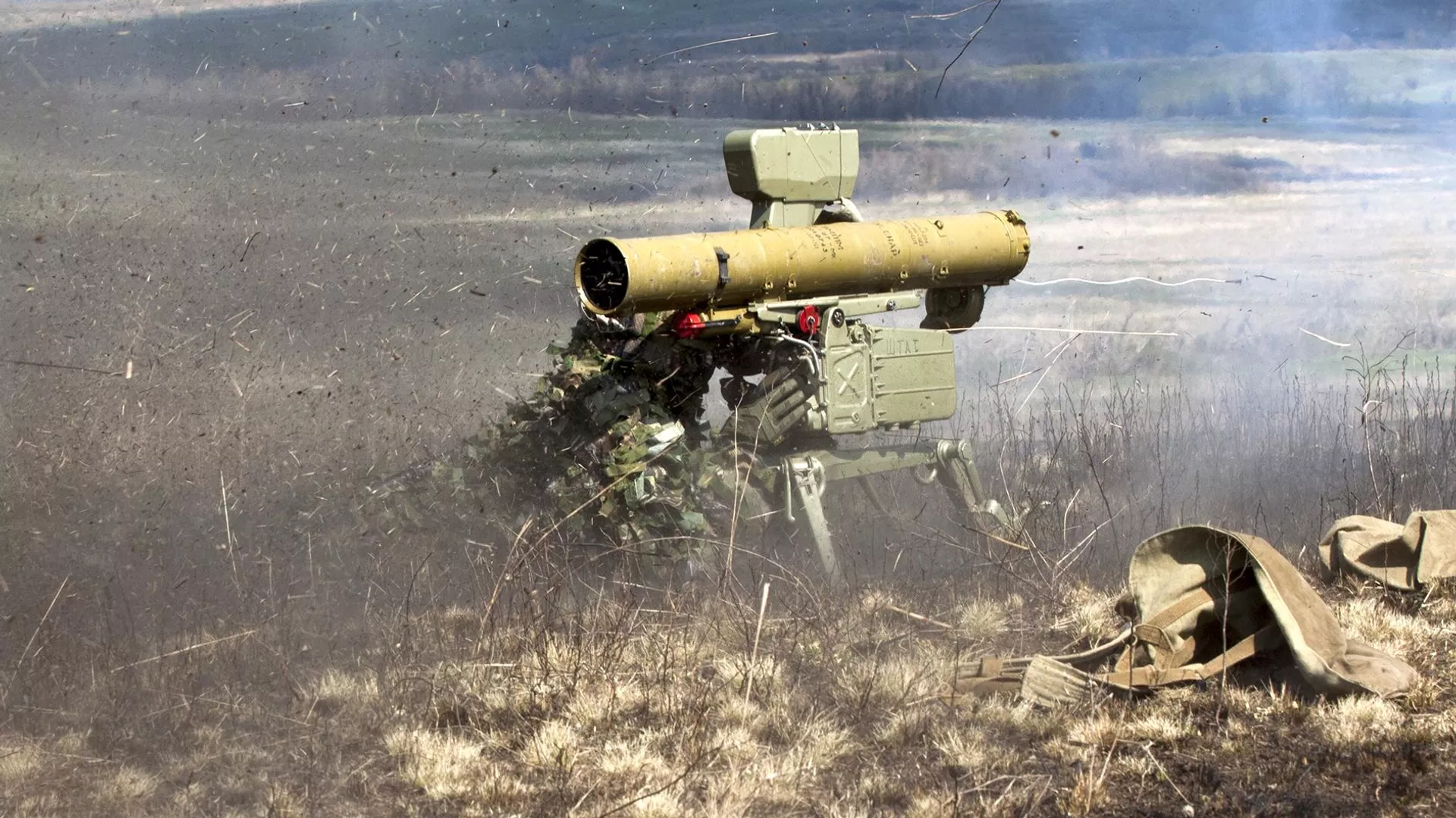
लड़ाकू विमानों ने वाहनों को चलाया


एक मानवीय निर्णय

महंगी और लंबी दूरी


SYDNEY (Reuters) - Facebook Inc (FB.O) on Tuesday said it would stop Australians sharing news content on its platforms if a proposal to make it pay local media outlets for their content becomes law, escalating tension with the Australian government.
Under Australia’s closely watched internet reform, the country will become the first to make the social media behemoth and Alphabet Inc’s (GOOGL.O) Google pay for news sourced from local providers under a royalty-style system.
Facebook’s plan to block the sharing of news on Australian user accounts, rather than pay royalties, puts the firm broadly in step with Google on the matter and pushes the prospect of an agreement with the government further out of reach.
“Assuming this draft code becomes law, we will reluctantly stop allowing publishers and people in Australia from sharing local and international news on Facebook and Instagram,” Facebook Australia Managing Director Will Easton said in a blog post, referring to two Facebook-owned platforms.
“This is not our first choice - it is our last. It is the only way to protect against an outcome that defies logic and will hurt, not help, the long-term vibrancy of Australia’s news and media sector”.
Australian Treasurer Josh Frydenberg on Tuesday said the proposed law was in the national interest, followed 18 months of public inquiry and would create a more sustainable local media industry where original content was paid for.
“We don’t respond to coercion or heavy handed threats wherever they come from,” Frydenberg said in an emailed response to Reuters’ request for comment.
Australian Competition and Consumer Commission (ACCC) Chair Rod Sims, who is overseeing the proposed law, said Facebook’s response was “ill-timed and misconceived”, and that the proposal “simply aims to bring fairness and transparency to Facebook and Google’s relationships with Australian news media businesses”.
“As the ACCC and the Government work to finalise the draft legislation, we hope all parties will engage in constructive discussions,” Sims said in a statement.
Bridget Fair, chief executive of Free TV Australia, a lobby group for free-to-air broadcasters, said Facebook’s plan amounted to “bullying” and that the U.S. firm would “say and do anything to avoid making a fair payment for news content”.
“Australian Facebook users are being held to ransom as a tactic to intimidate the Australian government into backing down on this issue,” she said in a statement.
The proposed law was “the only reasonable way to even up the bargaining power between Facebook, Google and Australian News Media Businesses,” Fair said.
Facebook’s Easton in his blog post called the proposed law “unprecedented in its reach”, and said the company could either remove news entirely or agree to pay publishers for as much content as they wanted at a price with no clear limits.
“Unfortunately, no business can operate that way,” he wrote.
Like in most countries, Australia’s traditional media companies in recent years have seen their mainstay advertising income streams eroded by online competitors, and consumers shy away from paid subscription.
Last month, Google began an advertising campaign using pop-up ads on its main search page that said its free service would be “at risk” and users’ personal data could be shared if the firm is made to pay news organisations for their content. The ACCC called the statements “misinformation”.
WASHINGTON (Reuters) - When the bones of the early armored dinosaur Scelidosaurus were unearthed in 1858 in west Dorset, England, they comprised the first complete dinosaur skeleton ever identified.
But aside from cursory papers by pioneering British paleontologist Richard Owen in 1861 and 1863 that incompletely described its anatomy, Scelidosaurus was long neglected despite the landmark nature of its discovery.
That has now changed, with the first thorough evaluation of its fossils finally giving Scelidosaurus its due - showing that
it had a unique anatomy and determining its place on the dinosaur family tree.
University of Cambridge paleontologist David Norman said Scelidosaurus, which lived about 193 million years ago, was an
early member of the evolutionary lineage that led to the dinosaur group called ankylosaurs. Ankylosaurs were so heavily armored - some even wielding a bony club at the end of their tails - that they are dubbed the tank dinosaurs.
There has been a long-running debate over whether Scelidosaurus was ancestral to another group called stegosaurs,
known for the bony plates on their back.
Scelidosaurus was a 13-foot-long (4-meters-long), four-legged plant-eater covered in spiky, bony armor. Its face was plastered in horny scutes, a bit like the face of a marine turtle. It was a moderately agile animal with defensive spines to deter predators.
“It has a lot of fascinating anatomy,” Norman said.
Scelidosaurus is among the earliest-known members of an even-larger dinosaur grouping called ornithischians and provides new insights into this group’s origins.
This individual was probably the victim of a flash flood and drowned in the sea, with its body becoming buried in sediment.
“This animal was discovered at a crucial time in the history of dinosaur research. It was given to the man (Owen) who
invented the name ‘dinosaur’ in 1842 and gave him a chance to at last demonstrate what dinosaurs really looked like.
Up until that moment dinosaurs had only been known from scraps of bone and some teeth,” said Norman, whose fourth research paper describing Scelidosaurus was published this month in the Zoological Journal of the Linnean Society of London.
“Curiously Owen did not describe it adequately and it has lain in the collection of the Natural History Museum in London - researchers knew of it by name but it was not at all well understood,” Norman added.
BEIJING, Sept. 1 (Xinhua) -- As the new school year starts, college students are returning to campus in Beijing under tight epidemic prevention and control measures.
Universities with preventive measures are allowed to reopen in a staggered schedule from Aug. 15 in Beijing, according to the Beijing Municipal Education Commission.
Since mid-August, over 170,000 college and university students have headed back to campus in Beijing, with around 10,000 returning to the city every day. By Monday, over 50 universities have opened for the new semester in Beijing, said the commission.
In Peking University, a variety of COVID-19 prevention and control measures are implemented to ensure safety. Students are required to take nucleic acid tests before returning to the campus and present a certificate based on their health conditions and whereabouts when registering.
The number of students returning to Beijing will hit 50,000 on Sept. 6, the highest single-day total.
-- Efforts must be made to build a new modern socialist Tibet that is united, prosperous, culturally advanced, harmonious and beautiful, Xi said at a high-level meeting on Tibet-related work.
-- Xi stressed a long-term commitment to the CPC Central Committee's policy to ensure Tibet has support from the central authorities and assistance from the whole country.
-- Work related to Tibet must focus on safeguarding national unity and strengthening ethnic solidarity.
-- More education and guidance should be provided for the public to mobilize their participation in combating separatist activities, thus forging an ironclad shield to safeguard stability.
BEIJING, Aug. 29 (Xinhua) -- President Xi Jinping has called for efforts to build a new modern socialist Tibet.
Xi, also general secretary of the Communist Party of China (CPC) Central Committee and chairman of the Central Military Commission, made the comments at the two-day seventh Central Symposium on Tibet Work, which ended in Beijing Saturday.
Xi underlined the need to fully implement the CPC's policies on governing Tibet for a new era.
Xi called for efforts to ensure national security and enduring peace and stability, steadily improve people's lives, maintain a good environment, solidify border defense and ensure frontier security.
Efforts must be made to build a new modern socialist Tibet that is united, prosperous, culturally advanced, harmonious and beautiful, Xi said.
Chinese President Xi Jinping, also general secretary of the Communist Party of China Central Committee and chairman of the Central Military Commission, speaks during a high-level meeting on Tibet work in Beijing, capital of China. (Xinhua/Li Xueren)
Since the sixth symposium in 2015, Tibet has made comprehensive progress and historic achievements in its various undertakings, Xi said, noting achieving sustained stability and rapid development in Tibet constitutes a major contribution to the overall work of the Party and the state.
Since the 18th CPC National Congress in 2012, policies on governing Tibet for a new era have taken shape, Xi said, stressing that the CPC leadership, the system of socialism with Chinese characteristics and the system of regional ethnic autonomy must be upheld to carry out work related to Tibet.
Work related to Tibet must focus on safeguarding national unity and strengthening ethnic solidarity, Xi said.
More education and guidance should be provided for the public to mobilize their participation in combating separatist activities, thus forging an ironclad shield to safeguard stability, Xi noted.
Xi stressed that patriotism should be incorporated into the whole process of education in all schools.
He called for continuous efforts to enhance recognition of the great motherland, the Chinese nation, the Chinese culture, the CPC and socialism with Chinese characteristics by people of all ethnic groups.
Tibetan Buddhism should be guided in adapting to the socialist society and should be developed in the Chinese context, Xi said.
While stressing the implementation of the new development philosophy, Xi noted that efforts should be sped up to advance high-quality development.
More work, measures and support are needed to consolidate the achievements made in poverty alleviation, Xi said.
Chinese President Xi Jinping, also general secretary of the Communist Party of China Central Committee and chairman of the Central Military Commission, speaks during a high-level meeting on Tibet work in Beijing, capital of China. (Xinhua/Rao Aimin)
A number of major infrastructure projects and public service facilities will be completed, including the Sichuan-Tibet Railway, Xi said.
Conserving the ecology of the Qinghai-Tibet Plateau is the greatest contribution to the survival and development of the Chinese nation, Xi said, emphasizing that scientific research should be further advanced on the plateau.
He also stressed strengthening the building of leadership teams at all levels, cadre teams and primary-level Party organizations in order to improve the capacity to respond to major struggles and prevent major risks.
Cadres and workers in Tibet should be cared for and supporting policies regarding their income, housing, medical care and retirement, as well as education for their children, should be further improved and well implemented, Xi noted.
Xi stressed a long-term commitment to the CPC Central Committee's policy to ensure Tibet has support from the central authorities and assistance from the whole country.
Continued and increasing support will be offered to Sichuan, Yunnan, Gansu and Qinghai provinces in their Tibet-related work, Xi said.
Other senior Chinese leaders were at the symposium, which was presided over by Li Keqiang. Li Zhanshu, Wang Huning, Zhao Leji and Han Zheng were in attendance, while Wang Yang spoke to sum up the event.
Xi's speech at the symposium is a guiding document on Tibet-related work in a new era, Li Keqiang said while presiding over the event.
In his concluding speech, Wang Yang also called for efforts to study Xi's speech, which laid out fundamental rules for carrying out Tibet-related work in a new era.■
This privacy policy has been compiled to better serve those who are concerned with how their 'Personally Identifiable Inform...