MITRA MANDAL GLOBAL NEWS

Bangladesh Deals with Triple Disasters of Flooding, Coronavirus and Lost Livelihoods

Authentic news,No fake news.


Manju Begum, 85, stands in front of her flooded house in Medeni Mandal in Munshiganj District, central Bangladesh. She says she has not received any assistance from local officials since her home was flooded more than a week ago. With nearly 5.5 million people people across Bangladesh affected by severe flooding, humanitarian experts are concerned that millions of people, already badly impacted by COVID-19, will be pushed further into poverty. Credit: Farid Ahmed/IPS

Manju Begum, 85, stands in front of her flooded house in Medeni Mandal in Munshiganj District, central Bangladesh. She says she has not received any assistance from local officials since her home was flooded more than a week ago. With nearly 5.5 million people people across Bangladesh affected by severe flooding, humanitarian experts are concerned that millions of people, already badly impacted by COVID-19, will be pushed further into poverty. Credit: Farid Ahmed/IPS

DHAKA, Aug 5 2020 (IPS) - With nearly 5.5 million people people across Bangladesh affected by severe flooding — the worst in two decades — humanitarian experts are concerned that millions of people, already badly impacted by COVID-19, will be pushed further into poverty.

With a third of the country under water, the National Disaster Response Coordination Centre in Bangladesh has reported that some 5.5 million people or nearly a million families were affected by the flooding as of Tuesday, Aug. 4.

The Health Emergency Control Room has recorded at least 145 deaths, mostly from drowning or snakebites, in 33 of the 64 districts affected by flooding.

In the past three days alone, two more districts were freshly inundated by heavy rains, affecting nearly half a million more people.

  • The United Nations Office for the Coordination of Humanitarian Affairs (UN OCHA) said in a Aug. 4 report that heavy monsoon rains in upstream regions continued to cause flooding in Bangladesh’s districts in the north, north-east and south-east, affecting some 5.4 million people.
  • June to August is typically the monsoon season here, but since the start of June heavy rains have resulted in many of the country’s rivers reaching levels classified as “dangerous”.
  • UN OCHA said the flooding had damaged houses, dykes, embankments, safe water sources and hygiene facilities and also adversely affected livelihoods, especially in the agricultural sector. It had also disrupted access to basic services such as health care and education.

Arif Hossain on his boat on a flooded street in Lohajang in District, central Bangladesh. The former tailor now earns a living from ferrying people on his boat. People across Bangladesh have been marooned, their homes damaged and crops destroyed by the floods. Credit: Farid Ahmed/IPS

Arif Hossain on his boat on a flooded street in Lohajang in District, central Bangladesh. The former tailor now earns a living from ferrying people on his boat. People across Bangladesh have been marooned, their homes damaged and crops destroyed by the floods. Credit: Farid Ahmed/IPS

“I have lost everything in the river Jamuna – my home, my croplands… it went under water so swiftly that I couldn’t save my belongings either,” Abdur Rahman from Sirajganj region, north-central Bangladesh said.

A number of low-lying areas in Sirajganj were affected by flooding when the Jamuna river levels rose in July, leaving hundreds homeless. The Jamuna and Padma rivers are two of the country’s main rivers. The Padma, the main distributary of the Ganges, also burst it banks last month. In several districts, school buildings, roads and other structures were destroyed.

It is not just Bangladesh that is affected. Flooding has wreaked havoc across a large part of South Asia. In Bangladesh, India, Nepal and Bhutan several million people have been affected and scores killed. Assam, Bihar and part of West Bengal were the worst-affected states in India.

“People in Bangladesh, India and Nepal are sandwiched in a triple disaster of flooding, coronavirus and an associated socioeconomic crisis of loss of livelihoods and jobs,” Jagan Chapagain, the secretary general of the International Federation of Red Cross and Red Crescent Societies (IFRC), said.

“Millions of people across Bangladesh, India and Nepal have been marooned, their homes damaged and crops destroyed by floods that are the worst in recent years,” Chaplain added.

He said the flooding of farm lands and destruction of crops could push millions of people, already badly impacted by COVID-19, further into poverty.

In Bangladesh, the worst affected are those who have become paupers overnight as they lost their homes, belongings and croplands.

In some districts, entire villages are under water, forcing people to leave their homes in search of safety while many were seen crouching on rooftops waiting for rescue. In the flooded northern districts in Bangladesh, it was a common sight of villagers marooned on the roofs of their houses along with their livestock or poultry while many others sought shelter on embankments or roads.

Arif Hossain from Munshiganj District, central Bangladesh, was a tailor by profession before the coronavirus pandemic. Now he spends his days ferrying people in the submerged locality on his small boat.

In central Bangladesh, major rivers continue to overflow, causing heavy flooding to ravage low-lying parts of the capital, Dhaka. In adjoining districts and northern parts of the country much of the population, who have already been affected by the coronavirus lockdowns, are in dire straits. Poorly-prepared relief operations have aggravated the plight of victims, triggering public anger and widespread criticism of the government.

“I haven’t received any kind of aid,” Hossain told IPS.

“Many people in the areas left the villages… those who have no place to go, like me, are staying here in homes that are already [flooded],” Hossain told IPS adding, “We’re staying in a room submerged in knee-deep water… my two children are always scared of snakes.”

  • The flooding is the second natural disaster that the country has had to deal with in as many months. In May, Cyclone Amphan made landfall in the midst of the country’s coronavirus lockdown. More than 2.4 million people and over half a million livestock had to be evactued from the in the coastal districts of Khulna, Satkheera, Jessore, Rajbadi and Sirajganj.

Manju Begum, 85, who lives alone in Medeni Mandal in Munshiganj District, central Bangladesh, 55 kilometres from capital, decried the non-action of local public representatives. She told IPS that nobody from her local government had offered her assistance after her home had been flooded.

“Floodwater entered my bedroom eight days ago… I got a little amount of food only from my neighbours,” she said.

However, last week Prime Minister Sheikh Hasina asked all government officials to remain prepared to extend support to those affected by the floods. She assured the country that extensive assistance would be given to the flood victims.

Bangladesh state minister for disaster management and relief Md. Enamur Rahman said they had formed six committees to monitor the activities of government relief assistance programmes.

The government has distributed cash, rice and other materials to those affected by the flooding and allocations would be increased if needed, Rahman said at a press conference in Dhaka last week.

Mostak Hussain, humanitarian director for Save the Children in Bangladesh, said nearly two million children here were affected by the longest-lasting floods in over 20 years.

“This has been a devastating monsoon so far and we’re only half way through the season,” he said.

The flooding has also left a large number of women affected as their livelihoods such as livestock, poultry farming, vegetable cultivation or tailoring have come to a halt. Initially, they faced setbacks to income generation as the coronavirus pandemic resulted in the country being shutdown.

“I took a loan from an NGO and started a poultry farm a couple of years ago, but I was forced to sell the chickens at a cheaper price as water inundated my house… now I’m not sure how would I repay the loan or maintain the family expenditure as I don’t have any work,” Shahana Begum, a widow, told IPS.

Thirty-three Russians remanded in custody in Belarus

Authentic news,No fake news.

MINSK, August 1. /TASS/. The Belarusian Attorney’s Office has ruled that the 33 detained Russian men should be remanded in custody, Chairman of the Investigation Committee Ivan Noskevich said at a meeting with President Alexander Lukashenko on Saturday.

"The main investigation directorate of the Investigation Committee’s central office continues an active phase of the criminal investigation launched on July 29 under Articles 13 and 293 part 2 of the Criminal Code (preparation for mass riots). Thirty-three citizens of the Russian Federation were recognized as suspects in this criminal case, and they were detained. On July 31, the investigation ruled and the prosecutor approved that they would be remanded in custody," Noskevich said, quoted by BelTA as saying.

Modern Tools, Age-old Wisdom: on India-Sri Lanka Relations

Authentic news,No fake news.

By Prasad Kariyawasam

Prasad Kariyawasam was Sri Lanka's one-time Foreign Secretary and High Commissioner to India

Indian Prime Minister Narendra Modi and Sri Lankan President Gotabaya Rajapaksa. Credit: V.V. Krishnan, the Hindu

COLOMBO, Sri Lanka, Jul 31 2020 (IPS) - The unique India-Sri Lanka relationship, de jure, is between equals as sovereign nations. But it’s asymmetric in terms of geographic size, population, military and economic power, on the one hand, and social indicators and geographical location, on the other. It is steeped in myth and legend, and influenced by religious, cultural and social affinities.

This is an opportune time for Sri Lanka and India to nourish the roots of the relationship using modern toolkits, but leveraging age-old wisdom and experience.

Historical ties

History reveals that the advent of Buddhism to Sri Lanka during the time of Emperor Ashoka was the result of cross-border discourse. For many centuries in the first millennia, the ancient capital city of Anuradhapura housed an international community which included traders from India, China, Rome, Arabia and Persia.

Later, Buddhist monks from Sri Lanka travelled to India, China, Cambodia and Java leaving behind inscriptions. Buddhist temples in Sri Lanka, to this day, contain shrines for Hindu deities. The colonial expansion of European maritime nations reshaped the Sri Lankan economy. Labour from south India was brought to Sri Lanka to work in plantations.

The Indian freedom struggle had its influence on Sri Lanka as well. There was cross-border support for the revival of culture, tradition, local languages, spiritual practices and philosophies, and education. Both countries transformed into modern nations with constitutional and institutionalised governance under colonial rule.

Most aspects of today’s globalisation existed in a different form in the pre-colonial era with free exchange of ideas, trade and intellectual discourse. However, process engineering by colonial powers for identification and categorisation of people was a factor in the emergence of separatist ideologies based on ethnicity, language and religion.

This mindset is now ingrained and accentuated in politics. Episodic instances of communal hostility are referenced often to suit tactical political gain. Around the world today, and not just in South Asia, policies and thinking are becoming communally exclusive, localised and inward-looking.

The COVID-19 pandemic hit the world against this backdrop, allowing some leaders an opportunity to double down on insular thinking, ostensibly for providing local communities with better economic and social prospects, and security.

Meanwhile, governance models favoured by nations keep vacillating between fundamental freedoms-based democratic systems and quasi democratic, socialist authoritarian systems.

In this regard, the people of Sri Lanka and India have been served well by long years of uninterrupted democratic governance. This has provided long-term stability for both countries and must not be vitiated.

Sri Lanka’s strategic location makes it apparent that not only economic fortunes but the security of both countries are inextricably linked. Therefore, it is heartening that India and Sri Lanka constantly strive for excellence in neighbourly relations, recognising that a calamity in one country can adversely impact the other.

Though robust partnerships with other countries must be sought in line with the non-alliance foreign policies of both countries, such efforts must be bounded by an atmosphere needed for peace, prosperity and stability.

Among others, freedom of navigation in the Indo-Pacific together with a rules-based international order and peaceful settlement of disputes are of common interest. While avoiding advocacy of zero-sum solutions on crucial issues, both countries must seek to harmonise strategic and other interests in line with common values and socioeconomic compulsions.

Addressing issues and imbalances

The socioeconomic development of Sri Lanka has remained linked to India. But there are many options available to address issues of imbalance and asymmetries. For instance, Sri Lanka can encourage Indian entrepreneurs to make Colombo another business hub for them, as logistical capacities and facilities for rest and recreation keep improving in Sri Lanka.

Integrating the two economies but with special and differential treatment for Sri Lanka due to economic asymmetries can be fast-tracked for this purpose. There is immense potential to accentuate or create complementariness, using locational and human resource potential, for harnessing benefits in the modern value chains.

Robust partnerships across the economic and social spectrum can promote people-to-people bonhomie. And engagement of legislatures is essential for promoting multiparty support.

With many countries receding into cocoons due to the pandemic, this is an opportunity for both countries to focus on the renewal and revitalisation of partnerships.

This article was originally published in the Hindu, the English-language daily owned by The Hindu Group and headquartered in Chennai, Tamil Nadu

Thousands protest in Berlin against coronavirus restrictions

Authentic news,No fake news.

BERLIN (AP) — Thousands protested Germany's coronavirus restrictions Saturday in a Berlin demonstration marking what organizers called “the end of the pandemic” — a declaration that comes just as authorities are voicing increasing concerns about an uptick in new infections.


With few masks in sight, a dense crowd marched through downtown Berlin from the Brandenburg Gate. Protesters who came from across the country held up homemade signs with slogans like “Corona, false alarm,” “We are being forced to wear a muzzle,” “Natural defense instead of vaccination" and “We are the second wave.”

They chanted, “We’re here and we’re loud, because we are being robbed of our freedom!” Police used bullhorns to chide participants to adhere to social distancing rules and to wear masks, apparently with little success. They tweeted that they drew up a criminal complaint against the rally's organizer for failing to enforce hygiene rules, then said shortly afterward that the organizer had ended the march.

Police estimated about 17,000 people turned out. The demonstrators were kept apart from counterprotesters, some of whom chanted “Nazis out!” Protesters continued to a subsequent rally on a boulevard running through the city's Tiergarten park, which police estimated drew 20,000 people. Police declared that event over as organizers again failed to get demonstrators to wear masks or keep their distance.

Protests against anti-virus restrictions in Germany have drawn a variety of attendees, including conspiracy theorists and right-wing populists. Unlike the U.S., Brazil and Britain, Germany’s government has been praised worldwide for its management of the pandemic. The country’s death toll — just over 9,150 people out of more than 210,670 confirmed virus cases as of Saturday — is five times less than Britain's, which has a smaller population.

The German government has been easing lockdown measures since late April but social distancing rules remain, as does a requirement to wear masks on public transit and in shops. Officials have been warning against complacency as the number of new COVID-19 cases has crept up recently. Amid concerns about residents bringing home infections from summer trips abroad, officials introduced free tests for people entering the country.

Germany's national disease control center registered 955 new cases Friday, a high figure by recent standards. “Thousands of #covidiots are celebrating themselves in Berlin as ‘the second wave,’ without distancing, without masks," tweeted Saskia Esken, a co-leader of the Social Democrats, the junior party in Germany's governing coalition.

“They are not just endangering our health, they are endangering our success against the pandemic and for the revival of the economy, education and society. Irresponsible!"

सरकार ने चीन की 47 और ऐप पर रोक लगाई:

Authentic news,No fake news.

पीटीआई-भाषा संवाददाता 14:29 HRS IST


नयी दिल्ली, 27 जुलाई (भाषा) सरकार ने चीन की 47 और ऐप पर रोक लगा दी है। इसके साथ ही अब तक चीन की कुल 106 मोबाइल एप को देश की संप्रभुता, एकता और सुरक्षा के लिये नुकसानदेह बताते हुये रोक लगाई जा चुकी है। सूत्रों ने यह जानकारी दी है।

इस घटनाक्रम की जानकारी रखने वाले सूत्र ने बताया कि जिन 47 नई चीनी ऐप पर अब रोक लगाई गई है वह पहले बंद की गई ऐप के ही प्रतिरूप अथवा भिन्न रूप हैं।

सूत्र ने बताया कि इस संबंध में शुक्रवार को आदेश जारी कर दिया गया है। जिन नई ऐप पर रोक लगाई गई है उनकी सूची तुरंत उपलब्ध नहीं हो पाई है और न ही इसके बारे में आधिकारिक तौर पर कुछ कहा गया है।

सरकार ने इससे पहले 29 जून को चीन की 59 ऐप पर पूरी तरह से रोक लगा दी है। सरकार ने इन ऐप को देश की संप्रभुता, एकता और सुरक्षा को नुकसान पहुंचाने वाला बताया है।

लंबा जीवन जीने का आसान तरीका।

Authentic news,No fake news.

МОСКВА, 27 июл — РИА Новости, Альфия Еникеева. По данным исследователей, у тех, кто ходит на работу пешком, ниже риск преждевременной смерти. Такие люди выносливее, у них реже бывают инфаркты и инсульты. Любители прогулок в среднем живут дольше, чем их ровесники, предпочитающие транспорт. Правда, это зависит от того, сколько шагов в день совершает человек.

Здоровье в ногах

В 2017 году ученые Университета Глазго (Великобритания) выяснили: люди, которые добираются до работы пешком или на велосипеде, чаще доживают до старости. Этот вывод специалисты сделали после почти пятилетнего наблюдения за 200 тысячами британцев.
За это время примерно две с половиной тысячи человек умерли. Еще у трех тысяч обнаружили злокачественные опухоли, а 1200 диагностировали сердечно-сосудистые заболевания. Среди них велосипедистов и тех, кто ходил на работу пешком, было мало. А меньше всего инфарктов и инсультов у любителей пеших прогулок.
Однако работа британских исследователей не учитывала скорости ходьбы и затраченного на нее времени. Эти параметры проанализировали сотрудники Медицинского университета Южной Каролины (США), изучив данные 135 тысяч американцев.
Ученые наблюдали за ними с 1999 по 2012 год. В начале проекта средний возраст добровольцев составлял 70,7 года у мужчин и 68,9 — у женщин. Спустя тринадцать лет примерно треть скончалась. Исследователи сопоставили данные о смертности и ее причинах с физической активностью. Те, кто ходил меньше 150 минут в неделю в среднем темпе или всего 75 в энергичном, умирали чаще. Кроме того, у них было больше легочных и сердечно-сосудистых заболеваний.
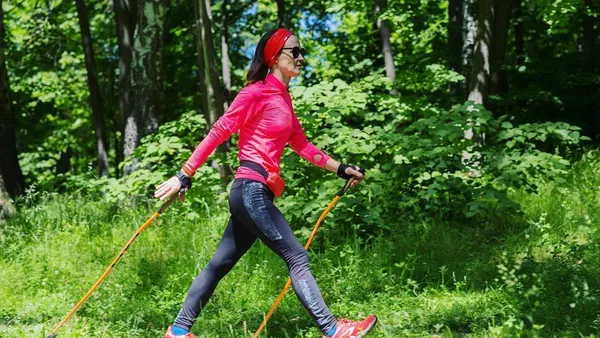
Скандинавская ходьба
Ученые выяснили, почему ходьба улучшает работу мозга

Главное — скорость

По мнению австралийских, британских и ирландских ученых, важна не столько регулярность ходьбы, сколько скорость. У любителей быстрого шага риск умереть, в том числе от сердечно-сосудистых заболеваний, в среднем на 20 процентов ниже. И с возрастом положительный эффект усиливается.
Исследователи попросили 50 тысяч здоровых британцев старше тридцати лет рассказать о привычках и образе жизни, в том числе о том, как часто и насколько быстро они ходят. В специальной анкете каждый доброволец обозначил свою скорость как медленную, обычную, оживленную — или высокую, 6,4 километра в час.
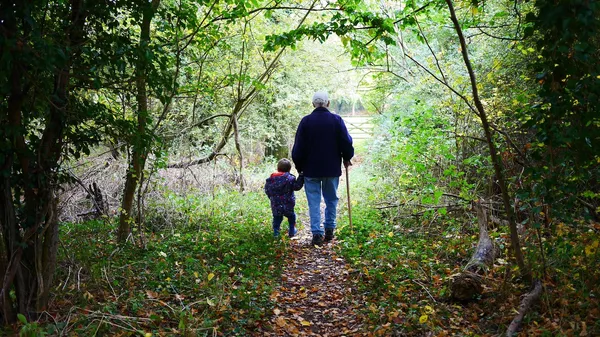
Дедушка с внуком на прогулке
Ученые рассказали, какая опасность может скрываться в медленной ходьбе
Два года спустя эти данные сопоставили со сведениями об умерших. Оказалось, у людей, шагающих со средней скоростью, риск преждевременной смерти на 20% ниже, чем у "тихоходов". А вот у тех, кто двигается быстро, этот показатель ниже уже на 24%.
Еще заметнее эффект среди добровольцев старше 60 лет. В этой группе средняя скорость уменьшала риск кончины от сердечно-сосудистых заболеваний на 46%, а оживленная ходьба — на 53%.

Так сколько все-таки шагов

Ученые из Гарвардской медицинской школы (США) предлагают измерять пользу ежедневных прогулок в количестве шагов.
Они попросили 16 тысяч женщин старше 70 лет неделю ходить со специальным устройством, фиксирующим передвижения в течение дня. Четыре года спустя данные о физической активности соотнесли с информацией о здоровье или причинах смерти — 504 участницы скончались.
Как выяснилось, важно даже незначительное увеличение количества шагов. Те, кто делал больше четырех тысяч, умирали реже, чем те, кто совершал всего 2700. Но закономерность работала только до семи с половиной тысяч шагов. Десять или даже 15 тысяч уже не давали ощутимого эффекта.
Скорее всего, эти цифры актуальны для возраста от 70 лет, отмечают авторы работы. И не исключают, что у молодых все иначе — чем больше шагов, тем выше защита.
Мужчина работает за компьютером
Это предел. Ученые назвали максимальную продолжительность жизни человека
Эксперимент американских коллег это подтвердил. Ученые из Национального института онкологии и Университета Теннеси 12 лет наблюдали за физической активностью и состоянием здоровья 4840 американцев старше сорока.
Каждый около недели носил фитнес-браслет с акселерометром. Фиксировали не только количество шагов в день, но и интенсивность ходьбы — по пиковой скорости в минуту, полчаса и за сутки. Затем сопоставили эти данные со сведениями о смертности за 12 лет исследования.
Анализ показал: делавшие по восемь тысяч шагов в день умирали на 51% реже. А среди совершавших 12 тысяч шагов и больше смертность ниже уже на 65%. При этом интенсивность ходьбы никак не влияла на состояние здоровья и продолжительность жизни.
Другое дело, что выполнять определенную норму по ходьбе тяжело психологически, отмечают британские исследователи. Группа подростков по их просьбе делала не меньше десяти тысяч шагов ежедневно — вскоре участники пожаловались на сложность задания, хотя до конца эксперимента продержались все.

Mitra-mandal Privacy Policy

This privacy policy has been compiled to better serve those who are concerned with how their  'Personally Identifiable Inform...