MITRA MANDAL GLOBAL NEWS

Bangladesh’s success in family planning like a miracle

Authentic news,No fake news.


896
DHAKA, June 8, 2020 (BSS) – Bangladesh’s astounding success in
family planning was seemed a miracle as the emerging middle-income
nation has brought down its fertility rate from about seven births per
woman to 2.003 births per woman, almost the European average, since
its independence in 1971.
The current fertility rate for Bangladesh in 2020 is 2.003 births
per woman, a 1.23% decline from last year as the rate was 2.028 births
per woman in 2019 a 1.17% decline from 2018, according to a recent
study conducted by one of the UN agencies globally.
Bangladesh was also able to set up a unique example in the world
cutting off its population growth rate to 1.37 percent from 2.46
percent in the past four decades.
Attributing the success, the public health experts thanked the
governments for taking initiatives over the years that ensured women
empowerment through facilitating education and healthcare services for
the country’s womenfolk.
Self-determination and equal rights for women as well as ensuring
full access to education and healthcare made the huge difference, they
observed. Bangladesh has invested heavily in family planning services
while every eligible couple receives information about different
contraceptive methods from local health workers, which help reduce
population growth, Aminul Haque, a professor of population sciences at
the Dhaka University said.
The increase in literacy rate over the years has also had a positive
impact on lowering fertility rate, he said.
Other countries of the world, the experts said, had failed to
achieve such success as none could have been able to conduct such
massive awareness campaign on using of different kinds of family
planning methods as like Bangladesh.
They believe Bangladesh’s media, particularly public broadcasters,
played a major role in making people aware of the benefits of having
fewer children, by pointing out that it helps parents take better care
of their children as well as causes less of a financial burden.
Furthermore, better healthcare services in rural areas also reduced
the child mortality rate that contributed to a drop in the fertility
rate, as people began to worry less about child survival.
According to Directorate General of Family Planning, only eight
percent eligible couples had used to practice family planning methods
in 1975.
But Bangladesh have been keeping progress to increase the rate in
every decade, as the use of family planning methods had raised to 54
percent in 2000, 61.2 percent in 2011 and 63.1 percent in 2020.
Currently, the rate of using family planning methods is 64 percent
in urban area and 62.4 percent in rural area while the rate of using
modern methods is 61.6 percent at national level, it said.
Health and family planning Minister Zahid Malik said only 37 percent
of eligible couples at Least Developed Countries (LDCs) are using
modern methods of family planning while the rate is 61.6 percent in
Bangladesh.
The government has been providing free contraceptives to women for
decades to reduce population growth, he said.
Besides, the minister said, the world has advanced a lot in reducing
mother and child mortality rate in 25 years from 1994 to 2019 and
Bangladesh is not legging behind as well.
In 25 years back, on average 8 per thousand women in the LDCs had
died during pregnancy or in birth giving complicacy which is now only
1.69 per thousand women in Bangladesh.
One of the Directors of Directorate General of Family Planning Dr M
Sharif said the government’s objective is to help every couple to
build their family in a planned way.
“We would like to see planned families where couples could take
decision of having children by their own choice without influence of
others,” he added.
The directorate, he said, has taken seven operation plans to
expedite the current awareness programmes with the aim of increasing
use of modern contraceptive methods to 70 percent.
Dr Sharif said the government’s target is to reduce the fertility
rate to only two children per woman by 2021.
The government has also set up a call centre named Sukhi Paribar
(Happy Family) with a routing number of 16767 to provide information
related to family planning as well as mother and children healthcare
to the couples.
The experts further proposed to shift family planning use patterns
towards more effective, longer lasting and lower-cost clinical and
permanent methods covering low performing areas.
But the major impact on fertility could be achieved by raising the
age of marriage, which will push up age at first birth and again
trigger a tempo effect, to bring fertility down further, they
suggested.


India's medium-term GDP growth outlook may be negatively

Authentic news,No fake news.

NEW DELHI, June 18 (Xinhua) -- Credit rating agency Fitch Thursday said it revised its
 outlook on India to "negative" from "stable" and affirmed the rating at "BBB-", the lowest
 investment grade.
"Fitch Ratings has revised the Outlook on India's Long-Term Foreign-Currency Issuer
 Default Rating (IDR) to Negative from Stable and affirmed the rating at 'BBB-'," Fitch said.
According to the agency, the coronavirus pandemic has significantly weakened India's
 growth outlook for this year and exposed the challenges associated with a high public-debt
 burden.
"Fitch expects economic activity to contract by 5 percent in the fiscal year ending March 2021
 (FY21) from the strict lockdown measures imposed since 25 March 2020, before rebounding
 by 9.5 percent in FY22. The rebound will mainly be driven by a low-base effect. Our forecasts are subject to considerable risks due to the continued acceleration in the number of new COVID-19 cases as the lockdown is
 eased gradually," it said.
However, the agency said it remains to be seen whether India can return to sustained growth
 rates of 6 percent to 7 percent as previously estimated, depending on the lasting impact of
 the pandemic, particularly in the financial sector.
"The humanitarian and health needs have been pressing, but the government has shown
 expenditure restraint so far, due to the already high public-debt burden going into the crisis,
 with additional relief spending representing only about 1 percent of GDP by our estimates
," the agency said.
"Most elements of an announced package totalling 10 percent of GDP are non-fiscal in
 nature. Some further fiscal spending of up to 1 percentage point of GDP may still be
 announced in the next few months, which was indicated by a recent announcement of
 additional borrowing for FY21 of 2 percent of GDP, although we do not expect a steep rise in
 spending."
The rating agency said fiscal metrics have deteriorated significantly, notwithstanding the
 government's expenditure restraint, due to the impact of the severe growth slowdown on
 revenue, the fiscal deficit and public-sector debt ratios.
Fitch expects general government debt to jump to 84.5 percent of GDP in FY21 from an
 estimated 71.0 percent of GDP in FY20.
"This is significantly higher than the median of 42.2 percent of GDP for the 'BBB' category in
 2019, to which FY20 corresponds, and 52.6 percent for 2020. The medium-term fiscal
 outlook is of particular importance from a rating perspective, but is subject to great
 uncertainty and will depend on the level of GDP growth and the government's policy
 intentions," it said.
As per Fitch, India's medium-term GDP growth outlook may be negatively affected by
 renewed asset-quality challenges in banks and liquidity issues in non-banking financial 
companies (NBFC).
The financial sector, it said, was already facing weak business and consumer confidence
 before the crisis and authorities had to deal with some high-profile cases over lapses in
 governance.

Ancient Iranians must have migrated to America

Authentic news,No fake news.


Ancient Iranians must have migrated to America
Khomein, May 12, IRNA – An archeologist and petroglyph researcher said that there is some fascinating evidence that shows ancient Iranian people have most probably emigrated to the American continent.
Mohammad Naserifard told IRNA on Tuesday that these finding are being presented for the first time.
Naserifard said after years of research on ancient painting in the caves and mountains of Iran, some fascinating achievements have been gained that are nationally and internationally important.  
He said it was the first time that Iranian petroglyphs and cave paintings were compared with those of other parts of the world.
The similarity in form and messages between petroglyphs of ancient people of Iran and those of America unravel numerous lost rings of human history and art, he said.
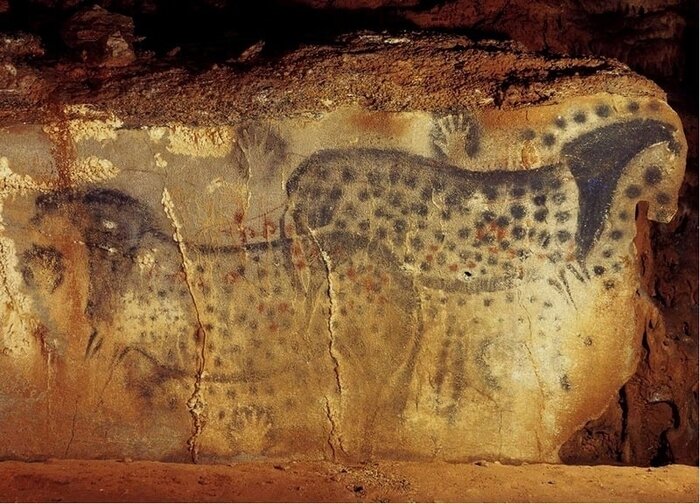
The date of the paintings of appaloosa horse of the native Americans with the paintings found in Sistan-Baluchestan, southeastern Iran, which are 11,000 years old. The same paintings are seen in a cave in France.
 Pech Merle, France
The French had claimed that that kind of horse had just lived in Europe. This is while the 11,000-year old paintings of Iran show women riding the legendary horses of the American Indians, he said.
The Iranian archeologist added that the recent research conducted on the petroglyphs of Teymareh, central Iran, showed that ancient Iranians have migrated to America as well. Belgian Professor Marcel Ot had already reached in his studies that Europeans have Asian roots.
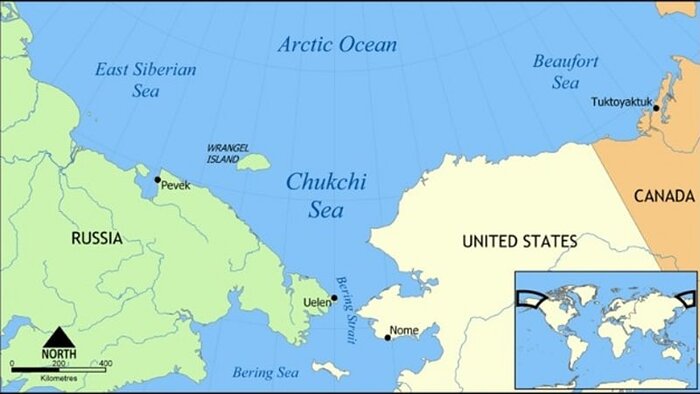
Naserifard said that the migration has taken place through the Bering Strait, between northeastern Asia and northwestern America of through the Arctic Ocean 10,000 BC.
 Bering Strait
The paintings found in Khomein, central Iran, show the same feather that the Native American wear on their heads, which signifies that the people of two cultures have the same roots. They show that ancient Iranians have migrated to the Americas thousands of years ago, he said.
 Teymareh, central Iran
He went on to say that in the decade-long research, Iranian archeologists encountered signs and symbols in the petroglyphs and cave paintings that had been seen in ancient clay tablets of Jiroft, southeastern Iran, and Shoosh (Susa), southwestern Iran.
The same symbols have been discovered in the Native American habitats in Kentucky. For example, pictures of ephedra plant that symbolizes eternal life. The same symbol with the sane divine meaning has seen in Central Asian Turks and Caucasus.
In the 10,000-year old petroglyphs of Teymareh, are seen the same spiral paintings as those of Red Indians of New Mexoco, Iota, California, and Nevada.
 Spiral petroglyphs of Iran and the US
Semiotically speaking, spiral symbols the beginning, development and culmination of entities, an idea which has most probably been taken from Iran to the Americas, he said.
The winged man paintings were first discovered in Iran. In the beliefs of ancient Iranians, they wear savior angels that helped people in difficulties. The paintings date back to 11,000 to 2,700 years ago, he said, adding that images similar to the ones found allover Iran are seen in Yellostone National Park in Wyoming, the US.
The Iranian and the American images are so alike that one may think they have been painted by the same artist 12,000 years ago, Naserifard said.
We believe that the same paintings mean that the two people had the same beliefs, and inasmuch as the Iranian ones are older, they mean that the ancient Iranians have migrated to America and have taken their beliefs with them.
The most common petroglyphs of Iran are images of wild goats in different styles. They are also seen in ideograms painted or carved by Native Americans in Nevada, California, Iota, Arizona, and New Mexico states. They are so similar that you may think have been painted by one artist in thousands of years.
Mythologically speaking, wild goats are angels in disguise. It is fascinating that Native Americans have mostly painted wild goats with the same message, he said.
He said these were just a few examples of the similarities. They are by no means over.
Comparison has a high place in anthropology; there are images of people while worshipping both in Teymareh and New Mexico, which are undoubtedly not accidental. They are ideograms.
The pictures of two wild goats with a smaller one between their horns are of great importance too (17,000 to 1,000 C). One of them is in Iran, the other one in Iota, the US. They have the same message. Similar figurines, dating back to Bronze Age, have been found in Lorestan, southwestern Iran. They made them and attached to the clothes of women in labor so that the savior angel would help them. Traces of the same belies are seen in the paintings on the walls and mountains near ancient Native Americans’ habitats.
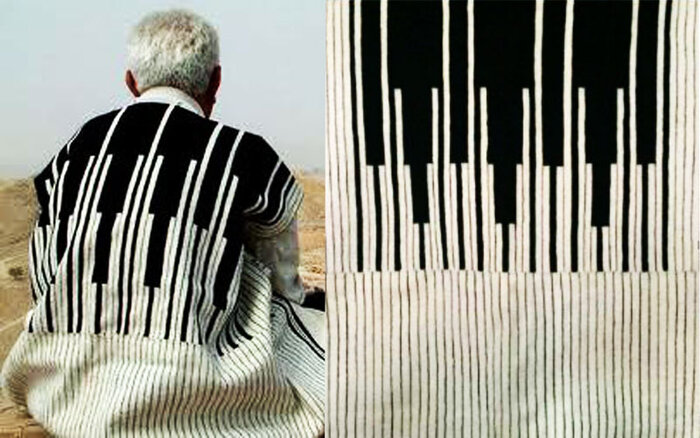
Lors of Iran have a kind of sleeveless garment named Choogha that is woven with thin strings made from wool. The traditional patterns used on Choogha is used by Native Americans too, which is amazing.   
 Choogha
Rock arts, petroglyphs and pictographs are documents that acquaint researches with the cultures of different places and times. They talk though the language of symbols and images, which has been the same all over the globe.

Global oil demand to contract by 9 mln barrels per day in 2020: OPEC

Authentic news,No fake news.

VIENNA, May 13 (Xinhua) -- The Organization of the Petroleum Exporting Countries (OPEC)
 revised down its forecast of global oil demand for 2020, predicting a 9.07 million barrels
 per day (b/d) year-on-year contraction in its monthly report published on Wednesday.
The Organization for Economic Co-operation and Development (OECD) oil demand was
 revised lower by 1.20 million b/d, while non-OECD oil demand growth was adjusted down
 by 1.03 million b/d, for total oil demand to reach 90.59 million b/d, according to the report.
Crude oil prices recorded a second sharp monthly drop in April amid an increasing oil surplus, it said. The OPEC Reference Basket (ORB) value plummeted by 16.26 U.S. dollars per barrel, or 48.0 percent 
month-on-month, to 17.66 dollars per barrel, the lowest monthly level since December 2001.
The report expected that the worst contraction in major oil demand centers around the 
world to take place in the second quarter of 2020, mostly in OECD Americas and Europe,
 with transportation and industrial fuels affected the most.
It pointed out that demand contraction in 2020 can be mitigated with sooner-than-expected
 easing of COVID-19 restriction measures and faster response of economic growth to
 stimulus packages.
OPEC also predicted that the world economy will decline by 3.4 percent in 2020,
 following global economic growth of 2.9 percent in 2019.
The U.S. economy is forecast to contract by 5.2 percent, while an even larger
 decline is expected in the Euro-zone, where economic activity is forecast to
 fall by 8.0 percent in 2020.
China's 2020 GDP is forecast to grow by 1.3 percent, recovering from a sharp
 contraction in the first quarter.
Russia's economy is forecast to contract by 4.5 percent in 2020, not only due to
 COVID-19, but also because of the considerable decline in oil prices.

Saudi Arabia, Russia vow mutual commitment to oil market stability

Authentic news,No fake news.

RIYADH, May 13 (Xinhua) -- Saudi Arabia and Russia vowed in a joint statement on
 Wednesday their commitment to oil market stability.
The statement was released following a phone call between Saudi Energy Ministe
r Abdulaziz bin Salman bin Abdulaziz and his Russian counterpart Alexander Novak
, in which they reviewed oil market developments, the Saudi Press Agency reported.
The statement highlighted the firm commitment of the two states to achieving the
 goal of market stability and expediting the rebalancing of the oil market.
"We are confident that our partners within OPEC+ are fully aligned with our goals
 and they will comply with the OPEC+ agreement," the statement said, hailing
 producers around the world who have willingly adjusted their production.
The statement noted signs of improvements in economic and market indicators
, including oil demand growth.
The Russian official welcomed the additional voluntary production cuts
 made by Saudi Arabia and the steps United Arab Emirates and Kuwait took
 to support Saudi efforts.

This new unemployment forecast rivals the depths of the Great Depression

Authentic news,No fake news.


New York (CNN Business)The unemployment rate in the United States will peak at 25%, rivaling the worst period of the Great Depression, Goldman Sachs warned on Wednesday.
The unemployment rate spiked to 14.7% in April as the economy lost more than 20 million jobs during the self-imposed shutdown to fight the coronavirus pandemic.
Economists at Goldman Sachs downgraded their labor market forecast "to assume that more workers will lose their jobs and a larger share of them will be classified as unemployed," the Wall Street bank wrote in a report to clients.
    Goldman Sachs previously projected the unemployment rate would peak at 15%. The new forecasts are based on government statistics, the first glimpse of the reopening process and new big data sources, the bank said.
    The federal government's monthly unemployment statistics only go back to 1948. The current level of unemployment is the highest monthly rate on record.
    Annual data, which go back to 1929, show that the unemployment rate peaked during the Great Depression at an average of 24.9% in 1933.
    The so-called real jobless rate, which captures the percentage of Americans who want a job but have given up trying to find one, surged to 22.8% in April. That was up from just 8.7% the month before.
    Goldman Sachs warned Wednesday that the real jobless rate will peak at 35%, up from the bank's previous projection for a peak of 29%.
    That would be worse than what the White House has publicly been bracing for. Kevin Hassett, senior economic adviser to President Donald Trump, told CNN last week that the real jobless rate could hit 25% before "hopefully" falling following a transition period this summer.
    No matter where the unemployment peaks, economists have cautioned that it will take years, perhaps even more than a decade, to get the jobless rate back near pre-crisis levels. Goldman Sachs expects the unemployment rate to stand around 10% at the end of 2020. For context, that matches the worst levels of the Great Recession. And even by the end of 2021, Goldman Sachs sees unemployment above 8%.

    Reopening the economy

    The dire forecasts come as some states have begun to reopen their economies, a challenging task given the risk of giving new life to the pandemic.
    Dr. Anthony Fauci, the nation's top infectious disease expert, said Tuesday that the "consequences could be really serious" if states reopen ahead of the guidelines issued by the White House.
    Goldman Sachs said the reopening process presents risks in both positive and negative directions.
    For instance, China's reopening suggests that a "much quicker pace of recovery is possible."
    Goldman also upgraded its GDP forecasts, predicting a "somewhat more V-shaped path" as states relax lockdown orders. The bank now expects rapid annualized growth of 29% in the third quarter, up from 19% previously.
    "With the reopening process now underway in many US states, we have more confidence that a large amount of activity will return fairly quickly," the report said.

    'Scarring effects'

    But that doesn't mean the US economy will recover to its pre-crisis size anytime soon.
    Even Goldman's call for a faster-than-usual recovery would leave the US economy with an output gap, which measures the difference between actual and potential growth, of three percentage points at the end of 2021.
    The reopening process itself poses serious health and economic challenges. Health experts have warned that coronavirus infections could ramp back up if social distancing is not followed.
    And Goldman noted several "serious health risks": "insufficient testing and contact tracing" in some states, reopening high-risk sectors and limited evidence of how effective measures like social distancing and will be.
      Likewise, there are concerns that the economic damage done by the pandemic may not be easily reversed -- despite the federal government's efforts to help businesses and households.
      "Prolonged weakness could cause severe scarring effects such as permanent layoffs and business closures that delay the recovery," Goldman Sachs economists wrote

      Coronavirus infection in children -- it may not start with a cough

      Authentic news,No fake news.

      Newswise — Children suffering from sickness and diarrhea, coupled with a fever or history of exposure to coronavirus, should be suspected of being infected with COVID-19, recommends a new study published in Frontiers in Pediatrics.
      The research also suggests that the gastrointestinal symptoms first suffered by some children hints at potential infection through the digestive tract, as the type of receptors in cells in the lungs targeted by the virus can also be found in the intestines.
      "Most children are only mildly affected by COVID-19 and the few severe cases often have underlying health issues. It is easy to miss its diagnosis in the early stage, when a child has non-respiratory symptoms or suffers from another illness," says author of this study, Dr. Wenbin Li, who works at the Department of Pediatrics, Tongji Hospital, Wuhan, China.
      He continues, "Based on our experience of dealing with COVID-19, in regions where this virus is epidemic, children suffering from digestive tract symptoms, especially with fever and/or a history of exposure to this disease, should be suspected of being infected with this virus."
      In this study, Li and his colleagues detail the clinical features of children admitted to hospital with non-respiratory symptoms, which were subsequently diagnosed with pneumonia and COVID-19.
      "These children were seeking medical advice in the emergency department for unrelated problems, for example, one had a kidney stone, another a head trauma. All had pneumonia confirmed by chest CT scan before or soon after admission and then confirmed to have COVID-19. While their initial symptoms may have been unrelated, or their COVID-19 symptoms were initially mild or relatively hidden before their admission to hospital, importantly, 4 of the 5 cases had digestive tract symptoms as the first manifestation of this disease."
      By highlighting these cases, Li hopes that doctors will use this information to quickly diagnose and isolate patients with similar symptoms, which will aid early treatment and reduce transmission.
      The researchers also link the children's gastrointestinal symptoms, which have been recorded in adult patients, to an additional potential route of infection.
      Li explains, "The gastro-intestinal symptoms experienced by these children may be related to the distribution of receptors and the transmission pathway associated with COVID-19 infection in humans. The virus infects people via the ACE2 receptor, which can be found in certain cells in the lungs as well as the intestines. This suggests that COVID-19 might infect patients not only through the respiratory tract in the form of air droplets, but also through the digestive tract by contact or fecal-oral transmission."
      While COVID-19 tests can occasionally produce false positive readings, Li is certain all these five children were infected with the disease, but he cautions that more research is needed to confirm their findings.
      "We report five cases of COVID-19 in children showing non-respiratory symptoms as the first manifestation after admission to hospital. The incidence and clinical features of similar cases needs further study in more patients."

      Excess coffee consumption a culprit for poor health

      Authentic news,No fake news.

      Newswise — Cappuccino, latte or short black, coffee is one of the most commonly consumed drinks in the world. But whether it’s good or bad for your health can be clarified by genetics, as a world-first study from the University of South Australia’s Australian Centre for Precision Health shows that excess coffee consumption can cause poor health.
      Using data from over 300,000 participants in the UK Biobank, researchers examined connections between genetically instrumented habitual coffee consumption and a full range of diseases, finding that too much coffee can increase the risk of osteoarthritisarthropathy (joint disease) and obesity.
      In earlier research conducted by Professor Hyppönen and team, six cups of coffee a day were considered the upper limit of safe consumption.
      Expert genetic epidemiologist, UniSA’s Professor Elina Hyppönen, says understanding any risks associated with habitual coffee intakes could have very large implications for population health.
      “Globally, we drink around three billion cups of coffee each day, so it makes sense to explore the pros and cons of this on our health,” Professor Hyppönen says.
      “Typically, the effects of coffee consumption are investigated using an observational approach, where comparisons are made against non-coffee-drinkers. But this can deliver misleading results.
      “In this study, we used a genetic approach – called MR-PheWAS analysis – to establish the true effects of coffee consumption against 1117 clinical conditions.
      “Reassuringly, our results suggest that, moderate coffee drinking is mostly safe.
      “But it also showed that habitual coffee consumption increased the risks of three diseases: osteoarthritis, arthropathy and obesity, which can cause significant pain and suffering for individuals with these conditions.”
      Professor Hyppönen says the prevalence of these conditions in Australia and around the world shows how important it is to determine possible causes and influencers of the diseases.
      “Excess coffee consumption can lead to increased risks of certain diseases,” Professor Hyppönen says.
      “For people with a family history of osteoarthritis or arthritis, or for those who are worried about developing these conditions, these results should act as a cautionary message.
      “The body generally sends powerful messages with respect to coffee consumption, so it’s imperative that individuals listen to these when consuming coffee.
      “While these results are in many ways reassuring in terms of general coffee consumption, the message we should always remember is consume coffee in moderation – that’s the best bet to enjoy your coffee and good health too.”

      Whipping up tensions between Russia and Czech Republic

      Authentic news,No fake news.

      MOSCOW, May 11. /TASS/. Whipping up tensions in the Czech Republic without any reason does not promote a constructive dialogue in Russian-Czech relations, Head of Russia’s Federal Agency for the Commonwealth of Independent States, Compatriots Living Abroad and International Humanitarian Cooperation Eleonora Mitrofanova told TASS.
      The Prague-based Respekt weekly newsmagazine reported earlier citing sources in the Czech special services that in early April a Russian national holding a diplomatic passport had allegedly arrived in Prague carrying ricin, a highly potent toxin. The man allegedly headed to the Russian embassy and the poison could be aimed for municipal politicians.
      "This situation is the continuation of hostile actions in addition to the dismantling by the Czech municipal authorities of the monument to Marshal of the Soviet Union Ivan Konev," Mitrofanova said. "We regret to see additional escalation in bilateral Russian-Czech relations."
      According to the official, the Czech authorities have slapped unfounded accusations against a staff member of the Russian federal agency in Prague. "This is certainly pure provocation. There are forces seeking to boost this negative reaction," she noted. "Our representative in the Czech Republic is a young man, who speaks the Czech language, who treats this country well and loves it. I believe that this is an unfounded and groundless provocation by the Czech authorities, which is part and parcel of actions they have been taking recently."
      Tensions between the two countries escalated following the demolition of a monument dedicated to WWII Soviet Marshal Ivan Konev in Prague. The monument was removed on April 3 following a decision by the authorities of the district Prague-6. The municipal authorities intend to hand it over to the Museum of the 20th Century that the Prague Mayor’s Office plans to establish. Russian Foreign Minister Sergey Lavrov said earlier that Moscow was waiting for the Czech authorities to respond to Russia’s proposal to discuss the violation of the 1993 friendship treaty.

      Mitra-mandal Privacy Policy

      This privacy policy has been compiled to better serve those who are concerned with how their  'Personally Identifiable Inform...