Donald Trump’s personal lawyer has claimed there was “nothing wrong” with his campaign taking information from Russia, as the fallout and toxicity triggered by the publication of Robert Mueller’s report grew.
As Democrats said they were keeping open their options of seeking to impeach Mr Trump for his alleged efforts to obstruct Mr Mueller’s probe, Rudy Giulianiwent on the offensive, saying “any politician” in the US would have sought damaging information about an electoral rival.
“There’s nothing wrong with taking information from Russians,” Mr Giuliani told CNN.
Asked by CNN host Jake Tapper if he would have taken information from a foreign source, the former New York City mayor replied: “I probably wouldn’t. I wasn’t asked. I would have advised, just out of excess of caution, don’t do it.”
Mr Giuliani’s defence of the president came after senator Mitt Romney, the 2012 Republican presidential candidate who lost to Barack Obama, launched a scathing attack on Mr Trump’s campaign, following the release of Mr Mueller’s report.
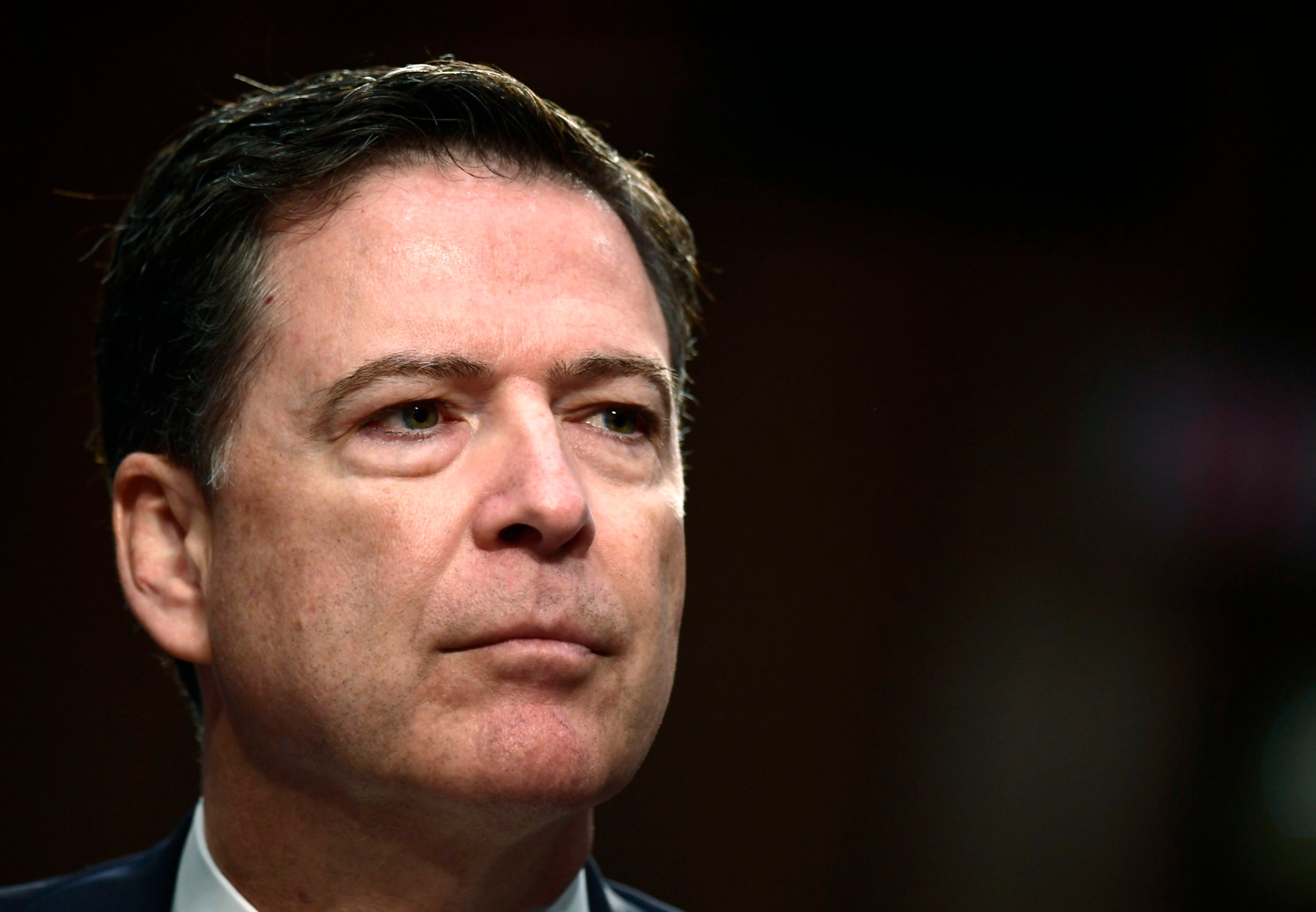
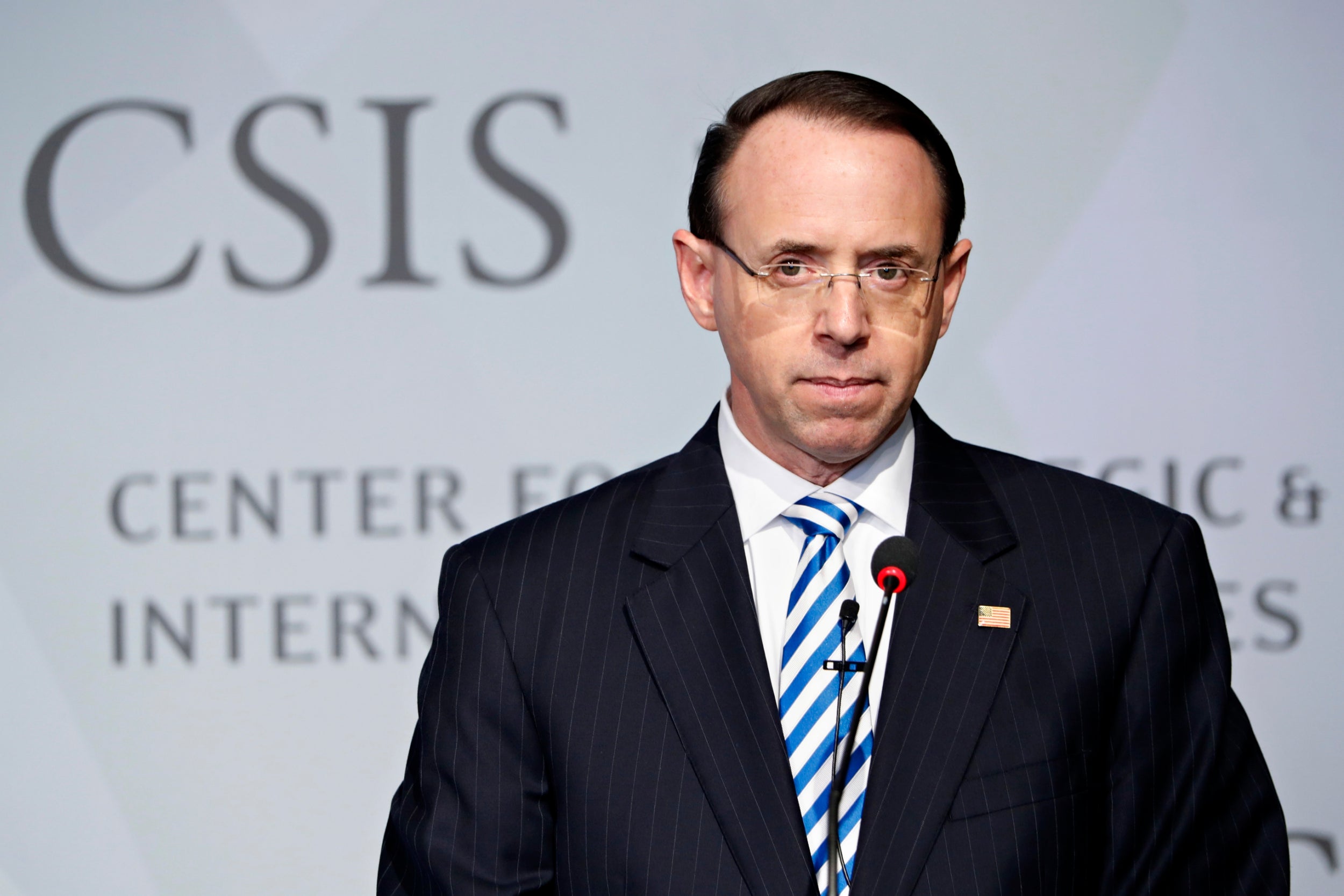
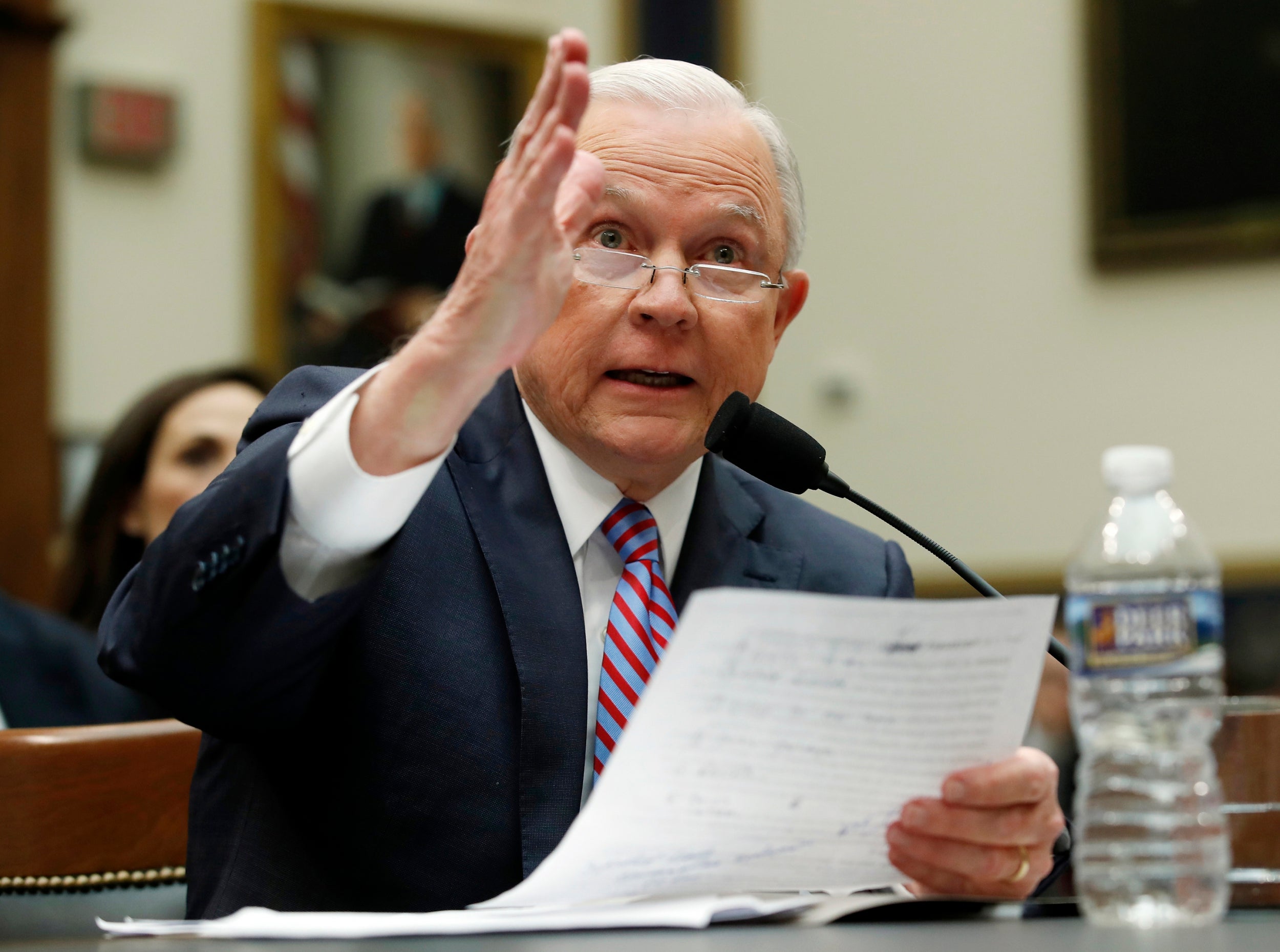
Mueller investigation: The key figures
Show all 12
While the report said it did not find evidence the Trump campaign colluded with Russia, it said the “investigation established multiple links between Trump campaign officials and individuals tied to the Russian government”. It also said, Russia’s alleged interference in the election was intended to help Mr Trump.
Among those interactions was a now infamous meeting at Trump Tower in New York in the summer of 2016, when Mr Trump’s eldest son and other campaign members, met with a Kremlin-linked lawyer who had allegedly offered incriminating information about Hillary Clinton.
The president later said no such information had been provided, and that the Russian lawyer, Natalia Veselnitskaya, was seeking to lobby the campaign on overturning a specific US sanction targeting several Russians.
Mueller report: Sarah Sanders says her untruths over FBI were told in ‘heat of moment’
Mr Romney, one of a just a handful of senior Republicans to voice concern about the report’s finding, said in a statement released on Friday: “I am sickened at the extent and pervasiveness of dishonesty and misdirection by individuals in the highest office of the land, including the president.
“I am also appalled that, among other things, fellow citizens working in a campaign for president welcomed help from Russia.”
Speaking on Sunday, Mr Giuliani claimed Mr Romney’s 2012 campaign had also tried to “dig up dirt on people”.
“Stop the bull. What a hypocrite. What a hypocrite,” Mr Giuliani said. “Any candidate in the whole world in America would take information – who says it’s even illegal?”
Democrats are now confronted with a difficult choice of whether to push for Mr Trump’s impeachment, something favoured by progressives such as Elizabeth Warren and Alexandria Ocasio-Cortez, or focus their efforts on defeating him in the 2020 election.
Democrat Jerry Nadler, chair of the House of Representative’s judiciary committee, whose panel would lead any impeachment proceedings, said his party would press ahead with investigations of Mr Trump in congress and “see where the facts lead us”.
“Obstruction of justice, if proven, would be impeachable,” he told NBC News.
Congressman Adam Schiff, chair of the same chamber’s intelligence committee, told Fox News the issue of whether to seek Mr Trump’s impeachment would be “very consequential”. He added: “I’m going to reserve judgment on until we have a chance to fully deliberate on it.”
Newswise — TROY, N.Y. — The loss of memory and cognitive function known to afflict survivors of septic shock is the result of a sugar that is released into the blood stream and enters the brain during the life-threatening condition. This finding, published today in the Proceedings of the National Academy of Sciences, explains the premature mental aging that follows septic shock and may shed light on memory loss in other diseases.
“This sugar is getting into the hippocampus, and it shouldn’t be in there,” said Robert Linhardt, professor of biocatalysis and metabolic engineering and member of the Center for Biotechnology and Interdisciplinary Studies at Rensselaer Polytechnic Institute, and lead author of the study. “We actually think this is rewiring memory in the hippocampus, and it’s causing memory loss. Neural circuits are being disrupted or broken or connected in the wrong way.”
The study is the latest outcome of a six-year partnership between Linhardt and Dr. Eric Schmidt, an expert on sepsis and assistant professor in the Department of Medicine at University of Colorado Denver.
Sepsis is a systemic infection of the body. One-third of patients admitted to hospitals with sepsis go into septic shock. Of those, half will die. In a 2016 study published in the American Journal of Respiratory and Critical Care Medicine, a team that included Schmidt and Linhardt developed a simple but accurate test for determining whether patients in septic shock would recover or die.
The test uses a urine sample to check concentrations of a type of sugar – glycosaminoglycans – that ordinarily coat cells lining blood vessels and other surfaces inside the body. In septic shock, the body sheds fragments of these sugars, and the team found that higher concentrations portend death. The test is used in clinical settings, and the insight has helped doctors search for more effective therapies.
Their next step tested whether a link exists between the sugars and mental aging associated with septic shock. Research published in the February edition of the Journal of Clinical Investigations showed that, during septic shock, fragments of the sugar heparan sulfate crossed the blood-brain barrier and entered the hippocampus, a region of the brain critical to memory and cognitive function. Evidence indicated that the heparan sulfate might be binding with brain-derived neurotrophic factor (BDNF), which is critical to hippocampal long-term potentiation, a process responsible for spatial memory formation. The researchers also found that presence of an enriched heparan sulfate in the blood plasma of septic patients upon admission to an intensive care unit predicted cognitive impairment detected 14 days after discharge.
To be sure, the researchers wanted to see the heparan sulfate enter the hippocampus and bind with BDNF. The new study in PNAS shows exactly that. To follow heparan sulfate into the brain in a sea of other sugars moving through the bloodstream Linhardt’s team had to synthesize heparan sulfate tagged with a stable carbon isotope, which unlike many other labeling methods, is completely safe and was identical to the natural sugar. It took them two years to figure out how to do it.
Then they put their hypothesis to the test. In healthy mice, 100 percent of the tagged heparan sulfated was excreted through the urine within 20 minutes, and none ever entered the brain. But in septic mice, researchers found a small amount of tagged heparan sulfate in the hippocampus region of the brain.
“Now that we know the cause of cognitive damage in septic shock, it gives us a clear target for a drug therapy: something that binds to the sugar and clears it, or an enzyme that converts it to something that won’t impair cognitive function,” Linhardt said. “This is an important advance, and we’re excited about the story that’s unfolding.”
At Rensselaer, Linhardt is joined in the research by Xing Zhang and Xiaorui Han. At University of Colorado, Schmidt is joined by Yimu Yang, Kaori Oshima, Sarah Haeger, Mario Perez, Sarah McMurtry, Joseph Hippensteel, Joshay Ford, and Paco Herson. The current research also includes Linhardt’s former student, Jian Lu, now on the faculty at the University of North Carolina at Chapel Hill, and his colleague, Yongmei Xu, who led in the synthesis of the tagged sugar.
About Rensselaer Polytechnic Institute
Founded in 1824, Rensselaer Polytechnic Institute is America’s first technological research university. Rensselaer encompasses five schools, 32 research centers, more than 145 academic programs, and a dynamic community made up of more than 7,900 students and over 100,000 living alumni. Rensselaer faculty and alumni include more than 145 National Academy members, six members of the National Inventors Hall of Fame, six National Medal of Technology winners, five National Medal of Science winners, and a Nobel Prize winner in Physics. With nearly 200 years of experience advancing scientific and technological knowledge, Rensselaer remains focused on addressing global challenges with a spirit of ingenuity and collaboration. To learn more, please visit www.rpi.edu.
Newswise — Diabetes has reached epidemic proportions in Asia and has dramatically increased the risk of premature death, especially among women and middle-aged people, a multinational study led by Vanderbilt University researchers has found.
There is an urgent need to implement diabetes management programs tailored to Asian populations, the researchers reported in JAMA Network Open, a journal of the American Medical Association.
“We found that patients with diabetes are at a substantially elevated risk of premature death, and the risk associated with diabetes is much higher than that reported by most previous studies conducted in the United States and Europe,” said the study’s corresponding author, Wei Zheng, MD, MPH, PhD, director of the Vanderbilt Epidemiology Center.
China and India have the highest diabetes burdens in the world. Throughout Asia, more than 230 million people are living with diabetes. Given the increased prevalence of obesity and rapid adoption of a Westernized lifestyle in Asia, that figure is expected to exceed 355 million by 2040.
The Vanderbilt-led research team pooled 22 prospective cohort studies in multiple countries from mainland China to Bangladesh that participate in the Asia Cohort Consortium. More than 1 million individuals were followed for an average of 12.6 years.
The study, conducted by researchers from across Asia and the United States, is the largest prospective investigation of the impact of diabetes on all-cause and cause-specific mortality among Asian populations.
Diabetes was associated with a nearly twofold increase in the risk of death from all causes. The highest relative risk of death was due to diabetes itself, followed by kidney disease, coronary heart disease and ischemic stroke.
The diabetes-related risk of death from all causes was particularly high for women and patients who were diagnosed with diabetes when they were middle-aged adults. Surprisingly, the relative risk of death due to diabetes itself was much stronger among underweight people than among those who were overweight.
This result is particularly relevant for certain racial and ethnic groups in the United States, including Asian Americans, who are more susceptible to insulin resistance and are at higher risk of developing diabetes at a relatively lower obesity level than are people of European ancestry.
Whether this may increase their risk of premature death once they develop diabetes has not yet been determined, said Zheng, the Anne Potter Wilson Professor of Medicine in the Vanderbilt University School of Medicine.
Lack of access to diabetes care in Asia may contribute to the unusually higher risk of premature death among diabetes patients in the study, the researchers added.
Many Asian patients, especially women and underweight patients, may not be able to achieve good blood glucose control due to a lack of access to insulin and other anti-diabetic medications, health care services or education in managing their disease, they concluded.
This is also a problem in the United States. “Even in developed Western countries,” the researchers said, “a substantial fraction of diabetes patients, particularly those from underserved populations, do not receive optimal care or adhere to recommended treatment.”
The study was supported by the National Institutes of Health and by several participating countries.
अबू धाबी अरब की खाड़ी में पहला हिंदू मंदिर का उद्घाटन (अमीरात समाचार एजेंसी)
खाड़ी में पहले हिंदू मंदिर की आधारशिला रखने के बाद, इज़राइल ने खुलासा किया - गर्व से - दुबई में एक आराधनालय का अस्तित्व, अंतिम अवधि के लिए गुप्त रखने के बाद।
"इज़राइल इन द गल्फ" - ट्विटर पर इज़राइल के विदेशी खातों में से एक - यूएई का कदम और अपनी भूमि पर रहने वाले विभिन्न धर्मों के अनुयायियों के प्रति सम्मान, यह तनाव कि सरकार ने दुबई में एक आराधनालय की उपस्थिति में समापन किया।
وضعت الإمارات حجر الأساس لأول معبد هندوسي في الخليج. نبارك حكومة الإمارات على هذه الخطوة التي تؤكد تسامحها الديني واحترامها لأتباع مختلف الديانات التي تعيش على أرضها، وهو ما توج بوجود كنيس يهودي أيضا في دبي لتتعانق المساجد والكنس والمعابد تحت مظلة الإمارات
यह आराधनालय की पहली आधिकारिक मान्यता है, और दूसरे इजरायली चैनल ने दिसंबर 2018 में कहा कि संयुक्त अरब अमीरात के अधिकारियों की मंजूरी के साथ दुबई के अमीरात में एक आराधनालय बनाया गया था, जिसने पिछले तीन वर्षों में इसकी देखरेख की थी।
इजरायल चैनल दुबई में यहूदी व्यापारियों पुष्टि की है कि है कि वह गुप्त आराधनालय, वे साल पहले बनाया है, जिसमें काम कर रहा था।
ब्लूमबर्ग की रिपोर्ट के अनुसार एक रिपोर्ट पिछले साल के अंत में, कि यहूदी समुदाय नवजात संयुक्त अरब अमीरात दुबई, जहां एक मंदिर यहूदी कानून के अनुसार भोजन तैयार करने के लिए प्रार्थना और एक रसोई के लिए एक जगह शामिल के शहर में पहले आराधनालय स्थापित है।
अमीरात नींव का पत्थर के रूप में आधिकारिक समाचार एजेंसी द्वारा की सूचना दी, अरब की खाड़ी में पहली हिंदू मंदिर के लिए कल रखा गया है, राजधानी अबू धाबी मंत्रियों और अधिकारियों ने भाग लिया में एक समारोह में।
चाल, संचार के साधन के माध्यम से भौहें कार्यकर्ताओं उठाया के रूप में उनमें से कुछ एक विरोधाभास संयुक्त अरब अमीरात, जो सहिष्णुता, अरब और मुसलमानों के साथ प्रकट नहीं होता है मानव अधिकार आलोचना अबू धाबी के लिए निर्देशित है, साथ ही कतर की घेराबंदी की संकट में और यमन में और कहीं और युद्ध में अपनी भूमिका के संदर्भ में प्रतिबिंबित करने के लिए विचार किया गया।
WASHINGTON (Reuters) - The United States demanded a cut off of Iranian oil exports to major importers like China and India who had been granted exemptions from sanctions, sending crude prices to six-month highs on fears the U.S. action could lead to a supply crunch.
Secretary of State Mike Pompeo, in a briefing on Monday, said the aim was to halt Iran’s exports entirely, as it continues to pressure Tehran to curtail its nuclear program, ballistic missile tests and support for conflicts in Syria and Yemen.
The Trump administration said it was working with top oil exporters Saudi Arabia and the United Arab Emirates to ensure the oil market was “adequately supplied” but the market, already fretting about tight supplies, raised skepticism about whether Riyadh could take a slower approach in boosting exports.
The United States reimposed sanctions in November on exports of Iranian oil after U.S. President Donald Trump unilaterally pulled out of a 2015 nuclear accord between Iran and six world powers last May. After renewing sanctions, it granted waivers to eight major buyers for a six-month period, which ends in May.
“We are going to zero. We’re going to zero across the board,” Pompeo said, adding that the United States had no plans for a grace period beyond May 1 for countries to comply. He said the aim is to deprive Iran of its lifeline of $50 billion in annual oil revenues.
While Saudi Arabia is expected to boost output again, analysts fear the U.S. move – along with sanctions on Venezuela’s oil industry – will leave the world with inadequate spare capacity.
The international Brent crude oil benchmark rose to more than $74 a barrel on Monday, highest since November, due to the uncertainty surrounding increased supply from Saudi Arabia and other OPEC nations, while U.S. prices hit a peak of $65.99 a barrel for the first time since October 2018.
“Combined with declines in global crude stocks, continued losses in Venezuela production as well as a possible disruption in Libya, a zero-waivers Iran decision will present a challenge to keeping global oil prices in check,” Joe McMonigle of Hedgeye said in a note to clients.
Pompeo said he was confident of Riyadh’s commitment to making sure there was sufficient supply in the market. Saudi Arabian Energy Minister Khalid al-Falih said on Monday the OPEC exporter would coordinate with other oil producers to ensure a balanced market.
He said it was “monitoring the oil market developments” after the U.S. statement, without committing to raising production. OPEC is next scheduled to meet in June.
FILE PHOTO: A gas flare on an oil production platform in the Soroush oil fields is seen alongside an Iranian flag in the Persian Gulf, Iran, July 25, 2005. REUTERS/Raheb Homavandi/File Photo/File Photo
QUESTIONS ABOUT WORLD SUPPLY
Trump has been clear to his national security team over the past few weeks that he wants the waivers to end and national security adviser John Bolton has been working the issue within the administration.
In recent months, Saudi Arabia and other OPEC members have cut supply dramatically. OPEC, along with allies such as Russia and others, agreed to reduce output by 1.2 million barrels per day (bpd) but they have exceeded those benchmarks, with Saudi Arabia alone reducing supply by 800,000 bpd.
In a tweet, Trump said Saudi Arabia and others in OPEC “will more than make up the Oil Flow difference in our now Full Sanctions on Iranian Oil.”
Prior to the re-imposition of sanctions, Iran was the fourth-largest producer in OPEC at almost 3 million barrels per day (bpd), but April exports have shrunk to well below 1 million bpd, according to ship tracking and analyst data in Refinitiv.
Tehran remained defiant over Washington’s decision, saying it was prepared for the end of waivers, while the Revolutionary Guards repeated their threat to close the Strait of Hormuz, a major oil shipment channel in the Gulf, Iranian media reported.
The countries that were granted a waiver for importing Iranian oil free from U.S. sanctions were China, India, Japan, South Korea, Taiwan, Turkey, Italy and Greece.
While Italy, Greece and Taiwan already have halted purchases, doing so could prove much more challenging for China and India. Turkey, another buyer, already has slammed the U.S. decision, saying it will not serve peace. Asian buyers largely refrained from strong statements.
Slideshow (2 Images)
Geng Shuang, a Chinese Foreign Ministry spokesman, said at a daily news briefing in Beijing on Monday that it opposed unilateral U.S. sanctions against Iran and that China’s bilateral cooperation with Iran was in accordance with the law.
South Korea’s Yonhap news agency quoted the Foreign Ministry as saying the South Korean government had been negotiating with the United States at all levels to extend the waivers and that it would continue to make every effort to reflect Seoul’s position until the May 2 deadline.
In India, refiners have started a search for alternative supplies but the government declined to comment officially.
Embassies of India, China and South Korea in Washington did not immediately respond to requests for comment, along with Japan, whose Prime Minister Shinzo Abe will be in the U.S. capital on Friday for an official visit.