Until society's perceptions change, my daughter will continue to think her worth is determined by the colour of her skin, writes Beatty [Courtesy of Muna Beatty]
My name means "wish", but over the years I have been called many other names that mean "black".
This is because I'm a dark-skinned woman from India.
My father is dark-skinned, while my mother has fair skin. I took after my father. My skin tone is neither "wheatish" nor "dusky", as some beauty companies prefer to label darker complexions - it is simply dark brown.
From a very young age, I felt I did not fit in. I was made to believe I was not good enough because of the colour of my skin. People constantly compared my complexion to others. It was impossible to escape their comments and judgements.
Even members of my own family made jokes about the way I look. A popular one was that "the electricity went out in the hospital when my mother was about to deliver me, and that's how I got my dark colour".
At school, one of my teachers once asked me, with a smirk, "Are you from Africa?".
As I grew older, I was pressured to change the way I look, to become lighter-skinned. Desperate measures were taken. From homemade - turmeric, curd, gram - to store-bought, many cosmetic products were applied on my skin to make me fairer.
As soon as I entered my late teens, there were talks within the family about finding me a suitable groom. Once, an elderly relative approached my parents with a proposal from a young man.
My father declined and I heard the relative tell him: "How can you decline? What does your daughter possess that makes you think she could get a better proposal? Have you not seen her? She is dark!"
I never responded to people's cruel comments or jokes. I never shared my insecurities or feelings of resentment with anyone. I just became numb and shut down. Soon I was not comfortable being in photographs or attending social functions. I wanted to be invisible.
Over the years, I buried the pain deep inside of me. So deep that when I look back today, I find it difficult to recall most of these episodes.
Instead of dealing with my feelings, I chose to live my harsh reality in silence.
My reality was simple: In India, I as a person had less value because of the colour of my skin.
A deep-rooted obsession
India's obsession with fair skin is well known and deep-rooted. Colour prejudice is widespread and practised openly across the country.
Indian society believes skin colour determines a person's worth. In our culture, all virtues are associated with "fair" while anything dark has negative connotations. TV programmes, movies, billboards, advertisements, they all reinforce the idea that "fair is beautiful".
The Advertising Standards Council of India attempted to address skin-based discrimination in 2014 by banning ads that depict people with darker skin as inferior.
This was a step in the right direction, but it failed to change much.
Four years later, India's media and advertisement industries are still promoting the idea that women with dark complexions should aspire to be fairer.
And most dark-skinned women are still desperately trying to look fair. Some use makeup that is meant for lighter skinned women, choosing to look "whitewashed" rather than embracing their natural skin tone. Others use bleaching products.
I know people who are at least a good 10 shades lighter than me who feel their skin colour is not good enough.
In India, everyone wants to be fairer.
I want change for my daughter
Today, I am a mother blessed with a son and a daughter. My husband and my son are lighter skinned, while my daughter has a darker complexion, like mine.
When she was born, we vowed to never let her feel less valuable because of the colour of her skin. From a very early age, we told her that she is beautiful, that her skin colour is beautiful, and tried to teach her a person's worth is not determined by the way he or she looks.
However, when she was just three years old, a boy at her preschool wanted to play with her and she was reluctant. When we asked her why, to our astonishment, she said: "because he is brown".
We were shocked, not understanding what caused her to think like that. We tried to explain to her that she is also brown.
After that incident, it became apparent to us that we cannot protect her from the outside world forever. As soon as she steps outside our house, she is exposed to a culture that values brown-skinned people less.
For example, when her school put on a performance, fair skinned kids were placed at the front regardless of their heights, and darker skinned children were all made to stand at the back, including my daughter. It broke my heart.
After watching that event, I realised that, until society's perceptions change, my daughter will continue to think her worth is determined by the colour of her skin, just as I did when I was younger. So I decided to do something to facilitate change.
#ColourMeRight
I'm now running a campaign called #ColourMeRight, to help give my little girl a better future. With this campaign, I want to make Indian media stop portraying people with darker complexions as inferior and make sure there are dark-skinned role models for young children like my daughter to look up to.
One may think there are bigger issues we are grappling with in India and that this campaign is dealing with a somewhat trivial issue. That may well be the case, but prejudice is prejudice, and I believe by changing the way people think about skin colour, I can make life so much better for millions of little girls just like my daughter.
As a result of the prejudice I suffered as a dark-skinned woman from a very young age, I still lack confidence. I don't want my daughter to go through all this. I want her to grow up in a progressive society that accepts her for who she is - recognises her for her character, individuality, strengths and values.
The first petition I started via change.org as part of the #ColourMeRight campaign was directed at a leading jewellery brand in India, named Tanishq. The brand used the tagline "Jewellery for every bride in India" in one of its advertisement campaigns. However, these ads featured only fair-skinned brides.
There is already a stigma around marrying a dark-skinned woman in India - one has to only look at the matrimonial ads seeking "fair" brides. This is why advertisement campaigns directed only at fair-skinned brides-to-be are not acceptable.
I was pleased to see many people agreed with me. And after gathering over a thousand signatures, my petition got a response from Tanishq. The company issued a statement assuring us that they will "create commercials that reflect the truly diverse nature of the country".
It was a small victory, but it gave me hope. It made me feel I was not alone. It made me realise there are many men and women across India who care about this issue and want to change the way our society perceives skin colour.
Recently I started the second petition, this time against India's cosmetics giant, Lakme.
Lakme is India's first homegrown cosmetics brand and after over 50 years in the business, it is still the market leader. It is a well-known brand that plays a prominent role in many Indian women's beauty routine.
However, when you look at their website, you see that their products cater only one skin colour: fair.
The theme of this year's Lakme Fashion Week was "Celebrating beauty without bias" and "beauty beyond boundaries" - so the company is well aware that cosmetics could and should be inclusive. It has the capability and the potential to do the right thing and cater for the cosmetic needs of all Indian women - fair, dark and every shade in between.
With this petition, I'm hoping Lakme to see its mistake and take a step in the right direction. If a company as big as this one starts catering for darker shades, it may help change the Indian society's perception of dark skin.
Ending colourism in India
We still have a long way to go to end colourism in India. #ColourMeRightis just the start of a very long and undeniably difficult journey. This campaign aims to give a voice to countless women like myself who have been made to feel invisible and forced into silence because of their skin colour. I don't know how effective it will be, how many people it will reach or how many minds it will change … but I do know it already made a difference in my little daughter's life.
The same child that once refused to play with a little boy because he is brown recently told me, "I am brown like you. I love brown".
The views expressed in this article are the author's own and do not necessarily reflect Al Jazeera's editorial stance.
YouTube has suspended the accounts of at least three media outlets run by the Syrian government, weeks after a report claimed the channels were violating US sanctions and generating revenue from ads.
The video streaming giant appeared to suspend the accounts of Syria's public international news organisation, SANA, the Ministry of Defence and the Syrian Presidency.
All three accounts appeared on Monday with a message, which read: "This account has been terminated due to a legal complaint," or "This account has been terminated for a violation of YouTube's Terms of Service."
The Damascus-based Sana TV's channel also appeared to be taken down, with a message reading: "This page isn't available. Sorry about that. Try searching for something else."
The move comes just weeks after online news website TomoNews revealed the government-run accounts were generating advertising revenue in violation of US sanctions.
US sanctions prohibit American companies from providing services to Syria without obtaining a licence from the Treasury Department, according to the report.
Syria is in the middle of bloody civil war that has raged since 2011 and claimed more than 500,000 lives.
NEW DELHI (Reuters) - Iraq replaced Saudi Arabia in August as the top oil supplier to India, data from industry and shipping sources showed, as refiners turned to Iraqi barrels to compensate for a lower intake of Iranian oil ahead of U.S. sanctions in November.
A worker checks the valve of an oil pipe at Nahr Bin Umar oil field, north of Basra, Iraq December 21, 2015. REUTERS/Essam Al-Sudani/File Photo
The United States is reimposing sanctions on Iran following Washington’s decision in May to withdraw from a 2015 international deal aimed at curbing Tehran’s nuclear programme. While some sanctions were implemented from Aug. 6, those affecting Iran’s petroleum sector take effect only from Nov. 4.
Imports of Iranian oil by India, Tehran’s top oil client after China, fell by about a third to about 523,000 bpd in August from July as state-refiners slowed purchases due to a delay in securing government approval to use Iranian ships.
Despite the lower purchases, Iran remained the third biggest oil supplier to India in August, the data showed.
Washington will consider waivers for Iranian oil buyers such as India but they must eventually halt imports as sanctions are imposed on Tehran, U.S. Secretary of State Mike Pompeo said last Thursday.
Iraq and Saudi Arabia continued to be the two biggest oil suppliers to India last month, the tanker arrival data obtained from sources showed. The sources declined to be identified.
India refiners shipped in 1.02 million barrels per day (bpd) of Iraqi Basra oil in August, an increase of about 46 percent from the previous month, while imports from Saudi Arabia declined 5 percent to about 747,000 bpd during the period, the data showed.
India imported less Nigerian oil in August as the west African nation’s output was hit by outages in a couple of major streams such as Bonny Light and Tornados. Also, Asian buyers opted to take light sweet U.S. oil rather than Nigerian.
India’s imports of U.S. oil in August rose to a record 275,000 bpd, accounting for about 6 percent of its overall purchases, the data showed.
India refiners had booked U.S. oil cargoes in June when discounts between U.S. crude future and Brent was wide enough to make arbitrage economics feasible for India.
India’s monthly oil imports from Nigeria declined by about 34 percent to about 279,000 bpd, the data showed.
Overall India’s monthly oil imports in August rose 3.1 percent to about 4.7 million barrels, while they were up 15.8 percent from a year earlier, the data showed.
UNITED NATIONS, Sept. 10 (Xinhua) -- UN Secretary-General Antonio Guterres on Monday called for more efforts from member states to fight corruption.
Corruption is present in all countries, rich and poor, North and South, developed and developing, he told the Security Council.
People across the world continue to express outrage at the corruption of their leaders, and at how deeply corruption is embedded in societies. They are rightly calling for political establishments to operate with transparency and accountability, or make way for those who will, he said.
"I call on leaders everywhere to listen, to nurture a culture of integrity and to empower citizens to do their part at the grassroots. We must all do more to fight corruption, strengthen governance and build trustworthy institutions that can ensure probity and progress for all."
Member states must be on the front lines in the fight against corruption. It is especially important to build up the capacity of national anti-corruption commissions and prosecutorial efforts, he said.
The World Economic Forum estimates that the cost of corruption is at least 2.6 trillion U.S. dollars, or 5 percent of global gross domestic product.
And according to the World Bank, businesses and individuals pay more than 1 trillion dollars in bribes each year, he said.
Swedish Prime Minister and leader of the Social Democrat Party Stefan Lofven speaks Sunday at an election party at the Fargfabriken art hall in Stockholm, Sweden. Photo by Claudio Bresciani/EPA-EFE
Sept. 10 (UPI) -- Sweden's nationalist party solidified itself as a legitimate third party, while the establishment left and right parties virtually tied in closely-contested elections Sunday.
The governing center-left coalition gained about 40 percent of the vote, while the center-right group attracted the same amount of support. Making significant gains was the Sweden Democrats Party -- which is riding a wave of anti-immigration sentiment not only in Sweden but also other European Union countries. It garnered 18 percent of Sunday's vote, up from 13 percent in the last election.
Due to the close contests, the parties must now work together to form a government. Sweden uses a proportional representation form of government where seats are allocated based on the share of the vote.
Prime Minister Stefan Lovfven's Social Democrats Party has a coalition with the Green and Left parties. The group maintained a one-seat lead, but fell short of the 175 seats needed to govern. They will have to negotiate with the right-wing parties to find a workable government.
"We have two weeks left until parliament opens," Lofven said. "I will work on calmly, as prime minister, respecting voters and the Swedish electoral system."
Nicholas Aylott, a political science professor at Sodertorn University, said 200,000 overseas ballots won't be counted until Wednesday, so the final results likely won't be known for days.
Whatever the outcome, getting all parties to work together could be a challenge.
"That frankly, is an extremely implausible scenario -- why would the Left bloc consent to an Alliance government when the Left bloc is actually a touch bigger than the Alliance?" Aylott questioned. "Much more plausible, I think, is that the Social Democrats either stay where they are or the government will resign and allow the negotiations to begin."
Aylott said it will be difficult for mainstream parties to treat the Sweden Democrats as equals.
"They're not a very old party, they were only formed at the end of the [1980s] and they have roots in overtly racist, Neo-Nazi organizations," Aylott said. "That history means something, no matter how much the party professors to have changed and maybe really has changed."
The party, once linked to neo-Nazis and other far-right groups, attracts working class men but has made strides to attract more women and higher-income voters. The country has recently seen an influx of immigrants that Sweden Democrats say puts a strain on social services.
Party leader Jimmie Akesson, though, said the group has zero tolerance for racism and that several members have been expelled.
Emboldened by Britain's bold exit from the European Union in 2016, the Sweden Democrats are pushing for a "Swexit" referendum of their own.
"We will increase our seats in parliament and we will gain huge influence over what happens in Sweden during the coming weeks, months and years," Akesson said at a party rally.
MOSCOW — A government plan to increase the age for collecting state pensions brought protests across Russia's 11 time zones Sunday even though the opposition leader who called them was in jail. More than 1,000 people were reportedly detained.
The plan calls for the eligibility age for retirement pensions to be raised by five years, to 65 for men and 60 for women. Opposition to it spans the political spectrum.
World news
The rallies got started in the Far East and Siberia when it still was early morning in Moscow, where a downtown demonstration in the afternoon ended in scuffles when riot police stopped participants from marching to the Kremlin.
Alexei Navalny, the anti-corruption activist who is President Vladimir Putin's most prominent foe, urged supporters to protest the pension proposal Sunday before he was sentenced to 30 days in jail for organizing an unsanctioned January protest involving a different issue.
Demonstrations took place throughout the sprawling country, from Yuzhno-Sakhalinsk on a Pacific island and in Kaliningrad, the Russian exclave between Poland and Lithuania.
Police officers detain a demonstrator during a rally protesting a rise in the retirement age in St. Petersburg, Russia, on Sunday.Valentin Egorshin
The OVD-Info organization that monitors political repression reported that as of Monday morning more than 1,000 people were detained in connection with the protests around the country. That figure included 452 which occurred in St. Petersburg, OVD-Info said.
Factory worker Olga Sokolova, 52, said she was "dumbfounded" when the proposal was introduced in Junebecause she had hoped to retire from her physically taxing job at age 55.
"I can't keep being afraid anymore," she said of her decision to risk detention by showing up at Moscow's Pushkin Square for the protest that attracted several thousand people.
The demonstrators, predominantly people in their 20s and decades away from retirement, chanted "Russia without Putin" and held signs with messages such as "Putin, when will you go on pension?"
They later marched toward Red Square and the Kremlin, chanting "Down with the czar!" as they passed the building of the Federation Council, the upper house of parliament, and leisurely Muscovites enjoying a hot afternoon.
A youth is escorted away from a protest in St. Petersburg, Russia, on Sunday.OLGA MALTSEVA
The group was eventually blocked by police barricades. Riot police observing from the sidelines charged the marchers with raised batons when some tried to rush through the barriers. The crowd dispersed half an hour later.
Raising the pension age is opposed both by older Russians, who fear they won't live long enough to collect significant benefits, and by young adults worried that keeping people in the workforce longer will limit their own employment opportunities.
"The reform is a robbery of my parents and grandparents. We're stealing our future, too. Right now the only thing we can do is protest," 24-year-old Igor Panov said at the Moscow demonstration.
"The state should have found the money it needed in the budget or through fighting corruption," 19-year-old Yegor Zhukov said at the St. Petersburg protest.
Popular opposition leader Yevgeny Roizman, who is a former mayor of Yekaterinburg, said on Twitter that a younger generation took the lead because middle-aged Russians were too scared to protest.
World news
"My respect to those who took to the streets today, especially young people," said Roizman, who was briefly detained at the rally in Yekaterinburg. "I want to say this to older people: The young have to take the hit for us and come out because we don't."
Putin's trust rating in public opinion polls dropped after the proposal was put forward. Last month he offered some concessions, but he and government officials say the age hike is necessary because rising life expectancy in Russia could exhaust pension resources if the eligibility age remains the same.
The proposed changes offered by Putin are to be considered when the bill comes up for its second reading in the Duma, the lower house of parliament.
The word ‘archaeology’ is Greek in origin and has nothing to do with monuments or heritage but simply means the ‘pursuit of ancient knowledge.’ While few of us pursue ancient knowledge ardently – or any knowledge for that matter – while on holiday, there is a certain joy we experience while visiting heritage sites – treasure troves of prehistoric civilisations, acmes of ancient creativity, epitomes of thought and design from an era gone by. More so when they are not overrun by tourists or hidden beneath unseemly structures erected in the name of preservation. Dipadih is one of those delightful anomalies where lack of visitors has paid put to development funds which in turn has meant less visitors.
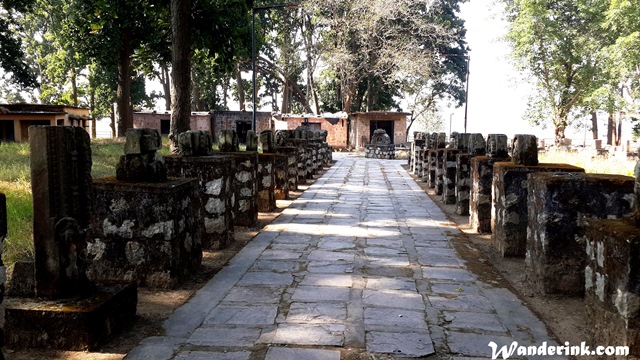
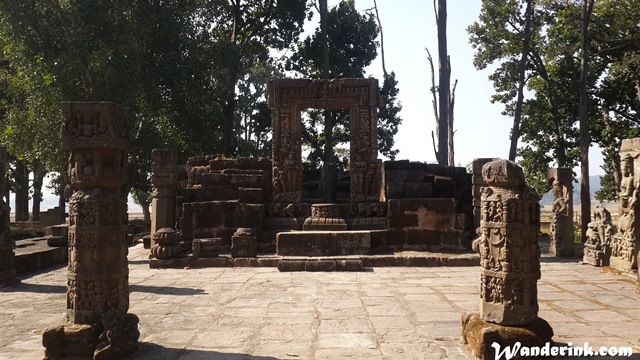
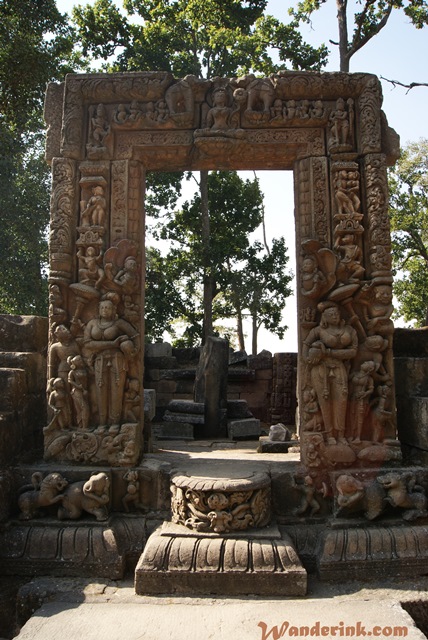
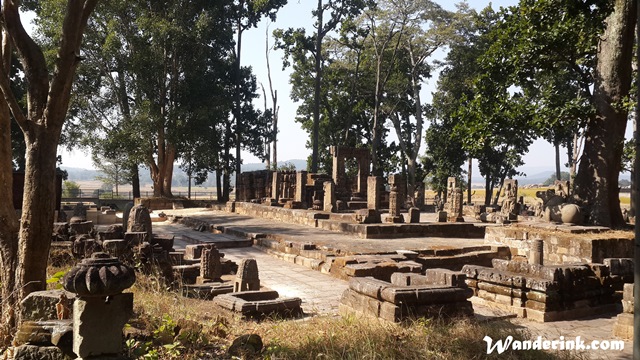
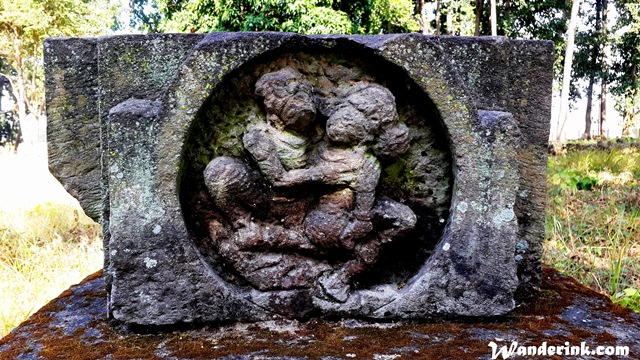
The site is an ancient temple complex and possibly the best archaeological site in the whole of Chhattisgarh. With not much footfalls, in large part due to its remote north location (read ‘route’ later in the story) the site has remained pristine. The best part is that the fruit of the archaeological dig has been preserved not in museums but on the open ground; and thankfully no claustrophobic awnings either. Excavated stone pillars have been erected along the path next to the entrance on which are exhibited the mythical creatures and religious figures that were unearthed at the site. A walk through the path leading to the main Shiva Temple breathes life to an almost visceral connection to our past and the rich heritage. Exploring the site is like walking through a live excavation site – only that here the sculptures have been lined up neatly, washing off the grime and the mud, for an exclusive premiere. Pardon the Hallmark sentiment, but you feel truly special here. The main findings in the region include six major temples and 74 smaller ones dating from the 7thcentury onward, when the region was under the Kalachuri kings.
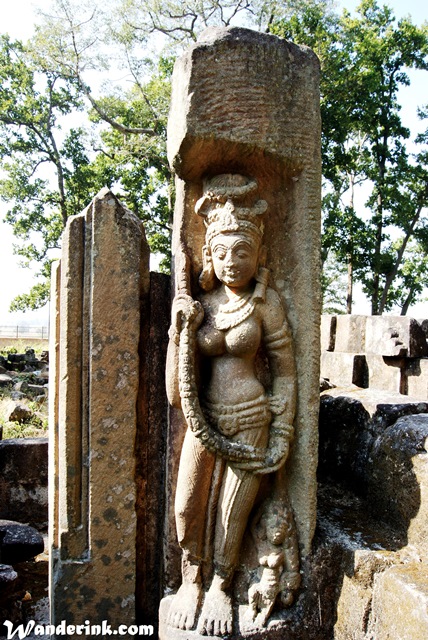
The main Shiva Temple is revered by the locals in the memory of King Samant Sarna who lost his life in battle centuries ago. The temple itself is quite unique in its craftsmanship, a celebration of perfection in everyday life. Thus there are images of the typical nayika (‘heroine’ literally) women characterised in sculptural art by alluring embonpoint – voluptuous breasts and well-rounded thighs. All around the complex are images of these nayikas in interesting postures – waiting for a lover, dancing, looking at themselves in the mirror. Keep an eye out for the one wearing a dissimilar pair of earrings. These nayikas are trendsetters, in stone: While mismatched earrings are popular with the tribal women of Sarguja even today, pop culture nayika Miley Cyrus wore one to a red carpet event last year.
There are regal-looking creatures roaring in alert sentry duty and the more pacific images of swans and beatific peacocks. There is a very unique statue of two lions with one head which can be seen on the adhisthana, the raised platform, of the temple. On the entrance doors to the temple there are the river goddesses Ganga and Yamuna, epitomising feminine grace and charm wearing jewellery and daintily coiffured. A magnificent Lord Shiva has been etched on to its arches. Around it is the Kalpavriksha (a wish-fulfilling tree in Hindu mythology) and a band of soldiers. A stroll around the temple will reveal grimacing men with severely twirled moustaches, the lower lips merging with the beards and tucked into the corners of the walls – their mouths are actually the exit for the drainage system. Creativity at its playful best.
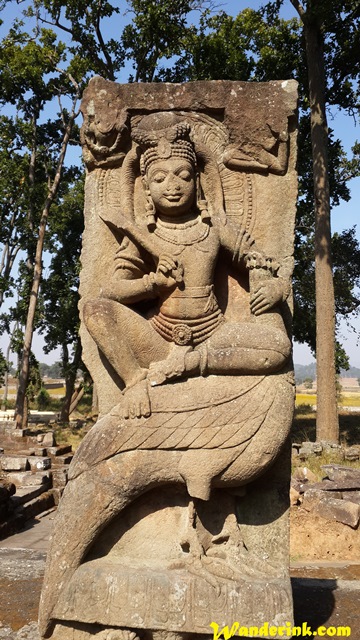
Other notable sculptures among the excavations here include the images of a dancing and an unmoving Lord Ganesha. The statue of Uma Maheshwar (Shiva and consort Parvati) is the epitome in sculptural art – there is a clearly discernible smile across the face of Uma Maheshwar. The hair on their heads as well as the jewellery worn by Parvati has also been etched out brilliantly. The statue of Rudra Bhairava or Shiva in his destructive avatar, with a garland of heads around his neck is more feral than elsewhere for it is grinning as if enjoying the annihilation. There is Lord Brahma with facial hair, apparently not seen anywhere else in India. Most nook and enclosure lead to a Shivalinga ranging from five feet to a behemoth and an architectural marvel made from 108 smaller Shivlingas. The macho soldier, in a marked departure from his usual gallant stance, plucking out a thorn that has pricked the tender feet of his paramour is an enduring one as it is endearing. Chivalry was always in fashion!
At the time of visit towards the end of last year I saw some labourers laying the foundation for a building without any sort of supervision within the site obviously flouting all conservation norms.
“Whom are you guys working for?” I asked.
“Babloo contractor.”
Expecting an ‘ASI’ or ‘state archaeology department’ I could only gawk at them.
“You don’t know Babloo contractor?” They asked, unbelieving.
“Mmmhhhh,” I mumbled unable to cover my feeling of inadequacy.
It could be just a matter of time before the true heritage experience of Dipadih is obliterated by more of such recent arrivals. But till then truly a life enriching experience.
The route and snacking suggestions: Dipadih is best done as a day trip from Ambikapur. Take the exit to Rajpur 38 km away. The road is a well maintained double lane though it tapers in many places to a narrow strip. Like the rest of Ambikapur, you don’t encounter much traffic here either. But do keep an eye open for tractors or other vehicles that are obscured by hayricks stacked up by the side of the road. Vast open fields, ochreous-yellow stubs in the post-harvest season, embrace the tarmac from both sides. Sal trees cuddle over clusters of adobe houses many of which are under lock and key; with not much of work left in the fields, the villagers have moved to cities looking for work.
Locals vouch for the quality of the food one gets at the dhabas along this route; there are a few as you near Rajpur which serves some seriously appetising stuff. The samosas from these shops are a must-try; the potato used in the filling has a certain je ne sais quoi which can be said only for those coming from Mainpat nearby. Have it with the pathaka (literally meaning ‘firecracker’) or imli (tamarind) chutney. Though the road traces a blazing straight track most of the time, there are severe half-moons and blind inclines. From Rajpur, Dipadih is 42 km and the scenery only gets better. A very memorable drive made further enjoyable by relative emptiness of the road. Once you reach Dipadih town there is an unobtrusive turning to the left which cuts through unending fields till the excavation site marked by sprawling arboreal glory.
Distance: 80 km / Time: 1 hr 30 min
You can wipe out a generation of people, you can burn their homes to the ground and somehow they will still come back. But if you destroy their achievements and their history then it’s like they never existed. Just ash floating.
George Stout / Frank Stokes played by George Clooney in the true life drama ‘The Monuments Men’
(Except for a few minor additions, the above article is largely from a chapter in the guidebook ‘Experience Chhattisgarh on the road’ written and photographed by for the Times Book Group.)
![Until society's perceptions change, my daughter will continue to think her worth is determined by the colour of her skin, writes Beatty [Courtesy of Muna Beatty]](https://www.aljazeera.com/mritems/imagecache/mbdxxlarge/mritems/Images/2018/9/6/56297b8ba99247fea70d8797d3251fac_18.jpg "Colour me right: It's time to end colourism in India")