To truly address sexual violence within the military, comprehensive changes must be implemented, writes Fatima [Reuters]
In 2003, I was a young Flying Officer in the Pakistan Air Force, training under a supervisor who was notorious for making advances on women. He lived up to his reputation. During my one year at the airbase, he inappropriately touched and made indecent comments and sexually explicit jokes to me and my female colleagues. Although I was not physically assaulted, the psychological trauma from these experiences was unbearable.
It is never easy to speak of sexual abuse, and I never reported him. Instead, I tried to erase this traumatic episode of my life from my memory - until recently. Last year, the revelations of pervasive sexual harassment and assault in the US film industry, and the consequent rise of the #MeToo movement, brought back these painful memories. Like other women across different industries and countries, I found the courage to speak out.
Because armies are male-dominated - across the world men account for more than 90 percent of military staff - and are intrinsically associated with certain notions of masculinity and aggression, they are difficult workplaces for women to navigate.
Furthermore, for centuries, armies have used rape as a weapon of war and some continue to do so. In recent years, there has also been growing evidence of the pervasiveness of sexual violence perpetrated by peacekeeping forces and of sexual assault committed within the military ranks across the world.
Despite increasing media attention on sexual crimes perpetrated by troops, information and statistics on sexual crimes within the military are still difficult to come by. Few countries around the world publish official data on the subject, and what is publicly available often underrepresents the true extent of the problem.
Israel, which mandates military service for both men and women, had 893 cases of sexual assault reported in the last year. The Pentagon estimates that 15,000 members of the US military have been sexually assaulted. In the British military, four in 10 military women are victims of sexual violence. A 2016 survey estimated that 27 percent of women in the Canadian armed forces face sexual abuse during their career.
Official reports on sexual violence in the military are even harder to find in developing countries. In my country, Pakistan, there have not been any reports released by the military on sexual crimes committed within its ranks. In countries like India, Peru,North Korea, Eritrea and Syria, there have been only occasional media reports on sexual assault committed by troops or anecdotal evidence published in human rights reports.
Across the world, sexual violence is very difficult for women in the military to address. Victims are often blamed for "provoking" the sexual abuse with their behaviour or dress. Reporting sexual harassment and assault can mean that the victim is labelled as a person of "loose morals" or as "a liar".
In more conservative settings, virginity and notions of honour make reporting sexual violence even more difficult, as women fear bringing shame to their families and losing their chances of marriage. At times, military women also trivialise sexual harassment to fit into the masculine setting. They may also discourage other women from reporting their experiences.
One of the biggest challenges in addressing sexual violence in the army is that military laws and procedures are different from civilian ones. Speaking to the media is prohibited and military institutions can hide behind legal loopholes or national security legislation to dodge accountability for crimes.
Sexual violence cases are heard in male-dominated military courts that operate under military law, which makes it difficult for militaries to try abusive people in top leadership positions. Often perpetrators sit in the same chain of command that is supposed to act on the complaint, leaving survivors of sexual violence fearing retaliation if they report. There is a gap in evidence-based studies on the issue, but data from the US military suggest that more than 48 percent of survivors refuse to proceed with trial after reporting sexual violence.
Solutions to the problem of sexual violence vary. Countries like Pakistan follow a strict policy of gender segregation to minimise interaction between men and women in the military. This is effective to an extent, given the conservative culture in the country.
To truly address sexual violence within the military, comprehensive changes must be implemented. These include: adapting practices to combat sexual harassment while keeping victims safe; developing action plans to prevent sexual harassment; training troops to report sexual harassment both as victims and as witnesses; creating safe and private channels of reporting sex crimes without fear of retaliation; amending military laws in countries that don't already classify sexual harassment as a specific crime to make it one; publicising the sexual harassment data and actions taken on them; and making provisions for victims to take sexual harassment cases to civil courts.Norway has taken the exact opposite route of putting men and women together in dorms and this strategy also seems to be working in reducing sexual assault rate. Countries like the US, France, UK,Israel and Canada have made some efforts to reform reporting and response mechanisms for sexual violence crimes to ensure protection for the victims and a higher likelihood for the perpetrators to be held accountable. None of these efforts has been enough, however.
These steps are essential if we want to create a safe environment for the women and men who serve .
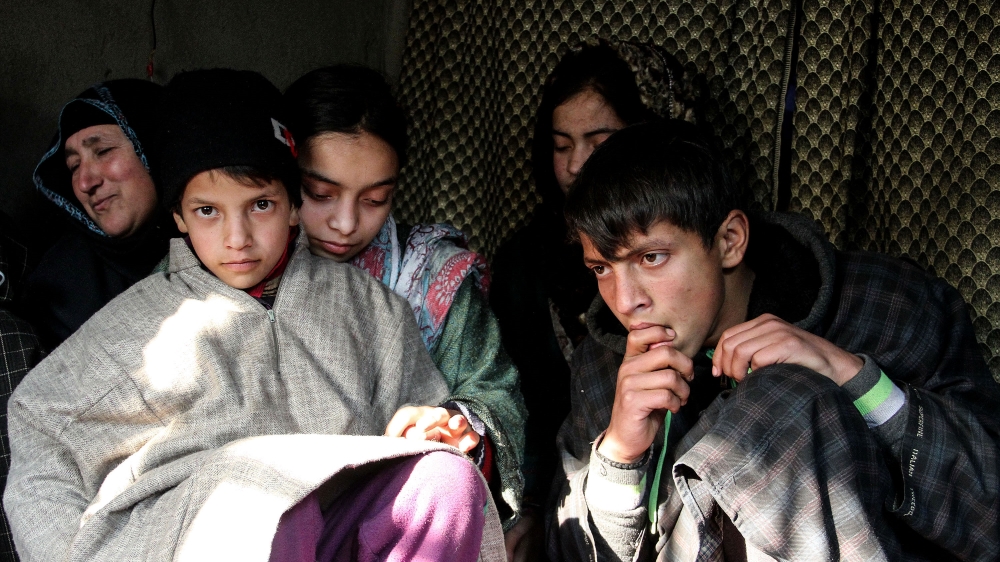
Srinagar, Indian-administered Kashmir -Unaware of the tragedy that happened to his family, five-year-old Rohit Koul played in the courtyard while his three elder siblings sat in a dimly lit room of their house in Lavdoora village, in south Kashmir's Anantnag district.
The children have not spoken much after their mother, Baby Koul, died three months ago due to chest disease. Nearly a year ago, their father, Maharaj Krishan, also died a natural death.
Muslim neighbours gathered at the home to offer emotional support to the Hindu children.
At a time of strained Hindu-Muslim ties in India, this unity in a remote village in divided Kashmir is exemplary.
Polarisation between the two communities has hit the country as right-wing groups engage in violence against Muslims because of their food and other social habits.
In April 2017, a Pew Research Center's study ranked India the fourth-worst country for religious intolerance out of 198 nations.
Indian-administered Kashmir is a Muslim-majority Himalayan region with Hindu, Sikh and Christian minorities, but living in harmony.
But the area divided by India and Pakistan had its share of tensions in the early 1990s, when turmoil forced many Kashmiri Hindus, known as Pandits, to abandon their homes and seek shelter in neighbouring Jammu and other parts of India.
Orphaned children of Koul family in their house in Levdoora [Sameer Mushtaq/Al Jazeera]
According to one study, Kashmir had 140,000 Pandits in the early 1990s, but that number was reduced to 19,865 by 1998.
The Kouls are one family that decided to remain. The warmth and support demonstrated by their Muslim neighbours after Baby Koul's death vindicated their choice.
'Like our own'
To pay tribute to Baby Koul, villagers of differing faiths gathered to perform her last rites according to the Hindu tradition.
"Baby Koul and her husband raised their children while fighting poverty. Their death shocked everyone in the village. These children are innocent and losing parents in less than a year is a catastrophe for them. Their parents were young and very gentle," Sameena, a local woman, told Al Jazeera.
According to villagers, the children are reluctant to go with their relatives because "they get much love from their neighbours".
The children were not emotionally ready to talk to this reporter because their mother died just a few days earlier.
"Villagers have helped the family and we will keep doing this. They are like our own children and we will not let them suffer in any way," resident Ghulam Nabi Dar told Al Jazeera.
The example of Hindu-Muslim togetherness displayed in Lavdoora village is not isolated.
Mehjabeena has created this mud house on the piece of land, which was donated by the Hindu neighbour [Sameer Mushtaq/Al Jazeera]
During Amarnath Yatra, Muslims help their Hindu brethren to undertake the annual pilgrimage in the snow-capped mountains in southern Kashmir.
Earlier this year, villagers in Sumbal in Bandipora in north Kashmir cleaned the premises of a Hindu temple to perform puja (prayer) on the occasion of Maha Shivratri, an important festival for Pandits.
The acts of kindness have also been reciprocated by Hindus. Last November, a Hindu couple greeted the procession marking Eid-e-Milad-un-Nabi the birthday of Prophet Mohammad, by distributing candies to Muslims as a symbol of love and affection. A video of the Hindu couple handing out the candies went viral on social media.
Worshipping together
In Mattan, the houses of worship for Hindus, Sikhs and Muslims are just a few metres apart.
Ramji, 60, is a priest at the temple in Mattan. "We share a good bond with our Muslim and Sikh brothers. We take part in each other's festivals. We also attend funerals when someone dies in Muslim neighbourhood," he told Al Jazeera.
The Tral area of Pulwama, which has been at the centre of anti-government protests in the last two years, also has Sikh population of 8,165 as of the latest census of India living happily with 98,632 Muslims.
"We never feel differences with each other. We are always there for each other in good and bad times. They even attend funeral prayers of militants," Faizan Ahmad, a student from Tral, told Al Jazeera.
Mehjabeena lives in a village in the Quazigund area. Twelve years ago, her husband abandoned her with two children. She returned to her home to live with her father for several years.
However, being poor, her father could not feed the family and she started living in a rented accommodation. "I used to wash clothes and dishes of the people to pay the rent and feed my family," she said.
Then a Pandit, Brij Nath, donated a piece of land to her where she built a one-room mud-brick house with the help of her father.
"I have lived in the village with her father and there was the association of oneness. I gave her a piece of land as she is very poor and has no place to live," Nath told Al Jazeera on the phone.
Generations of cooperation
In October last year, a church bell rang for the first time in 50 years at Holy Family Catholic Church in Srinagar. Christians, Muslims, Sikhs and Hindus inaugurated the bell weighing 105kg.
According to village elders, examples of communal harmony have been passed on through the generations.
"Kashmiri culture is a mix of three religions - Hindus, Buddhist and Muslims - which has come from our ancestors," said Zareef Ahmad Zareef, a Kashmiri poet and social activist.
"Temples have bells hanging at their entrance. Similarly, we have chains at Sufi shrines in the valley, which is a cross-ritual. We had some Hindu artists who have written Na'ats [poetry in praise of the Prophet] while there are Muslim artists who have written kirtans [divine Hindu songs]."
But Zareef accused politicians of trying to create barriers between the different communities.
"Our thoughts have been divided. We had oneness in Kashmir culture irrespective of religion," he said.
The fallout from the 2016 presidential election continues to dominate the news. If you flick to your favorite news channel, there’s a strong chance at least something to do with the election is still making headlines.
And for a good reason. Whatever side of the political spectrum you hail from, there’s a lot to talk about.
One of the major sticking points is that of election hacking. Allegations of election hacking and tampering continue to swirl, and with more elections looming near, this combustible topic is going to feature increasingly.
However, election hacking is a broad term. With one eye on the midterms and another on the future, let’s try and understand exactly what election hacking is.
Election hacking is also known as electoral fraud. At other times critics refer to it as vote rigging or electoral interference. But the objective is always the same—to directly influence the outcome of a vote.
One challenge facing voters is pinning down the effects of election hacking. Voters encounter difficulty because it isn’t usually a single observable issue taking place. In many cases, the manipulation is subtle, plays out over a lengthy period, and isn’t apparent until after the election results (but not all the time).
Around the world, numerous totalitarian states feature only name on the ballot: that of the existing leader or party, or parties subservient to the ruling party. This happens in countries like China, North Korea, Cuba, and Vietnam (there are several more, too). These are single-party dictatorships, however, and differ somewhat from rigged voting situations.
There are countless rigged election examples. For instance, the Ugandan general election of 2006, the Kenyan presidential election of 2007, the Romanian presidential election of 2014, the Syrian presidential election of 2014, and hundreds more all fit this category.
What Election Hacking Looks Like in Practice
Despite the many examples of electoral interference around the globe, election hacking boils down to just three major, coverall categories. Why? Because together, these three categories form a cohesive strategy for election hacking.
1. Manipulate the Voters Before the Election
The first strategy is to manipulate the voters before they hit the polling booths. Manipulating voters before an election is itself multifaceted, but there are prominent recent examples for you to examine.
The post-2016 presidential election analysis from various government agencies made it clear that Russia had run a “messaging strategy that blends covert intelligence operations—such as cyber activity—with overt efforts by Russian Government agencies, state-funded media, third-party intermediaries, and paid social media users or ‘trolls.'”
In early November 2017, Congress released a series of Russian-backed Facebook ads that targeted voters of specific demographics. The advertisements promote divisive, emotional topics designed to begin online arguments (some of which spilled out into public). Other revelations saw Russian-run Facebook pages uniting different political pages under unique hashtags to raise awareness.
“Fake news” plays a significant part in voter influence, as does social media in the distribution of the false stories. The severity of fake news varies. At times, fake news is a regular news report that has its truth economically twisted to suit the goal of the news outlet and their political choices.
However, at other times, fake news is outright lies spread throughout social media (sometimes using the aforementioned targeted advertising to hit key demographics that are more likely to share the fake media and thus increase its reach).
Fake news regularly appears in national newspapers, making bold, false allegations that target specific demographics or make sweeping, generalized statements. But when proven false, the newspaper prints a minute apology buried in the middle of an edition months down the line.
Another common voter manipulation tactic is to split the opposition support, then manufacture conflict between those parties. The US political system has only two major parties that will realistically win control of the three branches. Thus, splitting voters within parties isn’t a common tactic. However, in the UK, this tactic becomes more potent due to the overlap of many political parties.
However, there were attacks against at least one US voting software supplier, while a leaked NSA document confirmed a breach with a Florida-based voting-equipment vendor. A Bloomberg report in 2017 alleges “Russian hackers hit systems in a total of 39 states,” drastically increasing the scope of potential interference.
A direct attack on the voting machines seems unlikely; outrageous, even. They are a bastion of democracy, after all. But hackers have repeatedly shown just how easy it is to exploit a voting machine. At the enormous DEFCON cybersecurity convention, it took hackers less than two hours to hack a US voting machine. The DEFCON organizers pooled 30 voting machines from a variety of manufacturers, none of which remained secure.
One wireless hack exploited a 14-year-old vulnerability in unpatched Windows XP machines. Using the exploit, Danish security researcher Carsten Schürmann could change the machine vote tally from anywhere on the planet.
Despite what both major US political party supporters yell, there is still no evidence that there was direct voting machine manipulation affecting the outcome of the 2016 US presidential election. But “[w]ithout question, our voting systems are weak and susceptible,” says Jake Braun, CEO of security consulting firm Cambridge Global Advisors. “Thanks to the contributions of the hacker community today, we’ve uncovered even more about exactly how.”
3. Manipulate the Infrastructure
Finally, consider how manipulating the infrastructure around an election also plays a part in the outcome. Causing mass-disruption to citizens attempting to cast a vote is another way to hack an election. Disturbing the election process on the day of, or day before, can sway numbers.
Disruption levels vary, as you might imagine. An extreme example is the 1984 Rajneeshee attack. A religious cult poisoned over 700 Oregonians with salmonella to stop them voting in county elections, almost killing several in the process. At the same time, the cult registered thousands of homeless people to vote, promising them food in return. This level of disruption to cause “natural” voter fraud is rare. Also, it is difficult to contain, as the cult quickly realized.
However, widespread disruption doesn’t require poisoning or busloads of homeless people. A hacker with access to a voter database could delete or corrupt voter logs. Sounds outlandish? This exact hack took place at the aforementioned DEFCON conference. As you have already seen, Russian hackers hit voting systems in 39 states, so it isn’t entirely out of the question.
Another infrastructure disruption tactic is a powerful DDoS to take political information offline at critical moments. A Distributed Denial of Service (DDoS) attack is easy to organize, as well as cheap and very effective. Political sites can be forced offline under the strain of a DDoS attack.
The problem with such assertions is the resulting reactions harm those that already struggle to vote, in turn creating another form of election hacking (this falls under section one and three, by the way).
Sanam Naraghi Anderlini is Co-Founder & Executive Director, International Civil Society Action Network (ICAN)
WASHINGTON DC, May 4 2018 (IPS) - New York and Washington DC may be three hours apart geographically, but in global affairs, they are worlds apart.
With the wars in Syria, Yemen and elsewhere unabating, at the UN in New York, terms like ‘conflict prevention’ and ‘sustaining peace’ are back in vogue, with world leaders attending a major summit. Meanwhile in Washington while the talks with North Korea took center stage behind the scenes the drum roll of war against Iran is revving up.
Sanam Naraghi Anderlini
The playbook of this potentially impending war is familiar. The groundwork in the media and political arena is being laid, to make war necessary thus inevitable, so that it ultimately becomes so. Future historians can look back to this month for the many early warning signs and the red herrings that set this stage. Below I address four of the most obvious. The Israeli provocation
On Monday April 9th Israel attacked Syrian military bases where Iranian security personnel were stationed. Seven Iranians died in the attack and tensions in the region soared. As many Middle East watchers noted, Israel was trying to provoke a retaliation from Iran, so that Prime Minister Benjamin Netanyahu could unleash his pent-up anger across Iranian skies.
As the dead soldiers returned to Tehran, Iranian officials said the strikes “will not remain without a response.” Israel meanwhile reiterated it won’t tolerate Iranian military bases next door. It launched another attack on April 30th killing Iranians, Syrians and Iraqi military personnel.
Memories of Israeli-Iranian cooperation against Iraqi President Saddam Hussein during the 1980s Iran-Iraq war are all but erased from history as the two countries have provoked and retaliated against each other through proxies for three decades. But the war of words is escalating to war on the ground.
Undercutting the JCPOA
Second, not surprising the rising tensions in the region come in parallel with the attacks on the Iran deal or Joint Comprehensive Plan of Action (JCPOA) that Israeli Prime Minister Netanyahu has always resented. The JCPOA has prevented Iran from pursuing even the possibility of nuclear weapons, and was meant to open a pathway for broader diplomacy between the US and Iran and to keep at least a cold peace between Saudi Arabia, Israel and Iran.
While Iran has adhered to the terms of the JCPOA, the US has not. The financial sanctions and threats of billion dollar penalties against banks that dare to do business with Iranian companies or citizens are still in place.
Without the promised economic benefits, the Iranian government faces an angry public and an emboldened hardline and conservative faction within the regime. Despite joining the coalition fight against ISIS, Iran’s dogged support for Syria’s President Assad adds fuel to the fire of the anti-Iran coalition.
While Netanyahu’s theatrics on May 1 gained attention, other pro-war advocates in America have also been re-inserting themselves into mainstream politics. On April 11th, Michael Makovsky a former Pentagon official and now head of the Jewish Institute for National Security of America (JINSA) suggested that because President Trump threatened to withdraw from the JCPOA, he has put the US in a corner.
Makovsky acknowledged that Iran is adhering to the agreement but said if Iran withdraws the US should act. “A prepared president” he wrote, “should seize the historic opportunity to follow through on that threat.” In effect he argues that regardless of Iran’s adherence, if the US withdraws, it must attack Iran so as not to appear weak. President Trump has taken the bait.
Meeting with France’s President Macron on April 24th, Trump said the US could withdraw from the JCPOA, but if Iran does so and “starts its nuclear program they will have bigger problems than they have ever had before,” adding “If Iran threatens us, they will experience a retaliation few countries have ever experienced.” President Trump may hate the JCPOA, but he despises Iran’s adherence to it even more. Bolton, the MEK and the Regime Changers
Third, the ascent of John Bolton as National Security Adviser means ‘regime change’ policy is firmly back on the table. For those needing a reminder, this was the policy of the Bush administration after 9/11. It signals a range of covert and overt actions by the US or its proxies to bring down a regime that is deemed unfriendly to the US, and install a friendly one.
That John Bolton is an enthusiast of such a policy, and that he is publicly affiliated with the cultish Mujahedin e Khalq (MEK was on the terrorist list until 2012) that self-identify as Iran’s exiled opposition group and have shaped shifted to appear more palatable to western states, but remain widely despised inside the country, is another warning sign of an Iraq war redux.
Other ‘regime changers’ such as Eli Lake have also come out of hibernation. Early in April, Eli Lake an unapologetic supporter of the Iraq war published an interview with Dr. Shirin Ebadi, Iran’s Nobel laureate. Dr. Ebadi has long criticized the Iranian regime for its human rights abuses, and called for a variety of legal measures to bring about systemic change.
In her interview, she repeats her assertion that “the regime change in Iran should take place inside Iran and by the people of Iran…But,” she says, the US “can help the people of Iran reach their own goal” by establishing a channel to the legitimate and independent Iranian opposition.
That she’s seeking US support is of concern to many. But in calling for regime change, she is also siding against the JCPOA. The article headline screamed “Nobel Laureate is done with Reform, she wants Regime Change’ and overnight the neo-cons had their own version of a celebrity advocate.
The Economic Factor
Finally, there is nothing quite like preparing the groundswell for chaos than meddling with a country’s finances. Here too the timing and evidence is not coincidental. In February 2018, the Iranian rial lurched downward and as Iranians rung in their new year in late March, the spiral continued with a 20% loss, causing many to question machinations behind the scenes.
While Iran’s own mismanagement of the economy is also to blame, the coalescing of external factors is notable. Iranians have relied on the United Arab Emirates (UAE) markets to obtain dollars and enable transactions and trade.
But with US and Saudi involvement, the UAE instigated a new 5% value added tax, visa restrictions and tighter banking restrictions that mostly affect Iranians. In Iran a public rush to sell the rial and invest in the ever more expensive dollar or gold, prompted the government to step in and announce a single official dollar rate. Whether this allays fears and stabilizes the economy is yet to be seen. But uncertainty is in the air.
Iran has done a poor job of public relations in the US. For an older generation, images of yellow ribbons tied around neighborhood trees counting the days of the 1979 hostage crisis are seared in memories.
For a younger generation, it is images of brave women throwing off their mandatory veils as they fend off security guards. It is a far away land of angry clerics with furrowed brows where environmentalists and dual citizens are arrested.
But as pressures loom, it is important to remember that Iranians – men and women, old and young, children and grand parents are trying to live normal lives of love and laughter, joy and heartache.
In 2002 when US think tanks and media joined the Bush administration’s drumbeat of war on Iraq, the public was skeptical, but the political establishment pushed to make war seemed inevitable.
Yet decisions made on a high of adrenlin and machismo didn’t result in a ‘cakewalk of a war’. They caused unimagined misery. Iraq, a country that was the cradle of civilization that had no illiteracy in its population by 1980, is now unrecognizable. One million people are dead according to the most conservative estimates.
Depleted uranium from US weapons runs in the waterways and into veins of Iraq children giving rise to unprecedented levels of cancer. US hubris and mismanagement of the occupation and its aftermath also gave rise to ISIS.
Now cheerleaders of that war have their eyes on Iran. A country that is significantly larger and is home to 80 million people, majority young, overwhelmingly educated, and mostly fed up with the aging theocracy that isolates them from the world and thwarts their aspirations.
But this population does not want missiles raining from the sky. It doesn’t want its economy ruined. It wants engagement with the world. It is also deeply patriotic. They may rail against the regime but they will likely rally as a nation if there is any foreign attack.
Even if attacks are purported to be tactical, aimed at the heart of the regime’s center to create a vacuum of power, the ascendance of on organized opposition that is tasteful to the west is unlikely. The more likely scenario is the rise of a militant force, backed by an indignant population fueled by renewed anger towards the US and its allies.
The world should also pause and anticipate what may unfold if chaos is invoked through economic collapse and a weakening of Iran’s borders: at a minimum refugees spilling into Europe and an open gateway from Afghanistan and Pakistan to the Persian Gulf and beyond.
The JCPOA is a critical foundation for preventing conflagration on a scale we have not seen. For those who still claim military attacks, harsh sanctions or other forms of destabilization are the route to peace, democracy or human rights, the body count and chaos in Libya, Iraq and Yemen is evidence of their flawed logic.
Iran’s alliance with President Assad is unfathomable, but it does not warrant unleashing chaos against Iran’s 80 million people. Neither any regional Middle Eastern states, nor the global powers have morality on their side. All are implicated in wars that have led too many deaths already.
As the May 12 deadline looms for the US’s endorsement of the JCPOA, world leaders who claimed to support Mr.Guterres’ sustaining peace agenda, have a clear moral imperative: to stand by their words and sustain the peace for the millions of civilians in Iran and beyond who would pay the price if violence escalates.
That means they must prevent this impending conflict before the fog of inevitability sets in.
PARIS (Reuters) - Online donations to help French rail workers topped one million euros on Friday, a month after they began rolling strikes over President Emmanuel Macron’s drive to transform the heavily indebted state rail monopoly into a profit-making company.
Opinion polls show a majority of French people support the SNCF reform plan and the scale of response to a web-based petition for funds has surprised those who launched it.
“Who would have dreamed a month ago that it would reach a million? Nobody, and certainly not me,” said Jean-Marc Salmon, a university sociologist who teamed up with like-minded academics, authors and artists to launch the petition.
Train services were disrupted for a 14th day since early April on Friday by stoppages that are taking place for two out of every five days.
The capacity of the unions to maintain the strike will depend as much on the durability of their and their workers’ finances as on accumulating political capital.
The reform of the SNCF is the biggest since France’s nationalization of the railways in 1937; it will phase out the SNCF monopoly in domestic passenger rail and end hiring on more protective contracts than in other sectors.
SNCF management said the share of staff striking had dropped to 17 percent this week from more than 30 percent when stoppages began on April 3.
Prime Minister Edouard Philippe is set to meet union chiefs on Monday. Analysts believe the government may try to win over the more moderate unions and break the united front that the four main unions have maintained so far.
SNCF debt tops 46 billion euros, much of it blamed on heavy investment in France’s much-admired TGV high-speed train network at the expense of a far bigger secondary rail network which the company admits neglecting over recent years.
Losses due to the current wave of strikes total about 250 million euros, according to the SNCF.
STOCKHOLM, May 4 (Xinhua) -- The Swedish Academy announced Friday that it would not hand out the Nobel Prize in Literature this year.
It plans to award double prizes next year, the institute said in a press release.
"We have decided not to award a prize after long and intense discussions. The global confidence is so low (in the Swedish Academy)and ... we plan to award the prize next year and hopefully then a double prize," the academy's acting chief Anders Olsson told Swedish TT News Agency.
A similar situation has occurred before, said Olsson, referring to the practice of postponing the award ceremony, usually held annually, to the next year.
![To truly address sexual violence within the military, comprehensive changes must be implemented, writes Fatima [Reuters]](https://www.aljazeera.com/mritems/imagecache/mbdxxlarge/mritems/Images/2018/5/1/16071b567d8645fa912e44ef965322e3_18.jpg "Across the world, militaries have a sexual violence problem")