Shopian, Kashmir - As he walks through the ruins of his home, Abdul Ahad Bhat keeps returning to his cow. He sidesteps the rubble of the fallen ceiling, points at the burned out frames of the windows, and feels with his fingers the bullet holes on the walls, but it is the image of his dead cow that seems to symbolise for him the destruction of his home in Batmurran village in southern Indian-administered Kashmir.
"My brother and I carried the burned-out carcasses of our two cows on a tractor and we could see the remains of the calves inside them," he says. "They were both seven months pregnant. Of everything that burned here, that haunts me the most. The calves had burned inside their mother's wombs."
Bhat lost his home and his cow on December 19 in a gunfight between the Indian armed forces and rebel fighters in Batmurran village in Shopian district.
Bhat's four neighbours also lost their homes in the same gunfight and together they joined the fate of uncounted families rendered homeless in the frequent gun battles in the disputed region.
Between talking about his cow, 66-year-old Bhat, a butcher by profession, speaks about the lifetime of hard work through which he had made this new house two years ago. He says he wanted to gift his family a strong house, one that would last.
"But it couldn't even last a few hours," he says, standing amid the utensils and debris of what used to be their kitchen. "Years of work and savings blown up in two blasts. And now we are homeless, seven people living in a room in a neighbour’s house."
At least two rebel fighters and a civilian woman were killed in the gun battle while five houses along with two shops, a car and a motorbike were destroyed.
According to the officials in the region, over 210 rebel fighters have been killed in gunfights by the Indian forces in during the past year - the highest since 2010.
The Himalayan region claimed in full by both India and Pakistan erupted in deadly protests after a popular Kashmiri rebel commander Burhan Wani was killed by Indian security forces in 2016.
Thousands of civilians have been injured, many of them blinded by pellet guns fired by the security forces, drawing criticisms from human rights organisations.
India has stationed nearly half a million security forces to fight an armed rebellion that erupted in the late 1980s. In recent years, however, the armed resistance has given way to often deadly street protests.
Last year saw a record number of gun battles as Indian forces launched 'Operation All Out' amid a spurt in violence.
People rendered homeless
In most of these gun battles, the Indian armed forces, including the local police and its special counterinsurgency wing, have prior intelligence inputs about the presence of rebel fighters down to the specific house.
When the militants are in hiding in small houses in villages, it becomes easy for us to just blow up the houses and kill the militants inside rather than engage in a drawn out gun-fight
RAJESH YADAV, THE SPOKESPERSON OF CRPF
They lay cordon around the house and empty out the houses around it before the operation begins by generally blowing up the houses they suspect for the presence of rebels.
"When the militants are in hiding in small houses in villages, it becomes easy for us to just blow up the houses and kill the militants inside rather than engage in a drawn out gunfight," the spokesperson of Central Reserve Police Force (CRPF), Rajesh Yadav, told Al Jazeera.
"Why waste time and expose our soldiers to the possibility of casualty during a gunfight when a few IED’s can take care of the whole thing."
While the explosives kill the rebels easily, they render people homeless. There are no specific figures on the total number of houses destroyed by the use of explosives as both police and the civil administration have failed to compile data. The gunbattle in Batmurran on December 19 left at least 34 people homeless.
Mohammad Yaqoob Bhat has still not come to terms with the destruction of his house in the Batmurran village. An employee in the region's Information Department, Yaqoob and his five family members now live nearby with his sister.
"We come here sometimes, I, my wife, my children and we look at our house from a distance. We cry for a while and then we return. What else can we do?" he asked.
The only thing that survived from his home, Yaqoob says, was a kanger - the Kashmiri firepot to keep warm in the winters. He carried it with him this icy December afternoon.
"For 30 years I have been working. Except for the marriage of one of my daughters, I had put everything in this house. A geyser one month, then a power backup system after saving for months, a beautiful cupboard in the kitchen, computer for my children. And it is all gone."
No hope of compensation
No one from the government has come yet, they say, and if it weren't for the neighbours, they would be living on the streets.
None of the houses burned down in Batmurran had any insurance, their owners told Al Jazeera. Their efforts to find shelter and reconstruct their houses now depends on the compensation from the state government and the money raised by their neighbours and relatives.
Six members of Ali Mohammad Sheikh’s family and his wife's parents, whose house was also burned in the Batmurran gunfight, stay in a two-room shed of a neighbour.
"The neighbours collected money for us to buy some ration and medicine, and they opened their houses for us. Nothing from the government so far," one of the men in Batmurran says.
The regional administration says that it takes time to process the compensation for the families rendered homeless.
"We do compensate the families who lose their houses in these gunfights but we need a report from the police and intelligence department clarifying that the house owners were not involved in giving shelter to the militants. That takes a little time - two months I would say," Aijaz Ashraf, Deputy Commissioner of Shopian district, told Al Jazeera. "If the families have given shelter to militants then there is no compensation."
Ashraf said that a completely destroyed pukka (concrete) house gets a compensation of seven lakh Indian rupees ($11,000) while a damaged kaccha (mud and brick) house receives around four lakh Indian rupees ($6,300). If the house is partially damaged, he said, then the compensation is calculated accordingly.
Ashraf however, refused to comment on specific cases like Batmurran or give the exact number of houses destroyed over the last year in his district, but said that they had released funds for several burned houses over the past year.
Theft of valuables
An hour away from Batmurran, through vast apple orchards stripped bare by the winter, 26-year-old Ajaz Ahmad sits in his shop in Kellar market in Shopian district where he sells cheap plastic shoes.
Ahmad lost his home in Bamnoo village in the adjoining Pulwama district during a gunfight in July last year. For six months, Ahmad said that he along with his mother, two brothers, and a sister - have been living in a single room in a neighbour’s house. In another room in the same house, his uncle lives with his wife who suffers from cancer; their house too was blown up.
"The neighbours have four room, they gave us two. If it weren't for them, we don't know what we would do," Ahmad says. "But six months is too long to live at someone's house. I feel a sense of shame every evening going in there."
Deputy Commissioner of Pulwama district, Ghulam Mohammad Dar, told Al Jazeera that "the administration had provided compensation to the people who had lost their homes in gunfights, including the five families in Bamnoo village".
They can say whatever they want. Why don\'t they complain to the police then? I have no information about any such incidents
MUNIR KHAN, THE INSPECTOR GENERAL OF POLICE IN KASHMIR REGION
On the ground, however, the victims say that none of them have received compensation yet.
"We have been going to the offices. They say they will give the compensation soon. We keep telling them that we have sisters and mothers and we have no money except to eat two meals a day. But who listens to the weak?" Ahmad says, sitting amid the shoes and slippers in his shop. "We wait."
Many people allege theft of their valuables and belongings during the gun battles, something, they say they find hard to prove.
"The Indian forces drove us out and took position in our home during the gun battle and they stole my 20000 rupees ($300). I had saved the money by sewing clothes for over a year," 21-year-old Sakeena Bano, a resident of Arwani village in Anantnag district, told Al Jazeera.
Sakeena says she wanted to buy a motorised machine with the money she had saved by working eight hours every day.
"When I returned, they had pulled out the lock of the steel trunk where I used to keep my money," said Sakeena referring to the security forces who had camped inside her house during the gun battle.
Her family said that some utensils and the little gold they had been gathering for their daughter's marriage are also missing. Sakeena’s neighbours, who lost their house, too complained of theft by the armed forces.
According to the people, their cash, gold, clothes, utensils, beddings, and in one case a generator, were stolen from their homes. Bhat, the butcher, who lost his home and his cow in Batmurran village, found all the knives missing from the butcher shop near his home.
"Last month I had brought the knives for 10,000 rupees ($150). They took even the knives," Bhat told Al Jazeera.
The Inspector General of Police in Kashmir region, Munir Khan, while speaking to Al Jazeera, rubbished civilian claims.
"They can say whatever they want. Why don't they complain to the police then? I have no information about any such incidents," Khan said.
The people say that they don't register First Information Reports (formal police complaint) with the police out of fear, adding they see little point in complaining to the police when they believe that the police, along with the Indian paramilitary and army, were part of the theft.
Speaking on the condition of anonymity, a senior police official accepted that thefts happen and defended it by calling it 'war booty'.
"These people are sympathisers of militants. They give them shelter, night after night. Why should we not take away their things after killing the militants?"
Many people allege theft of their valuables and belongings during the gun-battles [Zahid Rafiq/Al Jazeera]
MOSCOW, Jan. 15 (Xinhua) -- Russia's incumbent president Vladimir Putin is likely to win the 2018 presidential race with 81.1 percent of votes, leaving all rival candidates far behind, a public opinion poll by the government-owned research center VTSIOM showed Monday.
About 67 percent of the Russian citizens tend to take part in the voting, among which 81.1 percent of the people would support Putin, according to a special research project launched by VTSIOM for the 2018 presidential elections on March 18.
Results of the research also showed that Pavel Grudinin, a farmer supported by the Russian Communist Party, might get 7.6 percent of votes, while Vladimir Zhirinovsky, leader of the Liberal Democratic Party, might get 4.2 percent.
TV presenter Ksenia Sobchak is likely to get 0.7 percent of votes, and Grigory Yavlinsky, founder of the opposition Yabloko party, would get 0.6 percent. The Presidential Commissioner for Entrepreneurs' Rights Boris Titov might just get 0.3 percent.
The survey was conducted over the phone on Jan. 8-10, involving 3,000 Russians aged more than 18 years old.
The world's third-largest toy museum, according to its founders, was inaugurated in Turkey's northern Samsun province on Tuesday.
The museum features an array of nearly 800 toys, most produced in the 1900s-1920s, worth some 2 million Turkish liras ($532,000), the local mayor told journalists at the grand opening.
Osman Genc, the mayor of Samsun’s Canik district, said that the museum is also the largest toy museum in Turkey, and spotlights vintage specimens crafted by German, French, Americans, Japanese, Polish, Chinese, and Turkish toymakers.
Calling toys vital for children’s education, Genc added: "The lack of a toy factory in Turkey has troubled us."
"If a nation wants to pass down its own culture, heroes, and life to future generations, it has to make its own toys. This is why we wanted to build a toy museum and encourage the private sector to build a toy factory," he added.
He said the museum not only exhibits toys but also gives children an opportunity to learn how to make toys in workshops.
"Our children will know our local toys and will be excited about them,” he said.
“So they will learn Turkish culture."
The museum also includes toys like miniature villages, Native American tents, airplanes and trains produced in Germany in the 1920s, as well as Ford's first toy car from 1920.
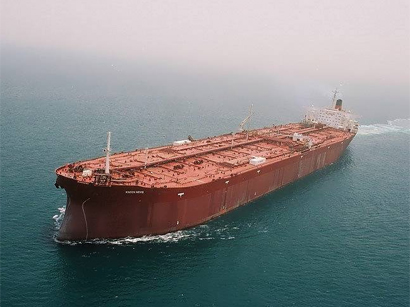
The Iranian Cabinet in a statement on Sunday declared Jan 15 (Monday) as a day of public mourning for the victims of the oil tanker inferno, IRNA reported.
Iranian government also condoled with the bereaved families of the victims of the deadly incident.
An Iranian tanker carrying gas condensates collided with a Chinese freight ship in East China coast on January 6, and all the 32 members of its crew members went missing. Three bodies were later found during a rescue operation.
The 30 Iranians and the two Bangladeshi sailors, who were members of the crew, had unfortunately been killed due to toxic gas and the huge size of the fire which embraced the tanker since the outset of the tragic incident, Head of Ports and Maritime Organization Mohammad Rastad told the Islamic Republic News Agency (IRNA) on Sunday morning.
SEOUL, Jan. 14 (Yonhap) -- South Korea is within reach of becoming the fifth-largest exporting nation in the world, fueled by a steady rise in outbound shipments, a private economic think tank said Sunday.
The Hyundai Research Institute (HRI) said in its latest 2018 export issue review paper that as of September last year, Asia's fourth-largest economy ranked No. 6 among exporters, up from eighth place in 2016. In 2017 its products accounted for 3.6 percent of all exports, a record high for the country.
It said the Netherlands, that has held the No. 5 spot since 2008, accounted for 4 percent of the global export market last year, down from 4.4 percent 10 years earlier.
The HRI said that for the new year shipments to developing economies are expected to grow sharply, bolstered by solid growth.
According to the International Monetary Fund economic growth among advanced industrialized economies will move up 2 percent this year, down 0.2 percentage point from 2017, but numbers for developing countries will rise 0.3 percentage point to 4.9 percent.
Such a trend can benefit South Korea that has increased trade with developing economies as part of its export diversification effort.
On the negative side, the think tank said that export growth will generally slow down compared to last year, with various risks linked to trading with the United States and China.
In addition, South Korea could experience problems with the appreciation of its currency compared to major currencies like the Japanese yen.
A stronger won can reduce the price competitiveness of the locally made products abroad, particularly if the yen loses its value.
The rise of crude oil poses can further complicate growth with rising prices to boost export volume, but posing its own set of problems down the line. South Korea has extensive oil refinery and petrochemical facilities.
If Western Texas Intermediate rises to US$60 per barrel in the fourth quarter, exports will go up 0.19 percent, but steady rise in prices could cause a drop in demand.
In regards to semiconductors that has contributed greatly to the country's recent export growth, HRI said shipments will continue to do well in the first half, with expansion tapering towards the latter months of the year.
The think tank said that beside's South Korea's traditional industries, eight new business areas such as next generation semiconductors and displays, energy, biotech and robotics promises good growth potential going forward.
Total exports in these sectors rose 27.5 percent on-year in 2017 to $73.6 billion. The growth rate for this field easily exceeded 15.8 percent gains for all exports.
HRI said that for South Korea to climb higher on the ladder of exporting nations it has to diversify its export market, enhance competitiveness of products and build up new industries that can sustain the current expansion.
Containers ready for shipment at Busan port. (Yonhap)
PRAGUE, January 14. /TASS/. Incumbent president Milos Zeman won the first round of Czech presidential elections on Saturday and will face Jiri Drahos in the second round of the vote due later this month, the Czech statistical department said.
As of 22:00 Moscow time, the department completed counting votes from 14,866 constituencies in the republic.
73-year-old Zeman won the first round with 38.56% of the vote, or 1,985,547 votes. His opponent Dragos, the 69-year-old former chairman of the Czech Academy of Sciences, garnered 26.6% of the vote, or 1,369,601 votes in total.
The turnout was 61.92% The Czech republic has 8.366 million registered voters.
NEW DELHI (Reuters) - Four former senior Indian judges on Sunday released a letter in support of a group of Supreme Court judges who on Friday openly criticised the way the top court was functioning.
(L-R) Justices Kurian Joseph, Jasti Chelameswar, Ranjan Gogoi and Madan Lokur address the media at a news conference in New Delhi, January 12, 2018. REUTERS/Stringer
The retired judges — including a former Supreme Court judge and a chief justice of the Delhi High Court — confirmed they had issued an open letter to the Chief Justice of India after four Supreme Court judges held a press conference on Friday in which one of them warned that the nation’s democracy was under threat because of the way the top court was being run.
The four sitting judges of the Supreme Court had criticised distribution of cases to judges and raised concerns about judicial appointments in the nation’s highest court under Chief Justice Dipak Misra.
Misra has not responded to their allegations.
“We agree with the four judges that though the chief justice of India is the master of roster and can designate benches for allocation of work, this does not mean that it can be done in an arbitrary manner such that sensitive and important cases are sent to hand-picked benches of junior judges by the chief justice,” the former judges said in the open letter on Sunday.
Justice Jasti Chelameswar gestures as he leaves after the news conference in New Delhi, January 12, 2018. REUTERS/Adnan Abidi
Reuters was able to confirm that the letter was drafted and signed by four former judges P.B.Sawant, A.P.Shah, K. Chandru and H. Suresh.
Two of the retired judges said it was important to support the group of Supreme Court judges because they had taken the bold step of speaking out publicly to protect the sanctity of the most important institution of India.
Slideshow (3 Images)
Friday’s public outburst by judges prompted Prime Minister Narendra Modi to hold an emergency meeting with his law minister on Friday but the government has refused to comment.
The four former judges said in the statement that all rules and norms must be laid down clearly for allocation of cases.
“This must be done immediately to restore public confidence in the judiciary and in the Supreme Court,” the former judges said.
BERLIN/PARIS (Reuters) - Emboldened by a preliminary coalition deal between Chancellor Angela Merkel and the Social Democrats (SPD), Germany and France will try to inject new momentum into their stalled EU reform efforts this week when their finance ministers meet in Paris.
FILE PHOTO - A German, French and an EU flag flutter over the German lower house of parliament in Berlin January 22, 2013. REUTERS/Fabrizio Bensch
Peter Altmaier, one of Merkel’s closest party allies, will pay a visit to his French counterpart Bruno Le Maire on Thursday, a day after leading French and German economists unveil new recommendations for a reform of the euro zone.
The meeting is a sign that Berlin is prepared to negotiate with Paris in parallel to Merkel’s coalition talks with the SPD, which could begin later this month if members of the center-left party give a green light at a party congress next Sunday.
“We have an acting government which can act and must continue to work,” Achim Post, deputy leader for the SPD in parliament, told Reuters. He said the coalition blueprint clinched on Friday would pave the way for a “paradigm shift” on Europe away from austerity and towards more investment and jobs.
The 28-page document was also welcomed by French President Emmanuel Macron, whose plans for an ambitious reform of the EU, including an overhaul of euro zone governance, were dealt a blow by an inconclusive German election in September and the political limbo that followed.
The draft, which could form the basis for Merkel’s third “grand coalition” government since taking power in 2005, raises the prospect of an “investment budget” for the single currency bloc, a nod to Macron’s call for a budget to help the euro zone cope with external economic shocks.
It also calls for the ESM bailout mechanism to be turned into a full-blown European Monetary Fund under parliamentary control and anchored in EU law.
In a sign of lingering divisions between Berlin and Paris, Macron on Friday questioned the logic of such a fund and stressed the need to complete the EU’s “banking union”, a vital project designed to sever the link between troubled banks and sovereign lenders. Berlin has been reluctant to move to the final stage by establishing a common deposit insurance scheme.
“CRUNCH YEAR”
As Merkel was celebrating her deal with the SPD on Friday, Paris was rolling out the red carpet for Mario Centeno, the new president of the Eurogroup forum of euro zone finance ministers, in a signal to other countries that Macron means business.
“It’s not insignificant and certainly not innocent in terms of the message,” a French finance ministry source said of the visit by Centeno, who met with Macron, Le Maire and Prime Minister Edouard Philippe.
Berlin and Paris now face a race against time to reconcile differences over how to make the euro zone crisis-proof after years of financial trauma that nearly tore the 19-nation bloc apart. Merkel and Macron have promised to come up with a joint position by March.
“2018 is a crunch year,” said the French source. “You’re moving into the European election period from early 2019 and onwards so the objective is to have something to show people.”
To help break the deadlock, a group of 14 economists, including Clemens Fuest, president of the Ifo Institute, and Jean Pisani-Ferry, a former adviser to Macron, will unveil new proposals on Wednesday that attempt to bridge German demands for more discipline and France’s insistence on more risk-sharing.
Their paper calls for an overhaul of euro area fiscal rules, which they call “complex and unreliable”, the creation of an independent fiscal watchdog, and a synthetic euro area “safe asset” that offers investors an alternative to sovereign bonds
VIENTIANE, Jan. 14 (Xinhua) -- The Lao government is to apply its Hin Nam Nor National Protected Area to UNESCO's list of world heritage sites next year, local online newspaper Vientiane Times quoted an official as saying on Sunday.
According to the report, the 88,000-hectare national park, some 230 km east of Lao capital Vientiane in Khammuan province, is being nominated as a potential Natural World Heritage Site because of its unique limestone karst formations and the area's rich biodiversity of wildlife and plants.
Laos will prepare all of the conditions and documents to nominate the Hin Nam Nor National Protected Area for World Heritage Site listing, Director General Thongbay Phothisane of Heritage Department under Lao Ministry of Information, Culture and Tourism told Vientiane Times on Friday.
"We expect to complete the submission process in 2020. However, we cannot say if or when the documents will be approved by UNESCO," Thongbay said.
The process of submitting the Hin Nam Nor National Protected Area to the World Heritage Committee began in 1998, according to the ministry.
"We have made field surveys, held field discussions with all stakeholders and conducted a formal consultation meeting in preparation to apply for the status of World Heritage Site in favor of the Hin Nam Nor National Protected Area," Thongbay said.
Thongbay said he believed Hin Nam Nor would attract a large number of visitors and generate income for local people if it were approved as a World Heritage Site.
"With its huge potential, this area will contribute to social and economic development, especially for the people of Khammuan," he said.
The Hin Nam Nor National Protection Area is home to over 40 mammal species, over 200 bird species, 25 bat species, 46 species of amphibians and reptiles, over 100 fish species, and more than 520 plant species, according to the Ministry of Information, Culture and Tourism. Many of these species are considered to be endangered or vulnerable, not only in Laos but also globally.
In February, the Lao government will submit a document to UNESCO to nominate the Plain of Jars in Xieng Khuang province as a World Heritage Site.
Laos currently has two UNESCO World Heritage Sites -- the ancient city of Luang Prabang which was listed in 1995 and the pre-Angkor Vat Phou temple complex which was listed in 2001.
LIMA, Jan. 14 (Xinhua) -- A 7.3-magnitude quake which struck Peru Sunday morning has killed two people, while the country's health minister said 17 people went missing after a mine collapsed following the quake.
The quake hit offshore at 4:18 a.m. local time (0918 GMT) at a depth of around 36 km, according to the U.S. Geological Survey. Peru's Civil Defense Institute said on Twitter that 65 people were injured.
An informal mine east of the coastal city of Chala collapsed following the quake, after which 17 people were missing, Peru's health minister said.
Several homes were affected and the the count of victims and injured would probably rise, according to Jorge Chavez, chief of Peru's Civil Defense Institute.
As the world's No. 2 copper producer, Peru locates most of its mines in the south far inland from the coastal region where earthquakes are common.
The quake was also felt in northern Chile, Peru's southern neighbor. Chile's National Emergency offices said there were no reports of injuries, damage to infrastructure, or interruption of basic services.
DHAKA, Jan. 14 (Xinhua) -- Huge columns of devotees dressed in traditional robes and prayer caps began streaming towards the venue of the second largest annual Muslim congregation in Dhaka, braving winter cold and dense fog in the morning on Sunday, to attend Akheri Munajat or concluding prayer.
With hundreds of thousands of devotees from Bangladesh and other countries praying to Allah for global peace, prosperity and fraternal harmony, the three-day second largest annual Muslim congregation after holy Hajj, called Biswa Ijtema, ended Sunday afternoon.
For about half an hour the Ijtema venue and its adjoining areas reverberated with the word "Amin" repeatedly uttered by devotees raising their hands together in the prayer.
The 28-minute grand prayer, led by renowned Islamic scholar Hafez Mohammad Zobayer from Bangladesh, at the congregation on the bank of the Turag river at Tongi, some 25 km north of capital Dhaka, specially sought divine blessings and welfare of all mankind.
Religious scholars delivered sermons on Islamic philosophy in the light of the holy Quran and Hadith during the congregation days.
The first phase of Bishwa Ijtema began Friday after Fazr (morning) prayers with religious sermons for the devotees, seeking world peace for the Muslim ummah. The second phase of the Biswa Ijtema will begin on the same venue on Jan. 20 and will conclude with the offering of Akheri Munajat (concluding prayer) on Jan. 22.
To ensure safety and security of the devotees and maintain law and order, thousands of different law-enforcing agencies have been deployed in and around the 60-hectare Ijtema ground, the main venue of the congregation. Several control rooms, watch towers and a number of close circuit cameras have been installed to avert any untoward incidents.
Bangladeshi Prime Minister Sheikh Hasina, among others, joined the concluding prayer.
The exact number of devotees on the last day could not be assessed as tens of thousands of devotees from the capital and the adjoining areas join the concluding prayer. The organizers have arranged loud speakers several km away from the venue so that devotees could join the grand prayer. Traffic on many city roads and highways has been kept suspended for smooth holding of the congregation.
UNITED NATIONS, Jan 11 2018 (IPS) - With a track record of six underground nuclear tests between 2006 and 2017, North Korea is desperately yearning to be recognized as the world’s ninth nuclear power – trailing behind the US, UK, France, China, Russia, India, Pakistan and Israel.
But that recognition seems elusive– despite the increasing nuclear threats by Pyongyang and the continued war of words between two of the world’s most unpredictable leaders: US President Donald Trump and North Korean leader Kim Jong-un.
Arguing that North Koreans have little reason to give up their weapons program, the New York Times ran a story last November with a realistically arresting headline which read: “The North is a Nuclear Power Now. Get Used to it”.
But the world’s five major nuclear powers, the UK, US, France, China and Russia, who are also permanent members of the UN Security Council, have refused to bestow the nuclear badge of honour to the North Koreans.
North Korea, meanwhile, has pointed out that the invasion of Afghanistan and Iraq, and the ouster of Libyan leader Muammar el-Qaddafi, were perhaps facilitated by one fact: none of these countries had nuclear weapons or had given up developing nuclear weapons.
“And that is why we will never give up ours,” a North Korean diplomat was quoted as saying.
Dr M.V. Ramana, Simons Chair in Disarmament, Global and Human Security at the School of Public Policy and Global Affairs, University of British Columbia, told IPS there is, however, hope in the recent placatory moves by North and South Korea.
“I think that the situation can return to a calmer state, although it is entirely possible that this calmer state would involve North Korea holding on to nuclear weapons. I suspect that for the time being the world will have to live with North Korea’s nuclear arsenal,” he added.
“Although that is not a desirable goal, there is no reason why one should presume that North Korea having nuclear weapons is any more of a problem than India, Pakistan, or Israel, or for that matter, China, France, the United Kingdom, Russia, or the United States,” said Dr Ramana, author of The Power of Promise: Examining Nuclear Energy in India, Penguin Books, New Delhi (2012).
“I think the greater problem is the current leadership of the United States that has been making provocative statements and taunts. I think it is for the powerful countries to start the process of calming down the rhetoric and initiate negotiations with North Korea.”
Also, any peace process should be based on reciprocal moves: one cannot simply expect North Korea to scale down its programs without corresponding moves by the United States, he declared.
Jayantha Dhanapala, a former UN Under-Secretary-General for Disarmament Affairs (1998-2003), told IPS there is little doubt that North Korea, (also known as the Democratic People’s Republic of Korea), has acquired a nuclear weapon capability and the means of delivering it to the mainland of the USA.
That this is clearly in defiance of international norms and a violation of international law and Security Council resolutions is also clear, he noted.
Those norms, quite apart from the Nuclear Non-Proliferation Treaty (NPT) and the Comprehensive Test Ban Treaty (CTBT), now include the recently negotiated Treaty on the Prohibition of Nuclear Weapons, or the Nuclear Weapon Ban Treaty, the first legally binding international agreement to comprehensively prohibit nuclear weapons, with the goal of leading towards their total elimination.
It was adopted on 7 July 2017, but neither the USA nor the DPRK have acceded to it, said Dhanapala a former President of Pugwash (2007-17),
He also pointed out that the persistent efforts of the DPRK since the end of the Korean War to conclude a just and equitable peace with the USA have been rebuffed again and again.
“Past agreements and talks both bilateral and multilateral have failed and we are now witnessing the puerile antics of two leaders engaged in the mutual recrimination of two school-yard bullies asserting that one man’s nuclear button is bigger than the other’s while tensions reminiscent of the Cold War build up alarmingly.”
Such escalation reached dangerous proportions at the time of the Cuban Missile Crisis where the historical record proves that the world was saved from nuclear catastrophe by sheer luck.
“We cannot trust to luck anymore,” he warned.
“Some small steps between the two Koreas hold promise of a dialogue beginning on the eve of the Winter Olympics. This must be the opportunity for all major powers to intervene and resume negotiations. The Secretary-General of the UN must act and act now,” he added.
The number of nuclear weapons in the world has declined significantly since the end of the Cold War: down from approximately 70,300 in 1986 to an estimated 14,550, according to the Federation of American Scientists (FAS).
According to US intelligence sources, North Korea’s nuclear arsenal is anywhere between 20 to 50 weapons. The US Defense Intelligence Agency (DIA) estimates a total of over 50 weapons.
Joseph Gerson, President of the Campaign for Peace, Disarmament and Common Security, told IPS that successive North Korean governments have pursued their nuclear weapons program for two primary reasons: to ensure the survival of the Kim Dynasty and to preserve the survival of the North Korean state.
“As Scott Snyder (a Senior Fellow for Korea Studies and Director of the Program on U.S.-Korea Policy Council on Foreign Relations) taught us years ago, there is a logic – potentially deadly as is the case with any nuclear weapons program – to the development of North Korea’s deterrent nuclear arsenal.”
Beginning with the Korean War, the United States has threatened and or prepared to initiate nuclear war against North Korea. These threats have added resonance for North Koreans as a consequence of the United States military having destroyed 90% of all structures north of the 38th parallel during the Korean War.
Gerson said it is also worth noting that in the wake of the 1994 U.S.-DPRK nuclear crisis, North Korea was prepared to trade its nuclear weapons program in exchange for security guarantees, normalization of relations and economic development assistance.
The United States failed to fulfill its commitments under the 1994 Agreed Framework, by refusing to deliver promised oil supplies and endlessly delaying its promised construction of two light water nuclear reactors in exchange for the suspension of the DPRK nuclear weapons program.
In 2000, former U.S. Secretary of Defense William Perry and Secretary of State Madeleine Albright negotiated a comprehensive agreement with North Korea. And President Clinton was to travel to Pyongyang to finalize the agreement, but with the political crisis caused by the disputed outcome of the 2000 Presidential Election, he did not make that trip.
Among the first disastrous orders of business of the Bush Administration was the sabotaging of that agreement. This, in turn, led to North Korea’s first nuclear weapons test, said Gerson, author of “Empire and the Bomb: How the US Uses Nuclear Weapons to Dominate the World”, “The Sun Never Sets…Confronting the Network of U.S. Foreign Military Bases”, and “With Hiroshima Eyes: Atomic War, Nuclear Extortion and Moral Imagination”.
While expectations for the meeting of North and South Korean officials, currently underway, are low, said Gerson, the world should be celebrating South Korean President Moon’s winter Olympic-related diplomatic initiatives and the resulting functional Olympic Truce.
By welcoming North Korean athletes to participate in the Olympics and by postponing threatening U.S.-South Korean military “exercises,” President Trump’s “my nuclear button is bigger than yours” –ratcheting up of dangers of war have been sidelined– he pointed out.
Following his inauguration last year, President Moon announced that he had a veto over the possibility of a disastrous U.S. initiated second Korean War. Having exercised that veto and forced Trump’s hand, he has opened the way for deeper diplomacy and peaceful resolution of the conflict.
Gerson said: “There remains, of course, the danger the Olympic Truce will simply serve as a temporary reprieve, with President Trump, beleaguered by the Muller investigation and seemingly endless scandals, again ratcheting up tensions. Disastrous war remains a possibility should the nuclear monarch opt for a desperate and deadly maneuver in his struggle for political survival.”
There never was, nor will there be, a military solution to the U.S.-North Korean nuclear crisis, and as U.S. military authorities have repeated warned, given Seoul’s proximity to North Korean artillery, even a conventional U.S. military attack against North Korea would result in hundreds of thousands of South Korean casualties and could escalate to uncontrollable and genocidal nuclear war.
The way forward requires direct U.S.-North Korean negotiations, possibly in multi-lateral frameworks like the Six Party Talks, Gerson noted.
As the growing international consensus advocates, resolution of the tensions will necessitate some form of a “freeze for freeze” agreement, limiting North Korea’s nuclear and missile programs in exchange for halting U.S. threats to destroy or overturn the North Korean government and to implement previous commitments to normalization of relations.
With this foundation in place, future diplomacy can address finally ending the Korea War by replacing the Armistice Agreement with a peace treaty and building on numerous proposals for the creation of a Northeast Asian Nuclear Weapons Free Zone.
In the end, Gerson said, the only way to prevent similar nuclear weapons proliferation crises is for the nuclear powers to finally fulfill their Article VI Nuclear Nonproliferation Treaty obligation to negotiate the complete elimination of their nuclear arsenals.
As the Nobel Peace Laureate and senior Manhattan Project scientists Joseph Rotblat warned, humanity faces a stark choice. “We can either completely eliminate the world’s nuclear weapons, or we will witness their global proliferation and the nuclear wars that will follow. Why? Because no nation will long tolerate what it perceives to be an unjust hierarchy of nuclear terror.”
As the 2018 Pyeongchang Winter Olympics approached in 2017, there had been concern North Korea could spoil the games with a missile provocation.
All that changed on New Year’s Day, thanks to what could be a New Year’s resolution from Kim Jong Un: Get along with South Korea.
Encouraging signs so far have followed the overtures, which included a Kim offer to send North Korean Olympians to the Winter Games.
There was first the 20-minute phone call on a re-established communication channel that runs through the truce village of Panmunjom.
Nothing of consequence was discussed between the technicians of the North and South, who were just making sure the line was working after two years of disuse.
Then on Friday North Korea accepted an offer to participate in high-level talks with Seoul officials.
Not all are embracing the improving mood in South Korea this week, however.
Gen. Vincent Brooks, who heads 28,500 U.S. troops on the peninsula, said expectations must be kept at the “appropriate level” and the military needs to stay on alert.
Brooks, like other U.S. officials, are concerned Kim’s message of reconciliation, timed right before the Olympics, is being sent to create friction among neighboring countries, while the State Department said Pyongyang may be “trying to drive a wedge” between Washington and Seoul.
The Trump administration may be monitoring Seoul’s next move.
A South Korean newspaper interviewed a senior U.S. official who voiced opposition to any Seoul funding of the North Korean national team during the Olympics, at a time when there is rising speculation South Korea could send a cruise ship to transport the North Koreans.
Private funding of North Korean Olympians, however, would be acceptable, the unnamed official told the Segye Ilbo.
Other U.S. officials have taken a stronger anti-North Korea position, including U.S. Sen. Lindsey Graham.
The lawmaker said North Korea should not be allowed to participate in the Winter Olympics and suggested in a tweet South Korea ban them from attending.
A few days later Unification Ministry spokesman Baik Tae-hyun defended Seoul’s position, and reaffirmed the Olympics as an opportunity to improve inter-Korea relations.
By Thursday, Trump and South Korean President Moon Jae-in had agreed to postpone joint exercises.
![Last year saw a record number of gun-battles as Indian forces launched 'Operation All Out' amid a spurt in violence [Zahid Rafiq/Al Jazeera]](https://lh3.googleusercontent.com/blogger_img_proxy/AEn0k_shBj4jT_70LZVm1YYU9-kaK3TSm65oh1dar_P9i5T2IPVxpQexAwrswEaQwD7wepUIirSiD8dI9e3pg9xjkqHyyBT8uLcHIAEnNmi67vhdMvQ9UyeDFO-ds13goQYNAFi_1k1d9tn3ZUSz6uK8I5WbYVu4vma3ZNZQD1xzgfR2g_q3MJsLyBOJLbRY87Y4X6XdvprStiexf0g=s0-d "Kashmiri homes become collateral damage in gun battles")