MITRA MANDAL GLOBAL NEWS

Refugee Camps “bursting at the seams” in Bangladesh

Authentic news,No fake news.


New arrivals struggle to find space in the already-overcrowded Kutupalong camp, which saw over 16,000 new arrivals within a week of the outbreak of violence in Myanmar on 25 August 2017. Credit: UNHCR/Vivian Tan
UNITED NATIONS, Sep 9 2017 (IPS) - A dramatic increase in the number of refugees fleeing Myanmar is placing a huge strain on already very limited resources in Bangladesh, the UN refugee agency (UNHCR) said.
In the last two weeks alone, an estimated 270,000 Rohingya refugees had sought safety in Bangladesh amid escalating violence in Myanmar’s Rakhine State.
“The situation is very grave,” said UNCHR Bangladesh’s spokesperson Joseph Tripura to IPS.
“There are people everywhere and refugees are scattered…[the camps] are at a point of saturation,” he continued.
Two refugee camps in Cox’s Bazar in south-east Bangladesh has seen its population more than double, from nearly 34,000 to over 70,000 Rohingya refugees.
“These are people that have been walking for days, many of them are tired and hungry and many are traumatized,” Tripura said.
Though many arrive on foot, refugees are now seeking alternative and risky routes including a five-hour boat ride across the Bay of Bengal.
One family of seven, one of whom was born just nine days ago, told UNHCR that they walked three days through the jungle to Myanmar’s border before taking a fishing boat to neighboring Bangladesh.
At least 300 boats carrying refugees arrived at Cox’s Bazar on Wednesday, the International Organization for Migration reported.
“There are many more waiting for boats,” another family told UNHCR.
“It would take a month to bring them all.”
Though both families reached Bangladesh’s shores safely, others are not so lucky.
A boat carrying at least five children sank on Wednesday and Bangladeshi border guards have reportedly pulled out the bodies of up to 40 Rohingya Muslims last week.
Humanitarian agencies have also reported that many refugees are arriving with serious medical needs including some that have been injured by gunshots and bomb blasts.
Myanmar’s military has repeatedly denied targeting Rohingya Muslims.
With refugee camps already “bursting at the seams”, many new arrivals have no shelter, food or water and limited access to health services.
UNHCR said that refugees are now squatting in makeshift shelters along the road and on available land in the border areas of Ukhiya and Teknaf.
The agency estimated that up to 300,000 Rohingya Muslims may cross the border into Bangladesh.
Tripura told IPS that there is an urgent need for more life-saving resources including more land and shelters. “We are not able to reach everyone and it is growing faster,” he said.
The agency also called for swift action to end the conflict in Myanmar.
“[The Government of Myanmar] needs to understand the underlying root causes of this problem and they should create a conducive environment so these refugees can feel safe to go back—it is a political decision that needs to be made as early as possible,” Tripura said.
“We have been dealing with this situation for a long time, but we are not seeing any improvement…it is getting worse,” he concluded.
The Rohingya Muslim community has faced a long history of repression in Myanmar where their status as citizens is disputed and their movement and access to social services is restricted, rendering the majority of the group stateless and impoverished.
The UN High Commissioner for Refugees (UNHCR) previously described the Rohingya community as one of the most “excluded, persecuted, and vulnerable communities in the world.”
Prior to the most recent exodus, Bangladesh had already been hosting an estimated 500,000 Rohingya Muslims for over three decades.
The influx began after Myanmar’s military launched “clearance operations” following attacks on security posts on Aug. 25 by an armed group known as the Arakan Rohingya Salvation Army (ARSA).
Many have appealed to Nobel Peace Prize laureate and Myanmar’s State Counsellor Aung San Suu Kyi including the Nobel Laureate Desmond Tutu who fought apartheid in his home country of South Africa.
“For years I had a photograph of you on my desk to remind me of the injustice and sacrifice you endured out of your love and commitment for Myanmar’s people,” Tutu wrote in a letter.
He added that it was “incongruous for a symbol of righteousness to lead such a country” that “is not at peace with itself, that fails to acknowledge and protect the dignity and worth of all its people.”

114 Nations Seek Support to Implement UN’s 2030 Development Agenda

Authentic news,No fake news.

Amina J. Mohammed is Deputy Secretary-General of the United Nations
UNITED NATIONS, Sep 2017 (IPS) - Two years have passed since the world came together to adopt a truly remarkable framework for common progress: the 2030 Agenda for Sustainable Development. The Agenda is transformative and inspiring its own right. That it was agreed at a time of severe political divisions on so many other issues was especially encouraging. Since then there has been very promising momentum around the world.
Amina J. Mohammed
The Sustainable Development Goals have jumped from the General Assembly Hall to communities across the world. They are taking hold among policy-makers and in global public awareness.
We saw this most recently here at the United Nations, when 65 countries — far more than expected and far more than last year — submitted their voluntary national reviews at the High Level Political Forum on Sustainable Development.
The Forum was a welcome opportunity to identify implementation challenges at the country level – and to share solutions, knowledge and best practices. It is clear that Member States are taking vigorous action to implement our SDGs. In many countries, Heads of State and Government are personally leading the charge, incorporating SDGs into national plans and visions, in some cases, incorporating sustainable development principles into legal frameworks too. In line with the interlinkages of the SDGs, we see governments walking the talk in terms of national coordination, resource mobilization and budget allocation, and engaging parliaments and local authorities.
Stakeholders, including business, NGOs, and the scientific community, are also helping to lead the implementation process. At the HLPF, which attracted over 5,000 participants this year, I was pleased to see so many enthusiastic actors. Next year, the list of countries ready to engage in the voluntary review process has already reached its maximum of 44. To me, this is an unmistakable signal of commitment.
The UN Development System, too, has shown its firm commitment to implementing the 2030 Agenda, by providing country-level support. To date, 114 governments have requested support from UN Country Teams on SDG implementation. That is the good news. However, our assessment clearly shows that the pace of progress is insufficient to fully meet that ambition. We see, in the unfinished business of the Millennium Development Goals as we transition to the SDGs, that progress has not been even across regions, between the sexes, and among people of different ages and constituencies.
Inequality remains a significant challenge, both within and among countries. Children and youth, women and girls, indigenous people, older people, rural workers, people with disabilities, migrants and people affected by conflict remain vulnerable, deprived of their rights and opportunities. Every day, they must be empowered if we are to be true to our commitment to leave no one behind. The latest data show that extreme poverty is down to 11 per cent, but this translates to an estimated 767 million people still living with severe deprivation. Although Eastern and South Eastern Asia made significant progress, 42 per cent of people in sub-Saharan Africa continued to live in extreme poverty. We do need to put emphasis on data to know where those are that are being left behind. Maternal deaths have declined, but we need to double the rate of reduction to meet the target.
This means a concerted effort to invest in universal health care, with a focus on primary health care and secondary referral. The environment continues to bear the brunt of man-made actions, leaving more than 2 billion people to confront water stress and nine out of 10 city dwellers breathing polluted air. And there has been a significant increase in violent conflicts in recent years, despite a decline in homicides and better access to justice for more citizens around the world. So we are challenged.
To eradicate poverty, address climate change and build peaceful, inclusive societies for all by 2030, key stakeholders, including governments, must drive implementation of the SDGs at a much faster rate and at much larger scale. Poverty remains a major challenge. Increasing focus on the poorest, most vulnerable, furthest behind and hardest to reach is critical.
To ensure no-one is left behind, we need to monitor progress through disaggregated data, by building the capacity of national statistic systems and by improving data availability. We must also advance on gender equality. The empowerment of women and girls is an enabler for the whole 2030 Agenda. Currently, gender inequality is deeply entrenched. We see it in the slow progress in women’s representation in political life and in decision-making within our own households.
We see it as well in the violence, most often with impunity, that women and girls face in all societies, which also affect the mental health of women – which is also deserving of greater attention. The systematic mainstreaming of a gender perspective in the implementation of the whole 2030 Agenda is therefore crucial.
Another critical area is climate change. At this point I would like to express my sincere condolences to those who have recently suffered from environmental disasters, from landslides in West Africa, widespread floods in South Asia and, as I am speaking, from immense destruction and loss of life in the Caribbean region with Hurricane Irma. My heart goes out to them.
On UN Staff Day—September 8 — I also wish to acknowledge all the colleagues working on the ground in the affected regions. Implementation of the Paris Agreement is central to the success of the 2030 Agenda. The UN System supported countries in identifying and declaring their climate targets in the lead-up to the Paris Agreement.
This has carried forward – through multilateral initiatives such as the Nationally Determined Contributions Partnership – with translating targets into action, coordinating support, and providing access to climate finance. The priority now must be to scale this up and accelerate action to achieve country targets.
The Secretary General’s climate summit in 2019 will provide momentum for increased ambition. However, the financing requirements for realizing the SDGs and the Paris Agreement are considerable. They call for transformative solutions. The Addis Agenda provides the financing framework and blueprint for global cooperation. In many SDG priority areas, additional investments are essential. Development banks have significant potential to scale up their contributions to sustainable development financing. We also need countries to meet their commitments on ODA and we need to leverage South-South cooperation.
But public finance alone is not sufficient. We need to work in partnership with the private sector to ensure that all financing becomes sustainable and contributes to the SDGs. A growing number of businesses are considering social and environmental factors in their investment decisions. But here again, we need to go to scale.
The SDGs are also opening new business opportunities. I am proud to say that the UN is supporting efforts by the private sector to better align their internal incentives with long-term investment and with sustainable development indicators. Ultimately, progress will only be achieved through genuine and meaningful partnership. Partnerships at all levels are key to ensure continued momentum and implementation. Let me emphasize here the key role of local governments and mayors.
The UN has a critical role to play in bringing all stakeholders together and supporting countries to achieve the Sustainable Development Goals. But the UN too must change to be an effective, accountable and responsive partner. As I have said before, the 2030 Agenda is a bold agenda for humanity and requires equally bold changes to the UN development system.
The UN development system has a proud history of delivering results and generating ideas and solutions to improve the lives of millions of the poorest and most vulnerable. Yet, the current model of the UN development system is insufficient to match the ambition, of the new agenda.
In June, the Secretary-General put forward 38 concrete ideas and actions to reposition the UN development system to deliver the integrated support needed to achieve the Sustainable Development Goals. Combined, these ideas offer a roadmap for change that can significantly enhance the system’s effectiveness, cohesion, leadership and accountability. In the coming month, we will continue to confer with Member States and the UN development system, and we look forward to continuing to work closely with you and your representatives as the process unfolds.
We intend as a system to meet the ambition. The 2030 Agenda is the international community’s best tool for a more prosperous and peaceful world. It is relevant to all countries and all people. And it belongs to everyone. Its success, in turn, will depend on the active engagement of all actors for people, peace, prosperity and a healthy planet.
My simple appeal today to all of you is to stay engaged, help us keep the ambition high, and work with us in this collective endeavour for a better future for all.

Unexpected Solar Flare is Also the Largest in Twelve Years

Authentic news,No fake news.


Matt Williams द्वारा
The past summer has been a pretty terrible time in terms of weather. In addition to raging fires in Canada's western province of British Columbia, the south-eastern United States has been pounded by successive storms and hurricanes - i.e. Tropical Storm Emily and Hurricanes Franklin, Gert, Harvey and Irma. As if that wasn't enough, solar activity has also been picking up lately, which could have a serious impact on space weather.
This past week, researchers from the University of Sheffield in the UK and Queen's University Belfast detected the largest solar flare in 12 years. This massive burst of radiation took place on Wednesday, September 6th, and was one of three observed over a 48-hour period. While this latest solar flare is harmless to humans, it could pose a significant hazard to communications and GPS satellites.
The flare was also the eighth-largest detected since solar flare activity began to be monitored back in 1996. Like the two previous flares which took place during the same 48-hour period, this latest burst was an X-Class flare - the largest type of flare known to scientists. It occurred at 13:00 GMT (06:00 PDT; 09:00 EST) and was measured to have an energy level of X9.3.
Essentially, it erupted with the force of one billion thermonuclear bombs and drove plasma away from the surface at speeds of up to 2000 km/s (1243 mi/s). This phenomena, known as Coronal Mass Ejections (CMEs), are known to play havoc with electronics in Low Earth Orbit (LEO). And while Earth's magnetosphere offers protection from these events, electronic systems on the planets surface are sometimes affected as well.
The event was witnessed by a team from a consortium of Universities, which included the University of Sheffield and Queen's University Belfast. With the support of the Science and Technology Facilities Council, they conducted their observations using the Institute for Solar Physics' (ISP) 1-meter Swedish Solar Telescope, which is located at the Roque de los Muchachos Observatory - operated by the Instituto de Astrofisica de Canarias.
As Professor Mihalis Mathioudakis, who led the project at Queen’s University Belfast, indicated in a recent University of Sheffield press statement:
“Solar flares are the most energetic events in our solar system and can have a major impact on earth. The dedication and perseverance of our early career scientists who planned and executed these observations led to the capture of this unique event and have helped to advance our knowledge in this area.”
The team was able to capture the opening moments of a solar flare’s life. This was extremely fortunate, since one of the biggest challenges of observing solar flares from ground-based telescopes is the short time-scales over which they erupt and evolve. In the case of X-class flares, they are capable of forming and reaching peak intensity in just about five minutes.
A powerful X2-class flare from sunspot region 2297 glows fiery yellow in this photo taken by NASA’s Solar Dynamics Observatory on March 11, 2015. Credit: NASA
In other words, observers - who only see a small part of the sun at any one moment - must act very quickly to ensure they catch the crucial opening moments of a flare's evolution. As Dr Chris Nelson, from the Solar Physics and Space Plasma Research Centre (SP2RC) - who was one of the observers at the telescope - explained:
“It’s very unusual to observe the opening minutes of a flare’s life. We can only observe about 1/250th of the solar surface at any one time using the Swedish Solar Telescope, so to be in the right place at the right time requires a lot of luck. To observe the rise phases of three X-classes over two days is just unheard of.”
Another interesting thing about this flare, and the two that preceded it, was the timing. At present, astronomers expected that we were in a period of diminished solar activity. But as Dr Aaron Reid, a research fellow at at Queen’s University Belfast’s Astrophysics Research Center and a co-author on the paper, explained:
"The Sun is currently in what we call solar minimum. The number of Active Regions, where flares occur, is low, so to have X-class flares so close together is very usual. These observations can tell us how and why these flares formed so we can better predict them in the future.”
Professor Robertus von Fáy-Siebenbürgen, who leads the SP2RC, was also very enthused about the research team's accomplishment. “We at SP2RC are very proud to have such talented scientists who can make true discoveries," he said. "These observations are very difficult and will require hard work to fully understand what exactly has happened on the Sun.”
Predicting when and how solar flares will occur will also aid in the development of early warning and preventative measures. The is part of growing industry that seeks to protect satellites and orbital missions from harmful electromagnetic disruption. And with humanity's presence in LEO expended to grow considerably in the coming decades, this industry is expected to become worth several billion dollars.
Yes, with everything from small satellites, space planes, commercial habitats and more space stations being deployed to space, Low Earth Orbit is expected to get pretty crowded in the coming decades. The last thing we need is for vast swaths of this machinery or - heaven forbid! - crewed spacecraft, stations and habitats to become inoperative thanks to solar flare activity.
If human beings are to truly become a space-faring race, we need to know how to predict space weather the same we do the weather here on Earth. And just like the wind, the rain, and other meteorological phenomena, we need to know when to batten down the hatches and adjust the sails.
Further Reading: University of Sheffield

NASA’s Kennedy Space Center Closes as Deadly Hurricane Irma Targets Direct Hit on Florida as Millions Evacuate

Authentic news,No fake news.


Ken Kremer द्वारा
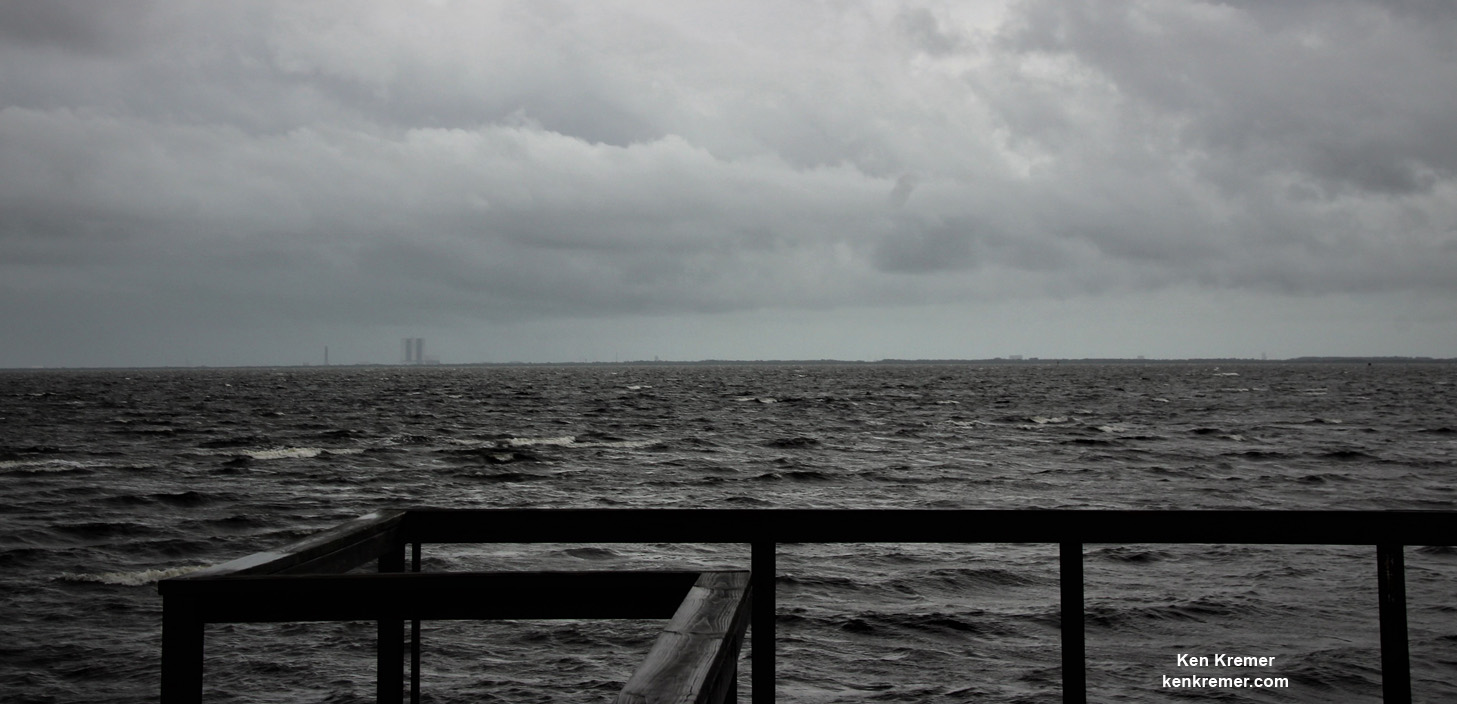
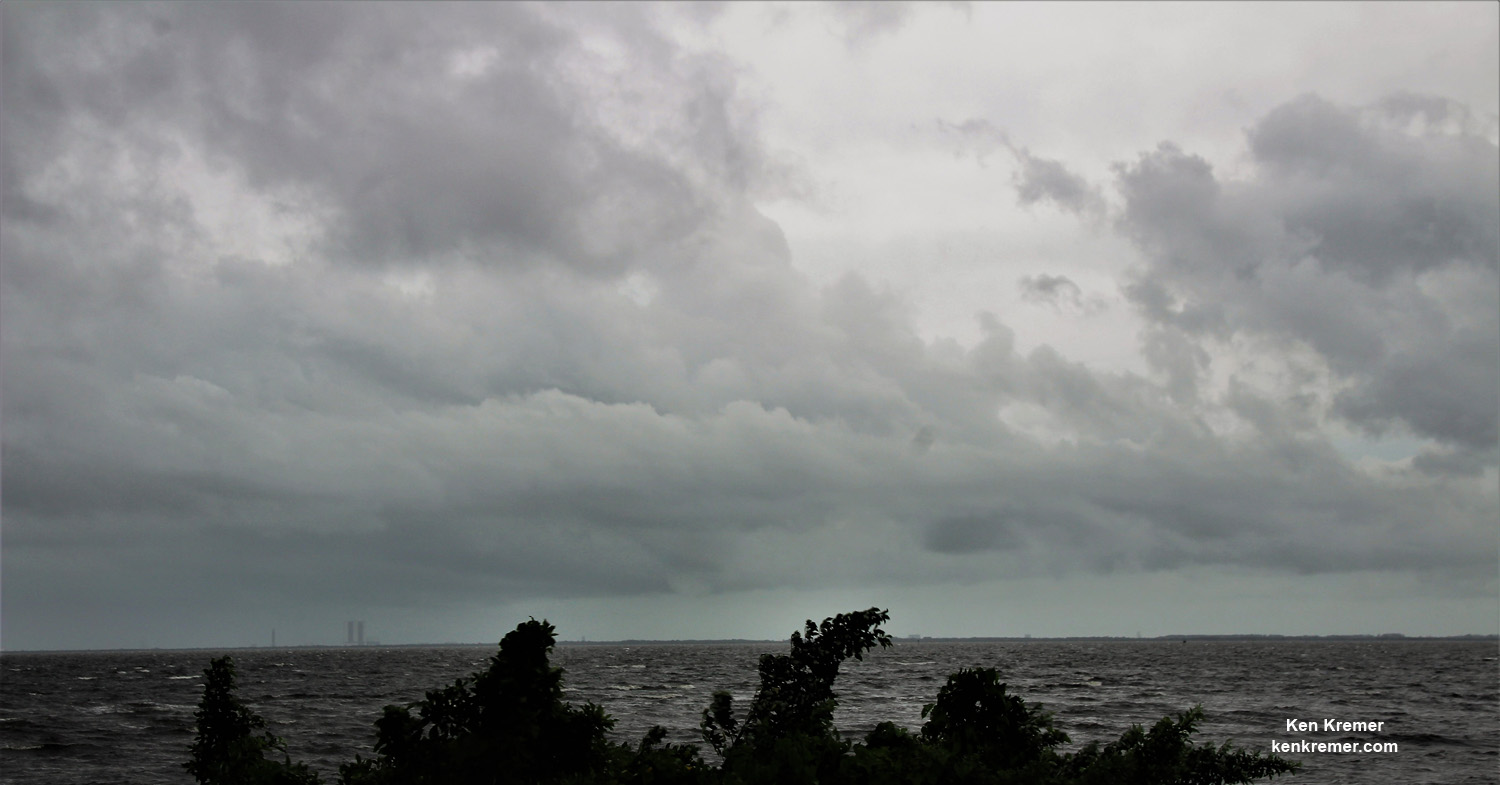
Storm clouds from looming Cat 4 Hurricane Irma obscure the view of the iconic Vehicle Assembly Building and Launch Complex 39A as seen from Titusville, forcing NASA to close the Kennedy Space Center until the storm passes. Credit: Ken Kremer/kenkremer.com
Hurricane Irma Cone forecast on Sept 8, 2017 from the National Hurricane Center. Credit: NHC

U.S. lawmakers introduce resolution condemning N. Korea's threat against Guam

Authentic news,No fake news.


SEOUL, Sept. 9 (Yonhap) -- A bipartisan group of U.S. House lawmakers have introduced a resolution condemning North Korea's threat against the U.S. territory of Guam.
Last month, the North threatened to fire intermediate-range ballistic missiles into waters just 30-40 kilometers off the Pacific island, a key strategic point for the U.S. military, where some of its strategic weapons are deployed, including B-1B and B-52 strategic bombers, and the THAAD missile defense system.
Earlier this week, Rep. Madeleine Bordallo (D-GU) introduced a resolution to the House Armed Services Committee, together with 21 co-sponsors, condemning "North Korea's unconscionable threats against Guam," according to congressional records.
It calls for evaluating needed investments in defensive capabilities to further safeguard Guam, the Northern Mariana Islands, American Samoa, Alaska and Hawaii, and expressing support for the forward deployment of missile defense systems.
The House of Representatives "urges enhanced strategic diplomatic engagement and military cooperation by the United States to address the growing North Korean threat" and "demands the international community fully enforce sanctions against the North Korean regime."


Russia to exert every effort to prepare efficiently and timely for FIFA World Cup

Authentic news,No fake news.


© Artem Korotaev/TASS
MOSCOW, September 9. /TASS/. Russia will do everything possible to prepare in an efficient and timely manner for hosting the 2018 FIFA World Cup, President Vladimir Putin said on Saturday.
"Everything is going on schedule, everything is financed properly," Putin said at a meeting with FIFA President Gianni Infantino.
Russia "will exert every effort to fulfil everything in an efficient and timely manner," he added. "I am hopeful that your specialists who oversee the work will go on with it and we together will carry preparations for the World Cup through to the expected finish."
Prior to the meeting, Putin and Infantino had inspected the renovated Luzhniki stadium and watched young footballers’ training sessions.
The Russian president drew the FIFA head’s attention to how Russian "young athletes and would-be champions" perceive the preparations for the World Cup.
"You were absolutely right saying that the Cup has some magic significance, some magic capacity," Putin told Infantino.
Russia was granted the right for the football championship after clinching the bid in Guatemala in December 2010. The victory came following a tight race against a bid from England, a joint bid from Portugal and Spain and another joint bid on behalf of Belgium and the Netherlands.
The country selected 11 host cities to be the venues for the matches of the 2018 World Cup and they are Moscow, St. Petersburg, Sochi, Kazan, Saransk, Kaliningrad, Volgograd, Rostov-on-Don, Nizhny Novgorod, Yekaterinburg and Samara.
The matches of the 2018 World Cup will be held between June 14 and July 15 at 12 stadiums located in the 11 above-mentioned cities across Russia. Two of the stadiums are located in the Russian capital.


More:
http://tass.com/sport/964812

Syrian government forces break siege of Deir ez-Zor airport

Authentic news,No fake news.


© EPA/YOUSSEF RABIE YOUSSEF
MOSCOW, September 9. /TASS/. Syrian government forces have broken the ISIS siege of Deir ez-Zor Airport and the city districts of Hrabesh and Tahtouh, SANA news agency said on Saturday.
The troops defending the airport met with the advancing forces of the Syrian army, SANA said.
In 2014, the Islamic State terrorist group besieged the city of Deir ez-Zor and took control of its eastern districts.
On 5 September 2017, units of Syria’s Republican Guard and special forces broke through the blockade of the city in the western flank and joined forces with defenders of the 137th artillery regiment’s base. As a result, more than 900 tonnes of humanitarian cargoes were delivered to the city that had lived through a three-year long siege.
On September 7, the government forces took a strategic bridge over the Euphrates to the northeast of Deir ez-Zor. They expanded control significantly over the areas adjoining the city. Later on, the troops continued the operations to unblock the military airdrome.
The lifting of the siege of Deir ez-Zor City, the administrative center of the eastern governorate enables the government forces to launch an operation to remove terrorists from the Euphrates Valley along the border with Iraq.
Liberation of the governorate, which is rich in oil and gas deposits, will have significance for the Syrian economy and resumption of trade with Iraq.


More:
http://tass.com/world/964818

Baku can suspend military cooperation with the West

Authentic news,No fake news.

BAKU, September 9 - RIA Novosti, Vugar Hasanov. Azerbaijan can suspend cooperation with the West in the military-geostrategic plane, participate in antiterrorist operations, peacekeeping mission and abandon the creation of opportunities to equip the NATO contingent in Afghanistan, the official state newspaper Azerbaijan writes in the article "In the US, Obama's living stereotypes are alive" .
NATO Headquarters in Brussels.  Archive photo
Foreign Policy described the scenario of the collapse of NATO by 2020
According to the newspaper in recent days against the backdrop of an authorized certain Western circles "new smear campaign" against Azerbaijan to observe the process, which can cast a shadow on the prospects of the US-Azerbaijani relations.
The publication draws attention to two articles published in the editions of The Washington Post and The Gardian on September 4. According to Azerbaijani media, these notes have been registered and were the signal for a new attack, in particular, Senator Richard Durbin in discussions of the bill on state and foreign operations in the 2018 second fiscal year, submit to the appropriate Senate committee amendment providing for sanctions against Azerbaijani officials.
"... Azerbaijan's partnership with the West, worried and annoyed some of the major countries of the region. However, official Baku, give preference to a multi-vector and balanced policy to bear all this pressure continued and developed a strategic partnership with the United States and the European Union. Sanctions and similar missteps may force official Baku to reconsider their foreign policy and give preference to unilateral choice, and this will become a serious loss for the US and Western states that have great interests in the region, " the newspaper said.
President of Azerbaijan Ilham Aliyev.  Archive photo
The administration of the head of Azerbaijan accused the Washington Post of lying
The article specifies that Azerbaijani peacekeeping platoons took part in the peacekeeping mission in Kosovo in 1999-2008, in Iraq in 2003-2008.
"Azerbaijani soldiers who started a similar mission in Afghanistan in 2002 are doing their duty right now in this country, opening their airspace and creating opportunities for using the existing air transport infrastructure, Azerbaijan is providing important support to equipping the NATO military contingent deployed in Afghanistan Therefore, Azerbaijan, first of all, can suspend cooperation with the West in the military-geostrategic plane, participation in antiterrorism their operations, the peacekeeping mission and abandon the creation of opportunities for equipping the NATO contingent in Afghanistan, "the article reads.
The American military at the command post.  Archive photo
US and NATO investments in Afghanistan's Air Force will be $ 6-7 billion in four years
The peacekeeping mission of the armed forces of Azerbaijan in Afghanistan began on November 20, 2002. Since January 1, 2015, Afghanistan is hosting a new mission of NATO "Strong Support."
Under a bilateral agreement between NATO and Afghanistan, there are about 12,000 military personnel in the country, whose functions include training and advising Afghan law enforcement agencies. The mission is declared non-combat. At present, 90 military servicemen, two military doctors and two officers of the engineering forces of the armed forces of Azerbaijan are participating in this mission in Afghanistan.

Mitra-mandal Privacy Policy

This privacy policy has been compiled to better serve those who are concerned with how their  'Personally Identifiable Inform...