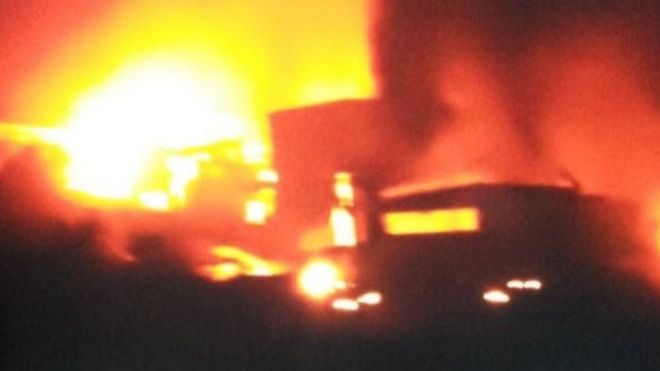
BBC Image copyrightIVAN SIDORENKOImage captionA pro-Syrian government blogger posted an image purportedly showing the strike's aftermath
The Syrian army says Israeli jets have attacked a site in the west of the country where Western powers suspect chemical weapons are being produced.
An army statement says rockets fired from Lebanese airspace hit a military post near Masyaf, killing two soldiers.
A monitoring group says they struck a scientific research centre and base storing surface-to-surface missiles.
Israel, which has carried out clandestine attacks on weapons sites in Syria before, has not commented.
An Israeli military spokeswoman declined to discuss the reports, saying it did not comment on operational matters.
The attack comes a day after UN human rights investigators said they had concluded a Syrian Air Force jet had dropped a bomb containing the nerve agent Sarin on a rebel-held town in April, killing at least 83 people.
Media captionAbo Rabeea says he is still suffering from the suspected chemical weapons strike in Khan Sheikhoun
Syrian President Bashar al-Assad has said the incident in Khan Sheikhoun - which prompted the US to launch a missile strike on an airbase - was a "fabrication".
He has also insisted his forces destroyed their entire chemical arsenal under a deal brokered by the US and Russia after a Sarin attack outside Damascus in 2013.
The Syrian army said rockets had struck the base near Masyaf, about 35km (22 miles) west of the city of Hama, at 02:42 on Thursday (23:42 GMT on Wednesday), causing "material damage" and the deaths of two personnel.
It accused Israel of attacking "in a desperate attempt to raise the collapsed morale" of the jihadist group Islamic State (IS) and warned Israel about "the dangerous repercussions of such hostile acts on the security and stability of the region".
The Syrian Observatory for Human Rights, a UK-based monitoring group, said the rockets had hit a Scientific Studies and Research Centre (SSRC) facility and a military camp nearby used to store short-range surface-to-surface missiles.
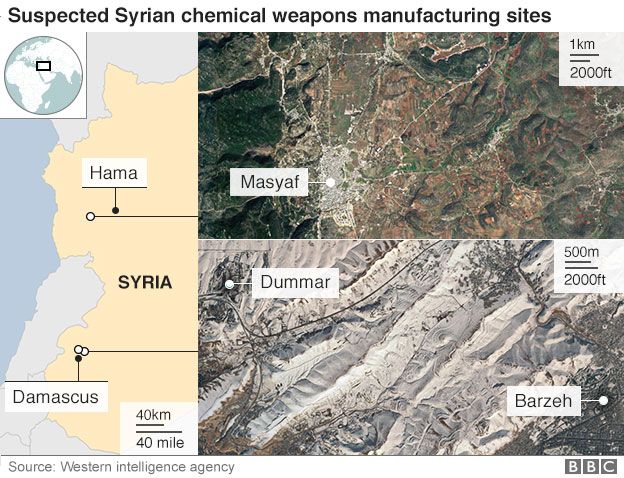
A Western intelligence agency told the BBC in May that three branches of the SSRC - at Masyaf, and at Dummar and Barzeh, both just outside Damascus - were being used to produce chemical munitions in violation of the 2013 deal.
The SSRC is promoted by the Syrian government as a civilian research institute but the US accuses the agency of focusing on the development of non-conventional weapons and the means to deliver them.
A clear warning
By Jonathan Marcus, Defence & Diplomatic Correspondent, BBC News
Israel has been watching events in Syria with alarm: the rising power of Iran and its Lebanese ally, Hezbollah - two of the main props of the Syrian regime - together with the reported periodic use of chemical weapons against civilians.
So this latest alleged attack sends a clear warning, not just to Hezbollah and Damascus but also to Russia - the other crucial supporter of the Syrian government.
Israel has been waging a long-running air campaign to prevent sophisticated weaponry being transferred to Hezbollah.
It is now talking about this campaign more openly; the former Israeli Air Force chief recently noting that it had carried out almost 100 air strikes over the past five years.
And with Israeli claims that Iran is building missile production facilities in Lebanon and Syria for Hezbollah, the message could not be clearer.
A former head of Israeli military intelligence, Amos Yadlin, tweeted that Thursday's strike on Masyaf was "not routine" and had targeted a "Syrian military-scientific centre for the development and manufacture of, among other things, precision missiles".
"The factory that was targeted in Masyaf produces the chemical weapons and barrel bombs that have killed thousands of Syrian civilians," he added.
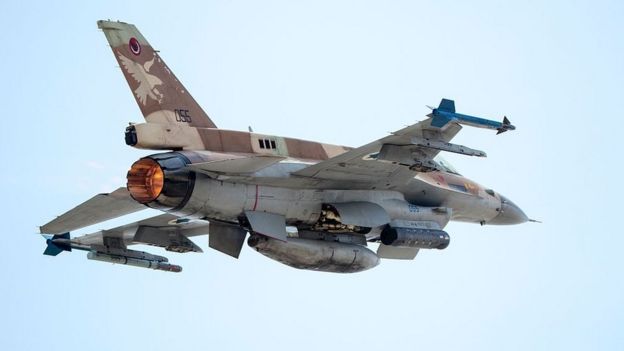
Image copyrightAFPImage captionIsrael has acknowledged carrying out dozens of strikes inside Syria in recent years
In 2016, Israel's Prime Minister Benjamin Netanyahu said it had carried out dozens of strikes in Syria meant to prevent transfers of advanced weapons to Hezbollah.
The militant Lebanese Shia Islamist movement, which last fought a war with Israel in 2006 and is backed by Israel's arch-enemy Iran, has sent thousands of fighters to support Syria's army in the country's six-year civil war.
Last month, Mr Netanyahu said Iran was building facilities in Syria and Lebanon to produce precision-guided missiles "as part of its declared goal to eradicate Israel". He gave no details but warned "this is something Israel cannot accept".
There’s a supermassive black hole at the center of almost every galaxy in the Universe. How did they get there? What’s the relationship between these monster black holes and the galaxies that surround them?
Every time astronomers look farther out in the Universe, they discover new mysteries. These mysteries require all new tools and techniques to understand. These mysteries lead to more mysteries. What I’m saying is that it’s mystery turtles all the way down.
One of the most fascinating is the discovery of quasars, understanding what they are, and the unveiling of an even deeper mystery, where do they come from?
As always, I’m getting ahead of myself, so first, let’s go back and talk about the discovery of quasars.
Molecular clouds scattered by an intermediate black hole show very wide velocity dispersion in this artist’s impression. This scenario well explains the observational features of a peculiar molecular cloud CO-0.40-0.22. Credit: Keio University
Back in the 1950s, astronomers scanned the skies using radio telescopes, and found a class of bizarre objects in the distant Universe. They were very bright, and incredibly far away; hundreds of millions or even billion of light-years away. The first ones were discovered in the radio spectrum, but over time, astronomers found even more blazing in the visible spectrum.
The astronomer Hong-Yee Chiu coined the term “quasar”, which stood for quasi-stellar object. They were like stars, shining from a single point source, but they clearly weren’t stars, blazing with more radiation than an entire galaxy.
Over the decades, astronomers puzzled out the nature of quasars, learning that they were actually black holes, actively feeding and blasting out radiation, visible billions of light-years away.
But they weren’t the stellar mass black holes, which were known to be from the death of giant stars. These were supermassive black holes, with millions or even billions of times the mass of the Sun.
As far back as the 1970s, astronomers considered the possibility that there might be these supermassive black holes at the heart of many other galaxies, even the Milky Way.
The Whirlpool Galaxy (Spiral Galaxy M51, NGC 5194), a classic spiral galaxy located in the Canes Venatici constellation, and its companion NGC 5195. Credit: NASA/ESA
In 1974, astronomers discovered a radio source at the center of the Milky Way emitting radiation. It was titled Sagittarius A*, with an asterisk that stands for “exciting”, well, in the “excited atoms” perspective.
This would match the emissions of a supermassive black hole that wasn’t actively feeding on material. Our own galaxy could have been a quasar in the past, or in the future, but right now, the black hole was mostly silent, apart from this subtle radiation.
Astronomers needed to be certain, so they performed a detailed survey of the very center of the Milky Way in the infrared spectrum, which allowed them to see through the gas and dust that obscures the core in visible light.
They discovered a group of stars orbiting Sagittarius A-star, like comets orbiting the Sun. Only a black hole with millions of times the mass of the Sun could provide the kind of gravitational anchor to whip these stars around in such bizarre orbits.
Further surveys found a supermassive black hole at the heart of the Andromeda Galaxy, in fact, it appears as if these monsters are at the center of almost every galaxy in the Universe.
But how did they form? Where did they come from? Did the galaxy form first, and cause the black hole to form at the middle, or did the black hole form, and build up a galaxy around them?
Until recently, this was actually still one of the big unsolved mysteries in astronomy. That said, astronomers have done plenty of research, using more and more sensitive observatories, worked out their theories, and now they’re gathering evidence to help get to the bottom of this mystery.
Astronomers have developed two models for how the large scale structure of the Universe came together: top down and bottom up.
In the top down model, an entire galactic supercluster formed all at once out of a huge cloud of primordial hydrogen left over from the Big Bang. A supercluster’s worth of stars.
As the cloud came together it, it spun up, kicking out smaller spirals and dwarf galaxies. These could have combined later on to form the more complex structure we see today. The supermassive black holes would have formed as the dense cores of these galaxies as they came together.
Hubble image of Messier 54, a globular cluster located in the Sagittarius Dwarf Galaxy. Credit: ESA/Hubble & NASA
If you want to wrap your mind around this, think of the stellar nursery that formed our Sun and a bunch of other stars. Imagine a single cloud of gas and dust forming multiple stars systems within it. Over time, the stars matured and drifted away from each other.
That’s top down. One big event that leads to the structure we see today.
In the bottom up model, pockets of gas and dust collected together into larger and larger masses, eventually forming dwarf galaxies, and even the clusters and superclusters we see today. The supermassive black holes at the heart of galaxies were grown from collisions and mergers between black holes over eons.
In fact, this is actually how astronomers think the planets in the Solar System formed. By pieces of dust attracting one another into larger and larger grains until the planet-sized objects formed over millions of years.
Bottom up, small parts coming together.
Shortly after the Big Bang, the entire Universe was incredibly dense. But it wasn’t the same density everywhere. Tiny quantum fluctuations in density at the beginning evolved over billions of years of expansion into the galactic superclusters we see today.
Colliding galaxies can force the supermassive black holes in their cores together (NCSA)
I want to stop and let this sink into your brain for a second. There were microscopic variations in density in the early Universe. And these variations became the structures hundreds of millions of light-years across we see today.
Imagine the two forces at play as the expansion of the Universe happened. On the one hand, you’ve got the mutual gravity of the particles pulling one another together. And on the other hand, you’ve got the expansion of the Universe separating the particles from one another. The size of the galaxies, clusters and superclusters were decided by the balance point of those opposing forces.
If small pieces came together, then you’d get that bottom up formation. If large pieces came together, you’d get that top down formation.
When astronomers look out into the Universe at the largest scales, they observe clusters and superclusters as far as they can see - which supports the top down model.
On the other hand, observations show that the first stars formed just a few hundred million years after the Big Bang, which supports bottom up.
The key is that gravity moves at the speed of light, which means that the gravitational interactions between particles spreading away from each other needed to catch up, going the speed of light.
In other words, you wouldn’t get a supercluster’s worth of material coming together, only a star’s worth of material. But these first stars were made of pure hydrogen and helium, and could grow much more massive than the stars we have today. They would live fast and die in supernova explosions, creating much more massive black holes than we get today.
This illustration shows the final stages in the life of a supermassive star that fails to explode as a supernova, but instead implodes to form a black hole. Credit: NASA/ESA/P. Jeffries (STScI)
The first protogalaxies came together, collecting together these first monster black holes and the massive stars surrounding them. And then, over millions and billions of years, these black holes merged again and again, accumulating millions and even billions of times the mass of the Sun. This was how we got the modern galaxies we see today.
There was a recent observation that supports this conclusion. Earlier this year, astronomers announced the discovery of supermassive black holes at the center of relatively tiny galaxies. In our own Milky Way, the supermassive black hole is 4.1 million times the mass of the Sun, but accounts for only .01% of the galaxy’s total mass.
But astronomers from the University of Utah found two ultra compact galaxies with black holes of 4.4 million and 5.8 million times the mass of the Sun respectively. And yet, the black holes account for 13 and 18 percent of the mass of their host galaxies.
The thinking is that these galaxies were once normal, but collided with other galaxies earlier on in the history of the Universe, were stripped of their stars and then were spat out to roam the cosmos.
They’re the victims of those early merging events, evidence of the carnage that happened in the early Universe when the mergers were happening.
We always talk about the unsolved mysteries in the Universe, but this is one that astronomers are starting to puzzle out.
It seems most likely that the structure of the Universe we see today formed bottom up. The first stars came together into protogalaxies, dying as supernova to form the first black holes. The structure of the Universe we see today is the end result of billions of years of formation and destruction. With the supermassive black holes coming together over time.
Once telescopes like James Webb get to work, we should be able to see these pieces coming together, at the very edge of the observable Universe.
UNITED NATIONS (Reuters) - The United States wants the United Nations Security Council to impose an oil embargo on North Korea, ban the country’s exports of textiles and the hiring of North Korean laborers abroad and subject leader Kim Jong Un to an asset freeze and travel ban, according to a draft resolution seen by Reuters on Wednesday.
U.S. Ambassador to the United Nations Nikki Haley has said she wants the 15-member council to vote on the draft resolution on Monday. However, Russia’s U.N. Ambassador Vassily Nebenzia has said this may be “a little premature.”
It was not immediately clear if the draft resolution had the support of North Korean ally China. A resolution needs nine votes in favor and no vetoes by the United States, Britain, France, Russia or China to pass.
ISLAMABAD, Sept. 6 (Xinhua) -- Pakistani police on Wednesday arrested three more members of the terrorist group "Ansar-ul-Sharia Pakistan" in southern port city of Karachi, local media quoted police officials as saying.
According to the reports, law enforcement agencies on Tuesday night apprehended Abdullah, chief of the relatively new outfit "Ansar-ul-Sharia Pakistan," during a raid in the city's Kaniz Fatima Society and led to the arrest of other members of the group on his information.
"All the members of the group are highly qualified from well-known universities of Karachi which included Karachi University, University of Engineering and Technology and Dawood University," said Senior Superintendent Police (SSP) Anwar Rao.
The group comprises 10 to 12 highly trained members. The chief himself was a graduate of Karachi University and was employed in the computer department of a university as an information technology expert, said Dunya News.
Abdullah confessed that the group targeted security forces to get their presence felt in the metropolis and was planning to tie with Al-Qaeda.
The members got their military training from Afghan area of Sharawak and brought weapons from Afghanistan, he further confessed during the interrogation.
Law enforcement officials informed the local media that the group was involved in attacks on police and army personals, several sabotage activities in the city and the most recent attack on a senior politician of local political party.
The latest attack on the politician led to the apprehension of the terrorists. The forces raided in different areas of the city after the attack to arrest his accomplices and recovered laptops, mobile phones and weapons.
The data found in the laptops and mobile phones has helped to unearth the nexus, said Rao.
Earlier, the Sindh provincial government decided to conduct a security audit of educational institutes while the record of the Karachi University's students will be shared with the intelligence agencies to curb terrorism in the country.
PARIS, Sept. 6 (Xinhua) -- Two men were arrested Wednesday afternoon after police found equipment and material suspected to be used for making explosives in an apartment in the southern suburbs of Paris.
A demining operation began around noon in the commune of Villejuif, and lasted until the late afternoon, according to French media.
The men were arrested in the neighboring commune of Kremlin-Bicetre when their car was stopped by the police.
One of them is the owner of the apartment, a 36-year-old man from Amiens, north France, and the other is a 47-year-old born in Tunisia, said French broadcaster LCI quoting police source.
Gas cylinders and electric wire are among the things found by deminers in the apartment, according to the newspaper Le Figaro.
LCI said oxygenated water, syringes and batteries were also found in the apartment, as well as many writings in Arabic.
Traffic in the two communes was disrupted on Wednesday afternoon, and a metro station in Kremlin-Bicetre was also temporarily closed.
The administrative bodies of both communes asked people to avoid going to these areas on social media.
The anti-terrorism section of the Paris Public Prosecutor's Office has opened an investigation for possible terror-related crimes.
It was a plumber who noticed something that looked like detonators, and then called the police around 11 a.m. local time, the reports said.
A large area around the four-storey residential building was evacuated shortly after the operation began, including a construction site nearby.
JERUSALEM, Sept. 6 (Xinhua) -- Israeli Prime Minister Benjamin Netanyahu on Wednesday asked International Committee of the Red Cross (ICRC) to help bring back Israeli civilians held in Gaza.
He made the request in his meeting with ICRC President Peter Maurer in Jerusalem.
Netanyahu said Israel has been seeking information about two civilians, who voluntarily crossed into the Gaza Strip and are believed to be held captive by Hamas, the Islamist organization that controls the coastal enclave.
Hamas, however, refused to divulge any information, the prime minister added.
"You come at a time when Israel is concerned about the unbelievable cruelty as the bodies of its slain soldiers are kept, and even information about them is kept," Netanyahu told Maurer, according to a statement released by the Prime Minister's Office.
"No less important, innocent, defenseless civilians are being held in Gaza," he noted.
In response to Netanyahu's request, Maurer said the Red Cross has a mandate under international law but "also had a mandate to help people and find practical ways (to this end)."
The ICRC president added that he was looking forward to having "the opportunity to look into some of the challenges that everyone is currently confronted with and to see how the ICRC can eventually help with them."
Two Israeli civilians, identified as Avera Mengistu and Hisham al-Sayed, entered Gaza in 2014. Israel believes they have been held captive by Hamas since then.
Hamas has never officially acknowledged if the two Israelis are in the besieged Palestinian enclave.
In 2015, an anonymous senior Palestinian official told the Hebrew-language Ynet news site that Mengistu was held by Hamas' security forces which later released him after ensuring that he was not a soldier.
Maurer's meeting with Netanyahu came a day after he met in Gaza with Hamas chief Yahya Sinwar.
Maurer told reporters that they had a "good conversation" about several topics, including the humanitarian crisis in Gaza and international humanitarian law.
He also toured several devastated areas in the coastal enclave and met with several families.
His visit is aimed at checking the worsening humanitarian situation in the Gaza Strip, which has been under an Israeli blockade for more than 10 years, according to an ICRC statement.
NEW DELHI, Sept. 6 (Xinhua) -- India witnessed over 400 deaths in road accidents every day in 2016, one of the highest in the world, according to an official report released Wednesday by India's federal ministry of road transport and highways.
The report compiled by the ministry's transport research wing said 150,785 people were killed in 480,652 road accidents across India in 2016.
According to the report, on an average 17 people died in 55 road accidents per hour last year.
Of the dead, 46.3 percent were in the 18-35 age group.
Compared to it in 2015, across the country 146,133 deaths were reported in 501,423 road accidents.
Though the number of road accidents have declined, however, the fatalities have made an increase.
Uttar Pradesh state recorded the highest number of road accident deaths in 2016 at 19,320, followed by Tamil Nadu at 17,218 and Maharashtra at 12,935.
The report indicates Indian roads continue to be one of the deadliest in the world.
"We are working to reduce fatalities not only on national highways but also on state highways and district roads as well," Indian transport minister Nitin Gadkari said.
According to the report, over-speeding and talking on mobile phone while driving were two of the main factors that caused the maximum number of road accident and deaths.
Two-wheelers accounted for the highest share (33.8 percent) in the total number of road accidents followed by cars, jeeps, and taxis which constitute 23.6 percent, said the report.
Deadly road accidents are common in India often caused due to overloading, bad condition of roads and reckless driving.
Global Road Safety Report 2015 released by WHO last year, however, said India accounts for more than 200,000 deaths annually due to road accidents.
OTTAWA, Sept. 6 (Xinhua) -- The Bank of Canada announced Wednesday it has raised its benchmark interest rate by one-quarter point to one percent.
It's the second time this year that the central bank has increased the rate after hiking it for the first time in seven years in July.
The bank's rate has returned to where it was at the start of 2015, when the central bank started slashing rates to stimulate a Canadian economy that had been waylaid by the oil price crash.
That followed unexpectedly healthy growth in the first three months of 2017 and exceeded the Bank of Canada's projections.
In a statement, the bank said solid employment and wage growth led to strong consumer spending, while the key areas of business investment and exports also improved.
"Recent economic data have been stronger than expected, supporting the bank's view that growth in Canada is becoming more broadly-based and self-sustaining," it said.
The bank's rate has an impact on lending rates that consumers and savers get from banks on mortgages, lines of credits, savings accounts and other financial vehicles.
The Canadian dollar gained more than a penny in reaction to the news on Wednesday, and was changing hands at 82 U.S. cents, the highest level since June 2015.
NAY PYI TAW, Sept. 6 (Xinhua) -- Myanmar security forces are prepared to counter any possible terrorist attacks and will take effective actions on any law-breaching acts, said a press statement issued by the presidential office on Wednesday evening.
The statement came shortly after some ministers briefed President U Htin Kyaw the latest situation in conflict-torn northern Rakhine state's Maungtaw and Buthidaung areas where they made a field trip recently.
The ministers made proposals to President U Htin Kyaw on some future tasks to address the Rakhine issue.
Meanwhile, the State Counselor's Office, in a statement issued on Tuesday, called on the people to be vigilant against any incitement by the Arakan Rohingya Salvation Army (ARSA) extremist terrorists.
The statement urged all people to stay calm in accordance with law and support the government in law enforcement.
President U Htin Kyaw stressed that it was the critical moment to meet the responsible officials and asked the authorities concerned to renovate the damaged border fences as soon as possible and erect new ones with government fund.
He also called for reinforcement of security forces to combat the terrorist attacks
An X9.3 class solar flare flashes in the middle of the Sun on Sept. 6, 2017. Credit:NASA/GSFC/SDO
If you're still riding that high from seeing the recent total solar eclipse and you want to keep the party going, now's your chance to see another of the night sky's wonders: an aurora. That said, a totally full Moon is going to try and wreck the party.
NASA announced that two powerful flares were just emitted on the surface of the Sun, casting coronal mass ejections in our direction. Over the course of the next couple of days, this should generate aurora activity in the sky outside the regular viewing areas. In other words, if you normally don't see the Northern Lights where you live, you might want to spend a few hours outside tonight and tomorrow. Look up, you might see something.
The first flare, an X2.2 event, peaked on September 6 at 5:10 am EDT and the second X9.3 flare went off at 8:02 am. Both of which came from the sunspot group AR 2673. If you've still got those eclipse glasses, take a look at the Sun, and you should be able to see the sunspot group right now. There are two groups of sunspots close to one another, AR 2673 and AR 2674. This follows up the X4 flare emitted on September 4th.
Solar astronomers measure flares using a similar scale to other natural events, with a series of designations. The smallest are A-class, then B, C, M and finally X. Each level within the rating accounts for double the strength; it's exponential. So, and X2 is twice as powerful as an X1, etc. The most powerful flare ever recorded was an X28 in 2003, so today's flare is still comparatively weak to that monster.
Here's the flare in visible and ultraviolet. Credit: NASA/GSFC/SDO
But, measuring in at X9.3, today's flare is the strongest in almost a decade. The last one this strong was back in 2008. And NOAA is predicting that this flare could cause radio blackouts across the sun-facing side of the Earth. If you're out at sea and depending on your radio transmissions, don't be surprised if you're getting a lot of static today.
How do you stand the best chance of seeing auroras? My favorite tool comes from NOAA's 3-day aurora forecast. It shows you a 3-day predictive simulation for what the solar storm should do as it buffets the Earth's magnetosphere. You can run the simulation backwards and forwards, and you're looking glowing green areas to come across your part of the world.
But even if it doesn't look like you're going to see the auroras, I still think it's worth trying. Even if you don't get an aurora directly overhead, you can sometimes see it on the horizon, and it can be surprisingly beautiful.
The big problem, of course, is the Moon. Tonight is also a full Moon, which means that awful glowing ball is going to rise just after sunset and blaze across the sky all night. You're going to have a rough time seeing all but the brightest auroras. But I still think it's worth trying.
If you want to maximize your chances of seeing an aurora, check out the Space Weathersite on a regular basis. There are also services that'll send you a text message when there's a powerful aurora going on in your area (just Google "aurora alert text messages". And of course, there are handy apps that'll make your phone beep boop when there are auroras overhead. I use an app called Aurora Alert.
We've had three powerful flares in the last couple of days, which means that the Sun is feeling a little frisky. There could be more, and they could happen after the full Moon is over, and we've got some alone time with the dark sky. So stay on top of the current space weather, spend time outside, and keep your eyes on the sky. You might get a shot at seeing an aurora.
THE last time Australia suffered a recession the web browser had just been invented and Bryan Adams topped the charts. Figures released today will show that its economy has racked up the longest stretch of growth in modern history: 104 quarters. The Netherlands, the previous title-holder, dipped into recession—defined as two consecutive quarters of contraction—after 103. In these 26 years, Australia has navigated the Asian financial crisis, the collapse of the dotcom bubble and the Great Recession, largely without scars. Its once-in-a-generation mining boom ended in 2014. Yet it has managed to avoid a bust. How did it break the record for economic growth?
Its success was built on the structural reforms of the 1980s and ’90s, when trade barriers crumbled and foreign-exchange controls were removed. A floating dollar cushioned the economy against external aches; inflation stabilised around a target band of 2-3%; and government finances greatly improved. By the time the global financial crisis hit, Australia had enjoyed over a decade of budget surpluses and net debt had been eliminated. It helped that China’s demand for commodities was fuelling a mining boom that created jobs and pushed up wages. Australia’s terms of trade soared as it churned out coal and iron ore to feed its neighbour’s factories. By 2013 household incomes were about 13% higher than they would have been without the bonanza.
History suggested that the rush would be followed by a bust. As prices and investment fell, debt and unemployment rose in resource-dependent parts of the country like Queensland and Western Australia. But the Reserve Bank responded by slashing cash rates to lows of 1.5%, where they have remained for the past year, allowing the diverse economies of Victoria and New South Wales to pick up the slack. A weaker currency boosted agricultural exports and drew students and tourists in growing numbers. Cheap loans and rapid population growth prompted an explosion in demand for housing. Last year Australia’s population swelled by 1.6%, over double the average of the OECD, a group of mostly rich countries. To accommodate its intake of foreign migrants, Australia must build a city roughly the size of Britain’s Birmingham every five years.
The luck seems set to continue. The central bank predicts that GDP growth will pick up to about 3% in the next couple of years. But families have reason to feel less optimistic. Unemployment rates have flat-lined above their equivalents in America, Britain and Japan. Underemployment (the number of people who would like more work) is close to record highs. Rising national income is not trickling down to workers: wage growth has fallen to about 1.9%, its slowest pace since the last recession. This is all the more uncomfortable because household debt has ballooned. Its ratio to GDP is close to 190%, one of the highest in the world. If the central bank raises interest rates, many families will have difficulties repaying their mortgages. For now, it is likely to do nothing—and the growth will go on.
 IVAN SIDORENKO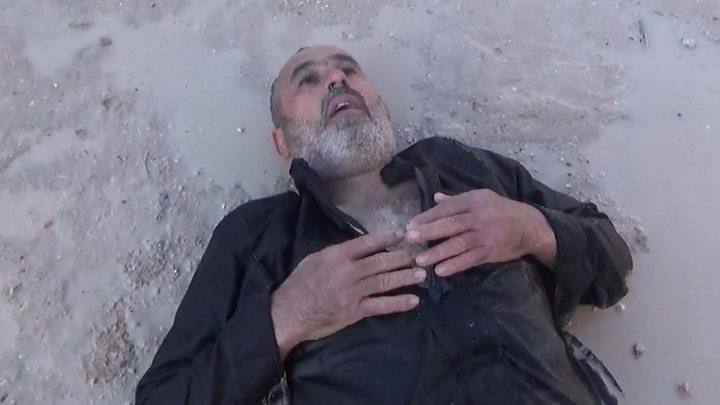
 AFP
AFP