MITRA MANDAL GLOBAL NEWS

Science News-Zika Virus Could Be Used to Treat Brain Cancer Patients, Study Suggests

Authentic news,No fake news.


Medical News


White Children More Likely to Get Unnecessary Antibiotics in Pediatric Emergency Departments
White children with viral diagnoses treated in pediatric emergency departments were up to twice as likely to receive antibiotics compared to minority children, according to a study published in Pediatrics. Although viral respiratory tract infections ...
– Ann & Robert H. Lurie Children's Hospital of Chicago
Pediatrics, Sept-2017
Embargo expired on 05-Sep-2017 at 00:05 ET


Zika Virus Could Be Used to Treat Brain Cancer Patients, Study Suggests
Recent outbreaks of Zika virus have revealed that the virus causes brain defects in unborn children. But in a study to be published September 5 in The Journal of Experimental Medicine, researchers from Washington University School of Medicine in St. ...
– The Rockefeller University Press
The Journal of Experimental MedicineR01 AI073755, R01 AI104972, CA197718, CA154130, CA169117, CA171652, NS087913, NS089272
Embargo expired on 05-Sep-2017 at 09:00 ET


Program Helps Nurses Provide Palliative Care to ICU Patients
Critical care nurses at five University of California medical centers are better prepared to lead primary palliative care at the bedside after participating in a special training and mentoring program.
– American Association of Critical-Care Nurses (AACN)
American Journal of Critical Care, Sept-2017
Embargo expired on 05-Sep-2017 at 06:00 ET


Zika Virus Kills Brain Cancer Stem Cells
While Zika virus causes devastating damage to the brains of developing fetuses, it one day may be an effective treatment for glioblastoma, a deadly form of brain cancer. New research from Washington University School of Medicine in St. Louis and the ...
– Washington University in St. Louis
The Journal of Experimental Medicine, Sep-2017R01 AI073755R01 AI104972CA197718CA154130CA169117CA171652NS087913NS089272
Embargo expired on 05-Sep-2017 at 09:00 ET


Face Value
Scientists have long deemed the ability to recognize faces innate for people and other primates. However, the findings of a new Harvard Medical School study cast doubt on this longstanding view. The study may shed light on autism spectrum disorders....
– Harvard Medical School
Nature Neuroscience, Sept-2017
Embargo expired on 04-Sep-2017 at 11:00 ET


Combined DNA and Protein ‘Liquid Biopsy’ for Early Pancreatic Cancer Better Than Either Alone
Johns Hopkins scientists say they have developed a blood test that spots tumor-specific DNA and protein biomarkers for early-stage pancreatic cancer.
– Johns Hopkins Medicine
Proceedings of the National Academy of SciencesAPP1060804, P30-CA006973, CA062924, CA102701, CA06973, CA152753, GM-07309, CA152753
Embargo expired on 04-Sep-2017 at 15:00 ET


Diabetes and Heart Disease Linked by Genes, Reveals Penn-led Study
Type 2 diabetes (T2D) has become a global epidemic affecting more than 380 million people worldwide; yet there are knowledge gaps in understanding the etiology of type-2 diabetes. T2D is also a significant risk factor for coronary heart disease (CHD)...
– Perelman School of Medicine at the University of Pennsylvania
Nature Genetics
Embargo expired on 04-Sep-2017 at 11:00 ET


Mayo Clinic Researchers Review the Clinical Potential of Senolytic Drugs on Aging
]Researchers are moving closer to realizing the clinical potential of drugs that have previously been shown to support healthy aging in animals. In a review article published online in the Journal of the American Geriatrics Society, Mayo Clinic aging...
– Mayo Clinic
Journal of the American Geriatrics Society
Embargo expired on 04-Sep-2017 at 06:00 ET


Palliative Care Makes Only Limited Gains in Africa
Icahn School of Medicine at Mount Sinai student leads first comprehensive analysis of African palliative care literature over past 12 years
– Mount Sinai Health System
Lancet Oncology
Embargo expired on 01-Sep-2017 at 18:30 ET


Research Reveals Gene Differences in Mouse Model Versus Humans
Aspects of gene function in humans can be predicted by studies of the corresponding gene in mice, but new research findings have revealed important divergences between the species which scientists will need to understand better through further invest...
– Sbarro Health Research Organization (SHRO)
Neoplasia


Support to Practice Independently Helps Nurse Practitioners Deliver Ongoing Primary Care to Patients
Nurse practitioners (NPs) whose healthcare organizations supported their practice as independent clinicians, were more likely than those who worked in less supportive environments to have their own patient panels (groups of patients to whom they deli...
– Columbia University Medical Center
International Journal of Nursing Studies, September-2017


Heart Hormones Protection, Psychotic Disorders, Self Regulation, and More in the Obesity News Source
Click here to go directly to Newswise's Obesity News Source
– Newswise


X-Ray Footprinting, Brain Development, Sleep Research, and More in the Cell Biology News Source
The latest research and features in cell biology in the Cell Biology News Source
– Newswise


Physician Experts Highlight Research ahead of Otolaryngology’s Annual Meeting
The latest research on patient preferences, quality-of-life, ear health, thyroidectomy, and other topics related to the specialty of otolaryngology will be presented in Chicago, IL, September 10-13, during the AAO-HNSF 2017 Annual Meeting & OTO Exper...
– American Academy of Otolaryngology - Head and Neck Surgery


Study: Drug May Curb Female Infertility From Cancer Treatments
An existing drug may one day protect premenopausal women from life-altering infertility that commonly follows cancer treatments, according to a new study.
– Cornell University
Genetics


12 Years After Fleeing Katrina, Family Displaced by Harvey Seeks New Life in Dallas.
Flooded homes. People stranded on roofs. Rescue boats patrolling neighborhoods. Ashley Aples saw the chaos and panic engulf Houston in just a few days, and he knew from experience it was time to flee.
– UT Southwestern Medical Center


Mayo Clinic Monthly News Tips - August 2017 Headlines
Balancing school and sleep; Researchers report link between cells associated with aging and bone loss; Discovery of new prostate cancer biomarkers could improve precision therapy...
– Mayo Clinic


Beware the Role of Depression in College Students’ ‘Failure to Launch’
Each fall, parents pack their college freshmen off to school, fingers crossed for a solid start on the road to adulthood. But some students don’t find their footing and return home after a semester or two to regroup.
Expert Available
– University of California, Los Angeles (UCLA), Health Sciences


Internationally Recognized Surgeon Named Chief Surgical Officer at Rutgers Cancer Institute of New Jersey
Expanding its surgical and research focus on cancers of the abdominal area and rare conditions including endocrine and mesothelioma malignancies, Rutgers Cancer Institute of New Jersey has named H. Richard Alexander, MD, FACS, as its new chief surgic...
– Rutgers Cancer Institute of New Jersey


ISPOR Latin America Conference to Focus on Improving Health Outcomes Through Stakeholder Engagement
ISPOR, the leading professional society for health economics and outcomes research, announced confirmation of the scientific sessions for its upcoming 6th Latin America Conference scheduled for 15-17 September 2017 in São Paulo, Brazil.
– International Society for Pharmacoeconomics and Outcomes Research (ISPOR)
ISPOR 6th Latin America Conference


Wolters Kluwer and the European Society of Oncology Pharmacy Launch the European Journal of Oncology Pharmacy
Wolters Kluwer Health and the European Society of Oncology Pharmacy (ESOP) today announced the launch of a new open access journal, the European Journal of Oncology Pharmacy (EJOP). The official journal of the ESOP will join the Lippincott portfolio ...
– Wolters Kluwer Health: Lippincott Williams and Wilkins
European Journal of Oncology


Mayo Clinic donates $500,000 to American Red Cross in aid to Hurricane Harvey victims
Mayo Clinic is pleased to offer support to the victims of Hurricane Harvey through a $500,000 donation to the American Red Cross. Mayo Clinic has requested that the funds go directly to relief efforts for those affected by the recent storm.
– Mayo Clinic


Dr. Peter Glazer Receives Prestigious Outstanding Investigator Award for Cancer Research
The National Cancer Institute (NCI) has named Peter M. Glazer, M.D., Ph.D., as a recipient of its Outstanding Investigator Award (OIA).
– Yale Cancer Center

Science News


New Fluorescent Dyes Could Advance Biological Imaging
Scientists at HHMI’s Janelia Research Campus have developed a new method for fine-tuning the structure of rhodamine dyes, and can now create a colorful palette of fluorescent molecules.
– Howard Hughes Medical Institute (HHMI)
Nature MethodsBiochemistry
Embargo expired on 04-Sep-2017 at 11:00 ET


Was the Primordial Soup a Hearty Pre-Protein Stew?
How proteins evolved billions of years ago, when Earth was devoid of life, has stumped many a scientist. A little do-si-do between amino acids and their chemical lookalikes may have done the trick. Evolutionary chemists tried it, and got results by t...
– Georgia Institute of Technology
CHE-1504217Proceedings of the National Academy of Sciences


Competing Species, Polluted Floodwaters, Post Harvey Cleanup, and More in the Environmental Science News Source
The latest research on the environment in the Environmental Science News Source
– Newswise


NSU’s Guy Harvey Research Institute Tagged Tiger Shark Breaks Distance Record – And Is Still Going!
A tiger shark named “Andy” is like the marine version of the Energizer Bunny – he keeps going and going and going…
– Nova Southeastern University
includes video


Earthworms at the Root of Sugar Maple Decline
A new study suggests that non-native worms are eating up the forest floor, causing sugar maples to die back and perhaps harming other forest dwellers.
– Michigan Technological University
journal Biological Invasions


Computer Science in Culture: Hackers More Likely to Be 'He' Than 'She'
A new report, released today, examined portrayals of computer science across media. The results demonstrate that while the uses of tech may seem to be unfettered, there are still limits as to who can be shown on screen using computer science.
– USC Annenberg School for Communication and Journalism


Saints and Sinners in Competing Species: Science or Dogma?
Studies examining whether invasive species outcompete native species may reflect bias of researchers. However, rigorous scientific debate and self-criticism may result in self-correction.
– SUNY Buffalo State
PLOS ONE


Vitamin B12 Fuels Microbial Growth
Scarce compound, vitamin B12, is key for cellular metabolism and may help shape microbial communities that affect environmental cycles and bioenergy production.
– Department of Energy, Office of Science
PNAS 114(7), E1205-E1214 (2017). [DOI: 10.1073/pnas.1612360114]


University of Wisconsin-Madison Museums Recreate ‘Cabinet of Natural History’ Digitally
In 1849, the Board of Regents of the new University of Wisconsin directed the curation of the state’s plants, animals and minerals in a “cabinet of natural history.” Now, that founding piece of scientific inquiry is re-forming — digitally. A ...
– University of Wisconsin-Madison


Reducing Peak-Time Power Usage Through Smart-Home Technologies
A next-generation residential energy management system may help utility companies and consumers save money by reducing the demand for costly peak-time energy.
– South Dakota State University

Lifestyle & Social Sciences


Why Hasn’t U.S. Tax Policy Responded to Rising Inequality? Surprisingly, It’s Our Beliefs in “Equal Treatment,” Researchers Find
Americans’ lack of support for raising taxes on the wealthy to address inequality may be explained, in part, by our beliefs in “equal treatment,” finds a new study by political scientists at New York University and Stanford University.
– New York University
American Political Science Association Annual Meeting


Political Scientist Rick Valelly '75 on Honoring Reconstruction
Given the sheer number of Confederate memorials, there is bound to be another shocking flashpoint of the kind that rocked Charlottesville and the nation. Stonewall Jackson and Robert E. Lee have vanished from Baltimore and New Orleans. Chief Justice ...
– Swarthmore College


University of North Florida Receives 2017 Higher Education in Diversity Award
The University of North Florida received the 2017 Higher Education Excellence in Diversity (HEED) award by INSIGHT Into Diversity magazine, the oldest and largest diversity-focused publication in higher education. This is the third time UNF has been ...
– University of North Florida


Reavey Receives Fulbright for Study in Romania
Brooke Reavey, assistant professor of marketing, will spend this academic year teaching and studying in Romania as part of a Fulbright Scholarship. She will be doing research on Romanian millennials' apparent disengagement with nonprofit and philanth...
– Dominican University


Gonzaga University School of Law Launches Center for Civil and Human Rights
SPOKANE, Wash. – The Gonzaga University School of Law is launching a new Center for Civil and Human Rights this fall to further its mission-based commitment to public service and social justice, and to advance understanding of the law surrounding c...
– Gonzaga University

Business News


DHS grants $5.6M in scientific leadership awards to Minority Serving Institutions
DHS S&T awarded $5.6 million in Scientific Leadership Award grants to five Minority Serving Institutions to develop course content and engage students and faculty in research relevant to the nation’s complex homeland security challenges
– Homeland Security's Science & Technology Directorate

Marketplace


Wichita State Offering Free Online Professional Development Courses
Wichita State University is offering full scholarships for anyone wanting to enroll in one of 35 undergraduate online professional development badges. Anyone who enrolls for one undergraduate-level badge now through Friday, Sept. 15, will have the fu...
– Wichita State University

What Is a Software Patch, Exactly

Ethiopia’s Internally Displaced Overlooked Amid Refugee Crises

Authentic news,No fake news.


DOLO ODO, Ethiopia, Sep 5 2017 (IPS) - Grasping its limp leg, a woman drags the carcass of one of her few remaining black-headed sheep away from her family’s domed shelter fashioned out of sticks and fabric that stands alone amid the desiccated scrubland a few kilometers from the town of Dolo Odo in the southeast of Ethiopia near the border with Somalia.
“Once all my goats are dead, we will go to one of the settlements by the town,” says the Somali-Ethiopian pastoralist dealing with the fallout of the latest drought afflicting the Horn of Africa.  
“Last year we dodged a bullet, but now the funding gaps are larger on both sides.” --Edward Brown, World Vision’s Ethiopia national director
In Ethiopia’s Somali region, whose inhabitants while ethnically Somali are Ethiopian nationals, there are 264 sites containing around 577,711 internally displaced persons—also known as IDPs—according to a survey conducted by the International Organization for Migration (IOM) between May and June 2017.
“For those who have lost everything, all they can now do is go to a government assistance site for food and water,” says Charlie Mason, humanitarian director at Save the Children Ethiopia until June this year. “They have no coping mechanisms left.”
But the scale of numbers means the government is overwhelmed—many sites have reported no access to food—hence international assistance is sorely needed. But international aid is often more geared toward those who cross international borders.
“Refugees get global attention—the issue has been around a long time, and it’s just how people look at it, especially if conflict is involved,” says Hamidu Jalleh, working for the United Nations Office for the Coordination of Humanitarian Affairs (OCHA) in the region. “Weather-induced IDPs hasn’t reached that level.”
IDPs are only one part of the humanitarian challenge for those tackling the drought in Ethiopia’s Somali region: 2.5 million people will require food assistance between July and December 2017, according to aid agencies, while some report this number is expected to be revised upwards of 3.3 million by mid-August.
The dilemma is made worse by the international humanitarian aid network already straining due to successive protracted global crises in the likes of Yemen, Somalia, Sudan and Nigeria.
“Due to a shortage of funding, we were only able to reach 1 million out of 1.7 million in the Somali region in June and July,” says Peter Smerdon, the United Nations World Food Programme regional spokesperson for East Africa.
Women encountered in the refugee camps around Dolo Odo said that though children weren’t getting as much food as they would like, they were relatively healthy. Credit: James Jeffrey/IPS
Drought does not recognize borders but international law divides people into refugees and IDPs. Under the 1951 Refugee Convention, crossing a border entitles refugees to international protection, whereas IDPs remain the responsibility of national governments.
On the edge of Dolo Odo, lines of corrugated iron roofs glint in the sun throughout a refugee camp housing 40,000 Somalis.
Refugees complain of headaches and itchy skin with the heat, and a recent reduction in their monthly food allowance. But at least that ration is guaranteed, along with water, health and education services—none of which are available to IDPs in a nearby settlement.
“We don’t oppose support for refugees—they should be helped as they face bigger problems,” says 70-year-old Abiyu Alsow amid the settlement’s ramshackle shelters. “But we are frustrated as we aren’t getting anything from the government or NGOs.”
Ethiopia’s Somali region contains the largest proportion of the total 1,056,738 IDPs identified by IOM throughout Ethiopia.
The existence of IDPs advertise the likes of internal conflict and disorder. Hence governments often approach the topic too gingerly, with IDPs then falling through the gaps—especially in Ethiopia.
“It’s only in the last year-and-a-half we’ve been able to start talking about IDPs,” says the director of a humanitarian agency working in Ethiopia, who spoke on condition of anonymity. “But the government is becoming more open about the reality—it knows it can’t ignore the issue.”
Displaced pastoralists inspecting a dead camel on the outskirts of an IDP settlement in the region around Gode. Credit: James Jeffrey/IPS
Many within the aid industry praise Ethiopia’s open-door refugee strategy—in marked contrast to Western countries increasingly focusing on migrant reduction—that means it hosts more than 800,000 people. But questions remain about its handling of IDPs.
“This country receives billions of dollars in aid—there is so much bi-lateral support, but there is a huge disparity between aid to refugees and IDPs,” says the anonymous director. “How is that possible?”
IDP camps in the Somali region’s northern Siti zone that sprang up during droughts in 2015 and 2016 remain full.
“There’s no financial backing to tackle underlying vulnerabilities to get people back on their feet,” Mason says.

A major obstacle to helping those displaced by drought is how pastoralists aren’t the only ones facing depleted resources.
In 2016 the Ethiopian government spent an unprecedented 700 million dollars, while the international community made up the rest of the 1.8 billion needed, to assist more than 10 million Ethiopians effected by an El Niño-induced drought.
“Last year we dodged a bullet, but now the funding gaps are larger on both sides,” says Edward Brown, World Vision’s Ethiopia national director. “Large donors are making hard choices as they are having to do more with less.”
Currently the Ethiopian government and humanitarian partners have raised 553 million of the 948 million dollars needed to help 7.8 million drought-affected Ethiopians identified around the country.
Aid agencies tackling Ethiopia’s drought previously warned they would run out of funds to continue providing food by this July unless additional donor funds were forthcoming.
It appears that calamity has been avoided, for now. Ethiopian authorities say last minute donations from the UK, EU and US means they have enough money until October to keep up food shipments.
But that’s a long way from securing long-term viability for those trying to live in this sun-scorched part of the world.
“Since securing additional resources from donors, we are now able to provide emergency food assistance to additional people for the next three months in the Somali region,” Smerdon says. “If additional needs are announced, WFP will attempt to cover as many as possible.”

Small Entrepreneurs Emerge as Backbone of Bangladesh’s Rural Economy

Authentic news,No fake news.


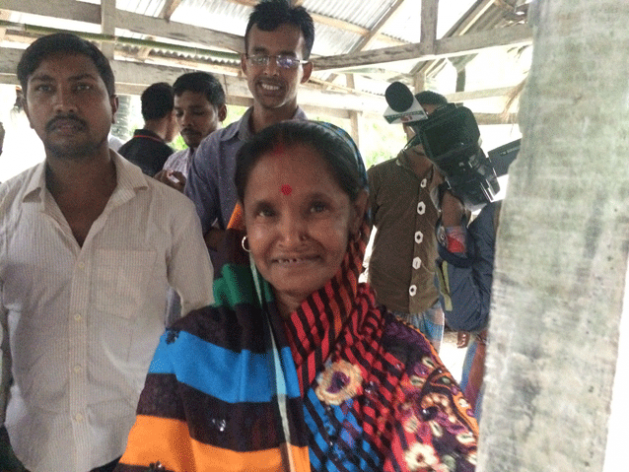
Shahndah Rani. Credit: Shahiduzzaman
Banaripara (Barisal), Sep 4 2017 (IPS) - She was born in the early 1950’s to an ultra-poor family in Kundihar, a remote village of Banaripara of Barisal division in Bangladesh. She was a beautiful baby and her father named her ‘Shahndah Rani’ which means ‘Queen of Evenings’. But in reality her life was far from that of a queen.
Born into acute poverty, there were days when she went without any food. Rani’s parents could not afford any schooling and gave her away in marriage at age 16 to relieve some of the pressures on them. She was married off to Monoranjan Dhar, who despite being poor himself, cared for Rani.
Soon after she moved in with her husband, Rani started working to produce lime from snail shells in the traditional way, by hand. Lime is one of the ingredients used in the consumption of betel leaf. Many people in Bangladesh and other South Asian countries are dependent on betel leaf or ‘paan’ chewing, which also includes other ingredients such as areca nut and often tobacco. It is chewed for its stimulant effects. Historians claim that betel leaf chewing has been part of South Asian culture for hundreds of years.
Rani’s struggle for survival began at the time of Bangladesh’s independence in 1971. She managed to save a capital fund of just 65 dollars, which she used to buy firewood and for collecting snail shells from ponds, marshland and swampland around her village. On the very first day of her business venture, she produced one kilogram of lime, which she was able to sell in a nearby rural market for about one US dollar.
Rani quickly realized that she was on the right track and understood the market value and demand. She’s never looked back.
Her husband Monoranjan proudly says, “Rani is energetic and she can think well. She gives me the courage and confidence to face the challenges of poverty together.”

Shanda Rani and her family with IFAD team members. Credit: Shahiduzzaman

Following four decades of hard work, Shandha Rani is now an icon for rural entrepreneurs in her village and community. Her husband and three adult sons work with her. She has also created jobs for three more people.
Several other women and men are following Rani’s footsteps. Dipali Rani is one of them, who also started producing lime. The local people have renamed the village Lime Para (village).
“It is good. Traders are now directly coming to us to buy our product. It also reduces our worries about marketing the product,” said Manaranjan.
Rani is eager to expand her network and business into neighbouring districts, so she is negotiating with financial institutions for loans to invest. She has successfully set up a small workshop with an electric moulding machine, a fireplace to burn snail shells and storage space. Rani is the proud owner of a motorboat for easy transportation of her product and raw materials. Her family home is now a tin-roofed, brick-walled house with a toilet on her own land. At present she has a running capital of about 10,000 dollars, with the capacity to produce 800 kg lime per day. However, lime from snail shells can’t be produced year-round because of non-availability of the shells, particularly in dry or winter seasons.
“If initiatives are taken to cultivate snail shells, it will be a big push for lime production. It has a potential market in the country. Snail shells without flesh are the key raw material for lime production. Besides, their flesh has huge demand in fish cultivation farms as feed. Such initiatives will also create more job opportunities in rural areas,” said James P. Biswas, Deputy Executive Director of the Bangladesh Development Society (BDS).
Rani’s story is one of the success stories of BDS, an NGO based in Barisal working to support development of rural entrepreneurs with assistance from the Palli Karma-Sahayak Foundation (PKSF) and the International Fund for Agricultural Development (IFAD), a United Nations specialized agency.
Since 2000, BDS has been supporting Rani. She was able to take loans 16 times and each of these loans was repaid on time. The loan amounts vary between 200 and 6,000 dollars.
“The organization has provided loans for various purposes to dozens of families in this sub-district and there has been remarkable progress. In most cases, beneficiaries have overcome poverty while at the same time creating jobs. With such success, BDS in partnership with the IFAD and PKSF is planning to increase the loan amount and help expand areas of activities,” Biswas added.
Benoit Thierry, Country Program Manager in the Asia and the Pacific Division of IFAD, who recently visited the Kundihar village along with PKSF officials, met up with several beneficiaries including Shahndah Rani to assess the impact of IFAD support in this area. Over four decades, the Fund has been providing grants and loans to Bangladesh, with the aim of enabling poor people in vulnerable areas to adapt the pattern of their livelihoods to climate change; help small producers and entrepreneurs benefit from improved value chains and greater market access and economically and socially empower marginalized groups, especially poor rural women.
Currently, the Government of Bangladesh and IFAD are negotiating to undertake another six-year project, starting in 2018, to increase farmer incomes and livelihood resilience through demand-led productivity growth, diversification and marketing in changing climatic conditions.
The proposed 111-million-dollar programme is expected to directly benefit at least 250,000 rural households in eleven districts of the country’s southern divisions of Chittagong and Barisal.
PKSF General Manager Akond Md. Rafiqul Islam said, “For many years, access to credit, cooperation, technical support and technology transfer to the poor were limited. Since its inception in 1990, PKSF has been working exclusively for their development in collaboration with 250 NGOs. In this context IFAD’s continuous assistance makes it easier to address effectively the needs of moderate and ultra-poor people. Now you will find thousands of success and trend setting entrepreneurs like Shahndah Rani all over the country.”
Things are moving and changing fast in Bangladesh. In a very real sense, these small rural entrepreneurs are strengthening the rural economy and creating huge job opportunities, Islam added. At present, PKSF is supporting more than 10 million poor people in the country, 90 percent of them women.
Israt Jahan, the top government official of Banaripara Upazilla, lauded IFAD, PKSF and NGO initiatives.
“Their activities are supplementing the government programmes, particularly in poverty alleviation, strengthening rural economy, empowerment of women and their participation in socio-economic development and cultural activities,” Jahan said.
She added that, “The Bangladesh government has made remarkable progress on poverty alleviation. While connectivity between rural areas and cities are well established, we still need to do more and welcome any support from IFAD and PKSF for programmes undertaken to benefit rural people.”

Vaaldiam Mining earns millions in royalties from mines years after exiting

Authentic news,No fake news.


  NAIROBI, KENYA: Canadian firm, Vaaldiam Mining Inc, earned a tidy Sh310 million during the year to June 2017 from the Kwale mineral sands project operated by Australian miner —Base Resources. While Vaaldiam might be unknown to many Kenyans, its predecessor Tiomin Resources is familiar to many and particularly to coastal residents. For more than a decade, the firm struggled to move the titanium mines of Kwale to production. Acquired rights Its efforts amounted to nil on the back of a push and pull with locals, lobby groups and Government agencies. Despite what can be termed huge failure during Vaaldiam’s stay in Kenya, it still earns a tidy sum from the mines that it had been sitting on for about 15 years without any tangible development. The Sh310 million ($3.1 million) payment is in royalties came from Base Resources, which in 2010 acquired the rights to the Kwale mineral sands project. Tiomin, which was in 2012 renamed Vaaldiam Mining Inc after acquiring Vaaldiam, entered Kenya in the mid-1990s with plans to prospect and eventually mine titanium in Kwale County. It was, however, unable to make any meaningful progress through the years and sold its rights to Base Resources of Australia in 2010. While the Australian firm in its disclosure in 2010 while selling the Kwale Mineral Sands mines to Base Resources said it had invested over Sh6 billion and might dispute being labelled a speculator, Vaaldiam had nothing much to show for the investment and the time spent at the Kenyan Coast. In fact, a firm that had earlier expressed interest to buy into the project pulled out of the deal, citing suspect disclosures on the activities undertaken at the mines. Base Resources, which took over the mineral sands mines in 2010, said it paid out Sh300 million to Vaaldiam as royalties during the financial year to June 30 this year. This is slightly lower than the Sh400 million Kenya Government was paid. The dismal disparity in pay between Tiomin and the Government is despite the company having put in little or no tangible investments in the Kwale mines while the Government owns the resource, on behalf of Kenyans. The royalties are part of the sale agreement that Base Resources signed with Vaaldiam, which were to be paid at a rate of 1.5 per cent of revenues. This is slightly lower than what the Governments gets - at 2.5 per cent but is being relooked, with a view of pushing it to about five per cent. “Royalty paid to the Government of Kenya in the 2017 financial (at 2.5 per cent) amounted to $4 million (about Sh400 million). The equivalent amount has also been expensed in the accounts as an accrual to bring the total (representing five per cent royalty) to $8 million (Sh800 million),” said Base Resources in a statement. “A further $3.1 million (Sh310 million) was paid to Tiomin/Vaaldiam as part of the ongoing acquisition cost of the project as agreed in 2010 - totaling to $11.1 million (Sh1.11 billion).” “Royalty costs are provided for and expensed on the basis of a five per cent royalty rate being payable to the Government of Kenya, whereas the royalty rate applicable under the terms of the special mining lease, and currently being paid, is 2.5 per cent.” Base in three years was able to do what Tiomin could not do in more than a decade, having moved into the mines in 2011, by being able to export the first cargo of mineral sands from the Kwale project in 2014. Tiomin discovered the mineral sands in Kwale in 1995 but faced hurdles, with the monumental one being getting a buy-in from the community. Meagre compensation Until the time of selling to Base Resources, the firm had not been able to move out locals to allow commencement of mining owing to meagre compensation it was offering. The resistance by locals who also raised concerns that the project would affect the environment and their sources of livelihood. It was reinforced by lobby groups that had argued Tiomin had bypassed the law in implementing the project. The firm also faced regulatory challenges through the years, with Government agencies turning down its applications. Tiomin was also broke, with the titanium discovery in Kwale being its only active project at the time and the lenders advanced credit to the firm on the basis of the viability of the mines. Other than credit from banks, the firm had been able to rope in a Chinese firm that had initially bought a 20 per cent stake but in 2009 said it was willing to up this to 70 per cent and move the mines to production. The deal, however, fell through within two months. Jinchuan Group of China, which was to pay Tiomin Sh2.5 billion ($25 million) and invest a further Sh1.8 billion in developing the project, opted out of the deal before it was concluded, arguing that it was ‘not satisfied with the disclosure schedule’ presented by Tiomin. Sitting on potential mines or oil fields with the hope of a big pay day through sale of rights is not unique to Tiomin. Many mineral and oil exploration and production firms have entered Kenya with a plan of sitting on extractive licences with expectations of being bought out by industry majors. Companies are currently holding licences to explore for minerals, oil and gas, but have undertaken minimum work obligations on the fields. They avoid being kicked out of the licence areas by the State but are always keen to renew their licences to keep their speculative tendencies alive. The Ministry of Mining in 2013 and later in 2015 revoked dozens of licences that had been issued to exploratory and mining companies. The then Cabinet Secretary Najib Balala (now in Tourism) argued that the firms had no capacity or intentions of undertaking meaningful work and were just speculating, shopping for buyers of part or all of their rights. A similar scenario has unfolded in the upstream oil sector, which just like mining has garnered interest in the recent past, where many companies licensed to explore for oil have not been meeting certain obligations stipulated under their licences. The Ministry of Energy has been forgiving and has so far not taken any drastic measures to end such speculations. It has only penalised one firm, despite  issuing dozens of licences to inactive companies, with the only visible activity being in the Turkana blocks. The Ministry has in the past said failure by firms to meet their contractual obligations - including minimum investments in actual exploration works as well as investments in the community - has been due to factors that are beyond their control.  Vaaldiam is one such firm that had nothing much to show for the investments and the time spent at the Coast.
Read more at: https://www.standardmedia.co.ke/business/article/2001253634/canadian-company-earns-millions-in-royalties-from-mines-years-after-exiting

British schools Nos. 1 and 2 in World University Rankings

Authentic news,No fake news.


Oxford University took the top spot in Times Higher Education's World University Rankings for 2017 -- for the second year in a row. File Photo by Andy Rain/EPA
Sept. 5 (UPI) -- For the first time in its 14-year history, two British universities hold the top two spots in Times Higher Education's annual World University Rankings.
Oxford and Cambridge claim the top two slots in the rankings -- with Oxford holding onto its number one position for the second year in a row, and Cambridge climbing up to take over the California Institute of Technology at No. 2.
"To be judged the best university in the world for the second successive year, against a backdrop in which Britain's role in the world is uncertain and the place of universities in society open to question, will be a great source of pride for everyone at Oxford, and, I hope, for the whole country," Oxford's vice-chancellor, Louise Richardson, said.
This rise could be due to Oxford and Cambridge both seeing increases in total institutional income up 24 percent and 11 percent respectively. U.S. universities that share the third spot, Caltech and Stanford, saw institutional income drop by 23 percent and 24 percent, respectively.
However, the underlying risk of Brexit may have major consequences on Oxford and Cambridge's funding. A key factor in funding institutions is the monetary support they receive from the European Union.
The European Union has provided many research grants to the universities. A quarter of Cambridge's research income and a fifth of Oxford's come in the form of EU grants. This could be potentially problematic for the future global performance of both colleges once Brexit is fully implemented.
The rankings director, Phil Baty, warns that Britain shouldn't jeopardize the quality of its institutions.
"They are a huge national asset and one that the country can ill-afford to undermine at a time when its place in the global order is under intense scrutiny," said Baty.

Mitra-mandal Privacy Policy

This privacy policy has been compiled to better serve those who are concerned with how their  'Personally Identifiable Inform...