Be clear about another great election loser. “Let’s reignite British spirit,” implored the Mail as it wound up its own bitter campaign with a 13-page special on the evils of Corbyn. He’s “Cor-Bin” howled the Sun, fearing “apocalypse” if he won. “Your country needs you,” boomed the Telegraph. “Vote May today,” said the Express. Only the Guardian (at the last) and Mirror stable supported Labour. And yet, and yet, it didn’t matter on the day. The supposed power of the Tory press was a bust.
Paul Dacre of the Mail instructed his faithful millions how to vote tactically. They turned a deaf ear. Rupert Murdoch’s fearsome Bun issued awful warnings. They were ignored. The printed press – with the FT and Times as reluctant Conservative backers – has seldom seemed more overwhelming. Labour cries of “fix” and “grotesque” were rising again as a reason/excuse for defeat, with the BBC added to that hate list. In the end, though, it didn’t matter – even before the May-bashing tabloid U-turns of hypocrisy the morning after.
In the changed world of 2017, this ought to kill many media preconceptions for good. Print circulations have shrunk and shrunk again even since 2015. Fewer faithful to read the tablets from on high. More balky floaters bent on doing their own thing.
But that’s only part of it because the mists over the march of digital coverage are beginning to clear at last, thanks to exhaustive research from Enders Analysis. We’re used to saying that social media handed America to Trump last November, a string of rightwing websites worsting newspapers and mainstream TV in the rust belt. Now, surely, we can sense a similar phenomenon from Hastings to Hallam.
There was no fake news, to be sure. Maybe Putin and co weren’t interested enough to intervene: but the same clear positioning streamed from mobiles and laptops. Look at Facebook, with over 56% of the voting population on board and political ads pouring in at an unprecedented rate. What did members of that giant community mostly share among themselves? News about Corbyn and May from the Independent, Guardian, Mirror and online Labour backers like the Canary and Evolve Politics.
Nor, to repeat, are we talking big press numbers against smaller social media hits. The Canary has more Facebook shares on the party leaders than the Telegraph or the BBC. Another Angry Voice’s reach left the Mail, Standard or Express trailing. (“Blown it”, as the Mail now snarls at Theresa).
It’s a “highly pro-Labour skew”, according to Enders, “tilted heavily towards content against May and for Jeremy Corbyn.” With exactly the same pattern on Twitter. And “worryingly for the UK’s biggest news brands, a common angle among much of the most shared content was criticism of the campaign coverage of UK national newspapers and public service broadcasters”. In other words, here were millions of largely young people going online every day to berate print and correct all its biases – but, equally, hefting a weight of opinion of their own.
What about the conversion rate for floaters, though? How does that all work in an era of visceral views-mongering? The fascinating thing is to examine a clash of communities. The Mail and Express don’t affect to despise Corbyn by accident. They think their readers are overwhelmingly Tory. They’re told what they want to hear. And, similarly, the Canary cheeps a parallel song. It knows what its users want too. As Corbyn surges forward, May’s allies start jumping ship.
In one way, this can appear merely a replication of the old print power, but smaller, cheaper, feistier, online. But the sharing and individually caring nature of social media gives it a different dimension – a feeling that you, the voter, are in charge not just at the ballot box but in your reaction to the campaign as it winds on. There are obvious perils here: see the closed communities of digital discussion and information who elected Trump. But there are also signals, in an era of startling swings, that the old ways of press hegemony, just like those of party loyalty, have had their day.
No more excuses, then: no more wailing about what’s “unfair”. We’re moving on.
DOHA, Qatar (AP) — Qatar's top diplomat struck a defiant tone Thursday, saying no one gave Arab nations the right to "blockade" his energy-rich country, and that the campaign by Saudi Arabia and its allies to isolate Qatar is based on "false and fabricated news."
(1 of 5) Qatari foreign minister Sheikh Mohammed bin Abdulrahman Al Thani, speaks to journalists during a joint press conference with his Lebanese counterpart Gibran Bassil, at the Lebanese foreign ministry, in Beirut, Lebanon.
In a wide-ranging interview with The Associated Press, Qatari Foreign Minister Sheikh Mohammed bin Abdulrahman Al Thani repeatedly denied his country funded extremists and rejected the idea of shutting down its Al-Jazeera satellite news network.
He said Qatar as an independent nation also had the right to support groups like the Muslim Brotherhood, despite its neighbors outlawing the Sunni Islamist group. Sheikh Mohammed's hard line mirrored that of a top Emirati diplomat who told the AP on Wednesday that the United Arab Emirates believes "there's nothing to negotiate" with Qatar.
Saudi Arabia, Egypt, Bahrain, the United Arab Emirates and other countries severed diplomatic ties with Qatar earlier this week and cut off air, sea and land travel to the peninsular nation. Kuwait's emir is working to mediate the Gulf crisis around Qatar, which is home to a major U.S. military base and the host of the 2022 FIFA World Cup.
"If anyone thinks they are going to impose anything on my internal affairs or my internal issues, this is not going to happen," Sheikh Mohammed said. Worried residents have responded to the crisis by emptying grocery stores in the Qatari capital, Doha, as Saudi Arabia has blocked trucks carrying food from entering the country across its only land border.
Its flag carrier Qatar Airways now flies increasingly over Iran and Turkey after being blocked elsewhere over the Middle East. Emirati officials also shut down the airline's offices in the UAE on Wednesday.
Al-Jazeera offices have been shut down by authorities in Saudi Arabia and Jordan. Meanwhile, Turkey's parliament approved sending troops to an existing Turkish base in Qatar as a sign of support. U.S. President Donald Trump, who tweeted Tuesday about Qatar funding extremists, called Qatari ruler Sheikh Tamim bin Hamad Al Thani on Wednesday and offered to host leaders at the White House to resolve the crisis.
On Thursday, Sheikh Mohammed told the AP that Sheikh Tamim "is not going to leave the country while the country is in blockade," in effect turning down the offer of mediation. An Emirati writer and ruling family member suggested Qataris already are looking for new leadership in the tiny country.
Qatar has yet to receive any list of demands from the Arab countries that have cut ties, Sheikh Mohammed said. That's even after Kuwait's emir Sheikh Sabah Al Ahmad Al Sabah flew to Qatar to discuss the crisis with officials.
Gambrell reported from Dubai, United Arab Emirates
LONDON (AP) — Britain voted Thursday in an election that started out as an attempt by Prime Minister Theresa May to increase her party's majority in Parliament ahead of Brexit negotiations but was upended by terror attacks in Manchester and London during the campaign's closing days.
(1 of 14) A police officer is stationed outside a polling station at Cubitt Town Infant and Junior School on the Isle of Dogs in London, as people cast their votes in the general election, Thursday June 8, 2017. (Victoria Jones/PA via AP)
Voters are choosing all 650 members of the House of Commons after May called the election three years ahead of schedule at a time when her party was well ahead in the polls. But the attacks have forced her to defend the government's record on terrorism, and this week she promised that if she wins she will crack down on extremism — even at the expense of human rights.
Rachel Sheard, who was casting her vote near the site of Saturday's attack in London, said the election had not gone as expected — and that it certainly wasn't about Brexit. "I don't think that's in the hearts and minds of Londoners at the minute, (not) nearly as much as security is," said Sheard, 22. "It was very scary on Saturday."
Eight people were killed Saturday near London Bridge when three men drove a van into pedestrians then randomly stabbed revelers in an area filled with bars and restaurants. Two weeks earlier, a suicide bomber killed 22 people as they were leaving a concert in Manchester, and five people died during at attack near Parliament on March 22.
The attacks have left Britain on high alert. The official threat level is "severe," the second-highest rating, indicating an attack is "highly likely." When May called the election seven weeks ago, she was seeking to capitalize on opinion polls showing that her Conservatives had a wide lead over the opposition Labour Party. She became prime minister through a Conservative Party leadership contest when her predecessor, David Cameron, resigned after voters backed leaving the EU. The time seemed right to seek her own mandate from the British people.
She went into the election untested in a national campaign, but with a reputation for quiet competence. May's mantra throughout the campaign was that she was the person to provide "strong and stable" leadership.
But the campaign did not go to plan. May was criticized for a lackluster campaign and for a plan to force elderly people to pay more for their care, a proposal her opponents dubbed the "dementia tax." As the polls suggested a tightening race, pollsters spoke less often of a landslide and raised the possibility that May's majority would be eroded.
After the terror attacks in Manchester and London, which twice forced the suspension of campaigning, security became the focus of the debate. May said this week that she would consider rewriting human rights legislation if it gets in the way of tackling extremism.
But in her final message to voters, May tried to put the focus back on Brexit. "I can only build that better country and get the right deal in Brussels with the support of the British people," she said. "So whoever you have voted for in the past, if that is the future you want then vote Conservative today and we can all go forward together."
Labour Party leader Jeremy Corbyn, who built his reputation as a left-wing activist, focused his campaign on ending the years of austerity that have followed the global financial crisis. He called for increased spending on the National Health Service, schools and police, as well as the nationalization of railroads and water utilities.
After the terror attacks, Corbyn suggested the Conservatives had undermined Britain's security by cutting the number of police on the streets. The Labour leader closed out his campaign by telling a rally he had reshaped British politics.
"As we prepare for government, we have already changed the debate and given people hope," he said. "Hope that it doesn't have to be like this; that inequality can be tackled; that austerity can be ended; that you can stand up to the elites and the cynics. This is the new center ground."
While the gap between the two parties has narrowed, virtually all polls suggest the Conservatives will retain control of Parliament. A high turnout is seen as Labour's best hope of eroding the Conservative majority.
The Conservatives held 330 seats in the last Parliament, compared with 220 for Labour, 54 for the Scottish National Party and nine for the Liberal Democrats. Rain is forecast through much of the country, but it is unlikely to be severe. Turnout is not expected to be affected.
"We live in a country where a bit of drizzle is commonplace," said John Curtice, an election expert at Strathclyde University. Polls are open from 7 a.m. to 10 p.m. (0600GMT to 2100GMT).
LONDON (AP) — The Latest on the attacks in the London Bridge area that killed eight people (all times local): 2:15 p.m. London's Borough Market remained sealed off Thursday, four days after attackers drove a rental van into a crowd and went on a stabbing rampage. Eight people died and nearly 50 were wounded.
(1 of 2) ADDS THAT SIBLINGS OF ECHEVERRIA SAY THAT IGNACIO IS DEAD This photo made available by Isabel Echeverria shows an image of Ignacio Echeverria, a 39-year-old Spanish banker, who remains missing after trying to help a woman injured in the vicinity of Borough Market on Saturday night. The siblings of the 39-year-old banker Ignacio Echeverria say that their brother was one of the people killed in the London attacks. (Isabel Echeverria via AP)
However, some nearby businesses have started to reopen. At Leon's coffee shop, some staff on duty the night of attack Saturday were still on leave and getting counselling. On the night, they pretended to lock the doors in a move that was thought to protect 20 customers inside.
One customer outside the shop was stabbed several times in the neck. John Vincent, the CEO and founder of Leon's, said: "Some of the people who were here on Saturday night are still a bit fragile. Some people who weren't here on Saturday night have got this whole guilt thing going on that they weren't here to be supportive to their colleagues."
1:20 p.m.
Relatives of the Spanish victim in the London Bridge attack last week say they would like to take the body of Ignacio Echeverria back to Spain as soon as the autopsy scheduled for Friday is conducted.
Spanish Interior Minister Juan Ignacio Zoido said Thursday that authorities are working to accelerate the repatriation of Echeverria and asked the public not to speculate about the cause of death until the coroner's report is issued.
The information offered so far by British authorities on Echeverria's death has been "sufficient and correct," said Ana Echeverria, the youngest sister of the victim.
Witnesses last saw 39-year-old Echeverria last Saturday lying on the floor after confronting the assailants near London's Borough Market with his skateboard.
His siblings appeared before cameras in London after meeting a forensic judge in London's Southwark and thanked authorities and the public for their support over the past five days.
"Something very sad, very hard, is becoming more beautiful and grand, making us appreciate even more our brother, our family, our friends and our country," said Ana.
12:45 p.m.
A police officer who was stabbed in the eye trying to stop the London Bridge attackers with only his baton has said he was sorry he couldn't do more.
The British Transport Police officer, whose name was not disclosed, was stabbed in the head, face and leg and is still hospitalized after Saturday's attack.
In a statement, he thanked members of the public for their support.
"I feel like I did what any other person would have done," he said. "I want to say sorry to the families that lost their loved ones. I'm so sorry I couldn't do more and I want you to know I did everything I could."
The officer, who had been on the job for less than two years, was one of the first on the scene.
10:30 a.m.
Dramatic footage from London's Borough Market shows three attackers viciously stabbing a man just before police converge and shoot them all dead.
The footage believed to be from a surveillance camera emerged on social media. It shows the final moments of the attack that started when the three rammed a van into pedestrians on busy London Bridge late Saturday. They then ran down a set of stairs and into the market, stabbing people at bars and restaurants as they went. Eight people died in addition to the attackers, and nearly 50 others were hospitalized.
The video shows a man crossing a deserted street in the market. One attacker runs up from the side and swings a knife at him, then the other two join in as he tries to run. The victim falls to the ground and passersby appear to throw things at the attackers to try to stop them.
9:30 a.m.
Police have arrested six men in actions directed against terror in the U.K. as a tense nation begins voting in a national election.
Detectives from London police's counterterrorism command raided properties in east London on Thursday, detaining three people on suspicion of the commission, preparation or instigation of terrorism offenses.
The three, who were not connected to the weekend attack on London Bridge, are being questioned at a south London police station.
Separately, police investigating the London Bridge attack made three arrests in Ilford, also in east London, late Wednesday.
Police are hunting any possible accomplices in the attack in which three men mowed down pedestrians on London Bridge and then launched a knife rampage. Eight people were killed and dozens were injured.
The witness table where former FBI Director James Comey will face the U.S. Senate Intelligence Committee and testify on June 8 about his meetings with President Trump sits at the ready in Washington, U.S., June 7, 2017. REUTERS/Jim Bourg
Washington
Former FBI Director James Comey will tell Congress today that President Donald Trump pressed him repeatedly to halt a probe into his ex-national security adviser's ties with Russia and to declare publicly that Trump himself was not under investigation. The outcome could have significant repercussions for Trump's 139-day-old presidency as special counsel Robert Mueller and multiple congressional committees investigate whether Trump's campaign team colluded with Russia during the 2016 presidential election. The White House and Russia deny any collusion occurred.
Aides to U.S. President Donald Trump are urging him not to fire Attorney General Jeff Sessions despite rifts between the two men, sources familiar with internal White House conversations said.
Iran
Iran's foreign minister rejected Donald Trump's condolences for deadly attacks in Tehran, calling the U.S. president's words ‘repugnant.’ Trump had said he prayed for the victims of Wednesday's attacks that were claimed by Islamic State, but added that "states that sponsor terrorism risk falling victim to the evil they promote."
Myanmar
Bodies and aircraft debriswere found in the sea off the southern coast of Myanmar by ships searching for a military plane that went missing with 122 soldiers, family members and crew on board. The Chinese-made Y-8-200F transport plane vanished after taking off from the coastal town of Myeik on a weekly flight to Myanmar's largest city, Yangon. The plane lost contact 29 minutes after takeoff while flying at 18,000 feet.
UK
Britons began voting today in an election Prime Minister Theresa May called to strengthen her hand in looming Brexit talks. May's campaign has not gone to plan, and as the poll leads of 20 points or more she was enjoying when she called the early election in April have shrunk.
British police investigating the deadly attacks on London Bridge said they had arrested three more suspects, as footage of the moment officers shot the assailants dead appeared online. The suicide bomber who killed 22 people at a concert in Manchester last month was radicalized in 2015 while living in Britain, his brother has told Libyan counter-terrorism investigators in Tripoli.
A man carries his daughter on his back after fleeing their home due to fighting between the Iraqi forces and Islamic State militants in Mosul's al-Zanjili's district in Iraq June 7, 2017. REUTERS/Erik De Castro
Somalia
Al Shabaab militants captured a town in Somalia's semi-autonomous Puntland region, a senior official said, and the group said it had killed at least 61 soldiers in the fighting.
Business
Investors are increasingly excited about the prospects for much faster growth in the solar power industry in Southeast Asia, which has until now been a backwater for renewable energy.
Many California tech companies in “Silicon Beach” are encouraging employees to bring their dogs to the office, saying their presence can boost productivity, relieve stress and improve the work environment.
Julius Baer executives have told U.S. prosecutors that a former employee of the Swiss bank acted alone if, as alleged, he helped funnel kickbacks and bribery payments to a soccer official in the Americas, people familiar with the investigation said.
Yezidi girl from Khanke camp near Dohuk. Credit: Fernando Burgés
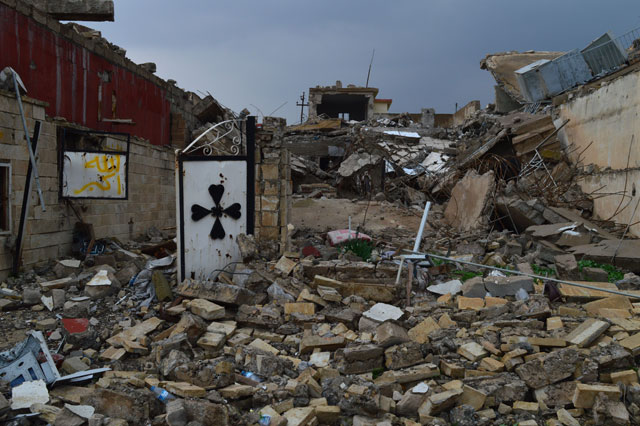
LONDON, Jun 7 2017 (IPS) - East of Mosul, many of the lands liberated from ISIS stand empty. Driving through the Nineveh plains, traditional homelands of Iraq’s minority communities of Yezidis, Christians, Shabak and Turkmen, you pass one ghost town after another, peopled only by members of the armed militias known in Iraq as the Hashd al-Shaabi, or ‘popular mobilization’.
Houses destroyed by ISIS vehicle bombs are juxtaposed with buildings flattened by international coalition air strikes. Inside the houses in many residential streets, there are holes smashed into the party walls to create the rat-runs used by insurgents to evade surveillance.
The battle to retake Mosul is already nearly eight months old and, as resistance on the city’s right bank has proved intense, civilian casualties have mounted rapidly. Yet many of the empty territories in Nineveh east of the city and in Sinjar to the west were first retaken months ago.
They join lands in Diyala, Kirkuk and Anbar where ISIS has been defeated but displaced people numbering in the millions have yet to return. To understand why is to appreciate the threats that now hang over the future of Iraq – threats that will not disappear when ISIS is defeated.
The Iraqi central government in Baghdad and the Kurdistan Regional Government in Erbil are broadly in agreement that IDPs can only return once security and services are restored. They have a point. There is extensive destruction to essential infrastructure. When thousands of civilians first returned to Ramadi after it was retaken, there were dozens of reported serious casualties from booby-traps and other IEDs and explosive remnants of war.
But many displaced minority communities now believe that their return is being delayed for other reasons. Christians, Yezidis, Shabak and Turkmen all cite cases where IDPs and supplies have been stopped at checkpoints, as detailed in a new report published by four international NGOs, Minority Rights Group International, the International Institute for Law and Human Rights, the Unrepresented Nations and Peoples Organization, and No Peace Without Justice. The fear is that land-grabbing is already underway.
Destroyed church building, Tal Kaif district, Ninewa Governorate. Credit: Mays Al-Juboori
A conservative estimate puts the number of armed militias controlling territory in liberated Nineveh at over 15, including ethnic militias drawn from members of local communities. On the ground, militia checkpoints have proliferated and you frequently have to pass through two or even three in a row. They play the game of who can fly their flag the highest. At the moment the relationship is one of mutual acceptance, but it is unclear how long that will last. Some are affiliated with the Iraqi Security Forces, others with the Kurdish authorities. Some take their orders from further afield.
Just as Grand Ayatollah al-Sistani called on Iraqi volunteers to mobilize in the fight against ISIS in June 2014, so many hope he will issue the fatwa to demobilize once ISIS is defeated. The practical challenges of Disarmament, Demobilization and Reintegration have hardly begun to be discussed in Iraq. Ensuring that members of local communities, including minorities, are properly integrated into the security forces is essential for their communities to feel safe.
But many of the most powerful militias supported by Iran, which for example control much of Diyala and key locations in Tel Afar, have already made clear that they have no intention of demobilizing. And as long as Turkey fears an Iranian corridor from Baghdad to Syria, its own attempts at securing a base in Nineveh will intensify. With those forces at play, the resurgence, post-ISIS, of Sunni Arab opposition under another name is perhaps inevitable.
In the face of this sectarian fragmentation members of minorities remain passionate about the future of their lands and many fiercely patriotic to the state of Iraq. Interviewing minority Shi’a IDPs in Kerbala last year, their gratitude at the religious authorities for giving them a temporary shelter was quickly followed by expressions of hope for their return to their homes in Tel Afar and the Nineveh plains. Assyrian and Chaldean Christians emphasize their millennia-long attachment to the land. Even Yezidi IDPs, who were subject to egregious crimes at the hands of ISIS and, in many cases, betrayal by their former neighbours, have begun to talk about the prospects of return.
But their hopes of return depend on security, and that must ultimately depend on a political agreement between the different forces now vying for control of their land. For years, the UN has tried to promote agreement between Baghdad and Erbil over ‘disputed territories’ in Nineveh and Kirkuk. With de facto boundaries being redrawn and new parties added to the conflict, the task just got a lot harder.
The battle against ISIS has created in Iraq a rare moment of unity. Sunni tribal forces and Shi’a militias, Iran and Turkey, the US and the other members of the international coalition, the Government of Iraq and the Kurdistan Regional Government are all cooperating in the face of a common enemy. As Gyorgy Busztin, deputy head of the UN mission, emphasized to me in Baghdad in March, that presents a window of opportunity, for Iraq’s people and for the international community.
But as control over retaken territory continues to fragment, and the militias become entrenched, the window is closing fast. By the time Mosul is finally declared liberated, it may already be too late