MITRA MANDAL GLOBAL NEWS

Zambia arrests 30 Chinese for illegal mining activities

Authentic news,No fake news.


Zambia arrests 30 Chinese for illegal mining activities
FILE PHOTO
By Francis Maingaila
LUSAKA, Zambia 
Zambian police arrested 30 Chinese nationals for allegedly carrying out illegal mining activities, the nation's home minister said on Sunday.
Speaking to reporters, Home Affairs Minister Steven Kapyongo said the police conducted an operation in the mining area on the Copperbelt on Saturday night.
Kapyongo also accused the Chinese nationals of employing underage youths to steal copper and other precious minerals.
The child miners were said to be aged between 10 and 16 years old.
The minister said the arrestees would be deported over "violating the provisions of the law regarding mining and labor activities" in Zambia.
He said the government will not tolerate foreign nationals using investment permit to commit crimes, warning to revoke permits of such people and deport them.
"In future, the government will also not hesitate to round up people used by foreigners to do illegal mining activities," said the minister.

Turkmenistan may use Central Asia-Center system for gas delivery

Authentic news,No fake news.


Ashgabat, Turkmenistan, June 1
By Huseyn Hasanov – Trend:
The Central Asia – Center gas pipeline system can potentially be used to deliver natural gas from Turkmenistan to the countries of Eastern Europe and the CIS, the Turkmen Dovlet Habarlary state news service writes after the Energy Charter Forum, held in Ashgabat May 30-31.
"In case of application of fundamental principles of the Energy Charter Treaty and reaching certain agreements with the transit countries, the Central Asia – Center gas pipeline system could potentially be used to deliver natural gas from Turkmenistan to the countries of Eastern Europe and the CIS," Turkmen Dovlet Habarlary said

Iran welcomes co-op with SOCAR in all spheres

Authentic news,No fake news.


Baku, Azerbaijan, 
By Dalga Khatinoglu – Trend:
National Iranian Gas Company (NIGC) and Azerbaijan’s state-run SOCAR have signed several good deals and negotiations on expansion of bilateral cooperation continue, Ali Shakarami the head of operation Dispatching Control Centre of NIGC told Trend.
According to him, the sides have already started gas swap operations and the volume of swap can increase in future.
Currently the gas swap operation between Iran, Turkmenistan and Azerbaijan continues. Turkmenistan has started gas swap with Azerbaijan since October 2016.

Turkmenistan delivers gas to Iran’a Qadr Company and Azerbaijan receives the same amount of gas on border with Iran, paying cash fee to the Islamic Republic. During 2016 Azerbaijan received more than 290 million cubic meters of gas from swap operations.
Shakarami who represented NIGC at the 24th International Caspian Oil and Gas Exhibition, being held in Baku from May31-June 3, added that SOCAR can also get involved in drilling operations at Iran’s oil and gas fields and the negotiations in this sphere also continue.
Shakarami didn’t mention the fields themselves, but an Iranian source told Trend earlier that those fields are onshore, in east western regions of the Islamic Republic.
Teymur Eyvazov the Rig Manager at Caspian Drilling Company Ltd. told Trend that this company also can provide drilling services for Iran on the Caspian Sea, in case SOCAR and Iran’s Oil Ministry start negotiations and reach a result.
Caspian Drilling Company owns several progressive rigs, including Dada GorgudIstiglal and a new semi-submersible drilling rig of the 6th generation named after national leader Heydar Aliyev, which would start drilling in offshore Absheron gas field in September for the first time, which aims to produce 1.5 billion cubic meters per year of gas in 2019 initially. Then the rig can be used in Shah Deniz gas field or other projects.
Iran holds a 10-percent share in Azerbaijan's offshore gas field, Shah Deniz.
Back in 2014, Iranian Oil Minister Bijan Namdar Zanganeh explained the country's interests in cooperation with Azerbaijan, in an exclusive interview with Trend.

The most important issue for Iran currently is the development of about 50 oil and gas fields, offered to foreigners last month within the framework of new designed oil and gas contracts, called Iran Petroleum Contract (IPC).

Iran has offered 4 projects in the Caspian Sea, blocks 24, 26 and 29 as well as Sardar-e Jangal oil fields.
Meanwhile, Lukoil CEO Vagit Alekperov said last week that his company planned to study the possibility of working with Iran on the Sardar-e Jangal field. Lukoil is also negotiating with Iran over development of onshore Ab Teymour and Mansouri oil fields.
Iran divided its exploration area in the Caspian Sea to 46 blocks which 8 of them have priority. Iran had carried out 3D seismic operations in 4000 square kilometers of the Caspian Sea at blocks 6,7,8 and 21 from 2003 to 2005 by his Pejvak ship, which was fired in 2005.

Iran also announced in 2012 that while drilling a 1,000-meter well below the surface of the Caspian Sea by Amir Kabir drilling rig, the country found a gas field at the depth of 700 kilometers. A year later Tehran announced the field (Sardar-e Jangal) was in fact an oil field with a gas layer.
Iranian part of the sea has been studied with Azerbaijani equipment two times - once before the fall of the Soviet Union, and then in 1994 and 1995 - to discover possible hydrocarbon reserves, but to no avail.

Azerbaijan also has all the technical equipment from rig building yards like Heydar Aliyev Baku Deepwater Jackets Factory, barges for transferring the rigs and platforms as well as laying pipelines under sea, huge cranes, seismic vessels, several rigs to be rent to Iran as well as supportive ships for various operational activities.

Sardar-e Jangal field

This field, located at block 6 with dimensions of 24x6 km in 750 meter water depth. Iran has drilled two exploration wells and reportedly the field holds 2 billion barrels of crude oil, with API of 39.

Blocks 24, 26 and 29

Block 24 is located 130 km to north Nowshahr port with 600-800 meters depth and 200 square km area.

Block 26 also is situated 100 km to north-east Anzali port, with 850-900 meters depth and 384 square km area.

Block 29 also located 135 km to north Nowshahr port with 800 meters depth and 1028 square km area.
-----

Dalga Khatinoglu is an expert on Iran's energy sector and head of Trend Agency's Iran news service

North. Korea rejects latest UNSC resolution, vows to continue nuclear buildup

Authentic news,No fake news.


SEOUL, June 4 (Yonhap) -- North Korea Sunday rejected the latest sanctions resolution adopted by the United Nations Security Council (UNSC) over the North's several ballistic missile tests, pledging to continue on with its nuclear development.
"The DPRK Ministry of Foreign Affairs gives a strong condemnation and rejection to the UNSC's another campaign of sanctions as it is a crafty hostile act with the purpose of putting a curb on the DPRK's buildup of nuclear forces, disarming it and causing economic suffocation to it," the foreign ministry said in a statement carried by the country's state-run Korean Central News Agency (KCNA).
"It is a fatal miscalculation if the countries, which have had a hand in the frame-up of the 'sanctions resolution,' would even think that they can delay or hold in check the eye-opening development of the DPRK's nuclear forces even for a moment," the statement said. DPRK is an acronym for the Democratic People's Republic of Korea, the North's official name.
"They would squarely see that their mean and indiscreet act would go in just opposite direction to what they want for."

   The statement came after the UNSC voted unanimously on Friday (New York time) to adopt Resolution 2356 to sanction more North Korean officials and entities after the communist country carried out a series of defiant missile tests.
The repeated successful missile tests by the North demonstrated steady progress in the country's pursuit of a nuclear-tipped intercontinental ballistic missile capable of striking the mainland of the U.S.
The foreign ministry repeated its claim that the country's nuclear buildup is an "all too natural exercise of its sovereignty" to thwart U.S. hostility, adding that it is also to "ensure peace and security on the Korean Peninsula."
Also referring to South Korea and the U.S.' policy to seek dialogue with North Korea along with pressure, the statement said "it does not make any sense to profess about dialogue with unjust preconditions attached and by applying maximum pressure."

   "No matter what others say, whatever sanctions and pressure may follow, we will not flinch from the road to build up nuclear forces ... and will move forward towards the final victory," the North said.
North Korea's "ultra precision and diversified Juche Rocket" will continue to thunder and skyrocket in full blast in numbers and in succession until the U.S. and other like-minded countries take their "right choices," it added.

Russia argues THAAD can be used offensively

Authentic news,No fake news.


By Lee Chi-dong
SINGAPORE, June 4 (Yonhap) -- A top Russian defense official on Sunday accused South Korea and the U.S. of escalating tensions in Northeast Asia by deploying the powerful Terminal High Altitude Area Defense (THAAD) on the Korean Peninsula.
Deputy Defense Minster Lt. Gen. Alexander Fomin claimed the missile system can be used for launching "long-distance attack missiles," and should not be viewed exclusively as a defensive system.
"That's why we are alarmed. It's a direct threat to Russia," he said, speaking at a plenary session of the 16th Shangri-La Dialogue in Singapore.
He pointed out the deployment of the THAAD system in South Korea has already begun.
"We are convinced that (the) ongoing (move) in the region under the auspices of the United States to deploy elements of a global missile defense (system) will not only not solve the existing problems on the Korean Peninsula, but, on the contrary, will only exacerbate them," he said in English.
He added THAAD in Korea would also trigger a regional arms race and provoke the North to attack its enemies.
The official took note of Japan's reported plan to beef up its own missile defense system as well, saying such measures will get closer to the Russian border areas and the Kuril Islands where there is a territorial dispute between Moscow and Tokyo.
"No doubt we will analyze the situation and consider possible measures of response," he said.
The general stressed that Moscow supports a "peaceful, diplomatic and economic" approach to resolve the problem related to "Pyongyang's act."

   The North has carried out nine ballistic missile tests this year alone and detonated five nuclear tests since 2006. The last detonation was carried out in September 2016 in the face of strong warnings by the international community.

Moscow seeks US explanations for sanctioning Russians over North Korea

Authentic news,No fake news.


Russia’s deputy UN envoy, Vladimir Safronkov

Russia’s deputy UN envoy, Vladimir Safronkov

© AP Photo/Mary Altaffer
UN, June . /TASS/. Russia’s deputy UN envoy, Vladimir Safronkov, demanded that Washington explained its move to sanction three Russian companies and one individual for their alleged ties with North Korea.
"We would like to hear the US side’s explanation regarding the June 1 expansion of the US sanctions on North Korea, that affected three Russian companies and one citizen of our country," Safronkov said at a session of the UN Security Council.
"This move raises eyebrows and causes deep regret. We have repeatedly stated that the mechanism of unilateral restrictions is illegal from the point of view of the international law," the diplomat added.
Washington extended its sanctions over North Korea on Thursday, putting three Russian companies (Ardis-Bearings Llc, Independent Petroleum Company and its subsidiary PrimorNefteProduct) and one individual (Ardis-Bearings Llc chief Igor Michurin) on its expanded blacklist for their alleged support of North Korea’s weapons programs.
Those added to the US blacklist would be subjected to a freeze of their US assets and a travel ban. US companies and individuals will be prohibited from carrying out any dealings with them.


More:
http://tass.com/politics/949648

Syrian army defeated the largest stronghold of militants IG * to the east of Aleppo

Authentic news,No fake news.

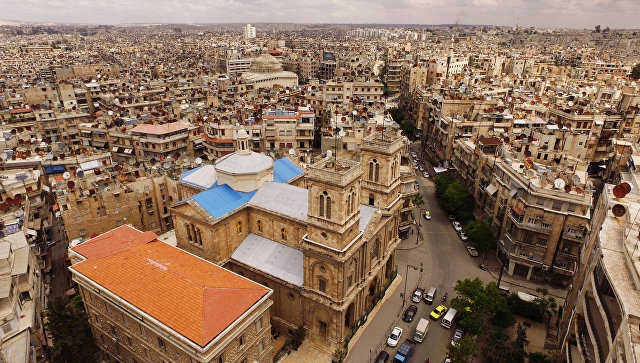
BEIRUT, June 4 - RIA Novosti, Mikhail Alaeddin. SAD army regained control over the settlement Mascagni, destroying the largest stronghold of the terrorist group "Islamic State" * in the east of the province of Aleppo, told RIA Novosti the Syrian military source.
The destroyed buildings on a street in the city dayr hafir in Aleppo province.  archival photo
In the province of Aleppo in late May destroyed more than a thousand militants IG *
"Government troops and allied forces returned full control of Mascagni destroying the largest stronghold of terrorists IG *.", - he told the agency.
According to a source in the settlement has already operate demining groups which started to search and bomb disposal and min.
* Terrorist group "Islamic state" (IG) is banned in Russia.
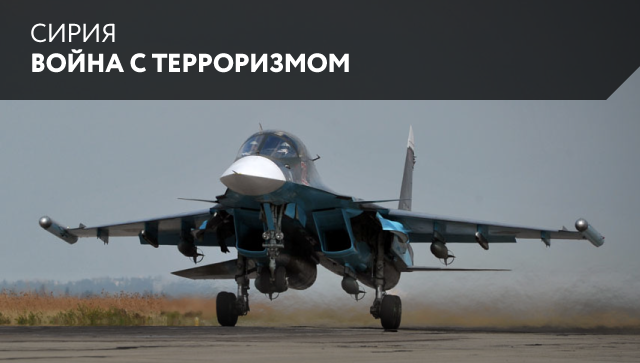
Development of the situation - in a special project of RIA Novosti " The war in Syria " >>

U.S. considers possible sanctions against Venezuela oil sector - officials

Authentic news,No fake news.


By Girish Gupta and Matt Spetalnick | WASHINGTON
The Trump administration is considering possible sanctions on Venezuela’s vital energy sector, including state oil company PDVSA, senior White House officials said, in what would be a major escalation of U.S. efforts to pressure the country’s embattled leftist government amid a crackdown on the opposition.
The idea of striking at the core of Venezuela’s economy, which relies on oil for some 95 percent of export revenues, has been discussed at high levels of the administration as part of a wide-ranging review of U.S. options, but officials said it remains under debate and action is not imminent.
The officials, speaking on condition of anonymity, told Reuters the United States could hit PDVSA as part of a “sectoral” sanctions package that would take aim at the OPEC nation’s entire energy industry for the first time.
But they made clear that the administration is moving cautiously, mindful that if such an unprecedented step is taken it could deepen the country’s economic and social crisis, in which millions suffer food shortages and soaring inflation. Two months of anti-government unrest has left more than 60 people dead.
Another complicating factor would be the potential impact on oil shipments to the United States, for which Venezuela is the third largest oil supplier after Canada and Saudi Arabia. It accounted for 8 percent of U.S. oil imports in March, according to U.S. government figures.
“It’s being considered,” one of the officials told Reuters, saying aides to President Donald Trump have been tasked to have a recommendation on oil sector sanctions ready if needed.
“I don’t think we’re at a point to make a decision on it. But all options are on the table. We want to see the bad actors held to account.”
The U.S. deliberations on new sanctions come against the backdrop of the worst protests faced yet by socialist President Nicolas Maduro, who critics accuse of human rights abuses in a clampdown on the opposition.
Since Trump took office in January, he has stepped up targeted sanctions on Venezuela, including on the vice president, the chief judge and seven other Supreme Court justices. He has pressed the Organization of American States to do more to help resolve the crisis.
While Trump has taken a more active approach to Venezuela than his predecessor Barack Obama, he has so far stopped short of drastic economic moves that could hurt the Venezuelan people and give Maduro ammunition to accuse Washington of meddling.
The two administration officials said the United States is also prepared to impose further sanctions on senior officials it accuses of corruption, drug trafficking ties and involvement in what critics see as a campaign of political repression aimed at consolidating Maduro’s rule.
But broad measures against the country’s vital oil sector – for which the United States is the biggest customer - would significantly ratchet up Washington’s response. The United States has imposed sectoral sanctions against Russia’s energy, banking and defense industries over Moscow’s involvement in Ukraine’s separatist conflict.
The officials declined to specify the mechanisms under consideration and said the timing of any decision would depend heavily on developments on the ground in Venezuela.
Possibilities could include a blanket ban on Venezuelan oil imports and preventing PDVSA from trading and doing business in the United States, which would have a severe impact on PDVSA's U.S. refining subsidiary Citgo.
A more modest approach, however, could be to bar PDVSA only from bidding on U.S. government contracts, as the Obama administration did in 2011 to punish the company for doing business with Iran. Those limited sanctions were rolled back after the 2015 international nuclear deal with Tehran.
The Venezuelan government and PDVSA did not respond to requests for comment.
   
'WE HAVE THE LEGAL AUTHORITY'
The grounds for possibly sanctioning PDVSA would  be “to claim that they’re corrupt, for example, or that they’re abusers of human rights indirectly,” said one of the officials, without giving further details.
“That’s enough. We have the legal authority to do that right now if we like,” the official said.
PDVSA has long been under scrutiny. In perhaps the most damning case to date, U.S. authorities in 2015 arrested two Venezuelan oil magnates alleging they took part in a billion-dollar conspiracy to pay bribes to secure PDVSA contracts. Both men pleaded guilty.
U.S. officials recognize, however, that oil sanctions on Venezuela could exacerbate the suffering of the Venezuelan people without any guarantee of success against Maduro, who accuses Washington and Venezuelan opposition of fomenting an attempted coup.
Given the potential for regional spillover, any decision on oil sanctions would require consultation with Venezuela’s neighbors, the officials said.
“The concern we have is that it will be a very serious escalation,” one official said. “We’d have to be prepared to deal with the humanitarian consequences of essentially collapsing the  government.”
Maduro’s government has been hit hard by its heavy reliance on oil, whose price has collapsed in recent years, and is accused by the opposition of severely mismanaging the economy.
Nevertheless, the U.S. officials said the Venezuela policy review was moving forward.
“Our function is to be ready in the event something escalates in the country and the president and secretary of state and (U.S. national security adviser) H.R. McMaster turn to us and say ‘OK, what do you got?’ It’s not like we’re going to do this tomorrow, but we are responsible for being prepared,” one official said.


(Editing by Yara Bayoumy and Mary Milliken)

Source-Reuters

Factbox: London Bridge attack

Authentic news,No fake news.


By Paul Sandle and Alistair Smout | LONDON
Seven people were killed by militants who drove a van at high speed into pedestrians on London Bridge and then stabbed revelers in the nearby Borough Market area on Saturday.
Britain's third militant attack in as many months took place five days before a national election which British Prime Minister Theresa May said would go ahead on Thursday as planned.
May said the perpetrators were Islamist militants and called for a tougher counter-terrorism strategy. All three attackers were shot dead by police and 48 people were injured.
The following is what is known so far:
WHAT?
- The attack started at 2158 local time (2058 GMT), Mark Rowley, Britain's top counter-terrorism police officer, said. Three attackers drove a white van at high speed from north to south into pedestrians walking on London Bridge, police said. Rowley said the van had been recently hired by attackers.
A witness told Reuters that at least six people were hit on the bridge.
"It looked like he was aiming for groups of people. I froze because I didn't know what to do," Mark Roberts, a 53-year-old management consultant, told Reuters. "It was horrendous."
Police said they responded to the incident on London Bridge at 2208 (2108 GMT).
- After the incident on the bridge, the three men abandoned the vehicle and attacked people with knives in the nearby Borough Market area on the south side of the Thames, police said.
Witnesses said the attackers stabbed people in the street and in pubs and restaurants in Borough Market.
"Armed response officers then responded very quickly and bravely and confronted the three male suspects who were shot and killed on Borough Market," Rowley said.
"The suspects were wearing what looked like explosive vests but these were later established to be hoaxes."
Rowley said that eight officers fired in the region of 50 bullets at the men, an unprecedented amount for British police, to stop the attackers.
He added that a member of the public also received a non-critical gunshot wound.
One of the attackers was shown in a photograph lying on the ground outside the Wheatsheaf pub.
Another man, also reported to be an attacker, was pictured on the ground a short distance away. Witnesses said they heard gunfire in the area.
- "We believe that the threat that they posed was neutralized in 8 minutes," Metropolitan Police Commissioner Cressida Dick told reporters.
A Reuters reporter nearby said he heard loud bangs afterwards that may have been controlled explosions.
- The area around London Bridge and Borough Market remains cordoned off.
- Police arrested 12 people on Sunday in the Barking area of east London in connection with the attack. A Reuters photographer saw four women being escorted into the back of police vans. British police also searched an address in nearby East Ham.
The English health authority said that 21 people remained in critical condition.
WHO?
- At 0025 British time on Sunday the attacks at London Bridge and Borough Market were declared as terrorist incidents.
- Rowley said he was "increasingly confident" that the three individuals who conducted the attack had been killed, but that police were working to establish whether any associates were involved in the planning.
- May said the attacks were inspired by what she called a "single, evil ideology of Islamist extremism" that represented a perversion of Islam and of the truth.
- Britain's "COBRA" emergency response committee, which includes intelligence and security chiefs as well as senior ministers, met on Sunday. Afterwards, May said there was no direct relationship between the London Bridge attack, the suicide bombing at a concert in Manchester that killed 22 people two weeks ago, and another vehicle and knife attack in Westminster in March which killed five people.
She called for a review of counter-terrorism strategy.
"We believe we are experiencing a new trend in the threat we face, as terrorism breeds terrorism, and perpetrators are inspired to attack not only on the basis of carefully-constructed plots after years of planning and training -- and not even as lone attackers radicalised online -- but by copying one another and often using the crudest means of attack," she said.
- Islamic State on Saturday sent out a call on instant messaging service Telegram urging its followers to launch attacks with trucks, knives and guns against "Crusaders" during the Muslim holy month of Ramadan.
- The United Kingdom is due to hold a national election on June 8.
- Major political parties suspended national campaigning for the June 8 election in the wake of the attack, with the exception of the anti-European United Kingdom Independence Party.
- Saturday's attack came less than two weeks after a suicide bomber Salman Abedi blew himself up at a concert in Manchester on May 22.
Britain raised its terror threat to the highest level of "critical" and deployed troops on the streets on May 23, a day after the Manchester suicide attack. The critical level means another attack could be imminent. It was reduced to "severe", which means an attack is highly likely, on May 27.
On March 22, Khalid Masood plowed a rented car into pedestrians on Westminster Bridge in London and stabbed a policeman to death before being shot dead. His attack killed five people.
- U.S. President Donald Trump tweeted: "Whatever the United States can do to help out in London and the U.K., we will be there - WE ARE WITH YOU. GOD BLESS!"
- Canadian Prime Minister Justin Trudeau said that one of those killed was a Canadian national.
- A separate incident in Vauxhall, two miles away, was not related to the other two incidents, police said.

(Additional reporting by Elisabeth O'Leary; Editing by Guy Faulconbridge and Catherine Evans)

Mitra-mandal Privacy Policy

This privacy policy has been compiled to better serve those who are concerned with how their  'Personally Identifiable Inform...