MITRA MANDAL GLOBAL NEWS

France inaugurates new president: Emmanuel Macron, 39

Authentic news,No fake news.


PARIS (AP) — Emmanuel Macron was inaugurated Sunday as France's new president at the Elysee Palace in Paris, and immediately launched into his mission to shake up French politics, world economics and the European Union.
The 39-year-old Macron is the youngest president in the country's history and the 8th president of France's Fifth Republic, which was created in 1958. A former economy minister with pro-business, pro-European views, Macron is the first French president who doesn't originate from the country's two mainstream parties.
After Macron was formally declared president, 21 cannon shots were fired from across the Seine River at the Invalides monument, where Napoleon is entombed. Macron later solemnly paid tribute at the Tomb of the Unknown Soldier beneath the Arc de Triomphe, greeting veterans and military officers in formation beneath the imposing arch.
Macron takes charge of a nation that, when Britain leaves the European Union in 2019, will become the EU's only member with nuclear weapons and a permanent seat on the U.N. Security Council. Before the ceremony, he met for an hour with his predecessor, Francois Hollande, taking a last few minutes to discuss the most sensitive issues facing France, including the country's nuclear codes.
In a visibly moving moment for both, Macron accompanied Hollande to his car, shaking hands and applauding him along with the employees of the French presidency who had gathered in the palace's courtyard.
The two men had known each other well. Macron was Hollande's former adviser, then his economy minister from 2014 to 2016, when Macron quit the Socialist government to launch his own independent presidential bid.
In his inauguration speech Sunday, Macron said he will do everything necessary to fight terrorism and authoritarianism and to resolve the world's migration crisis. He also listed "the excesses of capitalism in the world" and climate change among his future challenges.
"We will take all our responsibilities to provide, every time it's needed, a relevant response to big contemporary crises," He said. Macron announced his determination to push ahead with reforms to free up France's economy and pledged to press for a "more efficient, more democratic" EU. France is a founding member of the 28-nation bloc and its third-largest economy after Germany and Britain.
About 300 guests, officials and family members gathered in the Elysee reception hall, including Macron's wife, Brigitte, wearing a lavender blue dress by French designer Nicolas Ghesquiere for Louis Vuitton.
Macron himself wore a dark suit from French brand Jonas and Cie, a tailor based in Paris, that cost 450 euros ($491), according to his team. The new president arrived on the Champs-Elysees Avenue under a heavy rain — recalling Hollande's inauguration five years ago — but unlike his predecessor, Macron managed to avoid getting wet. The bad weather often associated with the former Socialist president has become a joke for the French.
After his time at the tomb, Macron went to shake hands with supporters along the Champs-Elysees, who were taking selfies and waving French tricolor flags, before coming back to the palace for a lunch with his family.
Earlier, he and France's new first lady briefly posed for photographers at the front porch of the palace after Hollande left. The couple will now live at the Elysee Palace. Macron will meet with Paris Mayor Anne Hidalgo later Sunday and will take his first trip abroad Monday to Germany to visit Chancellor Angela Merkel in Berlin.
Macron will also have to name his prime minister and form a government in the next few days. He has promised to reinvigorate French politics by bringing in new faces. His Republic on the Move movement has announced an initial list of 428 candidates for the 577 seats up for grabs in France's lower house of parliament in a vote in June. Macron is seeking to elect a majority of lawmakers so he can pass his programs.
Many of the Republic on the Move candidates are newcomers in politics. Their average age is 46, compared to 60 for the outgoing assembly. Half of them are women. Only 24 are lawmakers running for re-election, all Socialists.
Hollande, meanwhile, went on Twitter to describe the "terrible ordeals" that marked his five-year term, from deadly attacks to Greece's debt crisis. He defended his unpopular presidency in a series of tweets minutes after leaving the Elysee Palace.
Hollande noted his accomplishments in getting the Paris Agreement on climate change, legalizing gay marriage and doing "everything possible to ensure that Greece stays in Europe." "We lived through crises but we held together. France remained France," he tweeted.
Angela Charlton contributed to the story from Paris

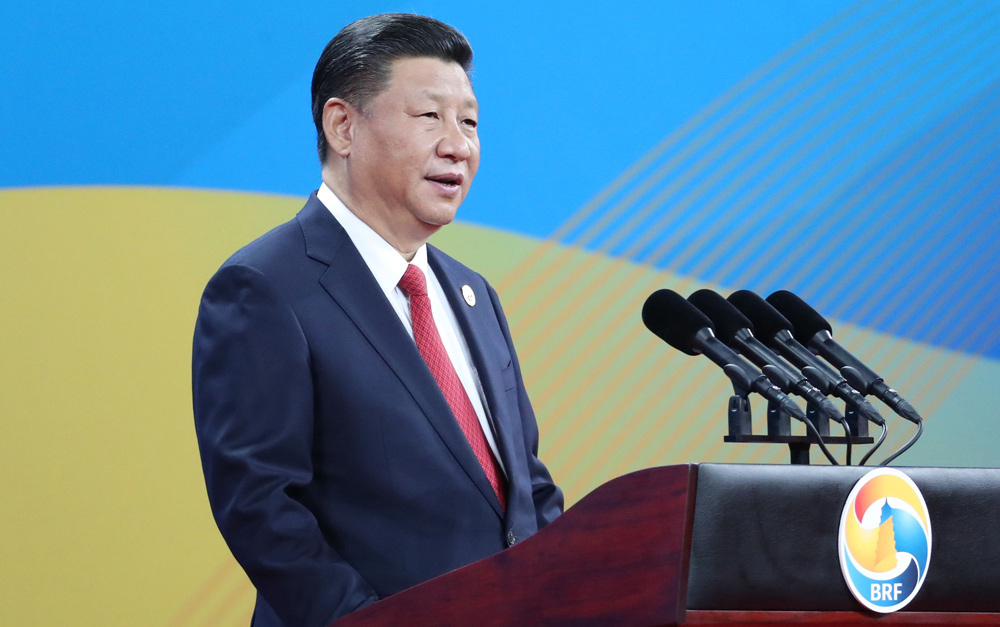
Xi says Belt and Road vision becoming reality

Authentic news,No fake news.

focus

China, Uzbekistan vow to strengthen cooperation

China, Uzbekistan vow to strengthen cooperation

Senior Chinese leaders vowed on Saturday to strengthen cooperation with Uzbekistan and push forward bilateral relations.
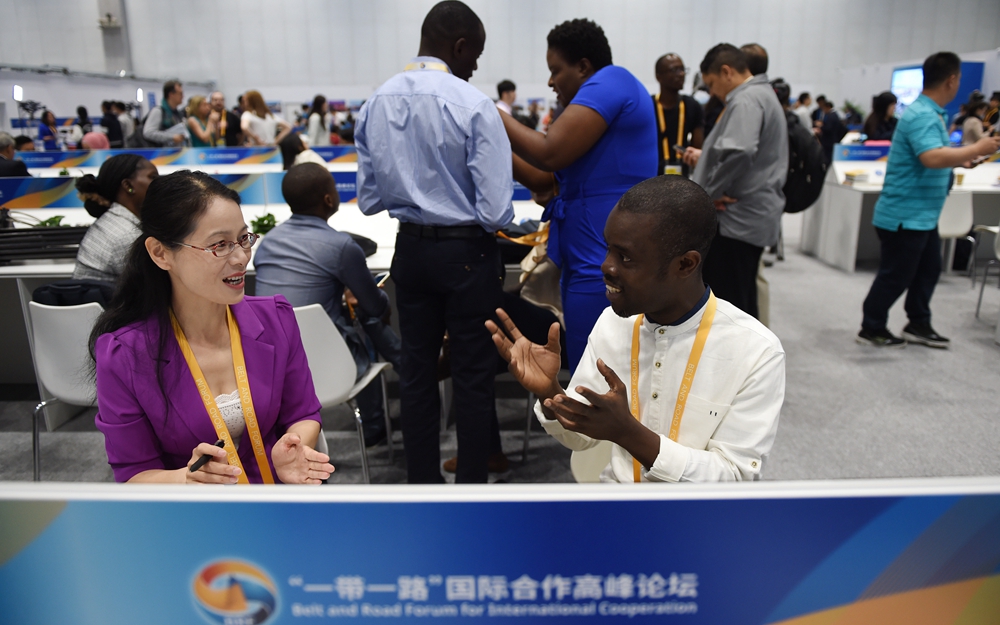
Time:2017.5.14—2017.5.15
Place:Beijing
5.14A.M.Opening ceremony
High-level plenary meeting
P.M.Conferences with 6 themes
5.15All DayRoundtable summit
  • Full video: President Xi delivers keynote speech at Belt and Road Forum

    Full video: President Xi delivers keynote speech at Belt and Road Forum

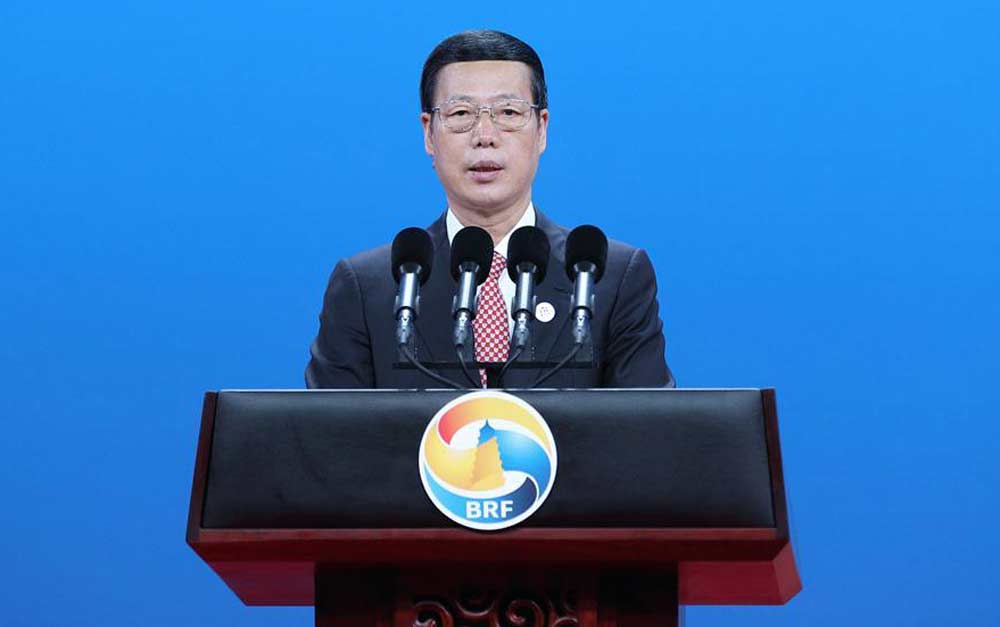
  • Vice Premier Zhang Gaoli addresses the Belt and Road forum plenary session

    Vice Premier Zhang Gaoli addresses the Belt and Road forum plenary session

  • Cambodian PM Hun Sen arrives in Beijing for Belt and Road Forum

    Cambodian PM Hun Sen arrives in Beijing for Belt and Road Forum

Commentary: Belt and Road to rebalance global economy

Commentary: Belt and Road to rebalance global economy

The world economy is going through a turbulent time, but the Belt and Road Initiative might just rebalance the things and help restore faith in globalization.
Commentary: Belt and Road new model of win-win, not outdated geopolitical maneuvering

Commentary: Belt and Road new model of win-win, not outdated geopolitical maneuvering

Pursuit of the Belt and Road Initiative denies outdated geopolitical maneuvering, targeting a new model of win-win cooperation in international relations.

Candidates lock horns in last debate before Iran election

Authentic news,No fake news.


 The six candidates contesting Iran’s 12th presidential election squared off in a final live televised debate on Friday.

In the course of the debate, the challengers that included incumbent President Hassan Rouhani, First Vice President Es’haq Jahangiri, Tehran Mayor Mohammad-Baqer Qalibaf, member of the Expediency Council Mostafa Mirsalim, Seyyed Ebrahim Raeisi, the current custodian of the Holy Shrine of Imam Reza (PBUH) in the northeastern city of Mashhad and former vice president Mostafa Hashemitaba elaborated on their economic plans and agendas as they campaigned for the May 19 vote.

**Smuggling, imports
The debate began in earnest with Jahangiri drawn first to answer a question about his plans to fight smuggling and reduce imports.

He said the smuggling of commodities undermines domestic production and diverts the course of economy from the right course. He added that the oversight in dealing with the smuggling of goods has dealt severe blows to the country’s economy.

Presidential candidates took turns to express their views on Jahangiri’s remarks with Raeisi saying that the backbone of his anti-smuggling plan is based on extensive research conducted in universities. He added that the 11th administration was not serious in dealing with the smuggling of goods. Hashemitaba said that 114 official docks have been used to smuggle goods into country.

Qalibaf said prevention is the first step in fighting goods smuggling and claiming that some ministers are engaged in illegal import of commodities to the country.

Rouhani said the first concern with regard to the smuggling is its root causes. He added that the private sector’s economic activities must be encouraged to reduce smuggling and emphasized that border villages must start producing and exporting goods in order to curb smuggling.

Jahangiri retook the podium to answer the candidates’ questions and said the judiciary has appeared weak in fighting the smuggling of goods.

He said Raeisi and Qalibaf should come clean on their records and should not be afraid to talks about them. 

He noted that the two should explained what they did to fight smuggling when they were in charge with Raeisi as deputy judiciary chief and Qalibaf as head of the anti-smuggling headquarters.

He said some $25 billion of goods used to be smuggled into the country when the incumbent government took the helm but it managed to cut to $25 billion.

He told Raeisi to be ashamed of what the previous government, which he supported, did rather than being critical. 

Jahangiri added that the current administration has taken serious measures to stop astronomical salaries. The Iranian first vice president said Tehran Municipality has not come clean on the selling of underpriced properties to certain people.

Jahangiri accused Qalibaf of “selling out” public properties worth 22,000 billion rails. He said the mayor blocked a parliamentary investigation into the scandal by lobbying.

He also said once already the country’s affairs were dealt with sloganism which pushed the country to the verge of collapse. He said those who did so to the country now have their representatives in the campaign team of some of the conservative candidates.

**Oil dependence
Mirsalim, the second hopeful taking to the podium, was asked to outline his approaches to boosting exports and reducing the country’s dependence on oil.

He said he plans to reduce crude oil sales in favor of exporting domestic products. He added that the sales of crude oil have made the country more dependent on other countries and added that exports must be encouraged to make up for expensive production inside the country.

The presidential contestants took turns to express their views on Mirsalim’s remarks with Rouhani saying that his administration has managed to open Iran’s export markets through the signing and implementation of the landmark 2015 nuclear deal.

He added that if the country does not exploit shared energy fields, the neighboring states will extract their oil reserves.

Jahangiri said the 11th administration has considerably reduced the export of raw materials.

Raeisi said the building of refineries in various provinces would reduce crude oil sales and criticized that no measure has been carried out in this regard. He added that there is currently no serious will to fight the smuggling of goods in the country.

Hashemitaba said export-oriented domestic production would help reduce the smuggling of goods. He said building refineries in different parts of the country is not economical.

Qalibaf said people with vested interest in smuggling have prevented solving the problem.

Mirsalim retook the podium to respond to the candidates’ questions, saying Iran must work with its neighboring countries to safeguard shared energy fields. 

**Banking issues
Rouhani, the third candidate at the podium, used his four-minute time to express his plans to solve the problems in the country’s banking system. He said Iran’s banking system needs fundamental reforms. The incumbent president added that his administration has managed to double the capital of state-run banks to get more active in the economic sector.

The presidential candidates took turns to express their views on Rouhani’s remarks with Jahangiri saying the previous administration had brought about the depletion of bank resources. He added that the 11th administration is implementing the development plan for banks to help them become active in production.

Raeisi said the 11th administration blames its predecessor for all of the problems. Raeisi added that the current administration has left the country in limbo for four years.

Rouhani hit back by saying that Raeisi has time and again called for a debate between “me and my predecessor”.

“I suggest that it would be better to hold a debate between me and Mr. Raeisi himself with the presence of the press because most of the cabinet members of the former government are active in Raeisi’s camp”.

Rouhani slammed Qalibaf for hurling verbal abuse against him and Jahangiri by calling them “rude” and “liar”. He said this is not a new thing as Qalibaf did mud slinging against the government over the past four years using his media outlets.

Hashemitaba said the banking problems were handed down to the 11th administration by its predecessor. Qalibaf said the administration of President Rouhani has failed in properly supervising and managing banks and added that liquidity has tripled under the present administration. Mirsalim said the banking system is currently based on usury, adding that the 11th administration is required to be more serious in dealing with the banking problems.

Rouhani retook to the podium to use his five-minute time to answer the debate question. He asked why the judiciary has not dealt with financial problems caused by the previous administration.

Rouhani asked Raeisi what he did while he was the head of the General Inspection Office to address embezzlements in the Oil Ministry and the Social Security Organization. He said Raeisi failed to address those scandals.

He said Raeisi and Qalibaf keep saying that they would give out cash subsidy to people and create jobs but they don’t say the resources for their plans.

The incumbent president said his administration have greatly reduced bank arrears and put banks back to the right course.

Rouhani noted that the media should be allowed to speak out and they should not be banned when they reveal scandals like the one in the municipality.

**Domestic production
Hashemitaba, the fourth candidate taking to the podium, answered a debate question about his plans for prosperity of domestic production. 

He said the modernization of the agriculture sector should be the first step for bringing prosperity to domestic production. He said the export-oriented production, investment attraction and bank reforms are other needed steps in this regard and added that domestic capital must be used to promote Iran’s exports.

The presidential hopefuls took turn to express their views about Hashemitaba’s comments with Qalibaf saying the current production problems are rooted in the mismanagement of the country’s affairs. Mirsalim said many production problems are a result of the administration’s inattention to the economic recession. Rouhani said production prosperity needs further investment and a proper use of technology.

Jahangiri said the private sector is the key to production and investment in the country and added that the 11th administration has succeeded in bringing stability back to the Iranian economy. Raeisi said 250,000 businesses shut down under the current administration.

Hashemitaba retook to the podium to use his five-minute time to give responses to the candidates’ question, saying the country’s industry will fail if it is not export-oriented. 

He added that many businesses shut down due to the worn-out technology used in them. He said some media outlets undermine any step taken to attract foreign investment.

**Subsidies
As the fifth candidate taking to the podium, Raeisi explained his plans for the implementation of the subsidies law. He said the 11th administration’s policies have led to increasing poverty inside the country and added that subsidies handed out to lower deciles must increase.

The presidential contenders took turns to express their views on Raeisi’s remarks with Hashemitaba, urged Raeisi to explain how he is going to increase cash subsidy by threefold. He said if Raeisi does so, his government would draw 17 times more from their pockets.

Qalibaf said entrepreneurs were under tremendous pressure as a result of the country’s economic problems. Mirsalim said domestic production has been damaged over the past four years. Rouhani said some people are willing to revive methods used by the previous administration and urged the continuation of cash handouts and the implementation of social security plan. 

Jahangiri said the existing problems are a result of wrong policies adopted by the previous administration and added that increasing cash handouts would destroy the country’s economy.

Raeisi retook to the podium to answer the candidates’ questions in five minutes. He expressed his readiness to hold a one-on-one debate with Rouhani on his wrong policies.

**Economic growth
Qalibaf took to the podium to answer a question in four minutes about his plans for boosting the country’s economic growth. He said Iran is facing full-fledged economic crisis and added that President Rouhani’s administration has not been successful in solving the country’s economic crisis. The mayor of Tehran said tax evasion in Iran amounts to 40 percent, adding that the creation of job opportunities is the most important step for boosting the economic growth.

The presidential hopefuls took turns to express their views on Qalibaf’s remarks with Mirsalim saying the 11th administration has failed to observe the principles of Economy of Resistance. Rouhani said Qalibaf must explain his plans for achieving 26 percent economic growth rate.

Jahangiri said the candidates must explain if they are capable of attracting foreign investment. Raeisi said oil accounts for the lion’s share of national seven percent economic growth rate. Hashemitaba also made comments on Qalibaf’s comments. Jahangiri said that his conservative rivals, Raeisi and Qalibaf, lacked any expertise in diplomacy and will fail to attract foreign investment.

The mayor of Tehran retook to the podium to answer the debate questions, vowing that his administration will certainly create five million jobs, including 1.5 million jobs for rural districts, if elected. Qalibaf said prosperity of the housing sector and tourism are among his main plans and added that it is possible to increase the country’s revenue 2.5 times.

Source: Iran Daily 

Afghanistan imports 30% of consumed oil, gas from Iran

Authentic news,No fake news.


Kabul, May 14, IRNA -- CEO of Afghanistan Oil and Gas Enterprise Walid Tamim announced here on Sunday that 30 percent of Afghanistan's consumed oil and gas is imported from Iran.

Answering IRNA’s question concerning exact figures of import, Tamim said because of imports by several private companies, the exact figures should be calculated.

He said that Iran is one of the important countries for Afghanistan in terms of supplying oil and gas.

Tamim went on to say that the figure for gas and oil trade in Afghanistan is $4.5 billion annually, so the enterprise decided to avoid oil and gas price fluctuations in the country and earning benefit and revenue for government to enter competition with the private sector.

Answering a question concerning lack of influence of oil price of the world market in Afghanistan, Tamim said that many countries are buying crude oil, but Afghanistan imports refined oil and gasoline, which has no tangible impacts on price.

He went on to say that the enterprise was established 55 years ago and its activities were ceased for 15 years and it resumed work and gained an annual revenue of one billion afghani which was equal to around $14 million for the government.

Afghanistan is importing all its oil and gas from Iran, Turkmenistan, Kazakhstan and sometimes from Iraq.

Veep urges speeding up relief operation in quake-hit N. Khorasan areas

Authentic news,No fake news.


Tehran, May 14, IRNA – First Vice President Eshaq Jahangiri stressed the need for deployment of all resources to address problems of those left injured following the earthquake in the city of Pishqaleh in North Khorasan Province.

Jahangiri during a telephone conversation on Sunday with governor general of North Khorasan was briefed on the latest situation in the northeastern province and the conditions of those affected by the quake.

He ordered all rescue teams to do their best to take care of the injured.

Jahangiri also sympathized with the bereaved families of the victims of the sad occasion and wished for the quick recovery of the injured.

At least two people were killed and 400 others injured when a 5.7-magnitude earthquake hit the city of Pishqaleh in North Khorasan Province Saturday night.

Some 177 injured were hospitalized and 223 more received medical aids on the spot.

Mitra-mandal Privacy Policy

This privacy policy has been compiled to better serve those who are concerned with how their  'Personally Identifiable Inform...