MITRA MANDAL GLOBAL NEWS

WORLD NEWS-RIA

Authentic news,No fake news.
Some countries have ceased to recognize the diplomas of Ukrainian medical universities

Authentic news,No fake news.

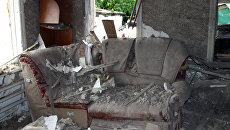
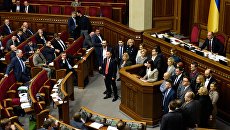
KIEV, May 12 - RIA Novosti. Minister of Education and Science of Ukraine Lilia Grinevich said that some countries have partially or completely ceased to recognize the diplomas of Ukrainian medical universities.
The lesson of the Ukrainian language.  archival photo
In Ukraine named the cause of poor proficiency in the mother tongue
"It is, in particular, Syria, Lebanon, Iraq, Palestine and others, from our medical schools have traditionally come to learn a lot of students", - quotes Grinevich Ministry's press service.
According to her, the reason for such a strange decision referred lowest score received in medical institutions of higher education and lack of access to the internship.
"Therefore, we need to determine what changes are needed now in order to solve these problems and improve the overall quality of educational services in the medical schools," - said Grinevich.
The Minister also noted that Ukraine has a medical education - the rating in the educational market for foreign students. Of the more than 64 million foreigners studying in the country, almost 40% are educated it is for medical specialties.

Equal Rights in Education: The Case of Bahrain, Colombia, Sri Lanka

Authentic news,No fake news.


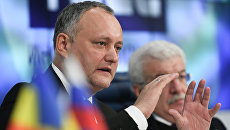
The experts panel aims at broadening the discussion on human rights and global citizenship education to encompass the promotion of equal and inclusive citizenship rights through education within national societies. Credit: Shafiqul Alam Kiron/IPS
ROME/GENEVA, May 9 2017 (IPS) - The role of education in enhancing equality of citizenship rights and diversity within communities affected by inter-communal civil strife will be top on the agenda of a meeting in Geneva on May 12.
Experts with extensive knowledge in the field of education, particularly in post-conflict situations and reconciliation in community settings, will take part in this event, which will focus on three case studies – Bahrain, Colombia, and Sri Lanka –
"We need to further explore the transformative power of education in building societies based on the principles of peace, tolerance and social harmony." Idriss Jazairy, executive director of the Geneva Centre
The meeting is organised by the Geneva Centre for Human Rights Advancement and Global Dialogue (GCHRAGD) –known as the Geneva Centre– in cooperation with the UNESCO Liaison Office in Geneva, the International Bureau of Education – UNESCO, and the Permanent Mission of Bahrain to the United Nations Office in Geneva.
The panel discussion, entitled “Human rights: Enhancing equal citizenship rights in education”, is aimed at reviewing the role of education in strengthening equality of citizenship rights and diversity within communities affected by inter-communal civil strife.
The purpose of the panel debate will be to analyse the impact of training to promote equal citizenship as part of human rights in school curricula and teaching methodologies with the broader aim of promoting a culture of peace and developing healthy, inclusive and fair societies.
The experts panel aims at broadening the discussion on human rights and global citizenship education to encompass the promotion of equal and inclusive citizenship rights through education within national societies.
According to the panel organisers, enhancing equal and inclusive citizenship rights fits against the backdrop of education on human rights and global citizenship, echoing at the domestic level the same ideals of a more tolerant, cohesive, and peace-driven world.
On this, the executive director of the Geneva Centre, Idriss Jazairy, said that the “panel debate is a timely opportunity to discuss the role of education in promoting and in enhancing at the domestic level equal and inclusive citizenship rights.
Education has the potential of playing an important role in strengthening inter-ethnic and inter-religious cooperation in societies permeated by conflict and violence, Jazairy added. “We need to further explore the transformative power of education in building societies based on the principles of peace, tolerance and social harmony.”
The Geneva Centre is an independent, non-profit, non-governmental organisation dedicated to the advancement of human rights through consultation and training with youth, civil society and governments.
It acts as a think-thank dedicated to the promotion of human rights through cross-cultural, political, religious and civilisational dialogue, and through training of the upcoming generations of stakeholders in the Arab region.
The Centre conducts independent research and provides insights about human rights in the Arab region and to examining multiple viewpoints on human rights issues, with special focus on systematic rights weaknesses in the Middle East and North Africa region.

Crime a battleground for German parties ahead of key vote

Authentic news,No fake news.


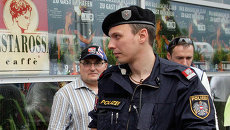
DUISBURG, Germany (AP) — Sarah Philipp is handing out red carnations to women browsing the lingerie stall at a quiet street market in Duisburg, adding a bright dash of color to the otherwise gray surroundings. The 34-year-old is hoping to defend her seat at Sunday's election for the regional assembly of Germany's westernmost state, which includes Bissingheim, an area built for railways workers serving the mighty steel and coal industry that once dominated the city.
The vote is a final test of the country's political mood before a general election in September and many of the issues on voters' minds in North Rhine-Westphalia are mirrored at the national level. Recently released figures on crime showing a sharp rise in violent offenses by migrants have propelled the topic to the forefront again, with nationalist parties seeking to capitalize on voters' fears.
Philipp, whose Social Democratic Party has governed North Rhine-Westphalia for the past seven years, is defensive when the topic comes up. "People tell us they feel less safe, but this isn't borne out by statistics," she says. At the same time, Philipp acknowledges that voters' fears need to be taken seriously: "You can't ignore the fact that safety is a very emotional issue."
Although Germany remains one of the safest countries in the world, a number of violent incidents have stoked angst about crime. Some of the most prominent cases have involved foreigners who had recently come to Germany as asylum-seekers.
Official figures show that while overall crime decreased slightly from 2015 to 2016, violent crime worsened. Non-Germans also accounted for a greater share of criminal suspects last year, with the biggest increase seen in the category of 'Zuwanderer' — comprising asylum applicants, people granted temporary permission to remain in the country and those resident illegally.
Zuwanderer make up 2 percent of the population yet accounted for 8.6 percent of all criminal suspects in 2016, up from 5.7 percent the year before. Easily overlooked in the broad statistics is that many of the violent crimes involved altercations in crowded refugee homes. The recent influx of migrants was also skewed toward teenage boys and young men, a population that experts say is disproportionately responsible for violent crime the world over.
The migrants who stand the greatest chance of being allowed to remain in Germany — Syrians being the biggest-single group — were underrepresented in the crime statistics. Young men from North Africa and some sub-Saharan African countries, who are unlikely to get permission to stay, have among the highest crime rates.
One of those was Anis Amri, 24, a Tunisian involved in small-time drug dealing and other petty crime until authorities decided to deport him. Before his paperwork came through, Amri stole a truck and killed 12 people at a Christmas market in Berlin. The Islamic State group later claimed responsibility.
The Berlin truck attack and a series of high-profile sexual assaults attributed to migrants over the past year appeared to support the dire predictions of critics of the government's decision under Merkel to allow in over a million asylum-seekers since 2015.
"Much of the violence we're seeing is due to the asylum and migration policy of Angela Merkel," says Marcus Pretzell, the regional head of Alternative for Germany, a nationalist party that is looking to make North Rhine-Westphalia the 13th state where it has political representatives.
A good result on Sunday would be seen as a sign that the party stands a good chance of entering the Bundestag for the first time in the Sept. 24 national election. Pretzell's party has been fanning fear of crime and migrants with a poster alluding to the sexual assaults that took place in Cologne, North Rhine-Westphalia's biggest city, on New Year's Eve 2015. Hundreds of women were groped and robbed, mostly by men from North Africa.
The failure by Cologne police to spot and stop the assaults prompted an outcry in Germany at the time. Merkel's party accused the state's left wing government of being lax on crime and branded governor Hannelore Kraft's most loyal aide, responsible for policing, a "security risk."
"There's a general sense of insecurity among voters, especially women, that's playing a role in this campaign," says Ina Scharrenbach, a regional lawmaker for Merkel's party, which currently is part of the opposition in North Rhine-Westphalia's parliament but is polling well.
Scharrenbach was part of the parliamentary inquiry into the New Year's assaults in Cologne. She cites measures to crack down on crime that the Christian Democrats introduced at the national level — where they share power with the Social Democrats — but denies that 'Merkel's refugees' are the main problem.
Instead, she blames the regional government for neglecting whole districts in large cities — of which this state of 18 million has many. One of those districts, Duisburg-Marxloh, made headlines last month when a 14-year-old boy was stabbed to death in a fight.
"We need to give people in these areas the feeling that the state isn't looking away," Scharrenbach says. Arnold Plickert, the regional head of Germany's biggest police union GdP, acknowledges that authorities ignored the problems in Marxloh and elsewhere for too long, but says a zero-tolerance policy is now in force.
"For the past year-and-a-half, we have been massively increasing police in these areas," Plickert says. "If someone fails to use their car indicator, listens to loud music or throws a cigarette butt on the ground, the police will ensure that the law is enforced."
But he says police and prosecutors can only solve part of the problem. Integrating migrants is key to turning crime trends around in the medium and long term, he says. "You have to say whoever comes to Germany needs to follow our rules," says Plickert. "And if they don't, then you draw a line and deport them."
Such tough talk is increasingly heard from all parties in Germany — and some migrants too. "If statistics make clear that crime is linked to migration then we need to look closely at it, but without emotion, empirically, scientifically," says Mohammed Assila. The Moroccan-born social worker has for years worked to prevent young Muslims from turning to Islamic radicalism and is familiar with all of the debates about immigration and crime.
Assila advocates a dual strategy: Offering migrants job training and education, and clearly spelling out the consequences for legal transgressions. "Repression but also prevention," agrees Philipp, the Social Democrat. "You have to do one, but you can't forget the other.

Pakistani bombing kills 25, deputy Senate leader wounded

Authentic news,No fake news.

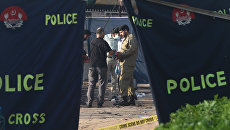
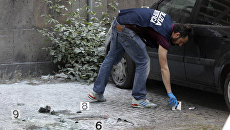
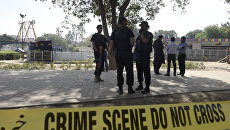
QUETTA, Pakistan (AP) — The deputy leader of Pakistan's Senate escaped an assassination attempt on Friday when a suicide bomber targeted his convoy in the country's southwestern Baluchistan province, killing 25 people and wounding dozens more, government officials said.
The Islamic State took responsibility for the attack on its official Amaq News Agency. The bomber struck soon after Abdul Ghafoor Haideri's convoy left a madrassa, an Islamic religious school, in the town of Mastung, not far from the provincial capital of Quetta, according to local government official, Munir Raisani.
The area has been a hotbed of militant activity in the past, although most of the previous attacks near Mastung have been on Pakistan's minority Shiite Muslims by the violent radical Sunni group Lashkar-e-Jhangvi.
However, IS last year carried out a brutal attack against lawyers in Quetta killing nearly 70 people, most of them young lawyers as well as at a shrine in the remote Kuzdar area. There, more than 60 people were killed. The shrine was frequented by both Shiites and Sunnis but it is a particular favorite of Shiites.
Friday's attack underscored the militants' continued ability to carry out high-profile attacks despite a protracted military crackdown that's underway in several parts of the country, including Pakistan's border regions with neighboring Afghanistan.
Shaken but with only minor cuts and bruises, Haideri told a local news channel that he could not speculate on the reason for the attack. "I was sitting in the front seat when the strong explosion occurred," he said. "The windshield of my vehicle broke and the door was destroyed. Broken glass and splinters hit me in the hand but thank God I did not suffer any major injury. .... I can't say why the blast (happened) or what led to it."
Haideri's political party, the pro-Taliban Jamiat-e-Ulema Islam, has hundreds of Islamic Sunni seminaries throughout Baluchistan. It is headed by Fazlur Rehman, who is known for his anti-U.S. stance. Prime Minister Nawaz Sharif condemned the attack on Haideri and Anwar-ul Haq Kakar, a spokesman for the Baluchistan provincial government, said police had been escorting Haideri when the attack occurred.
Several police were among the wounded. Local TV stations broadcast footage showing Haideri's badly damaged car at the scene of the attack.
Associated Press writers Munir Ahmed, Zarar Khan and Kathy Gannon in Islamabad contributed to this report.

Mitra-mandal Privacy Policy

This privacy policy has been compiled to better serve those who are concerned with how their  'Personally Identifiable Inform...