A major global survey by the International Committee of the Red Cross on attitudes to war has found some worrying trends. While here in Australia, separate survey results have prompted calls for compassion and understanding.
Italian President Sergio Mattarella on Monday asked outgoing Prime Minister Matteo Renzi to delay his resignation for long enough to oversee the adoption of the country's 2017 budget.
SPECIAL REPORT: Australia is losing the riches of its many languages. Even school children from immigrant families are abandoning the study of their mother tongues. In the nation's most multicultural state, researchers claim students are being "punished" with the scaling down of their HSC marks.
Authorities in Ghana have busted a fake US embassy in the capital Accra run by a criminal network that for a decade issued illegally obtained authentic visas.
Chile is experiencing its most extensive drought in history, and this year is set to become its driest in more than 40 years. In the southern region of Patagonia farmers are feeling the pressure as weather patterns change.
SBS Europe Correspondent Brett Mason delves into the inner workings of a team of tour guides at the Auschwitz Museum in Poland, who are tasked with informing visitors from across the globe about the horrors of the past.
Pressure is mounting on federal environment minister Josh Frydenberg to finally intervene in a major south-east Queensland residential development proposal on internationally significant wetland habitat for endangered species.
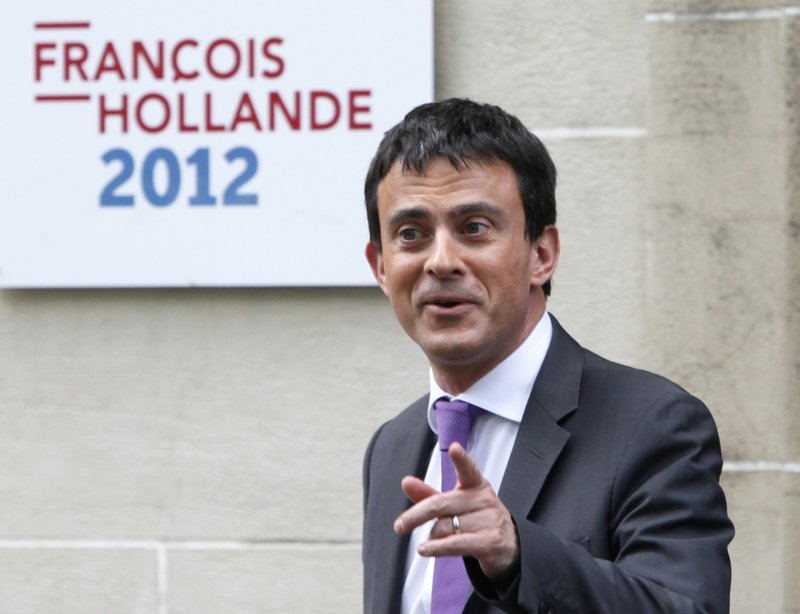
PARIS (AP) — French Prime Minister Manuel Valls has announced his candidacy for next year's presidential election.
Valls will face other contenders in the Socialist primary next month.
"I want to give everything for France," the 54-year-old said in a speech Monday evening in the Paris suburb of Evry.
He said he will quit his job on Tuesday in order to focus on his presidential bid.
Valls' announcement comes a few days after unpopular president Francois Hollande said he will not run again, in the hope of giving the Socialist party a chance to win in the April-May presidential election with a different candidate.
(1 of 1) Rescue teams work at the site where two trains collided head-on near Bad Aibling, Germany, killing twelve people and injuring 89. On Monday, Dec. 5, 2016 the train dispatcher was sentenced to 3 years and six months in prison because of negligence that led to one of the worst train crashes in German history this year.
The dispatcher, identified only as Michael P. in line with German privacy laws, has admitted playing a game on his phone shortly before the two trains he was in charge of collided on a single-track line on Feb. 9 near Bad Aibling, about 60 kilometers (40 miles) southeast of Munich.
He then set signals incorrectly and hit the wrong button while trying to alert the train drivers. "His thoughts were fixated on this game," presiding Judge Erich Fuchs said as he delivered the ruling at the state court in Traunstein, news agency dpa reported. "He had no resources left over for operational procedures."
Fuchs added that the defendant was not a bad person "but first and foremost became a victim of his own passion for games." Prosecutors sought a four-year sentence, while the defense called for two years at most. The court cited as an aggravating factor the fact that the defendant had been playing games during working hours in the weeks running up to the crash, with increasing intensity.
MITRA-MANDAL(Global news and views on current-affairs) monitoring service has no affiliation with the publisher of the content below.
This is a content navigation service.
(1 of 2) Poland's Deputy Prime Minister for economy, Mateusz Morawiecki announces Monday, Dec. 5, 2016 during a news conference in Warsaw, Poland, a major joint investment of some 250 million euros by Lufthansa and General Electric to build an advanced plant in southwestern Poland that will service engines for the Boeing 747-8 jumbo jets, starting in Sept. 2018.
Mateusz Morawiecki, Poland's deputy prime minister in charge of the economy and finance, told a news conference that it was an "excellent" project and a result of the government's strategy of pursuing and developing modern technology ventures.
The one-year-old government wants to give Poland's economy a boost to offer attractive jobs and prevent young people from emigrating. It also wants to strengthen the public finances to help pay for its social benefits policies.
Executives for Germany's Lufthansa Technik and for the U.S. General Electric (GE) Aviation said Poland offered the desired mix of highly qualified employees, favorable economic environment and easily accessible location. GE has been present in Poland for 25 years in the engineering sector, also developing aircraft engines.
The plant in Sroda Slaska, in the southwest, is to test and repair state-of-the-art engines for the Boeing 747-8 jumbo jets for Lufthansa and for other airlines, starting in September 2018. It will operate for at least 30 years and will create some 600 new jobs and train new personnel, recruiting from Poland.
"The technology that will be required to maintain (the newest GE9X) engine is one of the reasons why we selected this site here in Poland," said Bill Millhaem, senior executive at GE Aviation. Prime Minister Beata Szydlo said that large investments will be made across Poland in roads, railways and other infrastructure as the government aims to re-build Poland's industry and production potential.
"We are doing this to make Poland develop faster and more evenly, to give our country a good future," she said. Under communism, before 1989, Poland had a strong heavy industry sector that supplied the Soviet bloc countries. It was largely phased out as Poland began integrating with western Europe, but the government wants to now rebuild Poland's economic capacity focusing on modern technologies.
(1 of 1) Migrants, most from Eritrea, jump into the water from a crowded wooden boat as they are helped by members of an NGO during a rescue operation in the Mediterranean sea, about 13 miles north of Sabratha, Libya, on Aug. 29, 2016. Thousands were rescued from more than 20 boats by members of Proactiva Open Arms before being transferred to the Italian cost guard and other NGO vessels operating in the area.
U.N. High Commissioner for Refugees Filippo Grandi told The Associated Press Monday that he hopes refugees do "not get hijacked by all the rest." The EU has offered Turkey visa-free travel for Turkish citizens, fast-track EU membership talks and billions of euros for Syrian refugees if it stops migrants coming to Europe.
While refugee arrivals in Greece have slowed significantly, tensions between Ankara and Brussels are high over delays on easing visa restrictions and the slow pace of membership talks. Grandi said linking refugees' futures to Turkey's EU concerns "makes it somehow conditional to other issues that are more complicated and difficult."
4:45 p.m.
German authorities say that 100 Bavarian police officers will reinforce federal police patrolling the country's frontier with Austria, paving the way for more thorough border checks.
The move comes as police announced Monday that 37 migrants, most of them from Eritrea, were detained in the Bavarian capital, Munich, after entering the country on freight trains.
The state of Bavaria has a conservative government that has long talked tough on the migrant crisis and wants tougher checks, criticizing Chancellor Angela Merkel's decision in September 2015 to let in asylum-seekers who were stuck in Hungary.
Germany reintroduced limited border controls at the height of last year's influx during which hundreds of thousands of migrants entered the country. Many of them were Syrians, Iraqis and Afghans seeking to apply for asylum in Germany.
(1 of 13) Protestors in costume demonstrate outside the Supreme Court in London, Monday, Dec. 5, 2016. May's government will ask Supreme Court justices to overturn a ruling that Parliament must hold a vote before Britain's exit negotiations can begin _ a case that has raised a constitutional quandary and inflamed the country's heated debate about Brexit.
The court's most senior justice, David Neuberger, opened the four-day hearing by condemning the "threats of serious violence and unpleasant abuse" directed at Gina Miller, one of the claimants trying to ensure Parliament gets a say.
"Threatening and abusing people because they are exercising their fundamental right to go to court undermines the rule of law," Neuberger said, banning publication of the addresses of Miller and other parties in the case.
Neuberger and 10 other justices at the country's top court must decide whether Prime Minister Theresa May's government can invoke Article 50 of the EU's key treaty, the trigger for two years of divorce talks, without the approval of lawmakers.
May plans to trigger Article 50 by the end of March, using centuries-old government powers known as royal prerogative. The powers — traditionally held by the monarch but now used by politicians — enable decisions about joining or leaving international treaties to be made without a parliamentary vote.
Financial entrepreneur Miller and another claimant, hairdresser Deir Dos Santos, went to court to argue that leaving the EU would remove some of their rights, including free movement within the bloc, and that shouldn't be done without Parliament's approval.
Last month, three High Court judges agreed. But the government says they have misinterpreted the law. Opening the government's arguments, Attorney General Jeremy Wright said the use of prerogative powers didn't undermine Parliament, because the legislature had been in the driver's seat throughout the referendum process.
He said lawmakers had passed the European Referendum Act of 2015, laying out the rules for a referendum on EU membership, in "universal expectation ... that the government would implement its result."
Wright said the government wasn't using prerogative powers "on a whim or out of a clear blue sky" but as the result of a process in which Parliament had been "fully and consciously involved. Though the courtroom drama is unfolding in cool legal language, it has set public passions simmering.
November's ruling infuriated pro-Brexit campaigners, who saw the lawsuit as an attempt to block or delay Britain's EU exit. The anti-EU Daily Mail newspaper labeled the justices "enemies of the people" and suggested some held pro-EU views that compromised their impartiality.
Neuberger told a courtroom packed with scores of lawyers, journalists and members of the public that all sides in the case had been asked whether they wanted any of the justices to step down. He said that "without exception," none had any objections.
Miller — who has received a torrent of online abuse for her role in the case — arrived at court with her lawyers to cheers from pro-EU campaigners dressed as judges atop an open-topped double-decker bus.
"Nigel, where are you?" they sang mockingly, in reference to former UK Independence Party leader Nigel Farage, a prominent voice in the leave campaign. He had vowed to lead a march on the Supreme Court to demand judges respect the will of the majority. It was canceled last week after organizers said there was a risk it could be hijacked by far-right extremists.
Two anti-EU protesters held placards, one calling the case an "establishment stitch-up." In a reflection of the constitutional importance of the case, all 11 Supreme Court judges are hearing the appeal, the first time the full court has sat since it was founded in 2009. They are likely to give their ruling in January.
Complicating the picture are new participants including politicians in Northern Ireland, who also want a say, and the Scottish government, which argues the Edinburgh-based Scottish Parliament should get a vote too. Britons voted by 52 percent to 48 percent to leave the EU, but voters in Scotland strongly backed staying in, and the Scottish government says they shouldn't be dragged out of the 28-nation bloc against their will.
Many legal experts say the government will likely lose its appeal and be forced to give Parliament a vote. "The arguments this time round are pretty much the same as in the last case — and I suspect the outcome will be the same," said Nick Barber, associate professor of constitutional law at Oxford University.
Even if the government loses, it is unlikely to stop Britain leaving the EU. A debate in Parliament could delay the timetable, but most lawmakers have said they won't try to overturn the referendum result.
They could, however, seek to soften the divorce terms and have a greater say in the government's negotiating strategy — something May and other ministers have been unwilling to disclose for fear of tipping their hand.
Neuberger said the judges were "aware of the strong feelings" about Britain's EU membership. "However, as will be apparent from the arguments before us, those wider political questions are not the subject of this appeal," he said. "This appeal is concerned with legal issues; and, as judges, our duty is to consider those issues impartially, and to decide the case according to the law.