MITRA MANDAL GLOBAL NEWS

Imaging Technique Can See You Think


Imaging Technique Can See You Think

Fast fMRI tracks brain activity during human thought for first time

Article ID: 665688
Released: 30-Nov-2016 1:45 PM EST

  •  
  •  
  •  
  •  
  •  
  • SHARE
  •  
  • Credit: Lewis, et al. PNAS. Oct. 2016
    Oscillating checkerboards with different levels of contrast were sequentially presented to individuals to stimulate the visual cortex
  • Credit: Lewis, et al. PNAS. Oct. 2016
    fMRI signals in the brain’s visual cortex as an individual views the checkerboard stimulus. The green, blue and dark blue spots represent signals produced within a fraction of a second after stimulation with dark blue being the fastest responding areas.
  • Credit: Lewis, et al. PNAS. Oct. 2016
    Oscillating checkerboards with different levels of contrast were sequentially presented to individuals to stimulate the visual cortex
  • Credit: Lewis, et al. PNAS. Oct. 2016
    fMRI signals in the brain’s visual cortex as an individual views the checkerboard stimulus. The green, blue and dark blue spots represent signals produced within a fraction of a second after stimulation with dark blue being the fastest responding areas.
Newswise — By significantly increasing the speed of functional MRI (fMRI), researchers funded by the National Institute of Biomedical Imaging and Bioengineering (NIBIB) have been able to image rapidly fluctuating brain activity during human thought. fMRI measures changes in blood oxygenation, which were previously thought to be too slow to detect the subtle neuronal activity associated with higher order brain functions. The new discovery that fast fMRI can detect rapid brain oscillations is a significant step towards realizing a central goal of neuroscience research: mapping the brain networks responsible for human cognitive functions such as perception, attention, and awareness.
“A critical aim of the President’s BRAIN Initiative is to move neuroscience into a new realm where we can identify and track functioning neural networks non-invasively,” explains Guoying Liu, Ph.D., Director of the NIBIB program in Magnetic Resonance Imaging. “This work demonstrates the potential of fMRI for mapping healthy neural networks as well as those that may contribute to neurological diseases such as dementia and other mental health disorders, which are significant national and global health problems.”
fMRI works by detecting local increases in oxygen as blood is delivered to a working part of the brain. The technique has been instrumental for identifying which areas in the brain control functions such as vision, hearing, or touch. However, standard fMRI can only detect the blood flow coming to replenish an area of the brain several seconds after it has performed a function. It was generally accepted that this was the limit of what could be detected by fMRI—identification of a region in the brain that had responded to a large stimulus, such as a continuous 30 second “blast” of bright light.
Combining several new techniques, Jonathan R. Polimeni, Ph.D., senior author of the study, and his colleagues at Harvard’s Athinoula A. Martinos Center for Biomedical Imaging, applied fast fMRI in an effort to track neuronal networks that control human thought processes, and found that they could now measure rapidly oscillating brain activity. The results of this groundbreaking work are reported in the October 2016 issue of the Proceedings of the National Academy of Sciences.
The researchers used fast fMRI in human volunteers observing a rapidly fluctuating checkerboard pattern. The fast fMRI was able to detect the subtle and very rapid oscillations in cerebral blood flow in the brain’s visual cortex as the volunteers observed the changing pattern.
“The oscillating checkerboard pattern is a more “naturalistic” stimulus, in that its timing is similar to the very subtle neural oscillations made during normal thought processes,” explains Polimeni. “The fast fMRI detects the induced neural oscillations that allow the brain to understand what the eye is observing --- the changing checkerboard pattern. These subtle oscillations were completely undetectable with standard fMRI. This exciting result opens the possibility of using fast fMRI to image neural networks as they guide the process of human thought.”
One such possibility is suggested by first author of the study Laura D. Lewis, Ph.D. “This technique now gives us a method for obtaining much more detailed information about the complex brain activity that takes place during sleep, as well as other dynamic switches in brain states, such as when under anesthesia and during hallucinations.”
Concludes Polimeni, “It had always been thought that fMRI had the potential to play a major role in these types of studies. Meaningful progress in cognitive neuroscience depends on mapping patterns of brain activity, which are constantly and rapidly changing with every experience we have. Thus, we are extremely excited to see our work contribute significantly to achieving this goal.”
The results of this work contributed to Dr. Polimeni’s recent grant award from the NIH BRAIN Initiative. The BRAIN funding will be used to extend studies using fast fMRI to continue improvement in the fine scale mapping of human brain function.
The work was funded by the National Institutes of Health (NIH) through grants EB011498, EB019437, and EB015896 from the National Institute for Biomedical Imaging and Bioengineering. Additional funding was provided by several NIH Shared Resource Instrumentation Grants, and the Athinoula A. Martinos Center for Biomedical Imaging.
The Brain Research through Advancing Innovative Neurotechnologies (BRAIN) Initiative is part of a new Presidential focus aimed at revolutionizing our understanding of the human brain. www.braininitiative.nih.gov
Fast fMRI can detect oscillatory neural activity in humans. Lewis LD, Setsompop K, Rosen BR, Polimeni JR. Proc Natl Acad Sci U S A. 2016 Oct 25

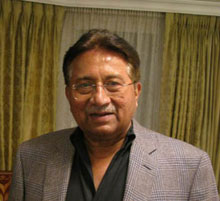
Pakistan and India Unlikely to Move to All-out War: Musharraf


LONDON, Dec, 2016 (IPS) - High levels of both conventional and nuclear deterrence are likely to prevent the recent surge in clashes between India and Pakistan from escalating into all-out war, according to Pakistan’s former president and army chief Pervez Musharraf.
Pervez Musharraf
Pervez Musharraf
In an exclusive interview with IPS in London, Musharraf predicted that low-intensity conflict would continue in disputed border areas. But he did not share the belief of many Pakistanis that hostilities could slide into full-scale war between the two nuclear-armed countries.
“Any military commander knows the force levels being maintained by either side,” he said. “I don’t think war is a possibility because the lethality and accuracy of weapons has increased so much.”
Although Pakistan has reserved the right to make a nuclear first strike, he said it had sufficient controls to ensure that its nuclear weapons, including new short-range tactical missiles, were not used accidentally or stolen by terrorist groups. “They are in good hands, in secure hands.” he said.
“Thank God, the level of conventional deterrence that we have in terms of weapons and manpower is enough to deter conventional war. So therefore I’m reasonably sure that in case of a war it is the conventional side which will be played and we will not go on to the unconventional.”
The 73-yeasr-old Musharraf made his comments during a wide-ranging discussion at his London home, in which he set out plans for a return to front-line politics in Pakistan. He said he might have reacted “more strongly” in recent clashes than the Pakistani authorities had done.
Although Pakistan has reserved the right to make a nuclear first strike, he said it had sufficient controls to ensure that its nuclear weapons, including new short-range tactical missiles, were not used accidentally or stolen by terrorist groups. “They are in good hands, in secure hands.” he said.
The two countries had previously made progress on territorial disputes including in Kashmir. But India’s Prime Minister Narendra Modi , who won power in 2014, was “on a collision course” with Pakistan that precluded a peaceful resolution, he said.
Musharraf also issued a strong warning about the threat to Pakistan coming from sectarian conflicts in the Middle East, saying it would be “extremely dangerous” for Pakistan to get dragged into the war in Yemen alongside its long-standing Saudi allies.
Pakistan was initially named by Saudi Arabia as part of a 34-nation coalition but held back from participating in the Saudi-led campaign supporting Yemen’s exiled government against Houthi Shia rebels.
Pakistan, with Iran as its neighbour, should not be taking sides, he warned. “We cannot do something which arouses internal conflict within Pakistan.”
The vexed question of terrorist “safe havens”, which Pakistan has been accused of providing near the border with Afghanistan, had to be addressed by both sides, Musharraf insisted. “Why is it Pakistan’s responsibility to control movement across the border?” he asked, arguing that terrorists were also being harboured in Afghanistan.
He had warm words, however, for Afghan President Ashraf Ghani, describing him as “definitely a good person”. This was despite the fact that efforts to build closer ties by training Afghan cadets in Pakistan had fizzled out.
His relationship with Ghani’s predecessor Hamid Karzai was more difficult. “I just didn’t like him,” Musharraf said, “because I think he was not a straight dealer.”
This is the second of three articles based on Musharraf’s interview with IPS.

Myanmar crowd protests Malaysia rally for Rohingya

MITRA-MANDAL(Global news and views on current-affairs) monitoring service has no affiliation with the publisher of the content below. This is a content navigation service.

Myanmar crowd protests Malaysia rally for Rohingya
ARCHIVE
Hardline ethnic nationalists protest arrival of ex-UN chief Kofi Annan-led commission in Sittwe -- capital of western Rakhine State and home of Rohingya Muslim minority, on September 06, 2016. ( Kyaw Kyaw - Anadolu Agency )
By Kyaw Ye Lynn
YANGON, Myanmar
A crowd gathered in Myanmar’s biggest city Yangon on Sunday to protest Malaysia’s government for organizing a rally in which Prime Minister Najib Razak accused Myanmar of rights violations against Rohingya Muslims.
Thousands of people -- including several Malaysian politicians -- attended the demonstration in Kuala Lumpur to demand an end to violence against the stateless Rohingya community in Myanmar’s troubled Rakhine State.
Since last month, Malaysia has criticized Myanmar’s government and military over violence in Rakhine -- which Razak and his cabinet have called "ethnic cleansing" -- while Myanmar has accused Malaysia of meddling in its internal affairs.
Hundreds of people -- including Buddhist monks -- joined the anti-Malaysia protest in Yangon on Sunday, carrying signs reading: “Be careful of two countries’ relation, Malaysian Prime Minister. Don’t pressure over fake ethnic.”
Pamaukkha, a monk who organized the protest, accused Razak of using religion in an attempt to regain his popularity among Malaysians by intervening in Myanmar’s sovereign affairs.
“This is our internal affairs, and the Malaysian government has nothing to do with this,” said Pamaukkha, a former leader of a nationalist Buddhist organization who resigned earlier this year after criticizing the “Ma Ba Tha” for contravening the will of the majority of Myanmar’s monks and people.
“I want to request him [Razak] not to mix religion with politics,” he told Anadolu Agency. “It’s very risky and dangerous.”
Rohingya advocacy groups claim around 400 Rohingya have been killed in military operations in northern Rakhine since Oct. 9 attacks that left nine Myanmar border police officials dead, while Myanmar says just 91 people -- 17 soldiers and 74 alleged "attackers" (including four who reportedly died during interrogation) -- have been killed.
Humanitarian outfits have called for an independent probe into the initial attacks, the ongoing operations and reported rapes and rights abuses in Rakhine, as with the area placed under military lockdown, rights groups and international reporters have been unable to enter.
On Sunday, Razak told the Kuala Lumpur rally -- attended by thousands of Rohingya, many of them refugees -- that the gathering was aimed at telling Myanmar State Counselor Aung San Suu Kyi -- a Nobel Peace laureate -- "that enough is enough".
"I asked my foreign minister to immediately meet her to find a resolution to the issue but she rejected it immediately,” he said. “She told my minister that she was willing to meet on Malaysia and Myanmar bilateral issues but not on Rohingya. This is the mentality class of a Nobel Peace Prize winner."
On Friday, Suu Kyi insisted that Myanmar’s government wants to make the relationship between ethnic Rakhine Buddhists and the Muslim minority “better”, but accused the international community of not adopting a constructive stance on the “highly sensitive and delicate” issue.
“But I would appreciate it so much if the international community would help us to maintain peace and stability and to make progress in building better relations between the two communities instead of always drumming up calls for, well, for bigger fires of resentment, if you like,” she told Channel News Asia in an interview in Singapore.
“I’m not saying there are no difficulties, but it helps if people recognize the difficulty and are more focused on resolving these difficulties rather than exaggerating them so that everything seems worse than it really is," she added.
A law passed in Myanmar in 1982 denied Rohingya -- many of whom have lived in Myanmar for generations -- citizenship, making them stateless.
The law denies the Rohingya rights to Myanmar nationality, removes their freedom of movement, access to education and services, and allows arbitrary confiscation of property.
Myanmar nationalists have since taken to referring to the Rohingya -- which the United Nations calls one of the most persecuted people in the world -- as Bengali, which suggests they are not Myanmar nationals but interlopers from neighboring Bangladesh.
Rohingya have fled Myanmar in droves for decades, with a new wave of migrations occurring since mid-2012 after communal violence broke out in Rakhine between ethnic Rakhine Buddhists and Rohingya -- described by the United Nations as among the most persecuted minority groups worldwide.
According to the last census in Malaysia, there were some 135,000 Rohingya in the country in 2014.

Turkey moves to do trade in local currency: Erdogan

MITRA-MANDAL(Global news and views on current-affairs) monitoring service has no affiliation with the publisher of the content below. This is a content navigation service.

Turkey moves to do trade in local currency: Erdogan
KAYSERI, Turkey 
President Recep Tayyip Erdogan has said Sunday that Turkey has taken steps to do its foreign trade in its national currency.
Speaking at an inauguration ceremony in central province of Kayseri, Erdogan said: "We have taken steps also to do trade with Russia, China and Iran in our local currency."
The president also reminded that Prime Minister Binali Yildirim will pay an official visit to Russia on Monday. "We will also take steps to do our trade in that region in the local currency.
"If we buy something from them [foreign countries], we will do that in their currency; if they buy something from us, they will do it in our currency."
Erdogan noted that Turkey will "play its own game" in the economic arena against "all games" played against it.
The president reiterated his Friday call on Turkish citizens to convert their foreign exchange savings into Turkish lira and gold to help boost the value of the local currency.
Following Erdogan's call to support the declining Turkish currency against the US dollar, Turkey's stock exchange also decided the same day to convert all of its cash assets into Turkish lira.
All of the cash assets will be kept in lira accounts, Borsa Istanbul said in a statement.
The U.S. dollar/Turkish lira exchange rate went up to stand at 3.5430 at 5 p.m. (1400GMT) Friday, compared to 3.4860 at Thursday's close.
Also making remarks at the ceremony in Kayseri, PM Yildirim said Turkey continues its economic growth despite all recent developments in the world. "It is for sure that Turkish economy remains strong against all attacks and ruses."

BTK railway to connect Azerbaijan to Europe


By Orkhan Quluzade – Trend:
Turkey expects the first branch of the Baku-Tbilisi-Kars (BTK) railway to be commissioned in early 2017, Minister of Transport, Maritime Affairs and Communications of Turkey Ahmet Arslan said in an exclusive interview with Trend.
He said that the second branch of the BTK railway will be commissioned during 2017.
"The BTK project is on the last stage of its implementation," the minister said.
Arslan added that the BTK is a very important project for both Azerbaijan and Turkey.
"The BTK will connect Azerbaijan and Turkey with a continuous railway," he noted. "This project is also important because it will contribute to the development of the economy and trade of Azerbaijan and Turkey with the countries of the region. Cargo from Azerbaijan will be delivered via Turkey to Europe thanks to this project."
"Also, the cargo from European countries will be delivered to the countries of Central Asia and China through the Baku International Sea Trade Port, which is under construction," the Turkish minister said. "This project will also positively affect the development of relations of our countries with other countries of the region."
"Other countries, such as China, Kazakhstan, Turkmenistan, Georgia also need this project, as well as Europe does," Arslan said.
The BTK railway is being constructed on the basis of the Georgian-Azerbaijani-Turkish intergovernmental agreement.
The peak capacity of the railway will be 17 million tons of cargo per year. At the initial stage, this figure will be one million passengers and 6.5 million tons of cargo.

Uzbek presidential election: Voter turnout at nearly 88%


Tashkent, Uzbekistan, Dec. 4
By Demir Azizov– Trend:
The voter turnout in the presidential election in Uzbekistan stood at 87.83 percent as of 20:00 (UTC/GMT +5 hours), according to the results of the online monitoring held by the country’s Central Election Commission (CEC).
A total of 17.94 million voters cast ballots in the election.
According to the updated data of CEC, names of 20,428,890 Uzbek citizens have been included in the voters’ list. Earlier, CEC said that names of 21.4 million citizens were included in the lists made by precinct election commissions.
Stateless persons, who have changed their citizenship, juveniles in detention, as well as Uzbek citizens who have stayed abroad for a long time, were excluded from the voters’ list, said CEC.
Polling stations opened at 06:00 (UTC/GMT+5 hours) and closed at 20:00. The voting currently continues at the polling stations established at the representative offices of Uzbekistan in Europe and the US.
The counting of votes separately for each presidential candidate started at the polling stations, where the voting was completed.
The Uzbek president is elected for a period of five years. The election is considered valid with a 33 percent turnout of the total number of voters. A candidate has to gain over 50 percent of the vote to win the election.
The Uzbek presidential election campaign started Sept. 9, 2016.
The canvassing, which began since the registration day of the candidates, Oct. 28, ended on Dec. 2 evening.
Candidates from four political parties of Uzbekistan participated in the presidential election - Uzbekistan Liberal Democratic Party (UzLiDeP), People's Democratic Party (PDPU), Milly Tiklanish (National Revival) Party, and Adolat (Justice) Social Democratic Party.
Among the presidential candidates were the country’s Acting President Shavkat Mirziyoyev from UzLiDeP, Sarvar Otamuratov from Milly Tiklanish Party, Nariman Umarov from Adolat Party, and Hotamzhon Ketmonov from PDPU.
The Uzbek CEC chairman said that the commission hasn’t received any reports of violation of the country’s electoral legislation so far.
In general, nearly 80,000 observers were monitoring the presidential election in Uzbekistan, including over 500 international representatives from 43 countries and such international organizations like the OSCE ODIHR, CIS Executive Committee, Shanghai Cooperation Organization, Organization of Islamic Cooperation.
About 1,300 local and foreign journalists were accredited to cover the presidential election in Uzbekistan, according to the CEC.
Preliminary results of the election will be revealed Dec. 5.

Turkmenistan to host international oil and gas conference


Ashgabat, Turkmenistan, Dec. 4
By Huseyn Hasanov– Trend:
The 21st International Exhibition and Conference "Oil and Gas of Turkmenistan 2016" will be held in Ashgabat on December 7-9, the Turkmen government said in a message.
According to the message, the specialists from 40 countries and representatives of nearly 100 oil and gas companies are expected to participate in the event.
Special attention will be paid to the diversification of supply of Turkmen natural gas to the world markets, as well as the Turkmenistan-Afghanistan-Pakistan-India gas pipeline construction project, the message said.
A number of documents related to the implementation of the project are planned to be signed, the message said.
"In the context of geopolitical cooperation, prospects of global, regional and national growth in the oil and gas industry, the market experts will consider the potential of Central Asia and the Caspian region as a major supplier of energy resources, Turkmenistan's role in global energy security," the Turkmen Dovlet Habarlary state news agency reported.
One of the sessions will be devoted to the implementation of know-how in the oil and gas refining and petrochemical industries of the country, the message said.
According to the message, the overview of current exploration work in the region, the development of Galkynysh gas field, as well as oil and gas fields on the Caspian shelf will be presented to the specialists.
The investments in oil and gas industry of Turkmenistan, the legal aspects of intergovernmental and multilateral agreements will be also discussed, the message said.

Mitra-mandal Privacy Policy

This privacy policy has been compiled to better serve those who are concerned with how their  'Personally Identifiable Inform...