MITRA MANDAL GLOBAL NEWS

Coal mining news-

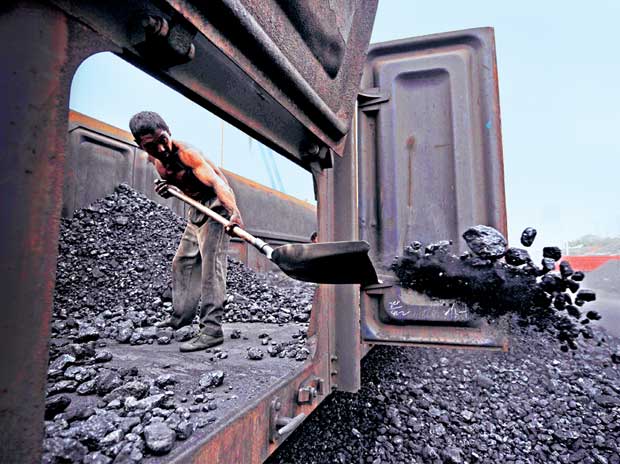
Global coal prices to stay strong if China maintains reduced production

The recent global surge in coal prices, however, is not on account of higher demand, but on account of China reducing its supply.

Avishek Rakshit  |  New Delhi 
Railways raises short distance coal freight

While coal imports in India are on a declining trend as Coal India has stepped on the gas and the nation’s thermal plants are stocked with 20-days’ coal reserves, the price of the fossil fuel will continue to be in excess of $50 a tonne for the 6,000 GCV (gross calorific value) variant.

The recent global surge in coal prices, however, is not on account of higher demand, but on account of reducing its supply.


According to Fitch Ratings, the strong rebound in key Asian thermal coal reference prices since the beginning of this year is a function of the Chinese government's regulations surrounding supply management, and is not supported by improvements in fundamentals.

The price increases have raised the risk of slowing, if not, halting Beijing's supply-side structural reforms in the coal sector.

According to the report, China's coal dropped 9.7 per cent during the first half of 2016 against the same period of 2015 as the country’s government in April reduced the number of statutory working days for coal miners to 276 a year from 330.

This policy resulted in global coal falling, with Chinese contracting more than demand, which fell by 4.6 per cent. Falling inventory and a wider gap between domestic coal and sea-borne cargo prices drove import volumes up by 8.2 per cent during the first half of the year.

This added only 8.16 million tonnes (mt) to China's coal import volumes, but it had a big impact on Asia-Pacific seaborne prices indices, with the benchmark Newcastle 6,000 kcal free-on-board prices rising 31 per cent from end-May to early September. China's Qinhuangdao 5,500 kcal coal prices also climbed 33 per cent over the same period.

Although the move benefited the Chinese coal industry, resulting in Coal India subsequently raising its prices by 6.29 per cent in tune with the global trend, Indonesian coal miners benefited less from the recent price rebound. Around 37 per cent of the Indonesian coal is normally purchased by India. However, with Coal India being mandated to cater to the of the coal industry, Indonesian exports were hit.

Also, India's doubling of a volume-based clean-tax to Rs 400 per tonne of coal in February adversely affected the for Indonesia's low heat-value coal.

Indonesian coal and exports fell 10.5 per cent and 14.3 per cent, respectively, in the first four months of 2016.

In turn, however, India has increased imports from South Africa, which exports coal of highercontent. Also, heavy rains in the coal producing countries in Asia hampered which resulted in lesser quantity being mined.

“The prices will remain on the higher side if continues to maintain a low volume,” an analyst with Motilal Oswal said. According to the analyst, Indian coal consumers, however, will not feel the heat because they can shift to domestic coal.

“Coal India has decreased the prices of its high-grade coal, which is supposed to pick up from the cement and sponge iron sectors,” the analyst said.

The coastal thermal plants, which are predominantly dependent on imported coal, may feel a marginal impact on account of higher prices. “However, they still have the option to switch to Indian high-grade coal,” the analyst added.

Fitch Ratings, however, stated that the tighter supply in will be susceptible to policy changes. China's available capacity remains more than adequate with only 95 mt of excess capacity eliminated in the January-July period, which is 38 per cent of the government's phase-out target for 2016.

The Shanghai Securities Journal reported the Chinese government was in discussions with major coal miners to increase flexibility in the working-day controls to manage risks from higher prices derailing the supply cuts.

With the global price increase, some Chinese coal companies have become more comfortable raising their capital expenditure. Shenhua Company raised its 2016 capex by 37.5 per cent to $4.12 billion, although 75 per cent of this relates to its investments in power generation capacity. Similarly, Yanzhou Coal Mining Company raised its already aggressive 2016 capex by 10.6 per cent to $1.41 billion.

Coal India, too, has raised its capex by 10.9 per cent to $1.92 billion for 2016-17.

HOw to build a house in two days.

WORLD, meet your new bricklayer.
A robotic, fully-automated machine is being developed in Perth, a world-first that could raise the brick shell of a new home within two days.
It can work 24 hours, 365 days — compared to the human variety who can put in anywhere from four to six weeks of backbreaking work for a typical home.
Local inventor Mark Pivac, an aeronautic and mechanical engineer, said his interest in the idea of developing the robot was sparked during Perth’s bricklaying crisis of 2005.
“People have been laying bricks for about 6000 years and ever since the industrial revolution, they have tried to automate the bricklaying process,” Mr Pivac told PerthNow.

Hadrian, the world's first automatic bricklayer
“We’re at a technological nexus where a few different technologies have got to the level where it’s now possible to do it, and that’s what we’ve done.”
“Hadrian” the robot — named after the famous Roman defensive wall of antiquity — will be commercialised first in WA, then nationally and then globally.
Laying 1000 bricks per hour, it can work day and night, with the potential to erect 150 homes a year.
It works by creating a 3D computer-aided design (CAD) laying program of a house or structure, then calculates the location of every brick and creates a program that is used to cut and lay the bricks in sequence from a single, fixed location.
A 28m articulated telescopic boom goes to work and mortar or adhesive is delivered under pressure to the robotic laying head and applied to the brick which is then laid in the correct sequence as per the program. The robot de-hacks, measures, scans for quality and cuts to length the bricks and routs for electrical and other services.
Mr Pivac’s father was a mining surveyor so he grew up around measuring instruments from a young age.
Working for the Air Force, the engineer says he was “exposed to some pretty nice high technology, really modern manufacturing methods, instrumentation and a lot of complex systems”.
But it was while working in the area of computer-controlled machinery and witnessing the shortage of Perth bricklayers that the idea of a bricklaying robot really took hold.

‘Hadrian’ can raise the brick shell of a house in two days.
Nearly two billion bricks are manufactured a year in Australia, which added fuel to the fire of the inventor’s imagination.
The project has been 10 years in the making and Mr Pivac said it had been a team effort.
“We have absolutely nothing against bricklayers,” Mr Pivac said.
“The problem is the average age of bricklayers is going up and it’s difficult to attract new young people to the trade.”
This week, investment company DMY Capital Limited announced its conditional agreement to acquire 100 per cent of Australian robotic building technology company, Fastbrick Robotics, the company set up by Mr Pivac and his cousin, Mike Pivac.
DMY chairman Gabriel Chiappini said: “We were immediately excited by the opportunity and see an enormous potential both domestically and later globally.”
More than $7m has been spent on developing “Hadrian” to date.
Fastbrick Robotics said it had received significant support from both Federal government grants and major industry parties such as Brickworks Ltd, a group of Australian-owned companies centred on clay and concrete products.

What do you think of the robot brickie?
ABN Group Managing Director Dale Alcock has helped in an advisory capacity.
“Housing affordability in Australia is of critical importance and is at the centre of political debate,” Mr Alcock said.
“While most agree that increasing supply is a realistic and logical solution, further consideration must be given to how we go about achieving this in more cost-effective and efficient ways.
“Australia’s Fastbrick Robotics is at the forefront of construction automation and its innovative robotic bricklaying technology has the potential to service the overwhelming demand for housing, quicker and cheaper than ever before.
“I’m excited to see the company gain further funding support and look forward with great anticipation as the company progresses its technology to commercialisation.”

चीन ने दुनिया में सबसे लंबी बुलेट ट्रेन का ट्रैक तैयार किया

  • [ + ]
पीटीआई-भाषा संवाददाता 12:58 HRS IST
: के जे एम वर्मा: बीजिंग, 10 सितंबर :भाषा: तेज रफ्तार रेलवे के क्षेत्र में भारत समेत वैश्विक बाजारों में प्रतिस्पर्धा के लिए बड़ी दावेदारी पेश कर रहे चीन ने देश में 20,000 किमी के ट्रैक नेटवर्क का निर्माण पूरा कर लिया है, जो दुनिया का सबसे लंबा बुलेट ट्रेन नेटवर्क है।

चीन के केंद्रीय हेनान प्रांत में झेंगझाउ को पूर्वी जियांगसु प्रांत के शूझौ से जोड़ने वाली तीव्र गति की रेल का संचालन आज से शुरू हो गया।

नई लाइन पर संचालन शुरू होने से अब चीन की तीव्र गति की रेलवे लाइन की कुल लंबाई 20,000 किमी से ज्यादा हो गई है और यह तीव्र गति की दुनिया की सबसे लंबी रेलवे लाइन बन गई है।

पश्चिम में 360 किमी की तीव्र गति की रेलवे लाइन उत्तर-दक्षिण की दो प्रमुख लाइनों से जुड़ती है जिससे पश्चिम और पूर्व के बीच यात्रा समय कम हो जाता है।

इस लाइन में नौ स्टेशन हैं और शुरूआती दौर में रेल 300 किमी प्रतिघंटे की रफ्तार से दौड़ेगी।

इस लाइन का निर्माण दिसंबर 2012 में शुरू हुआ था। प्रायोगिक परिचालन अप्रैल 2016 में शुरू हुआ था।

चीन, भारत समेत अन्य देशों के बाजारों में अपने बुलेट ट्रेन नेटवर्क को उतारने के लिए जापान से प्रतिस्पर्धा कर रहा है।

मुंबई-अहमदाबाद तीव्र गति की ट्रेन के निर्माण का अनुबंध जापान को मिल चुका है जबकि चीन चेन्नई से नई दिल्ली के बीच बुलेट ट्रेन के परिचालन की व्यवहार्यता पर काम कर रहा है


पाकिस्‍तान का ईदी फाउंडेशन दुनिया की सबसे बड़ी एंबुलेंस सर्विस चलाता है। ... 

Coal India applies for surrender of Mozambique mines

Kolkata: Coal India Ltd (CIL) on Monday said it has submitted an application to the National Institute of Mines (Instituto Nacional de Minas) of Government of Mozambique to surrender prospecting licences awarded to its wholly-owned subsidiary Coal India Africana Limitada (CIAL), Mozambique since mining would be “technically not feasible” in the licence areas.
In its annual report, Coal India said a mineability study has been undertaken based on the findings of the geological report, which revealed that it is technically not feasible to do mining in the licence areas of Coal India Africana. The response of the Mozambique government is awaited, the report said.
The licences, covering a total area of 224 sq. km, were awarded to the company’s African subsidiary with validity from August 2009 to August 2014 and subsequently extended up to August 2019. Out of the total mining area, as per the report, there was no occurrence of coal horizon till a depth of 500 m in the area of 170 sq. km. This has been surrendered to the Mozambique government. The remaining 54 sq. km area has been retained for which the Government of Mozambique has issued new licences till August 2019, the report added.
The company, however, has completely surrendered the prospecting licences covering the total 224 sq. km based on the geological report.

Bharat Bandh: Trade unions refuse to budge, reject govt's proposal to postpone strike on Sept. 2

Central trade unions (CTUs) across India have rejected the Union government's efforts for the nationwide bandh on Sept. 2, 2016 to be called off. As a result, all banks, factories and other organised sectors are expected to come to a standstill on Friday. 
Leading trade unions, including the All India Trade Unions Congress (AITUC) and Centre of Indian Trade Unions (CITU), have refused to call off the strike, saying that the government failed to meet their 12-point charter of demands. 
The demands include raising the minimum wage from Rs. 9,000 to Rs. 18,000 per month, stopping the disinvestment of Coal India, ending allocations of coal blocks to private companies, sorting out the wage revision of contact workers as well as outsourced workers in the coal industry. The CTUs also objected to the government's decision of foreign investment, especially in the pharmaceutical and defence sectors, on grounds of threat to national security.
Union Labour Minister Bandaru Dattatreya had urged CTUs to reconsider their decision of going on a nationwide strike. But they rejected it saying that the status report on the demands was almost identical to what was circulated one year ago. A joint meeting between the two was held on Aug. 26-27, 2015, ahead of the general strike that year.
Prime Minister Narendra Modi also convened an emergency meeting with Finance Minister Arun Jaitley, Power and Coal Minister Piyush Goyal and Dattatreya regarding the matter. A new offer may be made to the CTUs that will hopefully lead them to call off the strike.
Almost 5 lakh bank union workers and officers will reportedly join the strike to protest against the "anti-people, anti-national and anti-worker" policies of the Modi government. Workers and employees of the Reserve Bank of India (RBI) will also join the protest.
The All India Reserve Bank Employees' Association (AIRBEA) and the All India Reserve Bank Workers' Federation (AIRBWF) said in a joint statement that their employees "all over the country will participate in September 2 industrial strike in support of the demands of the country's working class."
The CTUs had requested Dattatreya to hold a meeting with the five-member panel of ministers dealing with labour issues to look into their demands in July this year. However, no such meeting was held. 
The Bhartiya Mazdoor Sangh (BMS), an RSS-affiliated union, had opted out of the last Bharat Bandh that was held on Sep 2, 2015 following the Centre's assurance to work on nine of the 12 demands put forward by the trade unions. The BMS has still not decided on joining the strike this year.
Meanwhile, West Bengal Chief Minister Mamata Banerjee has opposed the strike and directed all employees to report to work on Sept. 2, adding that all vehicles would ply and shops would remain open."We are against bandh. A bandh means loss of thousands of crores of rupees a day. Those who lost the election and those who were rejected by the people have called the bandh which will harm people... We will keep everything open. Vehicles will ply and shops will open. If vehicles and shops are damaged (by bandh supporters), we will take strong action. We will also give compensation," Banerjee told reporters, adding that the state cannot afford a bandh when it is under a debt of Rs. 40,000 crore.

Fuel for Future: India to Develop Coal Fields and Mines in Russia

Russia is slowly becoming a theatre of competition for India and China to secure energy to fuel their industries.

In a race to catch up to China, India plans to further enlarge the scope of investment in the Russian commodity market to fuel its industries for coming decades. As part of this strategy and also because of favorable commodity prices, India has offered to jointly develop coal fields and mines in Russia.
An official team led by Ramesh Abhishek, secretary, Department of Industrial Policy and Promotion conveyed India’s willingness to invest in Russia’s coalfield and mining sector.  “The Indian side expressed interest in joint development of coal fields and iron ore mines in Russia. They agreed to exchange information on such areas having potential for cooperation,” the Ministry of Commerce and Industry said.
In the recent past, investment in the Russian coal sector has declined drastically to a level below USD 1 billion in comparison to more than USD 2 billion in 2013; mostly due to low commodity prices and higher expenses of domestic companies. In absence of high level of investment, Russia may lose its competitive advantage in the international market.
India is taking this situation as an opportunity to grab for future needs. India has already made investments in Russia’s oil and gas fields in a big way and has plans to increase investments in future as well. As Sputnik reported earlier, ONGC Videsh Ltd. (OVL), the overseas arm of Indian state-owned petroleum company Oil and Natural Gas Corporation (ONGC), is exploring the opportunity to acquire a 49% stake in Russian oil producer Rosneft Oil Co.'s Tagul field.
During the 5th meeting of the India-Russia Working Group on Modernization and Industrial Cooperation, both sides expressed mutual interest in developing the long-term and mutually beneficial cooperation in the field of mineral fertilizers. Both sides also identified specific areas of cooperation in the field of mining and metallurgy. Other specific fields identified for enhancing cooperation included technology for production of CRGO steel in India, the pharmaceutical industry, the modernization of steel manufacturing facilities in India and participation of Indian power equipment supplier in modernization of Russia’s power sector. 

Balochistan, KPK special priority in CPEC: Ahsan Iqbal


Balochistan, KPK special priority in CPEC: Ahsan Iqbal
QUETTA, Aug 16 (APP): Federal Minister for Planning and Development, Ahsan Iqbal has said that Balochistan and Khyber Pakhtunkhawa (KPK) provinces were being given special priority in China Pak Economic Corridor (CPEC) projects, adding that US $ 35 billion out of US $ 46 billion of CPEC would be spent on energy production projects.
He said that Balochistan was ignored in past in term of development and added that we all of us were responsible for this negligence.
“Balochistan is also being given special priority in Prime Minister, Muhammad Nawaz Sharif Vision Program 2025,” he said.
He was addressing ceremony held in connection with inauguration of different projects executed at the University of Balochistan, Quetta in collaboration with Higher Education Commission (HEC). Earlier, he inaugurated these projects.
The Federal Minister said that 650 kilometers long Gwadar Quetta road project will be completed by December this year and added that work on new international airport in port town of Gwadar has been started.
“We have asked the provincial governments to submit their plans on proposed industrial zones along CPEC,” he said. “Development projects being executed in Balochistan funded by the federal government would be completed in time”.
Minister Iqbal said that we would have to adopt a positive thinking and mindset to obtain goals of progress and prosperity. Replying to questions asked by teachers and students of the varsity, the Federal Minister said, “There will be no change in the designs of CPEC. Work on western route of CPEC is underway”.
He said that work on ongoing development projects in port town of Gwadar including international airport, free trade zone, five star hotel, modern hospital, supply of potable drinking water, vocational training centers and others was underway. “Premier Nawaz Sharif will soon inaugurate the projects being completed in Gwadar in near future,” he said.
Vice Chancellor, University of Balochistan, Prof Dr. Javed Iqbal, Provincial Minister for Education, Abdul Raheem Ziratwal, Provincial Education Minister Omar Babar and a large number of teachers and students attended the ceremony.

Cabinet approves new mechanisms for licensing imports, orders sending more food supplies to Aleppo

Damascus, SANA – The Cabinet discussed in its weekly session on Tuesday a number of issues including the issue of the families of martyrs and injured people, and the economic and services situation in Aleppo.
During the session, which was chaired by Prime Minister Imad Khamis, the Cabinet approved a new mechanism for granting licenses for importation that seeks to achieve justice and competitiveness and prevents importers from monopolizing importation of goods, with emphasis on importing essential products and the requirements of the agricultural and industrial sectors.
The Cabinet also allowed the External Trade Establishment to import goods and granted it wider jurisdiction and authorities.
The Ministers then discussed the situation in Aleppo city, deciding to send large amounts of food items, vegetables, fruit, and fuel to it.
The Cabinet also decided to expand the citizen services centers after they proved to be successful, and decided to increase gasoline allotments for each province and to begin distributing heating oil as of August 20th at 400 liters in two batches per family.
Hazem Sabbagh

News For Health-


By Andrew M. Seaman
(Reuters Health) - People should get about 30 minutes of exercise each day to counteract the potentially harmful effects of being inactive for too long, according to a new statement from a leading U.S. heart group.
Research suggests inactivity may be linked to increased risk for diabetes, other blood sugar problems, heart disease, stroke and an earlier death, according to the statement from the American Heart Association.
"Be conscious of how much time you're spending sitting, and try to move more," said Dr. Deborah Rohm Young, chair of the AHA committee that authored the new statement.
"At least when you’re at home, try not to sit on the couch the whole time," said Young, who is also director of behavioral research at Kaiser Permanente Southern California in Pasadena.
Results from national health surveys in the U.S. suggest that adults spend an average of six to eight hours a day inactive, or sedentary, the committee writes in the journal Circulation. People over age 60 spend up to an average of 10 hours a day sedentary.
There could be a number of explanations for people being sedentary, the committee writes. Evidence suggests that people with mental health issues may spend a larger amount of time inactive, for example. Additionally, there may be a genetic component to people being sedentary.
There is also evidence that inactivity is a risk factor for a number of health conditions, and that taking breaks from being inactive may be protective of health.
Most of the existing studies of inactivity show a link between time spent being sedentary and an increased risk of diabetes, for instance. Several studies also show a link between sedentary time and heart disease.
One European study found that each hour of being inactive and watching TV increased a person's risk of fatal and nonfatal heart disease by about 6 percent. Each extra inactive hour was also tied to an 8 percent increased risk of coronary heart disease, which includes plaque buildup in the arteries.
Other studies tie increasing sedentary time to earlier death, the committee writes.
The connection between poor health and being sedentary may be independent of the link connecting more physical activity with improved health, Young told Reuters Health. So, people should likely break up prolonged periods of inactivity even if they meet the AHA's physical activity recommendations.
The quality of the current evidence prevented the committee from being able to say that people should stop being sedentary at particular intervals, the authors note.

The current AHA recommendation is that adults should get 150 minutes of moderate physical activity or 75 minutes of vigorous physical activity each week.
Getting people who are mainly inactive to move just a bit can likely lead to big gains in health, said Dr. John Bisognano, president of the American Society of Hypertension and a preventive cardiologist at the University of Rochester Medical Center in New York.
"Just encouraging people to do a little bit can make a big difference," said Bisognano, who was not involved with the new statement.
For example, he said, people could get up and walk around their building every hour.
"Motivating people to go from sedentary to physically active is a good focus," said Bisognano.
SOURCE: bit.ly/1GwHxg0 Circulation, online August 15, 2016

कश्मीर संबंधी फैसला भारत और पाकिस्तान को करना है: अमेरिका

     
पीटीआई-भाषा संवाददाता 
:ललित के झा: वाशिंगटन, 16 अगस्त :भाषा: अमेरिका ने कहा है कि कश्मीर पर किसी भी वार्ता की गति, गुंजाइश एवं स्वरूप के बारे में निर्णय भारत एवं पाकिस्तान को लेना है।

विदेश मंत्रालय की प्रवक्ता एलिजाबेथ ट्रुडो ने कहा, ‘‘कश्मीर पर हमारा रख बदला नहीं है। कश्मीर पर किसी भी वार्ता की गति, गुंजाइश एवं स्वरूप के बारे में दोनों पक्षों को निर्णय लेना है। हम हर प्रकार के और उन सभी सकारात्मक कदमों को समर्थन देते हैं जो भारत और पाकिस्तान निकटतम संबंधों के लिए उठा सकते हैं।’’ उन्होंने कल एक दैनिक संवाददाता सम्मेलन में कहा, ‘‘हम संघषरें के बारे में जानते हैं। हम हिंसा को लेकर चिंतित हैं और सभी पक्षों को एक शांतिपूर्ण समाधान तलाशने के प्रयास करने के लिए प्रोत्साहित करते हैं।’’ विदेश मंत्रालय की प्रवक्ता ने स्वतंत्रता दिवस पर दिए गए प्रधानमंत्री नरेंद्र मोदी के संबोधन के दौरान उनके द्वारा कही गई बातों के संबंध में पूछे गए किसी भी प्रश्न का उत्तर नहीं दिया।

एलिजाबेथ ने कहा, ‘‘मैं मोदी के बयान के बारे में टिप्पणी नहीं करूंगी।’’

BMW recalls over 156,000 cars for child seat defects in China

Source: Xinhua   2016-08-16 18:49:36

BEIJING, Aug. 16 (Xinhua) -- German automaker BMW will recall 156,922 cars in China over defects in their child seats, China's top quality watchdog said Tuesday.
Starting Sept. 1, the recall will involve more than 134,000 X3 models produced between November 2010 and April 2016 and over 22,000 X4 models produced between March 2014 and April 2016, according to a statement from the General Administration of Quality Supervision, Inspection and Quarantine.
Welding problems were found in the lower anchors of the child seats on those models, which may prevent the seats from being secured properly and raise the possibility of passenger injuries during accidents, the administration said.
BMW China Automotive Trading Co., Ltd. will repair the anchors of the recalled cars for free, according to the statement.

Mitra-mandal Privacy Policy

This privacy policy has been compiled to better serve those who are concerned with how their  'Personally Identifiable Inform...