MITRA MANDAL GLOBAL NEWS

5 Questions To Ask Your Friends Who Plan To Get The Covid Vaccine

Authentic news,No fake news.

By Kit Knightly


Many of us have friends or family who plan on getting the vaccine. Maybe they truly believe they are in danger. Maybe they think it’s better safe than sorry. Maybe they just want to be able to go to the pub again.

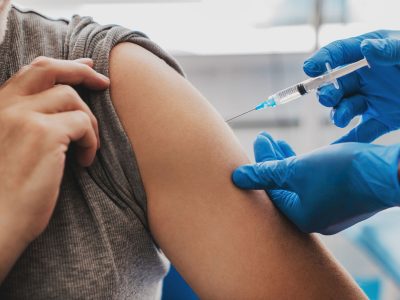
If you know someone who is planning on getting vaccinated against Covid19, ask them these five questions. Make sure they understand exactly what they’re asking for.

1. Did You Know That We Have Never Successfully Vaccinated Against Any Coronavirus?

No successful vaccine against a coronavirus has ever been developed.

Scientists have been trying to develop a SARS and MERS vaccine for years, with nothing to show for it. In fact, some of the failed SARS vaccines actually caused hypersensitivity to the SARS virus. Meaning that vaccinated mice could potentially get the disease more severely than unvaccinated mice.

2. Did You Know It Usually Takes 5-10 Years To Fully Develop A Vaccine?

Vaccine development is a slow, laborious process. Usually, from development through testing and finally being approved for public use takes many years. The various vaccines for Covid have all been developed and approved in less than a year.

While the media are quick to offer a TON of “explainer” guides, which cite “foresight, hard work and luck” as the reasons we got a Covid vaccine so quickly “without cutting corners”, they all leave out key information.

Namely, that none of the vaccines have yet been subject to proper trials. Many of them skipped early-stage trials entirely, and the late stage human trials have either not been peer reviewed, have not released their data, will not finish until 2023 or were abandoned after “severe adverse effects”.

3. Did You Know That The Covid “Vaccine” Is Based On New Technology, Which Has Never Been Approved For Use On Humans Before?

While traditional vaccines work by exposing the body to a weakened strain of the microorganism responsible for causing the disease, these new Covid vaccines are mRNA vaccines.

mRNA (messenger ribonucleic acid) vaccines theoretically work by injecting viral mRNA into the body, where it replicates inside your cells and encourages your body to recognise, and make antigens for, the “spike proteins” of the virus. They have been the subject of research since the 1990s, but before 2020 no mRNA vaccine was ever approved for use.

4. Did You Know That The Pharmaceutical Companies Can’t Be Sued If The Vaccine Hurts Or Kills Someone?

Back in the Spring of 2020 many governments around the world granted vaccine manufacturers immunity to civil liability, either by invoking existing legislation or writing new laws.

The USA’s Public Readiness and Emergency Preparedness Act (PREP) grants immunity until at least 2024.

The EU’s product licensing law does the same, and there are reports of confidential liability clauses in the contracts the EU signed with vaccine manufacturers.

The UK went even further, granting permanent legal indemnity to the government, and any employees thereof, for any harm done when a patient is being treated for Covid19 or “suspected Covid19”.

5. Did You Know 99.8% Of People Survive Covid19?

The case-fatality ratio of Sars-Cov-2 infection has been a bone of contention for months, but it is certainly much lower than all the initial models predicted.

It was originally massively inflated, with the WHO using a figure of 3.4%.

Subsequent studies have found it to be much lower, in some cases even lower than 0.1%. A report published in October in the WHO’s own research bulletin finding a CFR of 0.23% “or possibly considerably lower”.

Meaning, even according to the WHO, at least 99.77% of people infected with the virus will survive.

*

Ask your friends these questions. Give them detailed answers.

It is a rushed and untested vaccine, made using unprecedented technology, with no legal recourse should it do you harm, to treat a virus 99.8% of people will survive.

So the question that really matters is: Do you really want, or need, to take that risk?

Featured image courtesy of Off-Guardian

Every Girl Has a Right to An Education

Authentic news,No fake news.

By Yasmine Sherif

NEW YORK, Mar 7 2021 (IPS) - Access to an inclusive quality education is a universal human right. When the inherent right to a good education is ignored or denied, the consequences are severe. For a girl in country of conflict or forced displacement, the impact is brutally multiplied.

Yasmine Sherif

Besides their already marginalized role in war-torn countries or as refugees, adolescent girls and girls are being disproportionately affected by the consequences of the COVID-19 pandemic. Even before the pandemic broke in early 2020, some 39 million girls had their education disrupted as a direct result of humanitarian crises. Of these, 13 million girls had been forced out of school completely.

Such is the level of discrimination that, according to the UN refugee agency, UNHCR, refugee girls are only half as likely to be enrolled in secondary school as boys. There is a two in three chance girls in crisis settings won’t even start secondary school. At primary level girls in crisis settings are two and a half times more likely to be out of school.

In crisis settings, adolescent girls are more likely to be married by 18 than to finish school. Early pregnancies, gender-based violence and sexual and physical exploitation are realities faced by millions of girls daily. Take a moment and reflect on this brutal reality. Imagine if these figures were the reality of our own adolescent daughters.

The UNFPA projects that the diverse consequences of the COVID-19 pandemic could result in 13 million additional child marriages between 2020 and 2030. These traumatic experiences lead to higher dropout rates, perpetuating cycles of exploitation and entrenching millions in poverty. Such is the excruciating consequences of girls already enduring conflicts and forced displacement and now surviving another threat: the pandemic.

Providing girls and adolescent girls in crisis with an education is absolutely essential today in order to empower them and bring hope. Their access to an inclusive quality education during already challenging circumstances is as transformative for them as human beings arising from the ashes of hopelessness, as it is for their societies in urgent need of empowered girls and women to build back better.

Studies show that increased access to education dramatically raises their lifetime earnings, national economic growth rates go up, child marriage rates decline, and child and maternal mortality fall. Girls’ education breaks down cycles of exploitation, protecting and empowering young girls and adolescents to reach their potentials and become change-makers. And, the world need change-makers more than ever, not the least in countries affected by conflicts and displacement.

The World Bank estimates that if every girl worldwide were to receive 12 years of quality schooling, whether or not in a crisis setting, they would double their lifetime earnings, with the aggregate value running into trillions of dollars.

Education provides girls with practical skills and tools; it supports them emotionally and empower them process their traumatic experiences; it prepares them to face their unique challenges, helping them to not only become productive members of society, but more and more, to become confident leaders of their societies.

It is a small crowd right at the top, however. Only about 20 countries have a female head of state or government, and fewer have at least 50 percent women in the national cabinet. But as COVID-19 has demonstrated, several have played decisive roles in protecting our humanity on the basis of universal human rights.

So, what does the pathway to leadership look like when you are young? How do we get young girls in crisis situations into education and then later to play important roles in the decision-making of their communities, their economies and nations?

Education Cannot Wait – the global fund launched at the 2016 World Humanitarian Summit to deliver quality education for those left furthest behind, that is 75 million vulnerable children and youth in countries affected by armed conflicts, forced displacement, climate-induced disasters and protracted crises. At Education Cannot Wait we place girls and adolescent girls at the forefront of our work – because it is their inaliable human right and we believe in them as the change-makers. We take affirmative action: sixty percent of our total spending is geared at an inclusive quality education for girls.

Afghanistan, for example, is one of the most dangerous countries for children because of ongoing insecurity and conflict. UNICEF estimates that 60 percent of the 3.7 million children out of school are girls. Some 17 percent of Afghan girls will marry before the age of 15 and 46 percent will marry before they reach 18. Early marriages contribute significantly to school dropout rates.
The Welfare Association for the Development of Afghanistan, an ECW implementing partner, reaches out to community leaders to deliver real results for girls in the most remote areas of Afghanistan, who until recently were held back from going to school and from receiving a quality education.

ECW has given priority in Afghanistan to female teacher recruitment. This is being achieved in Herat, where 97 percent of teachers are women and 83 percent of students in accelerated learning classes are girls. The first year of ECW’s Multi-Year Resilience Programme – with teaching starting in May 2019 – saw some 3,600 classes established in nine of Afghanistan’s 34 provinces. This required newly recruited teachers, 46 percent of whom are women, to teach 122,000 children. Nearly 60 percent of the enrolled children are girls.

In Rodat district in Afghanistan’s Nangarhar province, for example, community stakeholders and religious elders agreed the lack of qualified female teachers was hindering girls’ access to education, and immediately set about to find one. It was no easy task but eventually a female graduate in chemistry and biology was hired and she has turned into a beacon of hope, helping some 40 girls return to classes.

This emphasis on girls’ education is crucial for our future as a human family and the priority must be with those girls and adolescent girls left furthest behind. As Deputy-Secretary of the United Nations, Amina J. Mohammed, recently stated: “Girls’ education is particularly under threat in emergencies and for children on the move and we need to continue to empower this next generation of women leaders through a quality education.”

On March 8 we celebrate International Women’s Day with this year’s theme of ‘Women in leadership: Achieving an equal future in a COVID-19 world’. From the perspective of those living in developed countries, what that equal future might look like for girls in crises settings has been perversely highlighted by the grim consequences of the new coronavirus world. As each month of lockdowns in rich countries passes, reports mount up of the mental health issues and child abuse being suffered by those unable to get to their normal safe learning environment at school. Girls especially are at risk and the ones more likely to be pressed into domestic chores and subject to discrimination – deprived of a future.

Gordon Brown, UN Special Envoy for Global Education and Chair of the ECW High-Level Steering Group, reminds us that the world in 2030 risks being as far away from meeting the Sustainable Development Goals for education (SDG4) as we are now – unless we act decisively. No one should be left behind and that means addressing support needed by over 75 million children and youth in need of urgent education support in crisis-hit countries.

Education cannot wait for a conflict or crisis to be over so that crisis affected children and youth can resume normal life, or refugee children can go home. Protracted crisis often last for decades and families caught up in conflicts spend an average of 17 years as refugees. When education is denied to children, hopes for a better, the last glimmer of hope is extinguished.

Education Cannot Wait is about hope and action. We were established to accelerate the race for meeting Sustainable Development Goal 4 in crisis and disasters. By bringing together all actors in both the humanitarian and development community, we sprint forward to meet the deadline of 2030. Thanks to host-governments, UN agencies, civil society and communities, we move fast, effectively and efficiently. However, a quality education for girls and adolescent girls in crisis requires financial investments. Provided that the funding is available, we can together win this race for girls’ education. Of this, we have no doubt.

The author is Director, Education Cannot Wait

Women Must Continue To Claim Power & Challenge The Unseen Barriers

Authentic news,No fake news.
By Sania Farooqui

The following opinion piece is part of series to mark the upcoming International Women’s Day, March 8.

NEW DELHI, India, Mar 6 2021 (IPS) - Power is an intriguing concept and it means different things to different people. In simple words, power is the ability to influence the behavior of others to get what you want. Power distribution is usually visible in most societies when there is a clear and obvious division between the roles of the men and expectations from women. One can’t talk about power without talking about patriarchy – in which men always hold the power and women are largely excluded from it. Women are almost always taught power and ambition are two dirty words, and should not be linked to their personalities.

In 2020, as the world tried to survive the global pandemic, women across the world were trying to survive a lot more along with COVID-19, also at times claiming their power and negotiating their spaces in various different ways.

Kawkab Al-Thaibani

In Yemen, Kawkab Al-Thaibani, a women’s rights activist and former Director of Women4Yemen Network has been pushing for women’s meaningful participation in the country’s current peace process.

“War is the face of toxic masculinity, and it will never give women space, because women are peace agents. The war in Yemen is the biggest challenge we are facing, but the lack of desire by the negotiators to include women in any talks, another challenge,” Kawkab said in an interview to IPS News.

“Yemeni women are one of the most resilient groups in the society. In this Pandemic, the businesses run by women were forced to shut down, whereas shops run by men were not. There is discriminaiton and they think businesses run by women are not important, though it’s very obvious now that it’s the Yemeni women who are leading the financial responsibility of the family,” Kawkab said.

Speaking at the Webinar organized by the IPS United Nations Bureau in mid july 2020 on the impact of Covid-19 on Women and Children, Saima Wazed, Advisor to the Director General of WHO on Autism and Mental Health, and Chairperson, Shuchona Foundation said, “Women already are subject to a double burden of duties which includes unpaid housework. The pandemic drew a common picture across cultures of women with jobs having to juggle being employee, homemaker, cook, cleaner, teacher to her children overnight. Those in the informal sector were the first ones to lose all of their choices of small income sources they may have had.”

One of the other alarming impacts of COVID-19 pandemic has been on girls’ education. “11 million girls might not return to school this year due to COVID-19s unprecedented education disruption.” According to this report by UNESCO, “This alarming number not only threatens decades of progress made towards gender equality, but also puts girls around the world at risk of adolescent pregnancy, early and forced marriages, and violence. For many girls, school is more than just a key to a better future. It’s a lifeline.”

Addressing the deeply rooted gender disparities in and through education, Yasmine Sherif, Director, Education Cannot Wait (ECW) says because of the many risks and barriers that continue to constrain girls and adolescent girls from accessing education, in context where girls are under-represented, ECW encourages its country-level partners to ensure that at least 60% of learners reached are girls and adolescent girls. “This affirmative action to address these inequalities entails promoting a ‘whole-of-child’ approach. It also considers their safety, their food security, their physical and mental health,” Yasmine said to IPS.

Nazlan Ertan

“COVID-19 risks damaging much of the progress towards gender equality that myself and other women activists have spent our lives working towards,” said Mary Robinson, former President of Ireland, Chair of The Elders to IPS. “We are deeply concerned that women already seem to be bearing the brunt of the socio-economic fallout from COVID-19, and that this pandemic may deepen the gender inequality rift,” said Mary Robinson.

In Turkey, in 2019, 474 women were murdered, mostly by partners and relatives and the figures in 2020, affected by coronavirus lockdowns, are expected to be even higher. “Women have been on the streets and various hashtags have surfaced, domestic violence has increased, nearly half of all the women claim that they have faced some form of physical or psychological abuse in their lives, said journalist Nazlan Ertan to IPS News.

In Bangladesh, in October 2020, citizens took to the streets, outraged by the reports of gruesome gang rapes and sexual violence that were taking place in the country. 975 women were raped in the first nine months of 2020 during the pandemic, 43 women were killed after being raped and 204 women were attempted to be raped by men in Bangladesh.

Shireen Huq

“There is a culture of impunity in the country and when it comes to accessing justice, corruption continues to be a major obstacle,” said Shireen Huq, women’s rights activist and founder Naripokkho, a non-profit organization that has been working on women’s rights and the impact of sexual violence in Bangladesh since 1983 to IPS News.

“Violence, male dominance and male aggression have existed for years, the tendency to glorify that these things didn’t happen in the past, and that it’s only happening now in our lifetime, is not true. Misogyny has been part of our culture, politics and society for centuries, especially across South Asia,” said Shireen.

In Egypt, Mozn Hassan, one of the most outspoken voices on human rights, founder and Executive Director of Nazra for Feminist Studies has had a travel ban imposed on her since June 2016, following previous incidents of judicial harassment against Nazra for Feminist Studies, including summons in relation to foreign funding case.

In an interview to IPS News Mozn said, “Being an independent femisnist voice can cost you a lot, targeting by state actors, asset freeze, travel ban, charges of supporting women to have “irresponsible liberty”, or facing threats of charges that could bring you to life time in prisons are just a few examples.”

Mozn Hassan

“What is happening to Nazra is a clear example of how patriarchal and conserverative individuals cannot accept feminism and feminist acts. I am only one amongst other human rights defenders who has been charged for supporting women to have ‘irresponsible liberty’. Being an activist is hard, being a feminist is harder and being a person who is not part of a social gang, even harder in Egypt. It really is a choice,” said Mozn.

In addition to these pre-existing social, political and systematic barriers to women’s participation and leadership, there are multiple new barriers that have emerged with the COVID-19 pandemic. However countries with women in leadership positions have suffered six times fewer confirmed deaths from COVID-19 than countries with governments led by men, only 20 countries have women as Head of State and Government worldwide.

The stories of strong female leaders navigating their countries through the pandemic crisis will be remembered for a long time to come, and perhaps also change the overarching narrative of what a strong leader should look and behave like – as compared to the reckless, often pompous and populist male leaders of the world. We are still a long way from fully leveraging the potential of women’s leadership, expertise and intelligence, but that’s not stopping women from taking charge.

The very nature of power is dominance, and women in their own quiet or not-so-quiet and resilient ways have sent the message out, that they are no longer willing to negotiate this space, they are simply going ahead and claiming it.

The author is a journalist and filmmaker based out of New Delhi. She hosts a weekly online show called The Sania Farooqui Show where Muslim women from around the world are invitedto share their views.

Mitra-mandal Privacy Policy

This privacy policy has been compiled to better serve those who are concerned with how their  'Personally Identifiable Inform...