MITRA MANDAL GLOBAL NEWS

India’s Trinity of Challenges

Authentic news,No fake news.
By N Chandra Mohan


Normally bustling streets in cities across India were mostly deserted as the country observed the shutdown. Credit: UN India
NEW DELHI, Mar 27 2020 (IPS) - The exigencies of combatting the coronavirus pandemic on a war-footing — Prime Minister Narendra Modi has announced a nationwide stay-at-home lockdown for 21 days to break the chain of transmission — has certainly deflected attention from equally pressing challenges confronting India. The nation’s capital witnessed horrific communal violence when the US President was visiting India, triggering international outrage, including from the South. The economy also deserves attention as growth has been decelerating since 2016-17. With the virus shock, the pace of expansion will contract as the economy shuts down and slides into recession.
This trinity of a public health problem, social disharmony and economic slowdown “may not only rupture the soul of India but also diminish our global standing as an economic and democratic power”, wrote former PM Dr Manmohan Singh in The Hindu. Many countries in the South looked up to India as a vibrant democracy with its unique diversity of peoples and cultures. Not any more as many voiced criticism over the riots, which left over 53 dead, mostly Muslims, hundreds of shops, businesses and livelihoods destroyed. Around 1,300 displaced Muslims sought refuge in a prayer ground located in north-east Delhi.
After winning a historic second term in May 2019, the NDA regime has prioritised policies that appeal to its majoritarian support base. The special status of Jammu and Kashmir was scrapped last August, followed by the detention of political leaders and a communications blockade. Farooq and Omar Abdullah were recently released. There are hopes that others will be let out soon. The Delhi violence was a culmination of nationwide protests against the Citizenship Amendment Act passed in Parliament in December. This legislation seeks to provide citizenship to persecuted religious minorities, barring Muslims, from Pakistan, Afghanistan and Bangladesh.
The CAA sparked off misgivings among the 200 million Muslims who comprise 14% of the population together with the combination of the intended National Population Register and National Citizens Register, where documents are needed to prove citizenship. This made them uneasy that they would be disenfranchised. Faced with a backlash — that includes resolutions by many states that they will not implement NPR and NCR — the government has shown signs of relenting, even stating that NCR hasn’t been brought up in the union cabinet! Even as it tackles the virus pandemic, it is however unyielding on CAA.
The reemerging religious and sectarian fault lines in India’s polity not surprisingly occasioned scathing reactions from its allies in the South. For instance, Iran has been a steadfast partner, especially since the presidency of the reformist Mohammad Khatami in the 1990s. But after the Delhi riots, Iran’s foreign minister Javad Zarif condemned the
“wave of organized violence against Indian Muslims”. Shortly thereafter, Supreme Leader Ali Khamenei strongly stated that “The government of India should confront extremist Hindus and stop the massacre of Muslims in order to prevent India’s isolation from the world of Islam.”
Elsewhere in the South, there were protests in Afghanistan, Bangladesh and Indonesia, especially in Medan and Jakarta. The CAA has also left Bangladesh and Afghanistan somewhat concerned over its implication that they persecute minorities in their countries! Matters have also not improved with one of the top NDA leaders referring to the immigrant influx from Bangladesh as “termites”! India sought to allay such concerns stating that CAA is only an internal matter. PM Modi was to visit Dhaka on March 17 but that trip was just as well cancelled due to the virus problem. If it had taken place, there would have been demonstrations.
But every crisis is also an opportunity. India’s heft in the South may have diminished, but dealing with the viral contagion provided PM Modi an opening to reach out to the South Asian Association for Regional Cooperation after a gap of several years. Due to problems with Pakistan, this grouping receded from his priorities in favour of the Bay of Bengal Initiative for Multi-Sectoral Technical and Economic Cooperation. PM Modi’s video conference with SAARC leaders “is a courageous step as it brings this regional institution back into reckoning at a time of calamity” stated Professor Amita Batra of the Jawaharlal Nehru University to IPS.
Dealing with the virus outbreak is also a chance to tackle social disharmony to salvage the growth story. PM Modi must address the sense of alienation among Muslims, assuring them that NPR and NCR will be junked. As Dr Singh noted, every act of sectarian violence is a blemish on Mahatma Gandhi’s India; that social unrest only exacerbates the economic slowdown and complicates efforts to revive growth. So while the country is locked down for 21 days, the rediscovery of a sense of national resolve in fighting the virus must include all sections of the population to address the trinity of challenges. At stake is the idea of India.
(The writer is an economics and business commentator based in New Delhi


Oil hits 18-year low as lockdowns diminish demand

Authentic news,No fake news.

LONDON (Reuters) - Crude oil fell sharply on Monday, with U.S. crude briefly dropping below $20 and Brent hitting its lowest level in 18 years, on heightened fears that the global coronavirus shutdown could last months and demand for fuel could evaporate further.
FILE PHOTO: The sun sets behind a crude oil pump jack on a drill pad in the Permian Basin in Loving County, Texas, U.S. November 24, 2019. REUTERS/Angus Mordant/File Photo
Brent crude, the international benchmark for oil prices, was down $1.93, or %7.7, at $23.00 by 0820 GMT, after earlier dropping to $22.76, the lowest since November 2002.
U.S. West Texas Intermediate (WTI) crude fell $1.14, or %5.3, to $20.37.
The price of oil is now so low that it is becoming unprofitable to many oil firms to remain active, analysts said, and higher cost producers will have no choice but to shut production, especially since storage capacities are almost full.
“Global oil demand is evaporating on the back of COVID-19-related travel restrictions and social distancing measures,” said UBS oil analyst Giovanni Staunovo.
“In the near term, oil prices may need to trade lower into the cash cost curve to trigger production shut-ins to start to prevent tank tops to be reached,” he added.
Hussein Sayed, analyst at FXTM also said: “This game of attrition is likely to drag prices even lower and even a price of $10 per barrel is no longer unimaginable.”
Besides demand destruction caused by the coronavirus pandemic, the oil markets have also been slammed by the Saudi Arabia-Russia price war that is flooding markets with extra supply.
An official from Saudi Arabia’s energy ministry said on Friday the kingdom was not in talks with Russia to balance oil markets despite rising pressure from Washington to stop the rout that has cut prices by more than 60% this year.
With world demand now forecast to plunge 15 million or 20 million barrels per day, a 20% drop from last year, analysts say massive production cuts will be needed beyond just the Organization of the Petroleum Exporting Countries.
“OPEC, Saudi Arabia and Russia could mend their differences, but there’s not that much OPEC could do .... The demand shock from COVID-19 is just too big,” said Lachlan Shaw, National Australia Bank’s head of commodities research.
The contango spread between May and November Brent crude futures reached its widest ever at $13.45 a barrel, while the six-month spread for U.S. crude broadened to minus $12.85 a barrel, the widest discount since February 2009.
Prompt prices are lower than those in future months in a contango market, encouraging traders to store oil for future sales.
Asian shares also slipped on Monday despite the all-out efforts of the central banks to bolster the markets with rate cuts and asset-buying campaigns.
China’s central bank unexpectedly cut the rate on reverse repurchase agreements by 20 basis points on Monday, the largest in nearly five years, as authorities ramped up steps to relieve pressure on an economy ravaged by the coronavirus pandemic.

Coal mines exempted from lockdown

Authentic news,No fake news.
Harare, Zimbabwe


Joseph Madzimure Senior Reporter
COAL mining companies are exempted from the 21-day Covid-19 national lock-down which starts today, since their operations relate to generation of electricity.
In a statement, Mines and Mining Development Minister Winston Chitando confirmed the latest development.
“Reference is made to the announcement of the national lockdown on March 27 2020 by President Mnangagwa and the subsequent Statutory Instrument 83 of 2020 (Public Health (Covid-19) Prevention Containment and Treatment) (National Lock-down) order 2020,” he said.
Coal mining companies are exempt in terms of section 2(c) and 4(1)(i) since their operations relate to generation of electricity.
“Notwithstanding the exemption, the companies are obliged to observe the key principles of the above order in fighting the Covid-19 pandemic.”
In executing the national lockdown for the rest of the mining industry, Minister Chitando said the ministry in consultation with industry, had noted a number of industry-specific challenges for the sector.
He said these and other challenges were already recognised by the President’s statement, which emphasised the need to keep certain critical equipment and services in operation.
“It further recognises the need for essential services to continue operating during the national lockdown.”
The Ministry of Mines and Mining Development in consultation with other stakeholders has developed a framework, which recognises some challenges facing the industry.
“The ministry in consultation with the Chamber of Mines of Zimbabwe and Zimbabwe Miners Federation has developed a framework through which the mining industry, taking into account applications for specific exemptions, will implement the national lockdown.
“The framework recognises the said challenges and is meant to give immediate temporary relief, while Government is considering applications from the respective mining companies.”
Mining operations, which face implementation challenges, are requested to apply for partial exemption to the Ministry of Mines and Mining Development through the Chamber of Mines and Zimbabwe Miners Federation.
“The applications should indicate clearly the nature and modus of operation during the lockdown period and the measures which will be taken to safeguard employees and other stakeholders from the potential spread of the Covid-19 virus,” said Minister Chitando.
“Once the application is lodged with the Chamber of Mines or Zimbabwe Miners Federation, the mining company in question may be allowed to continue operating pending a response from Government.”
The minister urged all mining companies seeking exemption to contact the Chamber of Mines of Zimbabwe and Zimbabwe Miners Federation for further guidance.

Coronavirus cited in two US coal mine closure announcements

Authentic news,No fake news.

30TH MARCH 2020

BY: MARIAAN WEBB
CREAMER MEDIA SENIOR RESEARCHER AND DEPUTY EDITOR ONLINE

The fast-spreading coronavirus pandemic is affecting US coal operations, with two companies on Monday announcing that they would idle operations in response to Covid-19, which has hit the global economy hard.
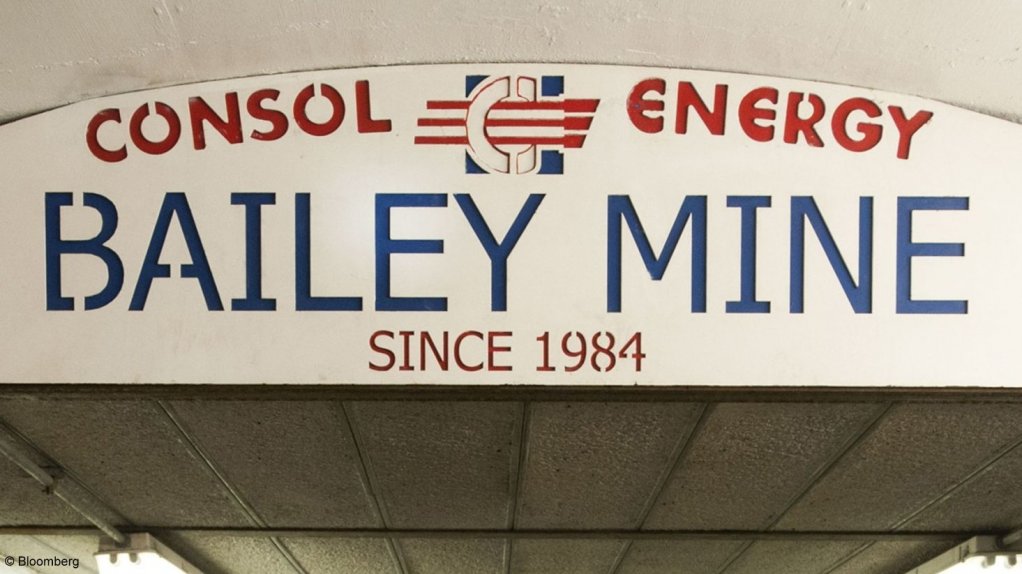
NYSE-listed Consol Energy said it would curtail production at its Bailey mine, in Pennsylvania, for two weeks, after two employees tested positive for the disease.
ADVERTISEMENT
The United Mine Workers of America has warned that coal mining workers are at significant risk from the coronavirus, as a large portion of workers may have black lung, which could be an underlying health condition that could exacerbate the symptoms of Covid-19.
Consol noted in a statement that the temporary curtailment of Bailey was borne out of an “abundance of caution” and said that its other operations in the Pennsylvania Complex, including the Enlow Fork and Harvey mines, continued uninterrupted.
ADVERTISEMENT
The Pennsylvania Complex has the capacity to produce 28.5-million tons a year, with the idled Bailey mine accounting for 11.5-million tons a year of the total capacity.
Meanwhile, Nasdaq-listed Alliance Resource Partners (ARLP) announced that it would temporarily cease coal production at all its Illinois basin mines, saying that the actions by world leaders to combat the deadly virus had crushed demand for energy. In addition, the price war initiated by Saudi Arabia and Russia had lowered oil prices even more.
The idling is scheduled to last through April 15, although ARLP said that the actual return to production could be accelerated or extended, based upon business needs of its customers.
"It is important to note that approximately 75% of our domestic sales are targeted to states that depend on coal, more than any other fuel, to generate electricity," said president and CEO Joseph Craft.
"As serious as the disruption caused by the virus has been to the citizens of these states, imagine the impact if our miners didn’t show up every day to ensure the reliable supply of this essential fuel necessary to keep the lights on. We remain in constant contact with our customers and stand ready to meet their needs for this essential fuel."
The group also suspended its guidance for 2020. The company previously said it would produce a total of 35.5-million to 37.5-million tons, with the Illinois basin’s contribution being 25.5-million to 27.3-million tons. Its sales tons guidance for the year was 36.8-million to 38.8-million tons.
“Although we are suspending formal guidance, we currently anticipate ARLP's total sales tons for 2020 will be approximately 25% below our initial expectations. At the same time, assuming we can successfully fulfill our coal sales commitments this year, the improvements to ARLP’s cash flow resulting from the steps outlined above are expected to substantially offset lower revenues, allowing us to maintain ample liquidity and protect our strong balance sheet."
Ratings agency Moody’s last week said that US coal producers would feel the pinch of Covid-19, as individual states shut down much of the industrial economy to try and stem the spread of the disease.
Coal-fired power plants are US thermal coal producers' most significant customers, but their purchases have dropped off significantly over the last decade, even before Covid-19. Before the intensification of the pandemic in the US, Moody’s expected that coal production would fall by between 15% and 20% this year to between 550-million and 600-million tons. The agency now expects that industry conditions will worsen beyond this forecast – driven by the weakened electricity demand in commercial and industrial operations. 

Cuba – An Example of Solidarity in a Time of Crisis

Authentic news,No fake news.
By Nino Pagliccia

The most frequent qualifier used to describe the global experience of the pandemic we are currently witnessing or affected by, is “crisis”. And I am reminded of political theorist Antonio Gramsci’s words: “The crisis consists precisely in the fact that the old is dying and the new cannot be born; in this interregnum a great variety of morbid symptoms appear.”
Is the coronavirus COVID-19 Gramsci’s “morbid” symptom? I don’t know. He may have been thinking of more political symptoms. If he were alive today he may have named the level of desperation of the US government towards countries resisting its hegemony like Venezuela, Cuba, China, Nicaragua, Russia,…and the list goes on… as a morbid symptom. The agony of the dying empire that lashes against anything that is healthy and living.
The Trump administration is surpassing the threshold of what is acceptable from anybody in distress when it put a $25 million bounty “for information leading to the arrest and/or conviction” of the president of Venezuela Nicolas Maduro and other top officials. Information or assassination? For the US State Department that is just semantics. Without doubt the US was behind the assassination attempt against Maduro planned in Colombia in August 2018 that took place in Caracas with drones carrying explosives. 
After all, the list of political assassinations by the US is quite extensive. The last one, this year, was that of Gen Qassem Suleimani, the leader of Irans elite military Quds force. Let no one be tempted to cast judgement on the victims. Only the assassin should stand trial.
The fact that the targeted killing against Maduro was ordered by the US State Department a few days ago at the precise time of a serious global health problem with the COVID-19 pandemic can only be interpreted as a Gramscian morbid symptom of the US administration collective disturbed minds.
But the state of mind of the US regime managers is not what I would like to focus on. 
If we take the etymological meaning of the word crisis, it comes from the Greek krisis meaning decision. That is, we are at a critical point where we are encouraged to look forward and make decisions. Those decisions may well be political and we hope that they will bury the old and lead to something “new” to be born.
In January 1959 something new arose in Cuba from the rebellion against the rotten US supported government that had condemned the majority of Cubans to poverty and ignorance. The new society that emerged has resisted a fierce blockade on its economy for the last 60 years, despite of which it has thrived and set the most valuable example to humanity: the value of solidarity.
It is quite striking that just few months into the new Cuban revolution Che Guevara stated in a speech on revolutionary medicine “[what] we have done is practising charity, and what we have to practice today is solidarity.” 
In my professional life I have worked with Cuban health professionals and I have observed the superb public health system that Cuba has in place. It is a fully publicly funded system with complete geographical coverage. The best indicator of the health achievement is Cuba’s infant mortality rate that stands at 3.7 per 1,000 live births (for the US is 5.6) according to the World Bank (2018). Its major success comes from a very proactive prevention approach to primary care. 
A major part of the strength of the institutions is the predominant role of solidarity in Cuban society. This sense of social cohesion may in fact be one of the reasons why Cuba is dealing quite successfully with the COVID-19 pandemic with 80 confirmed case reported to date and no deaths. President Diaz-Canel recently statedEveryone of us depends on every one of us, and we all depend on each other.” Consequently, community leaders and health brigades have visited close to 643,000 families to ensure they have the support needed to confront the health emergency in the face of an increasing blockade by the Trump administration.
Solidarity in domestic affairs is matched by the Cuban program of medical cooperation at the global level. A description of this program states that it is based on the principle of international solidarity and started with its first medical brigade to Algeria in 1963. In a research paper this author uses the example of Cuba to illustrate the practice of solidarity in healthcare in the hope of a healthier future. 
However, given that healthcare deals directly with human lives and that resources are scarce, hard questions need to be asked: What is the value of human life? What acceptable trade-off—if any—can we make for a human life? What sacrifices are we willing to make as a society to save the life of a child? These are more than philosophical questions. The decisions we make around those questions will determine the kind of society we envision to have. This author and a Cuban colleague have suggested that Cuba has shown strong political will to sustain human life in Cuba as well as in other countries with matching resources. There is no better time to show political will to sustain good population health than at time of crisis.
In the last few weeks there have been many reports of Cuban health professionals being deployed to several countries that have asked for assistance to tackle the COVID-19 pandemic that even the corporate media has not been able to hide. For example, the conservative National Post has recognised the valuable contributions made by “communist-run Cuba” together with China and Russia even in a NATO country like Italy.
Meanwhile, capitalist-run USA calls on governments not to receive Cuban doctors. The White House attacked the Cuban health professionals, who in half a century of history have carried out missions in over 150 countries in Africa, Latin America and the Caribbean, the Middle East and Asia, totalling more than 400,000 medical collaborators. That is irresponsible and contrary to human solidarity. What the international organization Médicins sans Frontières (MSF) is doing to alleviate the deadly burden of COVID-19 is commendable. What must de condemned is the fact that such a daunting task relies on charity through unpredictable donations. 
In conclusion, at a time of crisis – such as the spread of a deadly pandemic – we need to drop preconceived notions that might in fact exacerbate the crisis and search for ideas and strategies in order to build a new paradigm. Examples abound if we are objective observers. Cuba is such a living example of what is possible in the most severe health situation ever experienced in recent history in such a global scale. 
Solidarity as a human value– quite contrary to charity – is meanttoact upon the social organization in order to change it for the benefit of the larger collective. The exercise of solidarity is directed at awareness of the condition and at social change or the redefinition of power relations.
International solidarity, as a synonym of cooperation, could also be considered a pillar of foreign relations in a broader scale. What would it be like to have foreign relations between countries based on solidarity instead of hostility? Cuba shows us that it is possible.
*
Note to readers: please click the share buttons above or below. Forward this article to your email lists. Crosspost on your blog site, internet forums. etc.
This article was originally published on OneWorld.
Nino Pagliccia is a frequent contributor to Global Research.

New world’s best practice for COVID 19 prevention and control

Authentic news,No fake news.

Newswise — New recommendations for best practice for infection prevention and control in healthcare settings, to help stop the spread of COVID-19, have been developed by the University of Adelaide’s JBI, an international research organisation in the Faculty of Health and Medical Sciences.

The JBI COVID-19 Special Collection summarises current best evidence and provides detailed recommendations for methods of hand washing with soap and water, hand rubbing with alcohol solution and when and how to wear personal protective equipment.

“Getting the fundamentals right is critical, we have focused on practical knowledge needs, the frontline of the fight against COVID-19,” says Professor Zoe Jordan Executive Director of JBI.

“JBI has collated, scrutinised and synthesised the best available research from universities and hospitals across the globe to develop these updates,” Zoe says.

“The need for quick access to clear, unambiguous recommended practice based upon high quality evidence at the point of care is paramount. These resources support clinicians in ensuring their infection prevention and control practices are evidence-based and up-to-date.

“For example, many people do not know that alcohol hand rub works best if allowed to dry on your hands, or what the evidence says about wearing rings or jewellery while washing your hands before and after patient care,” she says.

“Hand hygiene is the global standard for preventing transmission of infection, with 20–40% of healthcare-associated infections due to cross infection from hands of healthcare workers, but most do not have access to the evidence on when to use soap and water or alcohol hand rub, leading to an over-reliance on alcohol hand rub,” says Zoe.

"With that in mind, JBI has taken great care to bring together this collection of current, high quality, reliable information we hope will assist in stopping the spread of COVID-19 and other deadly infections,” she says.

The updated resources are available for free download from JBI’s website, and include recommended practices and posters illustrating best practice in handwashing techniques for infection control and prevention, evidence-based summaries on topics such as the wearing of personal protection equipment, as well as the recommended practice for basic hand hygiene.

These resources will be disseminated to health professionals locally and globally via JBI’s commercial partner Wolters Kluwer Health, as well as its 75 collaborating healthcare and university partners in 36 countries, this includes SA Health.

JBI is a world-leading team of researchers whose work ensures that evidence-based knowledge reaches the people who need it most. JBI fosters long-term, sustainable change in health practices by training healthcare professionals to deliver evidence-based healthcare and providing the best available evidence to inform clinical decision making.

New framework will help decide which trees are best in the fight against air pollution

Authentic news,No fake news.

Newswise — A study from the University of Surrey has provided a comprehensive guide on which tree species are best for combatting air pollution that originates from our roads - along with suggestions for how to plant these green barriers to get the best results.
In a paper published in npj Climate and Atmospheric Science, air pollution experts from Surrey's Global Centre for Clean Air Research (GCARE) conducted a wide-ranging literature review of research on the effects of green infrastructure (trees and hedges) on air pollution. The review found that there is ample evidence of green infrastructure's ability to divert and dilute pollutant plumes or reduce outdoor concentrations of pollutants by direct capture, where some pollutants are deposited on plant surfaces.
As part of their critical review, the authors identified a gap in information to help people - including urban planners, landscape architects and garden designers - make informed decisions on which species of vegetation to use and, crucially, what factors to consider when designing a green barrier.
To address this knowledge gap, they identified 12 influential traits for 61 tree species that make them potentially effective barriers against pollution. Beneficial plant properties include small leaf size, high foliage density, long in-leaf periods (e.g. evergreen or semi-evergreen), and micro-characteristics such as leaf hairiness. Generally detrimental aspects of plants for air quality include wind pollination and biogenic volatile organic compound emissions. In the paper, the team emphasise that the effectiveness of a plant is determined by its environmental context - whether, for example, it will be used in a deep (typical of a city commercial centre) or shallow (typical of a residential road) street canyon or in an open road environment. To help concerned citizens with complex decisions, such as which tree is best for a road outside a school in a medium-sized street canyon, the team from Surrey has also developed a plant selection framework.
Professor Prashant Kumar, Founding Director of GCARE at the University of Surrey, said: "We are all waking up to the fact that air pollution and its impact on human health and the health of our planet is the defining issue of our time. Air pollution is responsible for one in every nine deaths each year and this could be intensified by projected population growth.
"The use of green infrastructure as physical barriers between ourselves and pollutants originating from our roads is one promising way we can protect ourselves from the devastating impact of air pollution. We hope that our detailed guide to vegetation species selection and our contextual advice on how to plant and use green infrastructure is helpful to everyone looking to explore this option for combatting pollution."
###
Barwise, Y. & Kumar, P. (2020). Designing vegetation barriers for urban air pollution abatement: a practical review for appropriate plant species selection. npj Climate and Atmospheric Science. (In press).

Scientists predict the size of plastics animals can eat

Authentic news,No fake news.

Newswise — A team of scientists at Cardiff University has, for the first time, developed a way of predicting the size of plastics different animals are likely to ingest.
The researchers, from the University's Water Research Institute, looked at the gut contents of more than 2,000 animals to create a simple equation to predict the size of a plastic item an animal can eat, based on the length of its body.
In the study, published today in Nature Communications, they report that the length of an animal can be used to estimate the biggest piece of plastic it can eat - and this was about 5% (a twentieth) of the size of the animal.
The researchers say that as the plastic pollution problem escalates, it is vital to be able to quickly assess the risk of plastics to different species around the world.
This work could also help scientists measure the risk of plastic pollution to ecosystems and food supplies - and ultimately the risk to human health.
By trawling through published data, the team found plastics ingested by marine and freshwater mammals, reptiles, fishes and invertebrates, from 9mm-long fish larvae to a 10m-long humpback whale.
During their research they found some shocking examples of the extent of plastic pollution, including hosepipes and flower pots in a sperm whale, plastic banana bags inside green turtles and a shotgun cartridge in a True's beaked whale.
Co-lead author of the study Dr Ifan Jâms said: "We still know very little about the way most animals feed in the wild, so it's difficult to figure out how much plastic they could be eating.
"This information gives us a way to start measuring the extent of the plastic pollution problem.
"We hope this study lays a foundation for including the 'ingestibility' of plastics into global risk assessments.
"We also hope this work will encourage more sophisticated assessments of the amount of plastic that may be moving into global ecosystems and food supplies."
Project leader Professor Isabelle Durance said: "All of us will have seen distressing, often heart-breaking, images of animals affected by plastic, but a great many more interactions between animals and plastic are never witnessed. This study gives us a new way of visualising those many, many unseen events.
"While we understand increasingly where concentrations of plastic in the world's aquatic ecosystems are greatest, it's only through work like this that we can know which animals are likely to be in danger from ingesting it.
"Through this work, we can also begin to understand how much plastic is entering global food webs or human foods, for example, because we know the general sizes of plastic likely to be taken in by zooplankton or fishes.
"We recognise that our research is part of wider efforts and there is still more work to do to quantify the risks from smaller plastic fragments or to understand the damage caused by plastic ingestion, but we hope this work helps the world to address its growing plastic problem."
The researchers said further work was needed to look at how and where terrestrial animals eat plastic to predict wider risks.

कोरोना संकट से हमारे दैनिक जीवन में सकारात्मक चीजें सामने आईं

Authentic news,No fake news.
स्रोत: डॉयचे वेले Al jazeera

दुनिया में कोरोना वायरस के प्रसार के बारे में नकारात्मक खबरों के प्रकाश में, हममें से अधिकांश चिंता और हताशा से पीड़ित हैं, लेकिन संकट का एक उज्ज्वल पक्ष भी है। कॉरोना वायरस प्रसार संकट दुनिया भर में दिखाए गए सबसे सकारात्मक चीजें क्या हैं?
सामाजिक रिश्तों का अनुमान लगाते हुएक्या आप कभी मंद-मंद बूढ़ी महिला के पीछे चलते हुए परेशान हुए हैं? अपने सातवें पड़ोसी से वही कहानी सुनने के बाद जब भी वह आपको देखता है? हममें से ज्यादातर लोग अपने दैनिक जीवन में बुजुर्गों के बारे में नहीं सोचते हैं, वे समाज में घर में या बुजुर्गों के लिए घरों में बैठे हुए एक अदृश्य हिस्सा हैं। दूसरों की सराहना और सुरक्षा के लायक हैं।
हाल ही में, बुजुर्गों की मदद करने के लिए कई पहलें सामने आई हैं जो अकेले खरीदारी करने में असमर्थ हैं या जिन्हें घरेलू मामलों के प्रबंधन में मदद की आवश्यकता है, और बड़ी संख्या में युवा लोग कोरोना वायरस से संक्रमण के जोखिम से वृद्ध लोगों को बचाने के लिए घरेलू अलगाव के लिए प्रतिबद्ध हैं, जिसने हमें एक समय में दिखाया था। संकटों में एक दूसरे की जरूरत होती है।
काम और जीवन के मामलों के साथ व्यस्तता के आलोक में, कुछ लोग भूल सकते हैं और अन्य अपने सामाजिक रिश्तों की अनदेखी करते हैं, चाहे वह परिवार, दोस्तों या पड़ोसियों के साथ हो, और अब एक ही परिवार एक साथ बैठता है, और दोस्तों का मूल्य व्यक्ति के जीवन में दिखाई देता है।
स्कूल बंद होने और घर पर रहने वाले बच्चों के साथ, परिवार समूह संबंधों, जैसे कि खेल, खेल या खाना पकाने का अभ्यास करके परिवार के रिश्ते को मजबूत करने के लिए समय का उपयोग कर सकते हैं। ये गतिविधियां परिवार के सदस्यों को एक साथ करीब लाती हैं, और यह मतभेदों को भूलने और समस्याओं को एक साथ हल करने का अवसर हो सकता है।
मूल व्यवसायों की अधिक सराहनावायरस दुनिया में आक्रमण करने वाली महामारी में बदल जाने के बाद, सभी गैर-आवश्यक सेवाओं को बंद कर दिया गया था, और फिर कई लोगों ने पाया कि समाज में बुनियादी व्यवसायों को जरूरी नहीं कि वे मानते हैं। मौजूदा संकट ने सभी स्वास्थ्य कर्मचारियों और खाद्य पदार्थों की बिक्री के महत्व को दर्शाया है। बेबीसिटर्स और पोस्टमैन, इन व्यवसायों के बीच आम कारक उनकी कम तनख्वाह है, भले ही वे समाज में अपरिहार्य हैं, और कोरोना संकट इन व्यवसायों के मालिकों की सामाजिक और भौतिक सराहना हो सकती है।
प्रकृति और आंदोलन की प्रशंसा हम में सेअधिकांश लोग अपने आस-पास की प्रकृति को मुस्लिम मामले के रूप में देखते हैं, जैसा कि हम दैनिक सुंदर दृश्यों को पारित करते हैं, जिन पर हम ध्यान नहीं देते हैं, लेकिन दुनिया के अधिकांश घरेलू इन्सुलेशन की प्रतिबद्धता के साथ, कई सूर्य के प्रकाश के लिए तरसते हैं और एक बगीचे में या एक पेड़ की छाया के नीचे बैठते हैं। , और हम लंबे समय तक प्रकृति के रंगों के साथ अपनी आंखों का आनंद लेते हैं।
और अगर आपको लंबी दूरी तक चलने से पहले शिकायत थी, तो कोरोना संकट की समाप्ति के बाद मामला बदल सकता है, इसलिए घर पर रहने से कई लोगों को दैनिक आंदोलन के लिए लंबे समय तक रहना पड़ता है, जिससे कुछ लोग घर में व्यायाम करते हैं या घर के अलगाव की अवधि के दौरान अपनी जरूरतों को पूरा करने के लिए कार के बजाय साइकिल का उपयोग करते हैं।
सोशल मीडिया का बेहतर उपयोग,कई लोग सोशल मीडिया प्लेटफॉर्म पर पढ़ी जाने वाली साजिश के सिद्धांतों और अफवाहों से प्रेरित होते हैं, क्योंकि कुछ लोग दूसरों पर हमला करने में मत-भिन्नता को स्वीकार नहीं करते हैं, और हालिया दौर ने इस व्यवहार में कुछ सुधार देखा है, क्योंकि इन साइटों के उपयोगकर्ता दूसरों की मदद करने और रोकथाम और जागरूकता फैलाने में अधिक रुचि रखते हैं।
 
शांत और सरलता का आनंद लेनाइसमें कोई संदेह नहीं है कि कोरोना संकट ने कई लोगों को अपनी आजीविका का स्रोत खो दिया है, और कई देशों ने इस स्तर से प्रभावित प्रभावित लोगों की मदद करने के लिए आर्थिक पैकेजों को अपनाया है।

दूसरी ओर, वे लोग थे जो तनाव और तनाव से पीड़ित थे, चाहे वे अपने काम या अपनी पढ़ाई में हों। इन घरों के अलगाव ने उन्हें अपने जीवन में कुछ शांत कर दिया, क्योंकि इसने उन्हें दैनिक तनाव से दूर रहने और अपने विचारों को पुनर्जीवित करने का अवसर दिया, और इसने दूसरों को अपनी छिपी प्रतिभा को खोजने का अवसर भी दिया, जहां वह कहते हैं। विशेषज्ञ बोरियत कुछ नया करने के लिए नेतृत्व कर सकते हैं, और अगर आप घर अलगाव के दौरान ऊब महसूस करते हैं, तो आप खाना पकाने, ड्राइंग या डिजाइनिंग में अपनी प्रतिभा का पता लगा सकते हैं। एक नई भाषा सीखने या किसी विश्वविद्यालय में आभासी कक्षाओं में भाग लेने के लिए आप विभिन्न अनुप्रयोगों का भी उपयोग कर सकते हैं।

Mitra-mandal Privacy Policy

This privacy policy has been compiled to better serve those who are concerned with how their  'Personally Identifiable Inform...