MITRA MANDAL GLOBAL NEWS

High-speed train from Tel Aviv to Jerusalem makes first test

Authentic news,No fake news.

The Jerusalem-Tel Aviv express train makes a test run near Mishmar Ayalon, Israel, on Tuesday. Photo by Debbie Hill/UPI 
License Photo
Jan. 16 (UPI) -- A high-speed electric train between Jerusalem and Tel Aviv made its first test run Tuesday, carrying an Israeli official and news reporters.
The train is designed to take 28 minutes from the new Navon station in Jerusalem to Tel Aviv's Hahagana Railway Station, near Ben Gurion Airport, according to a report in the Jerusalem Post.
The old line takes 78 minutes and was a built during the Ottoman Empire.
The test run Tuesday traveled 3.1 miles instead of the eventual 35 miles.
"We are connecting Jerusalem and connecting to the history of Jerusalem," Transportation Minister Israel Katz said to reporters. "I decided to call the fast rail line to Jerusalem King David Railways after King David, who conquered Jerusalem and turned it into the capital of Israel" -- more than 3,000 years ago.
Katz promised the line will start service on the eve of Passover, March 30, with one train per hour on one track, but eventually will increase to six trains hourly on two tracks.
After an initial three months of free travel, passengers will receive a 50 percent discount until the line is done.
The line includes a double track through five tunnels at a distance of 24 miles and eight bridges. One of the tunnels is 4.7 miles, the longest in Israel.
"I urged Israel Railways to shorten the timetable for completing the project, while maintaining maximum safety," Katz said.
The rail project, estimated to cost $1.8 billion, has been planned since 2001. In late December, Katz announced plans to extend the train line to the Old City. He also said the station nearest the Western Wall would be named after U.S. President Donald Trump, who has recognized Jerusalem as Israel's capital and vowed to move the U.S. embassy there.

Rohingya refugees to return to Myanmar within two years

Authentic news,No fake news.

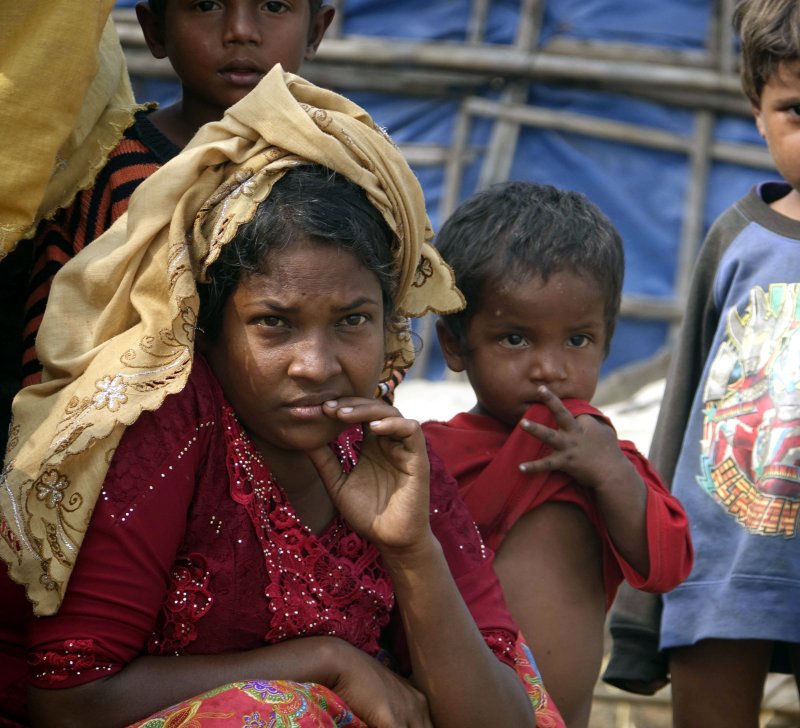
Rohingya refugees sit near a makeshift house in Maungdaw in western Myanmar. File Photo by Nyunt Win/EPA
Jan. 16 (UPI) -- Bangladesh and Myanmar on Tuesday finalized a two-year timeline to repatriate hundreds of thousands of Rohingya refugees who fled from persecution and violence.
The Rohingya Muslim minority will begin to leave Bangladesh, with Myanmar agreeing to accept 1,500 a week with the goal of taking back more than 700,000 refugees within two years.
"We have signed a very positive treaty. After several discussions, Myanmar has agreed to complete the repatriation process preferably within two years from the day it commences," Sufiur Rahman, Bangladesh's ambassador to Myanmar, said.
"We have proposed to repatriate 15,000 Rohingyas every week but they [Myanmar] did not agree to it," he added."They [Myanmar] have taken some preparations for the Rohingyas. They have agreed to take back 300 Rohingyas per day. Some 1,500 Rohingyas will be sent back in a week."
The number of Rohingya sent back every week will increase after three months, Rahman said.
The "physical arrangement" was decided at the first meeting of the Joint Working Group on the return of the displaced Rohingyas from Rakhine State. The meeting was held on Monday and Tuesday in the city of Naypyidaw.
Under the agreement, returnees would be received initially in Myanmar in two reception centers and be temporarily sheltered while officials rebuild the houses for them to move into.
Many displaced Rohingya in Bangladesh, however, remain concerned about returning to Myanmar.
"We are still not clear about what agreement was signed," Sirajul Mostofa, a community leader in a Rohingya camp in Cox's Bazaar, said.
"Our first priority is, they have to grant us citizenship as Rohingyas. Secondly, they have to give back our lands. Thirdly, our security must be ensured internationally. Otherwise, this is not good for us."
A wave of Rohingya migrants began exiting Myanmar last year when military attacks led to widespread violence in Rahkine State -- including allegations of rape, torture and killings.
Last week, Myanmar's military admitted to killing 10 Rohingya Muslimsfound in a mass grave

Poland eyes India mining sector

Authentic news,No fake news.

Delegation holds talks with Coal India

Polish companies may be interested in getting into commercial mining in India provided the conditions are right, said Marek Magierowski, Polish Deputy Minister, Ministry of Foreign Affairs.
Mr. Magierowski, who is leading a delegation organised by the Indo-Polish Chambers of Commerce and Industry (BCCI), was speaking to the media after an industry interaction organised by the Bengal Chamber of Commerce and Industry.
The delegation, comprising Ministers and representatives of trade and industry, is in the city to attend Bengal Global Business Summit beginning here on January 16. Among Poland’s area of expertise was deep mining in copper and coal. “We are offering this technology,” he said.The delegation also held discussions with Coal India Ltd. officials.
Poland, which participated in the Vibrant Gujarat Summit, is revisiting West Bengal after a year. Its other other areas of interest include energy, food processing, defence and innovation.
The Deputy Minister said his country’s economy had been developing steadily since the collapse of communism, growing at a ‘dynamic’ 4-4.5%. Unemployment stood at a ‘low’ 4%. “We are not really promoting business here, but we want to boost trade relations with India which is a priority country for us,” he said.”
BCCI president-designate Indrajit Sen said India and Poland had jointly etched out a roadmap for strengthening co-operation in areas like thick-seam underground coal mining, exploitation of gassy seams , developing clean coal technologies and transfer of technology in deep coal mining from Poland to India
Source- Return to frontpage

मधुमेह का सरल और प्रभावी समाधान ग्लाइसेमिक पेन्टैड

Authentic news,No fake news.


मधुमेह का सरल और प्रभावी समाधान ग्लाइसेमिक पेन्टैड
नयी दिल्ली, 03 जनवरी (वार्ता) देश और दुनिया में तेजी से बढ़ रही मधुमेह (डायबिटीज) के बारे में ताजा अध्ययनों से यह सामने आया है कि रोगी के खून की जांच के साथ-साथ यदि उसकी जीवन शैली और ग्लाइसेमिक उतार चढ़ाव को उपचार में शामिल कर लिया जाये तो इस पर प्रभावी ढंग से नियंत्रण किया जा सकता है।

मधुमेह या डायबिटीज के उपचार एवं प्रबंधन के लिए ज्यादातर खून की जांचों एफपीजी, पीपीजी और एचबीए1सी के आकलन पर ही ध्यान केंद्रित किया जाता रहा है लेकिन अब इसमें रोगी के ग्लाइसेमिक वैरीएब्लिटी और जीवन की गुणवत्ता को भी शामिल किया जाने लगा है। इन सभी को सामूहिक नाम ग्लाइसेमिक पेन्टैड (मधुमेह उपचार हेतु पांच फोकस क्षेत्र) दिया गया है जो इस रोग के नियंत्रण और प्रबंधन में महत्वपूर्ण साबित हो रहा है।

डायबिटीज एंड ओबेसिटी सेंटर के डॉ. ब्रिज मोहन मक्कड़ के अनुसार ग्लाइसेमिक वैरिएबिलिटी किसी भी व्यक्ति के ब्लड ग्लूकोज में दैनिक उतार-चढ़ाव को बताता है। वहीं जीवन गुणवता में व्यक्ति का शारीरिक, भावनात्मक एवं सामाजिक स्वास्थ्य शामिल है। साथ ही इसमें व्यक्ति के जीवन में भावनात्मक तत्व जैसे संतुष्टि और प्रसन्नता भी शामिल हैं। मधुमेह के रोगियों में जीवन गुणवत्ता के इन तत्वों की कमी पायी जाती है। इसलिए मधुमेह के उपचार एवं प्रबंधन में ग्लाइसेमिक वैरीएब्लिटी और जीवन की गुणवत्ता पर ध्यान केंद्रित करना जरूरी हो जाता है। ऐसा करने पर इसके अच्छे परिणाम सामने आते हैं।

मधुमेह का शिकार होने पर रक्त में शर्करा स्तर लंबे समय तक उच्च बना रहता है। बार-बार पेशाब आना, भूख और प्यास में बढ़ोतरी, हमेशा थकान बने रहना, घाव देरी से भरना इत्यादि इसके प्रमुख लक्षण हैं। मधुमेह का समय पर उपचार न किया जाए तो शरीर कई अन्य बीमारियों का घर बन जाता है। इससे हृदय रोग, स्ट्रोक, किडनी फेल होना, आंखों की रोशनी कम होना और अल्सर जैसे गंभीर बीमारियां हो सकती हैं। मधुमेह का स्तर बढ़ने पर व्यक्ति के कोमा में जाने और मौत तक की आशंका रहती है।

डा़ॅ मक्कड़ के अनुसार मधुमेह होने का सटीक कारण का अभी तक पता नहीं चल पाया है, लेकिन कुछ आनुवांशिक एवं जीवनशैली से संबंधित कारक ब्लड शुगर के स्तर को बढ़ाते हैं। मोटे तौर पर मधुमेह के कारणों में अनुवांशिक कारण, व्यायाम की कमी, खराब आहार, मोटापा, इंसुलिन में परिवर्तन, गर्भावस्था में मधुमेह, खराब जीवन शैली इत्यादि शामिल हैं।

पाचन के दौरान ग्लूकोज हमारे खून से होकर कोशिकाओं तक पहुंचता है। ब्लड शुगर को कोशिकाओं में पहुंचाने में शरीर को इंसुलिन की जरूरत पड़ती है। पैन्क्रियाज (पाचन ग्रंथि) इंसुलिन उत्पन्न करती है और उसे खून तक पहुंचाती हैं। यदि शरीर पर्याप्त मात्रा में इंसुलिन उत्पन्न नहीं कर पाता है अथवा इंसुलिन बनाने में शरीर को परेशानी होती है तो रक्त के अंदर का ग्लूकोज वहीं पर रह जाता है और इससे खून में शुगर का स्तर बढ़ जाता है। यदि खान-पान को नियंत्रित करने के बावजूद यही लक्षण बने रहते हैं तो वह मधुमेह रोग की शक्ल ले लेता है।

मधुमेह को मुख्यतः दो श्रेणियों टाइप 1 और टाइप 2 में रखा जाता है। टाइप 1 में शरीर में इंसुलिन बनना बंद हो जाता है। शरीर की श्वेत रक्त कोशिकाएं अग्नाशय की इंसुलिन बनाने वाली कोशिकाओं को नष्ट कर देती हैं। वहीं टाइप 2 में इंसुलिन काफी कम मात्रा में बनता है और जो इंसुलिन बनता है उसका भी सही तरीके से इस्तेमाल नहीं हो पाता। इसके कारण ग्लूकोज कोशिकाओं में नहीं जाता और रक्त में उसकी मात्रा बढ़ जाती है। टाइप 2 मधुमेह जैसे जैसे बढ़ता है, इंसुलिन की कमी भी बढ़ती जाती है। वहीं गर्भावस्था में मधुमेह का तीसरा मुख्य टाइप माना जाता है। इसमें गर्भावस्था के दौरान शरीर में शर्करा का स्तर बढ़ जाता है।

मधुमेह से बचाव के लिए हमें अपनी जीवन शैली और खान-पान की आदतों को सही रखना बेहद जरूरी होता है। नियमित रूप से व्यायाम, पर्याप्त नींद, मोटापा कम करना, तनाव से दूर रहना, धूम्रपान और शराब से दूर रहना, सुपाच्य और पौष्टिक भोजन करना इत्यादि शामिल हैं।

देश में मधुमेह के 55 विशेषज्ञों को शामिल कर ग्लाइसेमिक पेन्टैड फोरम की स्थापना की गयी है। विशेषज्ञों ने मधुमेह से संबंधित विभिन्न विषयों पर चर्चा और अपने अनुभवों को साझा कर मधुमेह प्रबंधन में ग्लाइसेमिक पेन्टैड की प्रासंगिकता को रेखांकित किया है। उनकी आम राय है कि एफपीजी, पीपीजी, एचबीए1सी के अलावा ग्लाइसेमिक वैरीबलिटी और जीवन गुणवत्ता को मधुमेह के उपचार एवं प्रबंधन के लिए जरूरी है। फोरम का मानना है कि भारतीयों के मधुमेह के उपचार एवं प्रबंधन में व्यक्तिगत आहार आदतों और उनके सामाजिक आर्थिक स्तर पर भी ध्यान दिये जाने की जरूरत है।

वार्ता

Read more at http://www.univarta.com/diabetes-simple-effective-solution-glycemic-pentad/features/news/1094723.html#UHrYS8KH6Ky9MYTl.99

गगनचुंबी इमारतें बनाने में भारत अभी पीछे

Authentic news,No fake news.


नयी दिल्ली 14 जनवरी (वार्ता) देश के बड़े शहरों के साथ-साथ छोटे शहरों में भी ऊंची-ऊंची इमारतों की संख्या लगातार बढ़ रही है लेकिन 200 मीटर से अधिक ऊंचाई की गगनचुंबी इमारतों के निर्माण में भारत अभी पीछे है।

पिछले वर्ष (2017) दुनिया में 200 मीटर से अधिक ऊंचाई वाली 144 इमारतें बन कर तैयार हुयीं। इनमें से मात्र तीन भारत की हैं। देश की ये तीनों इमारतें मुंबई में बनी हैं जिनमें से एक की अधिकतम ऊंचाई 266 मीटर या 873 फुट है। फिलहाल यह देश की सबसे ऊंची इमारत है। तीनों इमारतें रिहायशी इस्तेमाल के लिये बनायी गयी हैं।

काउंसिल अान टाॅल बिल्डिंग एंड अर्बन हैबिटेट के आंकड़ों के अनुसार पिछले वर्ष विश्व के 23 देशों में 144 गगनचुंबी इमारतें बन कर पूरी हुयीं। इन्हें मिलाकर दुनिया में ऐसी इमारतों की संख्या 1319 हो गयी है। भारत में ऐसी मात्र छह इमारतें हैं । देश में 2010 में पहली बार 200 मीटर ऊंचाई की दो इमारतें बन कर तैयार हुयी थीं। वर्ष 2015 में इनकी संख्या तीन हुयी जबकि पिछले वर्ष इसमें तीन का और इजाफा हुआ।

इस तरह की इमारतें बनाने में एशिया दुनिया में सबसे आगे है जहां पिछले वर्ष कुल 109 गगनचुंबी इमारतें बन कर तैयार हुयीं। एशिया के आगे होने में चीन का बहुत बड़ा हाथ है जहां पिछले वर्ष 200 मीटर से अधिक ऊंचाई वाली 76 इमारतों का निर्माण पूरा हुआ। दुनिया में पिछले वर्ष बनी कुल गगनचुंबी इमारतों में से आधी से अधिक चीन में बन कर तैयार हुयीं।

चीन पिछले दस वर्ष से लगातार इस मामले में विश्व का नंबर एक देश बना हुआ है। पिछले वर्ष अमेरिका दस इमारतों के साथ दूसरे तथा दक्षिण कोरिया सात इमारतों के साथ तीसरे स्थान पर रहा। कनाडा और इंडोनेशिया में पांच पांच तथा मलेशिया, उत्तर कोरिया, तुर्की और संयुक्त अरब अमीरात में चार चार इमारतें पिछले वर्ष बनकर तैयार हुयीं।

काउंसिल की रिपोर्ट के अनुसार तेजी से बढ़ते शहरीकरण के चलते इस तरह की इमारतों का निर्माण अब केवल प्रमुख वाणिज्यिक और व्यवसायिक शहरों तक सीमित नहीं रह गया है। पिछले चार वर्ष में इनकी संख्या दोगुना बढ़ी है तथा नये-नये शहरों में इनका निर्माण हो रहा है। पिछले वर्ष 23 देशों के 69 शहरों में ऐसी इमारतें बन कर तैयार हुयीं। तेरह शहरों में पहली बार 200 मीटर से अधिक ऊंची इमारत बनकर खड़ी हुयी जबकि 28 शहरों में नयी ऊंचाई की इमारत तैयार हुयी।

शहरों की बात करें तो चीन के शेनजेन में पिछले वर्ष इस तरह की 12 इमारतें बनी जितनी चीन के अलावा किसी अन्य देश में नहीं बनी। पिछले वर्ष बन कर तैयार हुयी सबसे ऊंची इमारत भी इसी शहर में है जिसकी ऊंचाई 599 मीटर है। यह दुनिया की चाैथी सबसे ऊंची इमारत है। इस समय दुनिया की सबसे ऊंची इमारत दुबई की बुर्ज खलीफा है जिसकी ऊंचाई 828 मीटर है। चीन के ही नैनिंग में 200 मीटर से अधिक ऊंची सात इमारतें गत वर्ष बन कर तैयार हुयीं जबकि चेंगदू और जकार्ता में इस तरह की पांच पांच इमारतें पूरी हुयीं।

रिपोर्ट के अनुसार विभिन्न देशों के चल रहे निर्माण को देखते हुये ऐसी इमारतों की संख्या पिछले वर्ष की तुलना में अधिक होगी। एेसी इमारतों के निर्माण में चीन और एशिया भले भी आगे हों लेकिन आने वाले वर्षों में इसमें बदलाव दिखलायी देगा। भारत, अफ्रीका और उत्तरी अमेरिका में ऐसी इमारतों के निर्माण में तेजी आती दिख रही है। भारत में इस समय 34 गगनचुंबी इमारतों का निर्माण चल रहा है जिनमें से चार 300 मीटर तथा एक चार सौ मीटर से अधिक ऊंचाई की होगी। इनमें से 14 के इस वर्ष पूरा होने की उम्मीद है।

वार्ता
Read more at http://www.univarta.com/skyscrapers-india-just-behind/features/news/1105446.html#Dstl3kTpfQfmGYg7.99

New gas reserve found in Bhola,Bangladesh

Authentic news,No fake news.

DHAKA, Jan 15, 2018 (BSS) - Bangladesh Petroleum Exploration Company (Bapex) has discovered a new reserve of a significant amount of natural gas in Bhola, a district of the country's southern region.

The new gas reserve, which is found in Bheduria union of Bhola district, is estimated to have 600 billion cubic feet (bcf) natural gas.

"With this reservoir, the total gas reserve in Bhola now stands at 1.5 trillion cubic feet (tcf)," Cabinet Secretary Shafiul Alam told a press briefing following the weekly meeting of the cabinet held at Prime Minister's Office (PMO) with Prime Minister Sheikh Hasina in the chair.

The Cabinet Secretary said Bapex hoped that it would get more gas in the district, with carrying out more exploration work there.

According to Petrobangla, the country has 26 gas fields with remaining reserve of 13.60 tcf as of January 2016. The new gas field in Bhola will be the country's 27th gas reserve.

Former Indian President Pranab Mukherjee called Bangladesh the "protector" of Bengali language

Authentic news,No fake news.

DHAKA, Jan 15, 2018 (BSS) - Former Indian President Pranab Mukherjee today called Bangladesh the "protector" of Bengali language through their historic Language Movement and achievement of its international recognition. 

"The people of the then East Bengal (now Bangladesh) has established the dignity of Bangla language," he told the International Bangla Literature Conference as the chief guest referring to the 1952 Language Movement and Bangladesh's subsequent success in achieving February 21 as the international Mother Language Day. 

He added: "They protected their culture and gave their lives and blood to establish the rights of their mother tongue." India's first Bengali president Mukherjee is now in Dhaka on a four-day visit coinciding with the concluding session of the literary conference at Nazrul Mancha on the premises of Bangla Academy. 

Mukherjee, however, said contamination in people's thought process and mind was deadlier than the environmental pollution and urged writers, artistes, poets and litterateurs to put in their efforts to clean the toxicity of mind and thoughts. 

He said the history suggests that "not Hitler, Mussolini" but figures like Prophet Muhammad (PBUH), Jesus Christ and Lord Buddha had created history.

"Not the victorious warriors, but the writers, poets and litterateurs have set the directions of civilization," Mukherjee said.

He said despite his interest in reading, his long political engagements often distanced him from books but during the presidency, he tried as much as possible to go through particularly the rare literary collections, secret records and documents kept at the Rashtrapati Vaban. 

"I thought, I should read as much as possible," Mukherjee said. 

Finance Minister AMA Muhith chaired the function while Cultural Affairs Minister Asaduzzaman Noor, State Minister for Foreign Affairs Md Shahriar Alam and convener of the conference Professor Emeritus Anisuzzaman addressed it as the special guests.

Social Welfare Minister Rashed Khan Menon, Information Minister Hasanul Haque Inu and Indian High Commissioner in Dhaka Harshavardhan Sringla were present in the audience row along with Bangladeshi and Indian writers, poets and literature critics.

Pak National Assembly Passed Five Bills On Women, Children And Minorities In 2017

Authentic news,No fake news.

ISLAMABAD, Jan 15 (APP):National Assembly has passed five bills to protect rights of
women, and minorities with the endeavour of Ministry of Human Rights during 2017
besides an amendment has also been done on punishment of female child marriage in
a Criminal Law Act.
The five bills included `The National Commission on the
Rights of the Child Act, 2017, which was passed on 1st of February last
year. Following an amendment was passed regarding the punishment for non-Muslim
girl child marriage accused.
The amendment was passed under, “The Criminal Laws Amendment)
Act, 2017”, on February 6, 2017.
According to it “Provided that in case of a female child as
defined in the Child Marriage Restraint Act, 1992 (XIX of 1929), or a
non-Muslim woman, the accused shall be punished with imprisonment of either
description for a term which may extend to ten years but shall not be less than
five years and shall also be liable to fine which may extend to one million
rupees.”
The third legislation passed by the lower house of the
parliament was “The National Commission on “The Status of Women (Amendment)
Act, 2017” on February 17, whereas, “The Hindu Marriage Act, 2017, was passed
on March 9, a day after the International Women Day, observed annually on March
8.
After the gap of six months, the next Act was passed on
September 13, 2017, titled, “National Commission on the Rights of the Child
Act, 2017” and last one was the long awaited amendment in “The Women in
Distress and Detention Fund (Amendment) Act, 2017, on December 14, which was
initially introduced in 1996 with the title “The Women in Distress and Detention
Fund Act, 2016”.
The bill seeks
to achieve the aforesaid objective to established a fund providing financial and legal assistance to the women languishing in jails on account of different allegations and those who face extreme hardships.
After a long time of almost 22 years, the bill is still lingering due to one reason or the
other leaving women in miseries to survive at their own. The Federal Minister
for Human Rights briefed APP that the main reason for delay in implementation
of this initiative was reallocation of the business under various Ministries and Divisions.
But, he said, after thorough working on the issue a
permanent solution has been sorted out and the domain fall under the minister
in-charge of the ministry.
Besides that under the new amendment the board of governors
of the fund which was earlier comprised of 19 members, has now been reduced to
nine for ensuring availability of members and holding regular meeting ensuing
relief to women in need.

Bill Gates announces to expand aid for Pakistan

Authentic news,No fake news.

Bill Gates announces to expand aid for Pakistan
By Islamuddin Sajid
ISLAMABAD, Pakistan
American billionaire philanthropist Bill Gates has announced a plan to increase financial aid for Pakistan, days after the U.S. administration suspended security assistance for the country, local media reported on Monday.
In a letter sent to Pakistan’s Health Minister Saira Afzal Tarar, Gates appreciated the government’s efforts for eradication of Polio virus from the country, local daily Dawn reported.
Pakistan is among three countries in the world, including Afghanistan and Nigeria, where polio virus still exists and the country remains under a polio-linked travel restriction imposed by the World Health Organization (WHO).
In 2014, the WHO made it mandatory for all people traveling from Pakistan to carry a polio vaccination certificate.
During the last four years, Pakistan successfully brought the cases down from 306 in 2014 to 54 in 2015, 20 in 2016 and only 8 cases in 2017, while no case has yet been reported in the current year.
"Mr Gates, assured us to continue his assistance for Pakistan and increase aid for polio eradication and also for other sectors as well," Sajid Husain Shah, spokesman for Ministry of Health, told Anadolu Agency.
According to the Health Ministry, Gates and Melinda Foundation have spent over Rs 72 billion ($654 million) as part of efforts to eradicate polio virus from Pakistan over the past five years.
On January 1, President Donald Trump’s Jan. 1 tweet had accused Pakistan of taking billions of dollars in aid from the United States and in return, “giving nothing but lies and deceit, thinking of our leaders as fools”.
Pakistan denied the U.S. allegations and said the U.S. needs to show more appreciation after Islamabad has fought terrorism “largely from its own resources” which it said cost over $120 billion in 15 years.

Shopian(,Kashmiri) homes become collateral damage in gun battles

Authentic news,No fake news.

Last year saw a record number of gun-battles as Indian forces launched 'Operation All Out' amid a spurt in violence [Zahid Rafiq/Al Jazeera]

MORE ON INDIA


Shopian,  Kashmir - As he walks through the ruins of his home, Abdul Ahad Bhat keeps returning to his cow. He sidesteps the rubble of the fallen ceiling, points at the burned out frames of the windows, and feels with his fingers the bullet holes on the walls, but it is the image of his dead cow that seems to symbolise for him the destruction of his home in Batmurran village in southern Indian-administered Kashmir.
"My brother and I carried the burned-out carcasses of our two cows on a tractor and we could see the remains of the calves inside them," he says. "They were both seven months pregnant. Of everything that burned here, that haunts me the most. The calves had burned inside their mother's wombs."
Bhat lost his home and his cow on December 19 in a gunfight between the Indian armed forces and rebel fighters in Batmurran village in Shopian district.
Bhat's four neighbours also lost their homes in the same gunfight and together they joined the fate of uncounted families rendered homeless in the frequent gun battles in the disputed region.
Between talking about his cow, 66-year-old Bhat, a butcher by profession, speaks about the lifetime of hard work through which he had made this new house two years ago. He says he wanted to gift his family a strong house, one that would last.
"But it couldn't even last a few hours," he says, standing amid the utensils and debris of what used to be their kitchen. "Years of work and savings blown up in two blasts. And now we are homeless, seven people living in a room in a neighbour’s house."
At least two rebel fighters and a civilian woman were killed in the gun battle while five houses along with two shops, a car and a motorbike were destroyed.
READ MORE

Kashmir conflict drives tourists away

According to the officials in the region, over 210 rebel fighters have been killed in gunfights by the Indian forces in during the past year - the highest since 2010.
The Himalayan region claimed in full by both India and Pakistan erupted in deadly protests after a popular Kashmiri rebel commander Burhan Wani was killed by Indian security forces in 2016.
Thousands of civilians have been injured, many of them blinded by pellet guns fired by the security forces, drawing criticisms from human rights organisations.
India has stationed nearly half a million security forces to fight an armed rebellion that erupted in the late 1980s. In recent years, however, the armed resistance has given way to often deadly street protests.
Last year saw a record number of gun battles as Indian forces launched 'Operation All Out' amid a spurt in violence.

People rendered homeless

In most of these gun battles, the Indian armed forces, including the local police and its special counterinsurgency wing, have prior intelligence inputs about the presence of rebel fighters down to the specific house.
When the militants are in hiding in small houses in villages, it becomes easy for us to just blow up the houses and kill the militants inside rather than engage in a drawn out gun-fight
RAJESH YADAV, THE SPOKESPERSON OF CRPF
They lay cordon around the house and empty out the houses around it before the operation begins by generally blowing up the houses they suspect for the presence of rebels.
"When the militants are in hiding in small houses in villages, it becomes easy for us to just blow up the houses and kill the militants inside rather than engage in a drawn out gunfight," the spokesperson of Central Reserve Police Force (CRPF), Rajesh Yadav, told Al Jazeera.
"Why waste time and expose our soldiers to the possibility of casualty during a gunfight when a few IED’s can take care of the whole thing."
While the explosives kill the rebels easily, they render people homeless. There are no specific figures on the total number of houses destroyed by the use of explosives as both police and the civil administration have failed to compile data. The gunbattle in Batmurran on December 19 left at least 34 people homeless.
Mohammad Yaqoob Bhat has still not come to terms with the destruction of his house in the Batmurran village. An employee in the region's Information Department, Yaqoob and his five family members now live nearby with his sister.
"We come here sometimes, I, my wife, my children and we look at our house from a distance. We cry for a while and then we return. What else can we do?" he asked.
The only thing that survived from his home, Yaqoob says, was a kanger - the Kashmiri firepot to keep warm in the winters. He carried it with him this icy December afternoon.
"For 30 years I have been working. Except for the marriage of one of my daughters, I had put everything in this house. A geyser one month, then a power backup system after saving for months, a beautiful cupboard in the kitchen, computer for my children. And it is all gone."

No hope of compensation

No one from the government has come yet, they say, and if it weren't for the neighbours, they would be living on the streets.
None of the houses burned down in Batmurran had any insurance, their owners told Al Jazeera. Their efforts to find shelter and reconstruct their houses now depends on the compensation from the state government and the money raised by their neighbours and relatives.
Six members of Ali Mohammad Sheikh’s family and his wife's parents, whose house was also burned in the Batmurran gunfight, stay in a two-room shed of a neighbour.
READ MORE

India ordered to probe 2,080 mass graves in Kashmir

"The neighbours collected money for us to buy some ration and medicine, and they opened their houses for us. Nothing from the government so far," one of the men in Batmurran says.
The regional administration says that it takes time to process the compensation for the families rendered homeless.
"We do compensate the families who lose their houses in these gunfights but we need a report from the police and intelligence department clarifying that the house owners were not involved in giving shelter to the militants. That takes a little time - two months I would say," Aijaz Ashraf, Deputy Commissioner of Shopian district, told Al Jazeera. "If the families have given shelter to militants then there is no compensation."
Ashraf said that a completely destroyed pukka (concrete) house gets a compensation of seven lakh Indian rupees ($11,000) while a damaged kaccha (mud and brick) house receives around four lakh Indian rupees ($6,300). If the house is partially damaged, he said, then the compensation is calculated accordingly.
Ashraf however, refused to comment on specific cases like Batmurran or give the exact number of houses destroyed over the last year in his district, but said that they had released funds for several burned houses over the past year.

Theft of valuables

An hour away from Batmurran, through vast apple orchards stripped bare by the winter, 26-year-old Ajaz Ahmad sits in his shop in Kellar market in Shopian district where he sells cheap plastic shoes.
Ahmad lost his home in Bamnoo village in the adjoining Pulwama district during a gunfight in July last year. For six months, Ahmad said that he along with his mother, two brothers, and a sister - have been living in a single room in a neighbour’s house. In another room in the same house, his uncle lives with his wife who suffers from cancer; their house too was blown up.
"The neighbours have four room, they gave us two. If it weren't for them, we don't know what we would do," Ahmad says. "But six months is too long to live at someone's house. I feel a sense of shame every evening going in there."
Deputy Commissioner of Pulwama district, Ghulam Mohammad Dar, told Al Jazeera that "the administration had provided compensation to the people who had lost their homes in gunfights, including the five families in Bamnoo village".
They can say whatever they want. Why don\'t they complain to the police then? I have no information about any such incidents
MUNIR KHAN, THE INSPECTOR GENERAL OF POLICE IN KASHMIR REGION
On the ground, however, the victims say that none of them have received compensation yet.
"We have been going to the offices. They say they will give the compensation soon. We keep telling them that we have sisters and mothers and we have no money except to eat two meals a day. But who listens to the weak?" Ahmad says, sitting amid the shoes and slippers in his shop. "We wait."
Many people allege theft of their valuables and belongings during the gun battles, something, they say they find hard to prove.
"The Indian forces drove us out and took position in our home during the gun battle and they stole my 20000 rupees ($300). I had saved the money by sewing clothes for over a year," 21-year-old Sakeena Bano, a resident of Arwani village in Anantnag district, told Al Jazeera.
Sakeena says she wanted to buy a motorised machine with the money she had saved by working eight hours every day.
"When I returned, they had pulled out the lock of the steel trunk where I used to keep my money," said Sakeena referring to the security forces who had camped inside her house during the gun battle.
Her family said that some utensils and the little gold they had been gathering for their daughter's marriage are also missing. Sakeena’s neighbours, who lost their house, too complained of theft by the armed forces.
According to the people, their cash, gold, clothes, utensils, beddings, and in one case a generator, were stolen from their homes. Bhat, the butcher, who lost his home and his cow in Batmurran village, found all the knives missing from the butcher shop near his home.
READ MORE

The forgotten massacre that ignited the Kashmir dispute

"Last month I had brought the knives for 10,000 rupees ($150). They took even the knives," Bhat told Al Jazeera.
The Inspector General of Police in Kashmir region, Munir Khan, while speaking to Al Jazeera, rubbished civilian claims.
"They can say whatever they want. Why don't they complain to the police then? I have no information about any such incidents," Khan said.
The people say that they don't register First Information Reports (formal police complaint) with the police out of fear, adding they see little point in complaining to the police when they believe that the police, along with the Indian paramilitary and army, were part of the theft.
Speaking on the condition of anonymity, a senior police official accepted that thefts happen and defended it by calling it 'war booty'.
"These people are sympathisers of militants. They give them shelter, night after night. Why should we not take away their things after killing the militants?"
Many people allege theft of their valuables and belongings during the gun-battles [Zahid Rafiq/Al Jazeera]
SOURCE: AL JAZEERA NEWS

Putin likely to win presidential race with 81.1 percent of votes: poll

Authentic news,No fake news.


Vladimir Putin (Xinhua file photo)
MOSCOW, Jan. 15 (Xinhua) -- Russia's incumbent president Vladimir Putin is likely to win the 2018 presidential race with 81.1 percent of votes, leaving all rival candidates far behind, a public opinion poll by the government-owned research center VTSIOM showed Monday.
About 67 percent of the Russian citizens tend to take part in the voting, among which 81.1 percent of the people would support Putin, according to a special research project launched by VTSIOM for the 2018 presidential elections on March 18.
Results of the research also showed that Pavel Grudinin, a farmer supported by the Russian Communist Party, might get 7.6 percent of votes, while Vladimir Zhirinovsky, leader of the Liberal Democratic Party, might get 4.2 percent.
TV presenter Ksenia Sobchak is likely to get 0.7 percent of votes, and Grigory Yavlinsky, founder of the opposition Yabloko party, would get 0.6 percent. The Presidential Commissioner for Entrepreneurs' Rights Boris Titov might just get 0.3 percent.
The survey was conducted over the phone on Jan. 8-10, involving 3,000 Russians aged more than 18 years old.

World's third-largest toy museum opens in Turkey

Authentic news,No fake news.

World's third-largest toy museum opens in Turkey
By Ilyas Gun
SAMSUN, Turkey
The world's third-largest toy museum, according to its founders, was inaugurated in Turkey's northern Samsun province on Tuesday.
The museum features an array of nearly 800 toys, most produced in the 1900s-1920s, worth some 2 million Turkish liras ($532,000), the local mayor told journalists at the grand opening.
Osman Genc, the mayor of Samsun’s Canik district, said that the museum is also the largest toy museum in Turkey, and spotlights vintage specimens crafted by German, French, Americans, Japanese, Polish, Chinese, and Turkish toymakers.
Calling toys vital for children’s education, Genc added: "The lack of a toy factory in Turkey has troubled us."
"If a nation wants to pass down its own culture, heroes, and life to future generations, it has to make its own toys. This is why we wanted to build a toy museum and encourage the private sector to build a toy factory," he added.
He said the museum not only exhibits toys but also gives children an opportunity to learn how to make toys in workshops.
"Our children will know our local toys and will be excited about them,” he said.
“So they will learn Turkish culture."
The museum also includes toys like miniature villages, Native American tents, airplanes and trains produced in Germany in the 1920s, as well as Ford's first toy car from 1920.

Iran declares public mourning for tanker victims

Authentic news,No fake news.


The Iranian Cabinet in a statement on Sunday declared Jan 15 (Monday) as a day of public mourning for the victims of the oil tanker inferno, IRNA reported.
Iranian government also condoled with the bereaved families of the victims of the deadly incident.
An Iranian tanker carrying gas condensates collided with a Chinese freight ship in East China coast on January 6, and all the 32 members of its crew members went missing. Three bodies were later found during a rescue operation.
The 30 Iranians and the two Bangladeshi sailors, who were members of the crew, had unfortunately been killed due to toxic gas and the huge size of the fire which embraced the tanker since the outset of the tragic incident, Head of Ports and Maritime Organization Mohammad Rastad told the Islamic Republic News Agency (IRNA) on Sunday morning.

S. Korea within reach of becoming 5th largest exporting nation:

Authentic news,No fake news.

SEOUL, Jan. 14 (Yonhap) -- South Korea is within reach of becoming the fifth-largest exporting nation in the world, fueled by a steady rise in outbound shipments, a private economic think tank said Sunday.
The Hyundai Research Institute (HRI) said in its latest 2018 export issue review paper that as of September last year, Asia's fourth-largest economy ranked No. 6 among exporters, up from eighth place in 2016. In 2017 its products accounted for 3.6 percent of all exports, a record high for the country.
It said the Netherlands, that has held the No. 5 spot since 2008, accounted for 4 percent of the global export market last year, down from 4.4 percent 10 years earlier.
The HRI said that for the new year shipments to developing economies are expected to grow sharply, bolstered by solid growth.
According to the International Monetary Fund economic growth among advanced industrialized economies will move up 2 percent this year, down 0.2 percentage point from 2017, but numbers for developing countries will rise 0.3 percentage point to 4.9 percent.
Such a trend can benefit South Korea that has increased trade with developing economies as part of its export diversification effort.
On the negative side, the think tank said that export growth will generally slow down compared to last year, with various risks linked to trading with the United States and China.
In addition, South Korea could experience problems with the appreciation of its currency compared to major currencies like the Japanese yen.
A stronger won can reduce the price competitiveness of the locally made products abroad, particularly if the yen loses its value.
The rise of crude oil poses can further complicate growth with rising prices to boost export volume, but posing its own set of problems down the line. South Korea has extensive oil refinery and petrochemical facilities.
If Western Texas Intermediate rises to US$60 per barrel in the fourth quarter, exports will go up 0.19 percent, but steady rise in prices could cause a drop in demand.
In regards to semiconductors that has contributed greatly to the country's recent export growth, HRI said shipments will continue to do well in the first half, with expansion tapering towards the latter months of the year.
The think tank said that beside's South Korea's traditional industries, eight new business areas such as next generation semiconductors and displays, energy, biotech and robotics promises good growth potential going forward.
Total exports in these sectors rose 27.5 percent on-year in 2017 to $73.6 billion. The growth rate for this field easily exceeded 15.8 percent gains for all exports.
HRI said that for South Korea to climb higher on the ladder of exporting nations it has to diversify its export market, enhance competitiveness of products and build up new industries that can sustain the current expansion.
Containers ready for shipment at Busan port. (Yonhap)Containers ready for shipment at Busan port. (Yonhap)

Incumbent president Zeman wins first round of Czech presidential vote

Authentic news,No fake news.


Vote count at a polling station in Prague

Vote count at a polling station in Prague

© REUTERS/David W Cerny
PRAGUE, January 14. /TASS/. Incumbent president Milos Zeman won the first round of Czech presidential elections on Saturday and will face Jiri Drahos in the second round of the vote due later this month, the Czech statistical department said.
As of 22:00 Moscow time, the department completed counting votes from 14,866 constituencies in the republic.
73-year-old Zeman won the first round with 38.56% of the vote, or 1,985,547 votes. His opponent Dragos, the 69-year-old former chairman of the Czech Academy of Sciences, garnered 26.6% of the vote, or 1,369,601 votes in total.
The turnout was 61.92% The Czech republic has 8.366 million registered voters.


Mitra-mandal Privacy Policy

This privacy policy has been compiled to better serve those who are concerned with how their  'Personally Identifiable Inform...